

A shielded servo cable is essential when precision motion systems operate near drives, motors, encoders, sensors, or switching power electronics that generate electromagnetic interference. Proper servo cable shielding helps protect feedback signals, reduce nuisance faults, and support EMC compliance. In industrial automation, robotics, CNC machinery, and packaging equipment, choosing the right EMC motor cable improves reliability, uptime, and long-term system stability.
What is shielded servo cable,servo cable shielding, EMC motor cable?
A shielded servo cable is a specialized motor or feedback cable designed to carry power, brake, encoder, or resolver signals while blocking electromagnetic interference. Servo cable shielding typically uses copper braid, aluminum foil, or combined shielding to reduce noise coupling and help the system meet EMC performance requirements.
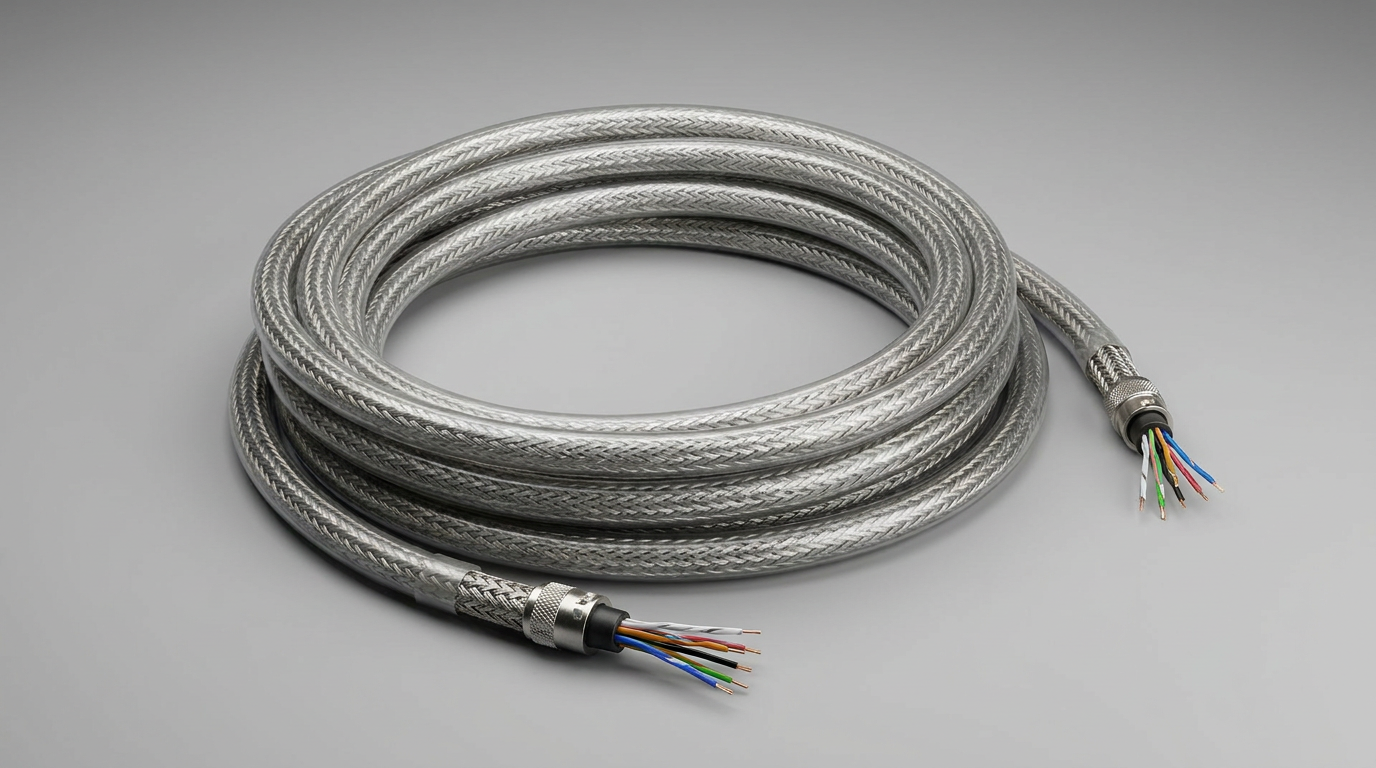
Construction and Purpose in Motion Systems
A shielded servo cable is built for dynamic, electrically noisy environments where accurate motor control matters. Servo drives switch current rapidly, creating high-frequency noise that can radiate into nearby circuits or travel along cable paths. Shielding provides a controlled barrier that captures this interference and routes it safely to ground when properly terminated.
Based on our internal data and market analysis, here is the breakdown:
| Cable Element | Typical Material | Main Function | Why It Matters |
|---|---|---|---|
| Power conductors | Tinned or bare copper | Carry motor current | Supports stable torque output |
| Signal pairs | Twisted copper pairs | Carry encoder/resolver data | Reduces signal distortion |
| Shield layer | Copper braid, foil, or both | Blocks EMI/RFI | Improves EMC performance |
| Jacket | PVC, PUR, TPE, or LSZH | Mechanical protection | Resists oil, abrasion, and movement |
| Drain wire | Tinned copper | Grounding path for foil shield | Simplifies shield termination |
Shielded servo cables may be used between servo drives and motors, between motors and feedback devices, or in hybrid configurations combining power and signal cores. The correct design depends on voltage, current, bend radius, installation style, oil exposure, drag-chain use, and compliance needs.
cwcables Pro Tip: I recommend selecting the shield structure based on both the electrical noise level and the installation method. A cable that works well in a fixed panel may fail early in a drag chain if the jacket and shield are not designed for continuous motion.
How Does shielded servo cable,servo cable shielding, EMC motor cable Work?
A shielded servo cable works by surrounding conductors with a conductive barrier that intercepts electromagnetic noise before it reaches sensitive signals or radiates outward. When the shield is bonded correctly, unwanted high-frequency energy is redirected to ground, helping servo drives, motors, encoders, and controllers communicate reliably.
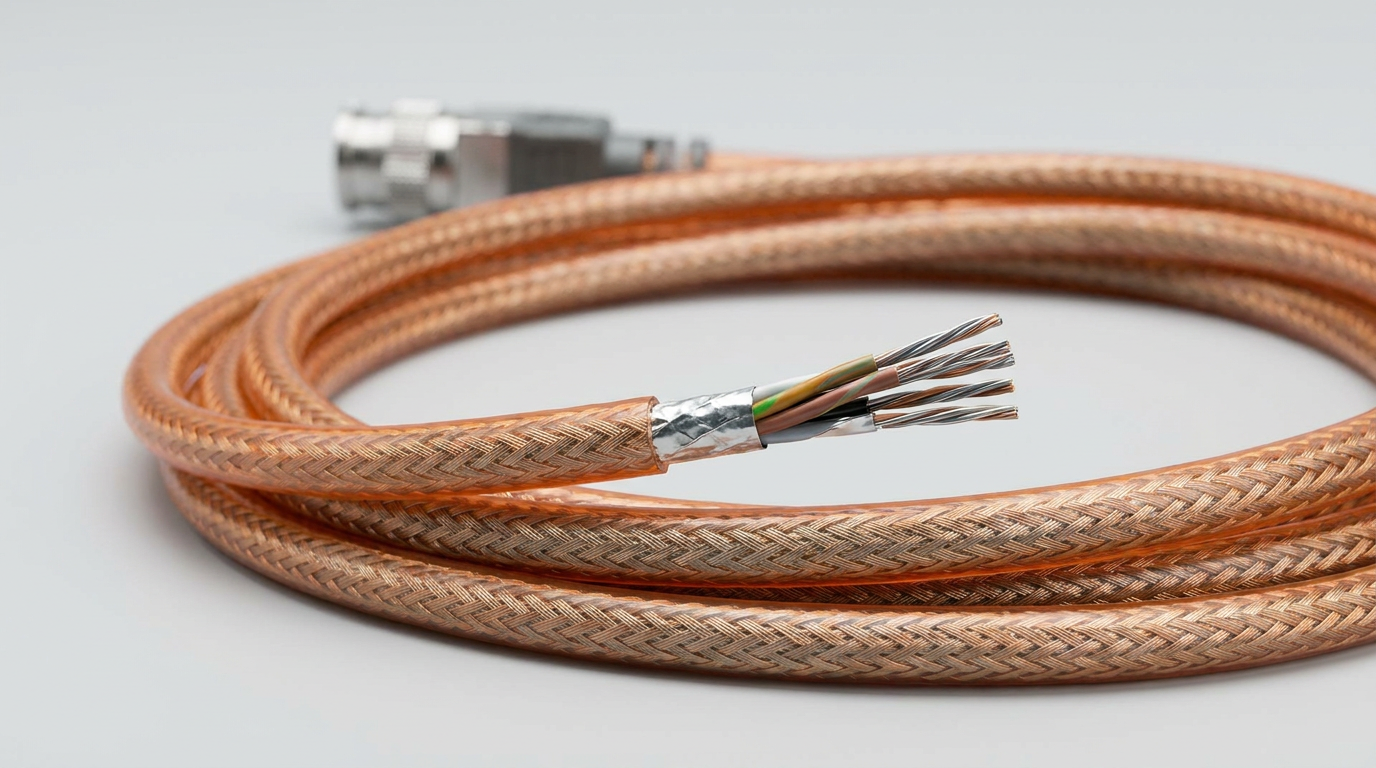
Noise Control Through Shielding and Grounding
Servo systems generate electromagnetic interference mainly because drives use high-speed switching to control motor current. This switching can create common-mode noise, conducted emissions, and radiated emissions. Servo cable shielding reduces these effects by creating a low-impedance path around the conductors.
Key working principles include:
- Shield interception
The braid or foil layer captures radiated electromagnetic fields before they couple into nearby wiring. - Noise drainage
Proper termination allows captured interference to flow to ground instead of remaining on the cable. - Twisted-pair balancing
Signal pairs are often twisted to cancel induced noise and maintain encoder or resolver accuracy. - Separation of power and feedback paths
Physical separation reduces coupling between high-current motor conductors and low-level feedback signals. - 360-degree termination
Clamp-style shield bonding usually performs better than long pigtail grounding because it reduces high-frequency impedance.
For best results, the shield should be continuous, undamaged, and grounded according to the drive manufacturer’s EMC instructions. In many systems, grounding at both ends is preferred for high-frequency shielding, while specific control systems may require a different approach to avoid ground-loop problems.
cwcables Pro Tip: I avoid long shield pigtails whenever possible. They may look convenient, but at high frequencies they behave like antennas and can reduce the effectiveness of even a high-quality EMC motor cable.
What are the benefits of shielded servo cable,servo cable shielding, EMC motor cable?
The main benefits are lower electrical noise, better signal integrity, fewer servo alarms, improved EMC compliance, and longer equipment life. A properly selected shielded servo cable protects encoder feedback, stabilizes motor control, reduces interference with nearby devices, and supports reliable automation performance in demanding industrial environments.
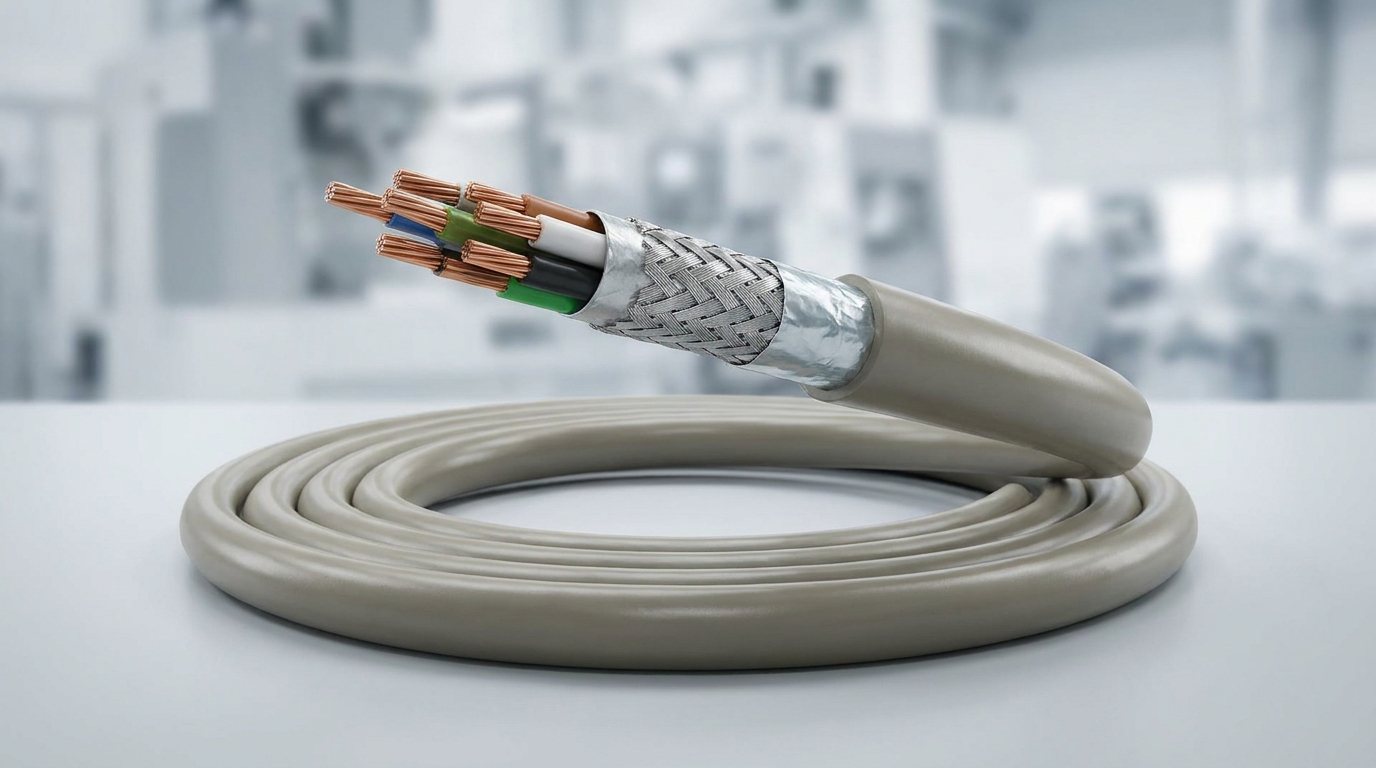
Performance Advantages in Industrial Automation
Shielded servo cables are not only about compliance; they directly influence machine reliability. When interference enters feedback wiring, the drive may misread position, speed, or torque data. This can cause following errors, unstable motion, random alarms, or production stoppages.
Based on our internal data and market analysis, here is the breakdown:
| Benefit | Practical Impact | Common Application |
|---|---|---|
| Reduced EMI | Fewer signal errors and false trips | CNC machines, robots |
| Improved encoder accuracy | More stable position feedback | Servo axes, pick-and-place systems |
| EMC compliance support | Easier machine certification | Export equipment, CE-marked systems |
| Lower downtime risk | Fewer unexplained drive faults | Packaging and production lines |
| Better nearby device protection | Less interference with sensors and PLCs | Dense control cabinets |
| Longer cable reliability | Better resistance to flexing and noise stress | Drag chains, moving gantries |
The benefits are strongest in environments with VFDs, servo drives, welding equipment, switching power supplies, high-current busbars, or long cable runs. In these cases, unshielded cable can become a source or receiver of electrical noise.
cwcables Pro Tip: I treat shielding as a system feature, not just a cable feature. The cable, connector, grounding method, cabinet layout, and drive settings all need to work together to achieve reliable EMC performance.
How to maintain a shielded servo cable,servo cable shielding, EMC motor cable?
To maintain a shielded servo cable, inspect the jacket, connectors, grounding points, bend radius, and shield termination regularly. Prevent crushing, over-bending, chemical damage, and loose shield clamps. Good maintenance keeps servo cable shielding effective and helps avoid intermittent faults that are difficult to diagnose.
Inspection and Preventive Care Checklist
Maintenance is especially important in moving applications such as robot arms, gantries, cable carriers, machine tools, and automated conveyors. A shielded servo cable may still conduct power even when the shielding or feedback conductors are degraded, so visual and electrical inspections are both necessary.
Recommended maintenance actions include:
- Inspect the outer jacket for cuts, cracks, swelling, abrasion, or oil degradation.
- Check connector tightness to ensure vibration has not loosened plug or clamp connections.
- Verify shield bonding at drive, motor, and cabinet entry points.
- Look for bend-radius violations near cable exits, clamps, and moving axes.
- Avoid cable twisting during replacement or installation.
- Separate servo cables from noisy power cables unless proper shielding and routing are confirmed.
- Test continuity if intermittent alarms or feedback errors appear.
- Replace damaged drag-chain cables early before conductor fatigue causes unplanned downtime.
In harsh environments, maintenance intervals should be shorter. Oil, coolant, metal chips, washdown chemicals, and continuous movement can accelerate cable aging. Using the correct jacket material, such as PUR for abrasion and oil resistance, can reduce maintenance frequency.
cwcables Pro Tip: I always inspect the first 300 mm near connectors and cable carrier entry points first. Most mechanical fatigue and shield damage starts where the cable transitions from fixed mounting to movement.
What is the price of shielded servo cable,servo cable shielding, EMC motor cable?
The price of a shielded servo cable depends on conductor size, core count, shielding type, jacket material, flexibility rating, certification, connector options, and order quantity. Standard EMC motor cable is usually more economical than high-flex, oil-resistant, custom servo cable built for continuous-motion applications.
Pricing Variables That Affect Total Cost
Servo cable pricing is not determined by length alone. A cable for a fixed cabinet-to-motor installation may cost significantly less than a drag-chain-rated cable with hybrid cores, double shielding, PUR jacket, and molded connectors.
Based on our internal data and market analysis, here is the breakdown:
| Cost Factor | Lower-Cost Option | Higher-Cost Option | Price Impact |
|---|---|---|---|
| Shielding | Foil shield | Braid + foil shield | Medium to high |
| Jacket | PVC | PUR, TPE, LSZH | Medium |
| Flex rating | Fixed installation | High-flex drag chain | High |
| Conductors | Standard copper | Fine-strand copper | Medium |
| Certification | Basic industrial grade | UL, CE, CSA, RoHS, flame-rated | Medium |
| Connectorization | Bulk cable | Molded or assembled connectors | High |
| Order quantity | Small batch | Volume production | Lower unit cost at scale |
When comparing quotes, check whether the cable includes the same shielding coverage, copper quality, jacket compound, voltage rating, and flex-cycle rating. A cheaper cable may become more expensive if it causes downtime, noise faults, or early replacement.
cwcables Pro Tip: I suggest evaluating total installed cost, not just price per meter. A well-matched shielded servo cable can reduce troubleshooting time, drive faults, and replacement labor over the life of the machine.
Key Features & Comparison
Key features of a high-quality shielded servo cable include strong EMI protection, durable insulation, flexible conductor construction, suitable voltage rating, oil-resistant jacket options, and reliable shield termination. Comparing cable types helps identify whether a standard, high-flex, hybrid, or EMC-focused motor cable is best for the application.
Comparing Common Servo Cable Options
Based on our internal data and market analysis, here is the breakdown:
| Cable Type | Best Use Case | Shielding Level | Flexibility | Typical Jacket | Main Advantage | Limitation |
|---|---|---|---|---|---|---|
| Standard shielded servo cable | Fixed motor connections | Medium to high | Low to medium | PVC | Cost-effective EMC protection | Not ideal for constant motion |
| High-flex servo cable | Drag chains and moving axes | High | High | PUR/TPE | Long flex life and noise control | Higher cost |
| Hybrid servo cable | Combined power, brake, feedback | High | Medium to high | PUR/PVC | Simplifies wiring and installation | More complex specification |
| EMC motor cable | Drive-to-motor installations | High | Medium | PVC/PUR/LSZH | Strong emission control | Must be terminated correctly |
| Feedback shielded cable | Encoder/resolver connections | Medium to high | Medium | PVC/PUR | Protects low-level signals | Not for motor power |
Choosing between these options depends on motion type, machine environment, connector requirements, and EMC risk. For example, a robotic axis requires high-flex construction, while a fixed pump or spindle motor may only need a standard shielded EMC motor cable with correct grounding.
Important selection criteria include:
- Voltage and current rating
- Core count and conductor size
- Shield coverage percentage
- Minimum bend radius
- Flex-cycle rating
- Oil, coolant, and abrasion resistance
- Flame-retardant or low-smoke requirements
- Connector compatibility
- Compliance with drive manufacturer recommendations
cwcables Pro Tip: I match cable design to the axis behavior first. If the cable moves every cycle, high-flex construction is not optional—it is the difference between planned service life and repeated machine stoppages.
Cost & Buying Factors
When buying shielded servo cable, consider electrical rating, shielding performance, installation environment, flexibility, certification, connector style, lead time, and supplier support. The best purchase is not always the lowest-cost cable; it is the cable that meets EMC, motion, durability, and compatibility requirements with minimal risk.
Practical Buying Guide for Procurement and Engineering
A reliable buying decision starts with a clear technical specification. Without this, it is easy to purchase a cable that fits mechanically but fails electrically, or one that meets power requirements but does not survive repeated bending.
Use this buying checklist before ordering:
- Confirm the servo drive and motor model
Check the manufacturer’s cable recommendations and pinout requirements. - Define the application type
Identify whether the cable is fixed, occasional-flex, or continuous-flex. - Calculate electrical requirements
Confirm voltage, current, conductor size, insulation rating, and brake requirements. - Assess EMC risk
Consider cable length, nearby drives, cabinet density, and grounding architecture. - Choose shield construction
Select foil, braid, or combined shielding based on noise sensitivity and frequency range. - Select jacket material
Match PVC, PUR, TPE, or LSZH to oil, abrasion, flame, and environmental needs. - Review certification requirements
Confirm UL, CE, RoHS, CSA, or other standards if required. - Decide on bulk cable or assemblies
Pre-terminated cables can reduce installation time and wiring errors. - Evaluate supplier capability
Look for technical support, customization, quality control, and stable lead times.
A supplier such as cwcables can help align shielding, conductor design, jacket material, and connector options with real operating conditions, especially when the application involves custom equipment or export machinery.
cwcables Pro Tip: I ask customers for photos of the installation path whenever possible. Cable routing, bend points, and nearby noise sources often reveal requirements that are missing from the written specification.
Conclusion
A shielded servo cable is necessary whenever servo performance, feedback accuracy, EMC compliance, or machine uptime could be affected by electrical noise. By selecting the right servo cable shielding, jacket, flex rating, and grounding method, you can improve reliability and reduce costly troubleshooting in automation systems.
Final Selection Guidance
The right EMC motor cable should be selected as part of the complete motion-control system. Cable quality matters, but so do routing, grounding, connector design, and compatibility with the servo drive. For critical machinery, the safest approach is to specify cable requirements early in the design stage rather than treating cable selection as a final purchasing detail.
Before finalizing your cable choice, confirm:
- The cable matches the drive and motor electrical requirements.
- The shield design is suitable for the noise environment.
- The jacket can withstand oil, abrasion, temperature, and motion.
- The bend radius and flex rating match the installation.
- Shield termination follows EMC best practices.
- The supplier can provide consistent quality and technical support.
For applications involving robotics, CNC systems, packaging machines, gantries, or high-speed automation, cwcables can help evaluate the right shielded servo cable configuration for performance, durability, and EMC reliability.
cwcables Pro Tip: I always recommend validating the cable choice before full-scale production. A small pilot installation can confirm noise performance, routing practicality, and mechanical durability before the system is deployed widely.