PUR flexible cable is designed for motion-intensive, oil-exposed, and mechanically demanding environments where ordinary cable jackets can crack, swell, or lose flexibility. With a polyurethane outer sheath, this cable type supports automation, robotics, machine tools, outdoor equipment, and cold-area installations while maintaining abrasion resistance, tensile strength, and stable electrical performance.
What is PUR flexible cable?
PUR flexible cable is an industrial cable with a polyurethane jacket engineered for repeated bending, abrasion, oil exposure, and harsh mechanical stress. Compared with standard PVC cable, a PUR cable offers better cut resistance, longer flex life, and stronger performance in machine tools, automation systems, robotics, and outdoor equipment.
flexible cable
Material Structure and Typical Applications
A polyurethane flexible cable uses PUR as the outer sheath material because it combines elasticity with toughness. Inside, the conductor is usually fine-stranded copper to improve bending performance, while insulation materials are selected according to voltage, temperature, and signal requirements.
Common construction elements include:
Fine-stranded copper conductor for improved flexibility and fatigue resistance.
PVC, PE, TPE, or XLPE insulation depending on electrical and thermal needs.
PUR outer jacket for abrasion, oil, coolant, and mechanical resistance.
Optional shielding for signal integrity in servo, encoder, and data applications.
Optional numbered or color-coded cores for easier installation, inspection, and maintenance.
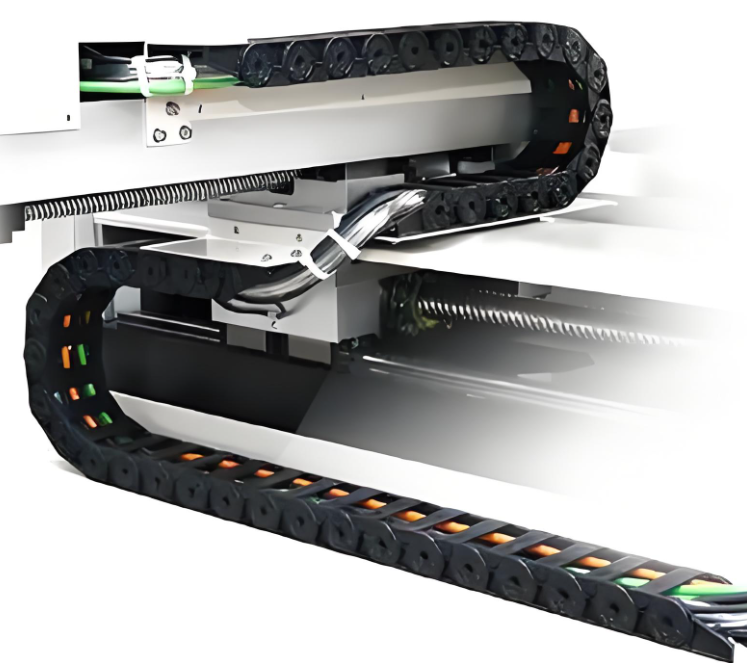
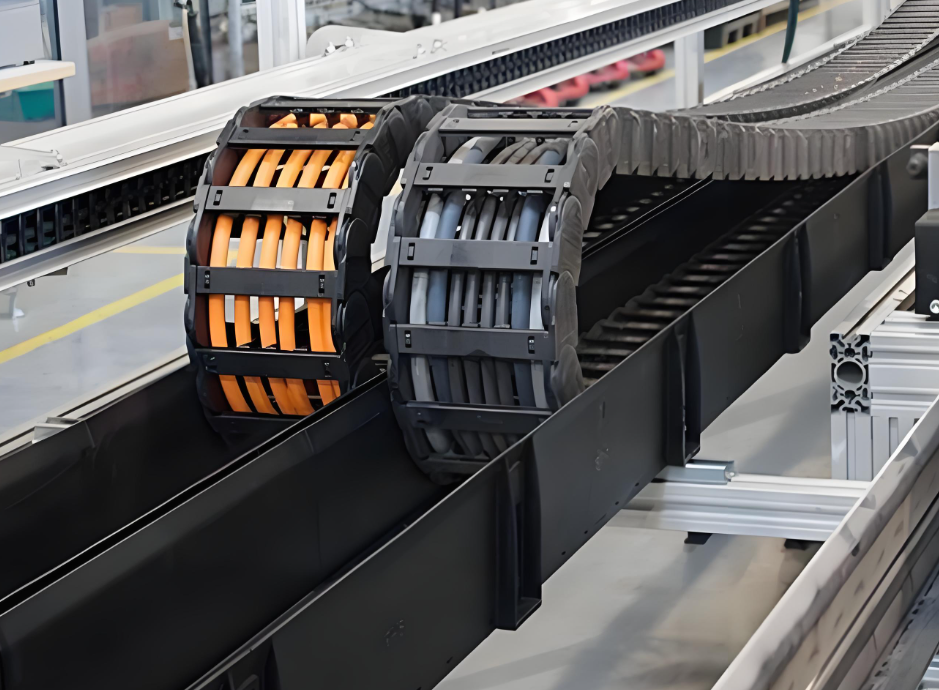
Typical uses include drag chains, industrial robots, CNC machines, packaging equipment, production lines, handling systems, and outdoor mobile machinery.
chengwen cable Pro Tip: When I specify PUR flexible cable for moving equipment, I always confirm the bend radius, cycle rate, and exposure to oil or coolant first. These three factors usually determine whether a standard flexible cable is enough or whether a higher-grade PUR jacket is required.
How Does PUR flexible cable Work?
PUR flexible cable works by combining a flexible copper conductor with a tough polyurethane sheath that resists wear, oil, and repeated bending. The conductor carries power or signals, while the jacket protects the internal cores from abrasion, chemicals, moisture, cold temperatures, and mechanical stress during continuous movement.
Flexing Performance in Dynamic Installations
In moving systems, the cable must bend repeatedly without conductor breakage or jacket failure. PUR flexible cable achieves this through a balanced design: fine copper strands reduce internal stress, insulation keeps cores electrically separated, and the PUR jacket absorbs external friction and impact.
Key working principles include:
Electrical transmission
Copper conductors carry current, control signals, or data between components.
Mechanical flexibility
Fine stranding allows the cable to bend repeatedly without concentrating stress in one point.
Jacket protection
The PUR sheath resists abrasion, oil, coolant, and tearing better than many standard jacket materials.
Environmental stability
A cold-resistant flexible cable design can remain usable at lower temperatures where ordinary jackets may stiffen.
Motion reliability
In drag chains or robots, correct cable lay-up helps reduce twisting, corkscrewing, and premature conductor fatigue.
chengwen cable Pro Tip: For drag chain use, I recommend checking not only the cable’s minimum bend radius but also whether it is rated for continuous flexing. A cable that bends during installation is not automatically suitable for millions of movement cycles.
Is soow cable oil resistant?
Yes, SOOW cable is generally oil resistant because its rubber jacket is designed for heavy-duty portable power use and exposure to oils, water, weather, and abrasion. However, for continuous motion, tight bending, or machine automation, PUR flexible cable may provide better flex life and mechanical wear resistance.
SOOW Cable Versus PUR Cable in Oil-Exposed Areas
SOOW cable is widely used for portable power, construction equipment, temporary power distribution, and industrial tools. It typically has an oil-resistant thermoset rubber jacket and insulation. However, oil resistance alone does not mean it is the best choice for all moving machinery.
Based on our internal data and market analysis, here is the breakdown:
Factor
SOOW Cable
PUR Flexible Cable
Oil resistance
Good for many industrial oils
Excellent for oils, coolants, and greases
Flexibility
Good for portable use
Excellent for continuous motion designs
Abrasion resistance
Good
Very high
Drag chain suitability
Usually limited
Commonly used when properly designed
Cold performance
Often good
Excellent when specified as cold-resistant flexible cable
Typical use
Portable power, tools, temporary power
Automation, robotics, CNC, moving systems
SOOW cable is strong and practical, but it is not always optimized for high-speed repetitive bending. If the application involves robotic arms, cable carriers, linear motion, or coolant-heavy machine tools, a PUR cable is often the more reliable long-term option.
chengwen cable Pro Tip: I use SOOW cable for rugged portable power, but I avoid treating it as a universal motion cable. If the cable must move thousands or millions of times, I usually evaluate a polyurethane flexible cable instead.
What are the disadvantages of an oil-filled cable?
Oil-filled cable can provide strong insulation and thermal performance in certain power transmission systems, but it has clear drawbacks. These include leakage risk, maintenance complexity, environmental concerns, higher installation requirements, and limited practicality for compact, flexible, or frequently moving industrial equipment.
Practical Limitations of Oil-Filled Cable Systems
Oil-filled cables are mostly associated with specialized high-voltage or legacy power systems rather than modern flexible machine wiring. The oil helps manage insulation and heat, but it also introduces mechanical and environmental complications.
Main disadvantages include:
Leakage risk
Damaged sheaths, joints, or terminations can allow insulating oil to escape.
Higher maintenance demand
Pressure monitoring, oil quality checks, and leak detection may be required.
Environmental concerns
Oil leaks can contaminate soil, water, or production areas.
Installation complexity
Handling, sealing, and termination are more demanding than standard dry cable systems.
Limited flexibility
Oil-filled designs are not suitable for dynamic applications such as robots, drag chains, or portable machinery.
Repair difficulty
Fault location and restoration can be time-consuming and costly.
For heavy-duty industrial equipment, an oil-resistant cable with a PUR sheath is usually more practical when flexibility, abrasion resistance, and clean installation are required.
chengwen cable Pro Tip: I do not recommend oil-filled cable for moving industrial machinery. If the concern is exposure to oil, coolant, or grease, a correctly specified PUR flexible cable is usually cleaner, safer, and easier to maintain.
Is PVC cable oil resistant?
PVC cable can offer basic oil resistance depending on the compound formulation, but standard PVC is not always reliable in continuous oil, coolant, or harsh mechanical environments. For demanding machinery, PUR flexible cable typically provides stronger resistance to abrasion, cutting, low temperatures, and long-term oil exposure.
PVC and PUR Jacket Performance Differences
PVC is common because it is economical, easy to process, and suitable for many general-purpose electrical installations. However, oil, coolant, and repeated bending can gradually harden, swell, or crack some PVC compounds, especially in demanding industrial conditions.
Based on our internal data and market analysis, here is the breakdown:
Property
Standard PVC Cable
PUR Flexible Cable
Oil resistance
Basic to moderate, compound-dependent
High
Abrasion resistance
Moderate
Very high
Flex life
Suitable for general movement
Better for repeated dynamic motion
Cold resistance
Can stiffen in low temperatures
Better when designed as cold-resistant flexible cable
Chemical resistance
Moderate
Strong against many oils, greases, and coolants
Cost
Lower
Higher initial cost
Best use
Fixed wiring, light-duty machinery
Heavy-duty automation and mobile equipment
PVC cable may be acceptable for fixed wiring or light industrial use. For continuous motion, coolant splash zones, outdoor mobile equipment, or harsh factory environments, PUR cable generally offers longer service life and reduced replacement frequency.
chengwen cable Pro Tip: I choose PVC when the environment is stable and cost is the main factor. But when oil, abrasion, cold, or repeated bending are present, I usually move the specification to PUR to avoid early jacket failure.
Key Features & Comparison
The main advantages of PUR flexible cable are oil resistance, abrasion resistance, high flexibility, cold performance, and durability under mechanical stress. Compared with PVC, rubber, and ordinary flexible cables, PUR is often the better choice for automation, robotics, machine tools, and outdoor heavy-duty applications.
Performance Comparison for Industrial Cable Selection
Based on our internal data and market analysis, here is the breakdown:
Feature
PUR Flexible Cable
PVC Cable
Rubber Cable
Standard Flexible Cable
Oil resistance
Excellent
Basic to moderate
Good
Varies
Abrasion resistance
Excellent
Moderate
Good
Moderate
Flexibility
High
Medium
High
Medium
Continuous flex suitability
Strong when designed for drag chains
Limited
Application-dependent
Limited to moderate
Cold resistance
Very good with proper compound
Limited to moderate
Good
Varies
Cut and tear resistance
High
Moderate
Good
Moderate
Outdoor durability
Good when UV-rated
Compound-dependent
Good
Varies
Typical cost
Medium to high
Low
Medium
Low to medium
Best application
Automation, robotics, CNC, heavy-duty motion
Fixed or light-duty wiring
Portable power and outdoor tools
General machinery
A PUR cable is especially valuable where cable failure would stop production. Its higher initial cost is often offset by lower downtime, fewer replacements, and better resistance to oils, coolants, chips, friction, and repeated movement.
Important selection points include:
Match voltage and current rating to equipment requirements.
Confirm minimum bend radius for installation and operation.
Specify shielding for signal, servo, or encoder applications.
Choose cold-resistant flexible cable construction for low-temperature sites.
Verify resistance to the exact oil, coolant, or chemical used on-site.
chengwen cable Pro Tip: I always compare total cost of ownership, not just purchase price. In harsh machinery, a cheaper cable can become expensive quickly if it causes downtime, troubleshooting, or repeated replacement.
flexible cable
Cost & Buying Factors
PUR flexible cable usually costs more than standard PVC cable, but the price reflects stronger jacket performance, flex design, shielding options, conductor quality, and oil-resistant construction. The right buying decision should balance cable life, movement cycles, chemical exposure, installation conditions, and downtime risk.
Pricing Variables That Affect Cable Choice
The cost of polyurethane flexible cable depends on both material and engineering requirements. A simple unshielded control cable is less expensive than a shielded drag chain cable with high-flex copper conductors, special insulation, and cold-resistant PUR sheathing.
Key buying factors include:
Cable structure
More cores, larger conductor sizes, shielding, and special insulation increase cost.
Flex rating
Continuous-flex or drag-chain-rated designs require better materials and construction.
Oil and chemical exposure
Stronger PUR compounds may be needed for coolants, cutting oils, grease, or cleaning agents.
Temperature range
Cold-resistant flexible cable compounds can add cost but improve reliability in low-temperature environments.
Certification requirements UL, CE, RoHS, CPR, or other standards may affect sourcing and price.
Order quantity and customization
Custom colors, printing, packaging, and low-volume orders can influence unit cost.
For buyers, the best approach is to define the operating environment first, then compare cable options by service life and risk reduction instead of price alone.
chengwen cable Pro Tip: When customers ask for the lowest price, I ask how much one hour of machine downtime costs. In many factories, choosing the correct PUR flexible cable once is far cheaper than replacing a failed cable later.
Conclusion
PUR flexible cable is a strong choice for oil-resistant, cold-resistant, and heavy-duty industrial applications where flexibility and jacket durability matter. It outperforms many standard cable types in moving machinery, automation, robotics, and coolant-exposed environments, helping reduce downtime and improve long-term reliability.
Final Selection Guidance for Industrial Users
Selecting the right cable means matching the cable construction to the actual working conditions. PUR is not always the cheapest option, but it is often the most dependable when the cable faces repeated bending, abrasion, oil, coolant, or outdoor exposure.
Use PUR flexible cable when your application involves:
Continuous or frequent movement.
Drag chains, robotic arms, or automated handling systems.
Oil, grease, coolant, or chemical splash.
Abrasion from machine parts, floors, or cable carriers.
Cold environments where ordinary cable jackets may stiffen.
High downtime cost from cable failure.
For general fixed wiring, PVC may be sufficient. For portable power, rubber or SOOW cable may be suitable. For demanding industrial motion and oil-resistant performance, PUR cable is often the more reliable long-term solution.
chengwen cable Pro Tip: If you are unsure which cable construction fits your equipment, share the movement type, bend radius, temperature, oil exposure, and voltage requirements with us. At chengwen cable, we can help match the cable to the real working conditions instead of guessing from a catalog.