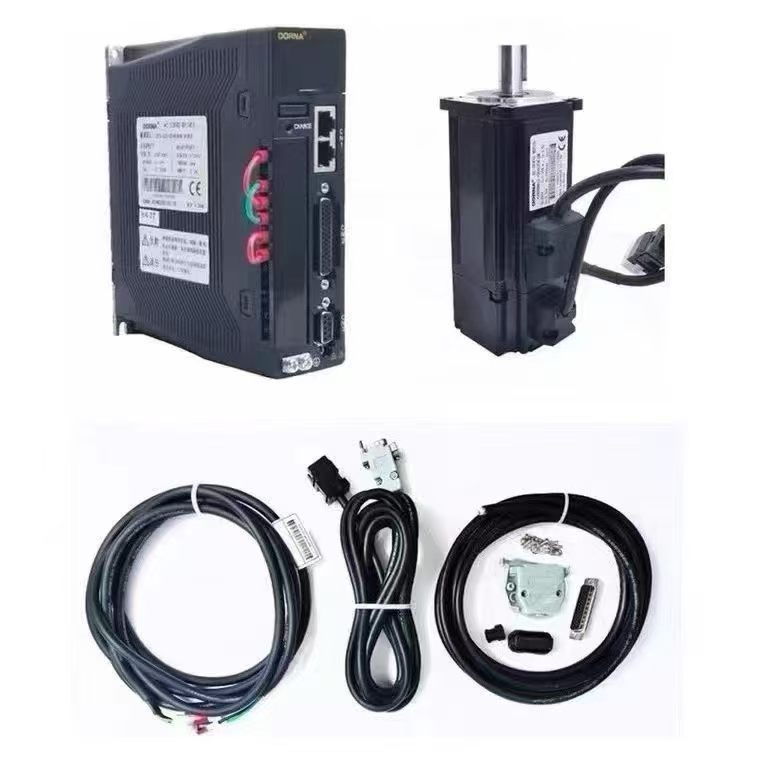
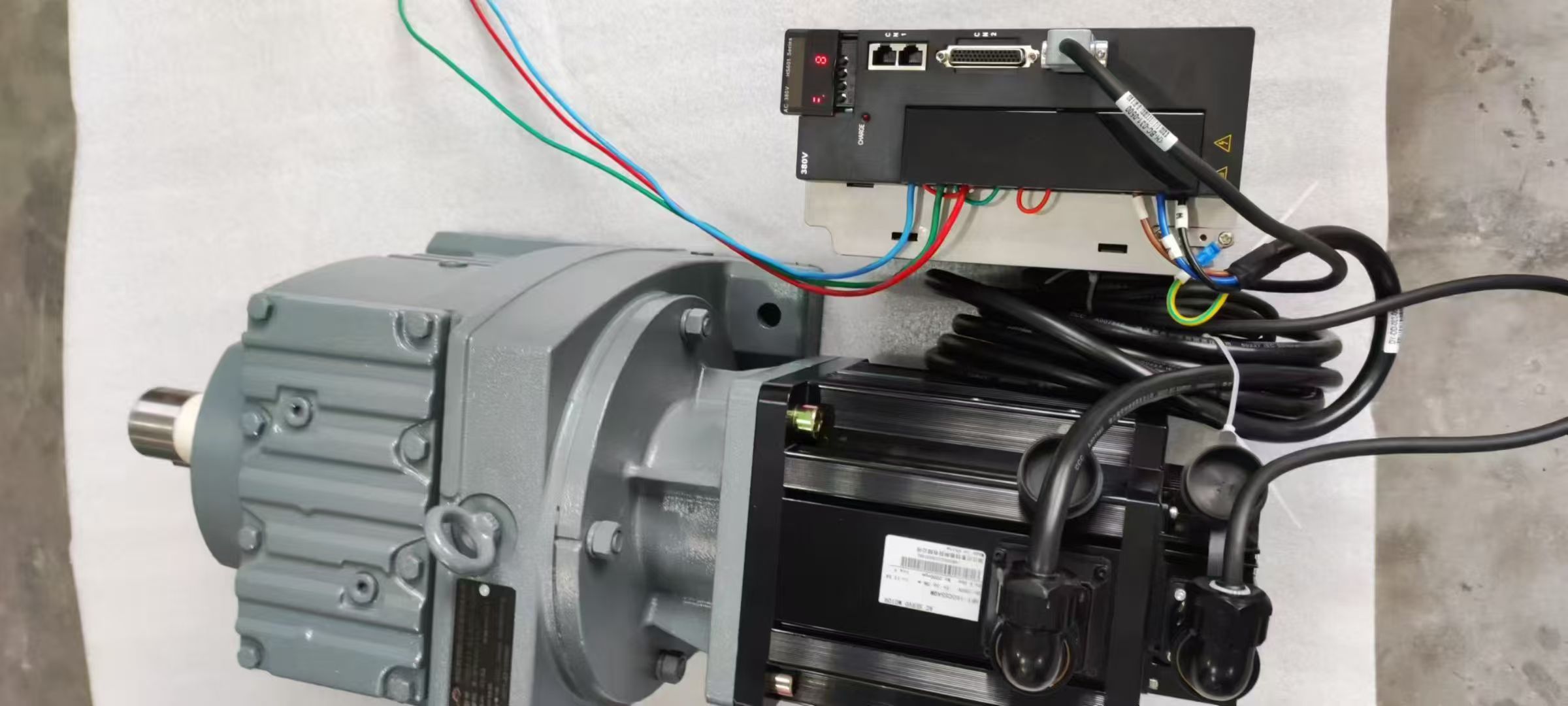
Precision motion control depends on clean, reliable feedback from the encoder to the drive or controller. The right cable protects low-level signal integrity against electrical noise, flexing, oil, abrasion, and installation stress. This encoder cable guide explains how to match shielding, conductor design, connector style, environment, and budget so your motor encoder cable supports stable positioning, repeatability, and long service life.
What is encoder cable selection?
Encoder cable selection is the process of choosing the correct cable construction, shielding, conductor size, connector type, flexibility rating, and environmental protection for an encoder feedback system. A proper choice ensures the controller receives accurate position, speed, and direction signals without noise, voltage drop, intermittent faults, or premature cable failure.
Encoder Cable Selection Fundamentals
Encoder cables carry feedback signals from rotary, linear, or motor-mounted encoders to drives, PLCs, CNC controllers, robots, and motion controllers. Because these signals can be low voltage and high frequency, the cable must preserve waveform quality while resisting interference from motors, VFDs, contactors, welders, and other industrial noise sources.
Based on our internal data and market analysis, here is the breakdown:
Prevents false counts, jitter, and position errors
Twisted pairs
Signal balance
Improves differential signal integrity
Conductor size
Voltage drop and durability
Supports required cable length and motion stress
Jacket material
Environmental resistance
Protects against oil, coolant, abrasion, and chemicals
Flex rating
Motion life
Prevents conductor fatigue in moving applications
Connector type
Installation reliability
Reduces wiring errors and downtime
Impedance/capacitance
Signal quality
Helps maintain clean high-speed encoder pulses
For incremental encoders, cable selection often focuses on maintaining clean A, B, and Z channel signals. For absolute encoders, especially SSI, BiSS, EnDat, or fieldbus-based feedback, impedance, shielding, and pair geometry become even more important. A well-matched cable prevents intermittent feedback errors that are difficult to diagnose once the machine is running.
cwcables Pro Tip: I always start encoder cable selection by checking the encoder output type and cable length before looking at jacket or connector options. If the signal architecture is wrong, even the most rugged cable will not solve feedback instability.
How Does encoder cable selection Work?
Encoder cable selection works by matching electrical, mechanical, and environmental requirements to the motion system. You evaluate encoder signal type, cable length, noise exposure, flexing, temperature, chemicals, connector compatibility, and grounding method, then choose a cable that preserves signal integrity under real operating conditions.
Signal, Motion, and Environment Matching
The selection process should begin with the encoder datasheet and end with the actual machine environment. A cable that performs well in a static cabinet may fail quickly on a robot arm, drag chain, spindle, gantry, or servo axis exposed to coolant and continuous movement.
A practical encoder cable selection workflow includes:
Identify the encoder output
Incremental: TTL, HTL, line driver, open collector, push-pull
Absolute: SSI, BiSS, EnDat, Hiperface, CANopen, EtherCAT-based feedback
Confirm the required conductor layout
Power conductors
Signal pairs
Drain wire
Overall shield
Pair shields if required
Calculate cable length and signal sensitivity
Longer runs usually need better shielding and lower capacitance.
TPE for wider temperature and dynamic applications
Verify connectors and pinout
M12, M23, M17, D-sub, RJ45-style, or manufacturer-specific connectors
Straight or angled plug
Shield termination method
Plan grounding and routing
Keep encoder cables away from motor power cables.
Use correct shield bonding at the drive, cabinet, or both ends depending on system design.
Encoder cable shielding selection is especially important because encoder feedback errors often appear as random alarms, skipped counts, unstable speed control, or positioning drift. Selecting the correct cable upfront reduces commissioning time and long-term maintenance costs.
cwcables Pro Tip: I recommend routing encoder cables separately from motor power cables even when using high-quality shielding. Shielding is protection, not permission to ignore cable routing best practices.
servo cable
What are the benefits of encoder cable selection?
Proper encoder cable selection improves feedback accuracy, reduces electrical noise problems, extends cable life, and prevents costly downtime. It helps motion systems maintain stable position control, cleaner speed regulation, repeatable machine movement, and fewer nuisance faults in demanding industrial environments.
Performance and Reliability Advantages
A carefully selected encoder cable directly supports the quality of the feedback loop. In precision motion control, the controller can only correct motion based on the signal it receives. If that signal is distorted, delayed, interrupted, or corrupted by noise, the machine may lose accuracy even if the encoder and servo drive are high quality.
Based on our internal data and market analysis, here is the breakdown:
Benefit
Impact on Motion Control
Typical Result
Better signal integrity
Cleaner encoder pulses or data
Fewer position errors
Improved EMI resistance
Lower interference from drives and motors
Reduced nuisance alarms
Longer service life
Less fatigue and jacket damage
Lower replacement frequency
Easier installation
Correct connectors and pinout
Faster commissioning
Better environmental protection
Resistance to oil, coolant, and abrasion
Fewer field failures
Stable grounding
Controlled shield behavior
Lower noise coupling
Reduced troubleshooting
Fewer intermittent faults
Less unplanned downtime
For high-speed axes, even minor signal distortion can create large positioning problems. In packaging machinery, CNC systems, robotics, semiconductor equipment, medical automation, and printing machines, feedback quality is closely tied to production quality. A properly specified motor encoder cable helps maintain repeatability across thousands or millions of cycles.
Good encoder cable selection also reduces hidden costs. Intermittent encoder faults can consume hours of technician time because they may only appear during acceleration, machine warm-up, cable movement, or nearby switching events. Choosing the correct cable construction makes the entire control system more predictable.
cwcables Pro Tip: I treat encoder cable selection as part of the motion system design, not as an accessory decision. A low-cost cable can become expensive quickly if it causes one avoidable production stop.
servo cable
How to maintain a encoder cable selection?
Maintaining encoder cable performance means inspecting the cable, connectors, routing, strain relief, shielding, and grounding over time. Regular checks help detect jacket wear, loose connectors, oil damage, shield breaks, conductor fatigue, and routing changes before they create encoder faults or motion accuracy problems.
Inspection and Preventive Maintenance Practices
Encoder cable maintenance is about preserving the original electrical and mechanical conditions that made the cable suitable. Even a well-selected cable can fail if it is crushed, bent below its minimum radius, exposed to unexpected chemicals, or pulled at the connector.
Use this maintenance checklist:
Inspect the jacket
Look for cuts, swelling, cracking, flattening, abrasion, or chemical softening.
Check bend radius
Confirm the cable is not bent tighter than the manufacturer’s recommended radius.
Verify strain relief
Ensure cable clamps and glands support the cable without crushing it.
Inspect connector locking
Check threaded couplings, bayonet locks, and latch mechanisms.
Look for contamination
Remove oil, coolant, dust, and metal chips from connector areas.
Confirm cable routing
Keep encoder cables separated from motor, brake, and power wiring.
Check shield continuity
Verify the shield connection if noise symptoms appear.
Monitor drag-chain behavior
Ensure the cable moves freely and is not twisted, kinked, or rubbing.
Replace damaged cables early
Do not wait for intermittent faults to become machine shutdowns.
For dynamic applications, cable life is influenced by acceleration, bend radius, travel distance, torsion, temperature, and cable carrier design. If the machine has been modified, maintenance teams should recheck whether the existing cable still matches the updated motion profile.
cwcables Pro Tip: I never recommend repairing a damaged encoder cable in a high-precision axis unless it is an approved serviceable assembly. Splices can change impedance, shielding, and reliability in ways that are hard to predict.
What is the price of encoder cable selection?
The price of encoder cable selection depends on cable length, conductor count, shielding design, jacket material, flex rating, connector type, certification, and customization. Basic static encoder cables cost less, while high-flex, oil-resistant, torsion-rated, or pre-molded assemblies for servo systems cost more.
Pricing Ranges and Cost Drivers
Encoder cable cost is best evaluated as total installed value rather than unit price alone. A cheaper cable may be acceptable for a short, static, low-noise application, but it may be unsuitable for a long servo axis, continuous-flex machine, or electrically noisy cabinet.
Based on our internal data and market analysis, here is the breakdown:
Cable Type
Typical Cost Level
Best Use Case
Main Cost Drivers
Basic static encoder cable
Low
Fixed cabinet or machine wiring
Conductor count, length, basic shielding
Shielded industrial encoder cable
Medium
General automation and servo feedback
Overall shield, twisted pairs, jacket quality
High-flex encoder cable
Medium to high
Drag chains and moving axes
Fine-strand conductors, flex-rated insulation
Oil-resistant PUR encoder cable
Medium to high
CNC, packaging, factory automation
PUR jacket, abrasion resistance
Torsion-rated robotic cable
High
Robot arms and rotating axes
Torsion design, special materials
Pre-terminated motor encoder cable
Medium to high
Fast installation and reduced wiring errors
Connectors, molding, pinout, testing
Custom encoder cable assembly
Variable
OEM systems and retrofit projects
Design, certification, length, connector sourcing
When budgeting, include more than cable price. Consider downtime risk, connector labor, testing time, installation complexity, replacement frequency, and machine accessibility. A high-quality cable assembly may cost more upfront but reduce startup delays and service calls.
For OEMs and system integrators, cwcables can support encoder cable selection by aligning the cable design with application requirements such as signal type, flex life, shielding strategy, connector configuration, and environmental exposure.
cwcables Pro Tip: I advise buyers to compare encoder cables by application fit, not just by price per meter. The right cable often pays for itself by preventing just one encoder-related downtime event.
Key Features & Comparison
The best encoder cable combines low-noise signal transmission, effective shielding, correct pair geometry, durable insulation, suitable jacket material, reliable connectors, and the right flex rating. Comparing these features side by side helps engineers choose a cable that fits both the control signal and the machine environment.
Feature Comparison for Common Encoder Cable Designs
Based on our internal data and market analysis, here is the breakdown:
Feature
Basic Shielded Cable
High-Flex Encoder Cable
Servo Motor Encoder Cable
Robotic/Torsion Encoder Cable
Best application
Static or low-motion wiring
Drag chains and moving axes
Servo feedback between motor and drive
Robot arms and rotating systems
Shielding
Overall braid or foil
High-coverage braid/foil
Overall shield, sometimes pair shielding
Flexible shield optimized for torsion
Pair construction
Standard twisted pairs
Fine-strand twisted pairs
Signal pairs plus power/reference conductors
Torsion-stable conductor layout
Jacket material
PVC or standard industrial jacket
PUR or TPE
PUR, PVC, or OEM-specified jacket
PUR/TPE specialty jacket
Flex resistance
Low to moderate
High
Moderate to high
Very high torsion resistance
Oil resistance
Depends on jacket
Usually good with PUR
Often required in servo systems
Usually high
EMI protection
Moderate to good
Good to excellent
Good to excellent
Good, with motion durability
Installation complexity
Low
Medium
Medium
High
Typical cost
Low
Medium to high
Medium to high
High
Best buying priority
Cost-effective reliability
Flex life and shielding
Correct pinout and drive compatibility
Torsion life and ruggedness
A strong encoder cable guide should always distinguish between electrical features and mechanical features. For example, a cable can have excellent shielding but still fail quickly if installed in a drag chain without a high-flex conductor design. Conversely, a very flexible cable may still perform poorly if it lacks proper shielding for a noisy servo environment.
Encoder cable shielding selection should consider both shield coverage and termination. Braid shields generally provide strong mechanical durability and low-resistance grounding, while foil shields can improve coverage at certain frequencies. Many industrial encoder cables use combined foil and braid shielding to balance performance.
cwcables Pro Tip: I like to specify the cable by failure mode: noise risk, flex risk, chemical risk, or connector risk. Once the main risk is clear, the correct feature set becomes much easier to choose.
Cost & Buying Factors
Buying the right encoder cable requires balancing price, signal quality, machine environment, flex life, connector reliability, and supplier support. The lowest-cost option is not always economical if it increases installation time, creates feedback faults, or requires frequent replacement in demanding motion applications.
Practical Purchasing Criteria
A good purchasing decision starts with application data. Before requesting a quote, gather the encoder model, drive model, pinout, required cable length, connector type, operating environment, motion profile, and compliance requirements. This avoids mismatched assemblies and reduces redesign work.
Important buying factors include:
Encoder and drive compatibility
Confirm signal type, voltage, wiring layout, and pin assignment.
Cable length
Longer cables may require better shielding, lower capacitance, and differential signaling.
Noise environment
High-noise areas need stronger encoder cable shielding selection.
Motion profile
Static, flexing, torsion, and drag-chain applications require different cable constructions.
Connector reliability
Molded connectors can reduce wiring errors and improve sealing.
Environmental exposure
Check oil, coolant, UV, temperature, abrasion, moisture, and chemicals.
Installation space
Consider cable diameter, bend radius, connector angle, and routing path.
Certification needs
UL, CE, RoHS, REACH, flame ratings, or machine-specific standards may apply.
Supplier engineering support
A knowledgeable supplier can help validate the cable before production or installation.
Lifecycle cost
Include replacement labor, downtime, and troubleshooting time.
For OEM production, repeatability matters. Standardized cable assemblies reduce technician variation and simplify inventory. For maintenance teams, having pre-tested replacement motor encoder cable assemblies can significantly reduce machine recovery time.
cwcables Pro Tip: I recommend sharing the full motion application with the cable supplier, not just the length and connector. Details like drag-chain travel, nearby VFDs, and coolant exposure often determine whether the cable succeeds.
Conclusion
Encoder cable selection is essential for reliable precision motion control because it protects feedback signals from noise, movement, and environmental damage. By matching shielding, conductor design, jacket material, connectors, and flex rating to the application, engineers can improve accuracy, reduce downtime, and extend system life.
Final Selection Checklist
Choosing the right encoder cable is a technical decision that affects machine accuracy and reliability. The best approach is to evaluate electrical requirements first, then mechanical motion, then environmental exposure, and finally installation and cost factors.
Use this final checklist before purchasing:
Confirm encoder output type and voltage.
Match conductor count and twisted-pair layout.
Choose shielding based on EMI risk and cable length.
Select static, high-flex, drag-chain, or torsion-rated construction.
Verify jacket material for oil, coolant, abrasion, and temperature.
Confirm connector type, pinout, sealing, and locking method.
Plan shield termination and grounding.
Route encoder cables away from motor power cables.
Consider pre-terminated assemblies for faster installation.
Work with a supplier that understands precision motion systems.
For projects that require dependable encoder feedback, cwcables can help specify or customize encoder cable assemblies for servo systems, automation equipment, robotics, CNC machinery, and other precision motion applications.
cwcables Pro Tip: I always view the encoder cable as part of the feedback device, not just wiring. If the cable cannot preserve the signal, the controller cannot deliver true precision motion.