

Flexible power cable is essential wherever electrical power must move safely through bending, vibration, travel, or repeated machine motion. Selecting the right cable means balancing conductor flexibility, insulation material, voltage rating, oil resistance, temperature range, and installation environment. For machine builders, automation engineers, and maintenance teams, cwcables helps match flexible power cable types to real operating conditions, not just catalog specifications.
What is flexible power cable,flexible power cable types,flexible power cable for machines,rubber power cable,olflex cable?
A flexible power cable is an electrical cable designed to transmit power while tolerating bending, movement, vibration, or frequent repositioning. Common flexible power cable types include PVC, PUR, rubber power cable, drag-chain cable, and olflex cable-style control power cables used in machines, robotics, tools, and industrial automation systems.
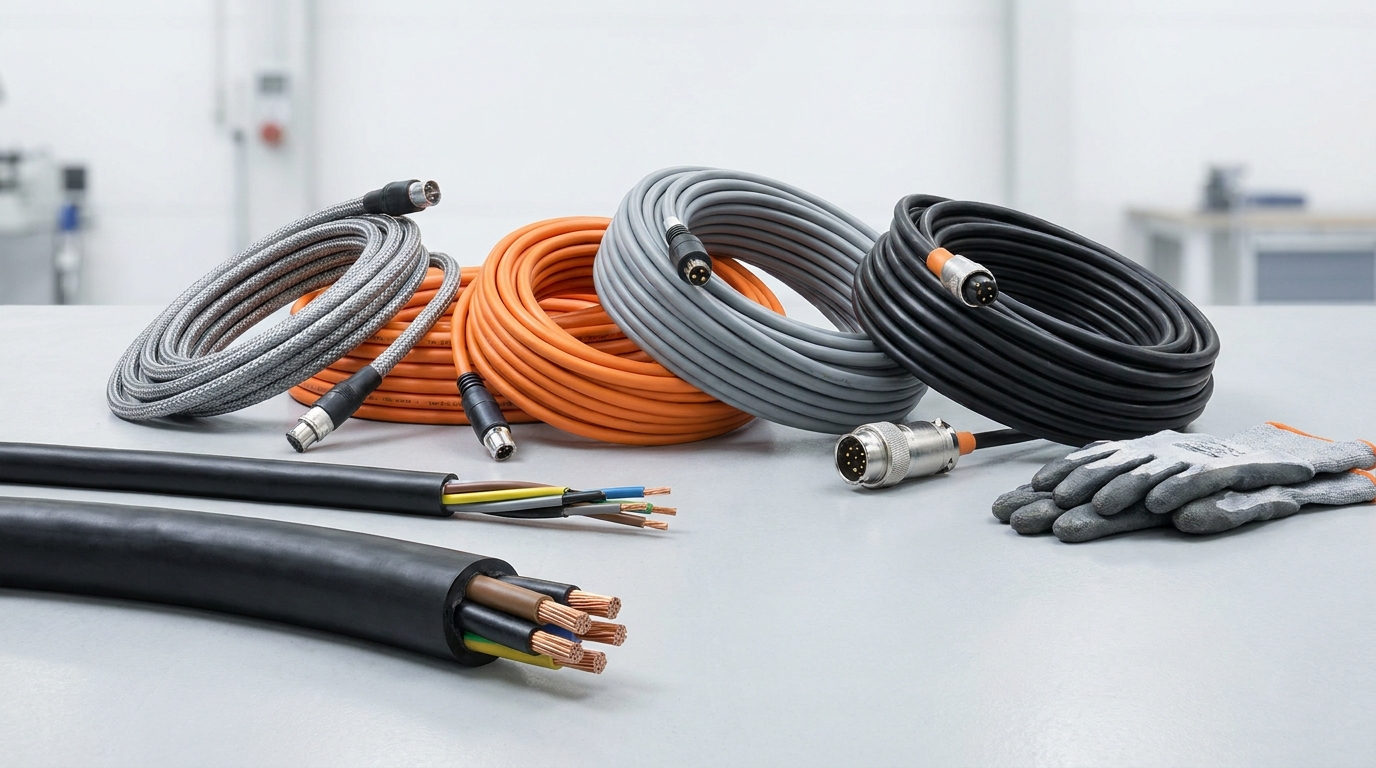
Cable Construction and Typical Types
Flexible power cables use finely stranded copper conductors instead of solid conductors, allowing the cable to bend without cracking or losing conductivity. The insulation and jacket materials determine whether the cable is suitable for indoor machines, outdoor equipment, oil exposure, abrasion, welding areas, or continuous flexing in drag chains.
Based on our internal data and market analysis, here is the breakdown:
| Cable Type | Typical Jacket Material | Best Use Case | Key Advantage |
|---|---|---|---|
| PVC flexible power cable | PVC | General machinery, panels, light-duty equipment | Cost-effective and easy to install |
| PUR flexible power cable | Polyurethane | Automation, robotics, drag chains | High abrasion and oil resistance |
| Rubber power cable | EPR/CR/CPE rubber compounds | Outdoor tools, mobile equipment, harsh sites | Excellent flexibility and ruggedness |
| Drag-chain cable | PVC/PUR/TPE | Continuous motion systems | Designed for repeated bending cycles |
| Olflex cable-style flexible cable | PVC/PUR depending on type | Machine wiring and control power | Reliable flexibility for industrial wiring |
For machines, the most important difference is not only the jacket material but also the bending radius, conductor class, shielding requirement, and whether the cable is rated for fixed installation, occasional movement, or continuous dynamic motion.
cwcables Pro Tip: I always recommend confirming the actual movement pattern before selecting a cable. A cable that works well for occasional machine adjustment may fail quickly inside a drag chain if it is not designed for continuous flexing.
How Does flexible power cable,flexible power cable types,flexible power cable for machines,rubber power cable,olflex cable Work?
Flexible power cable works by combining fine copper strands, flexible insulation, and protective outer sheathing to carry current while absorbing mechanical stress. In machines, the cable bends, twists, or vibrates without conductor breakage, provided the correct cable type, bend radius, current rating, and installation method are used.
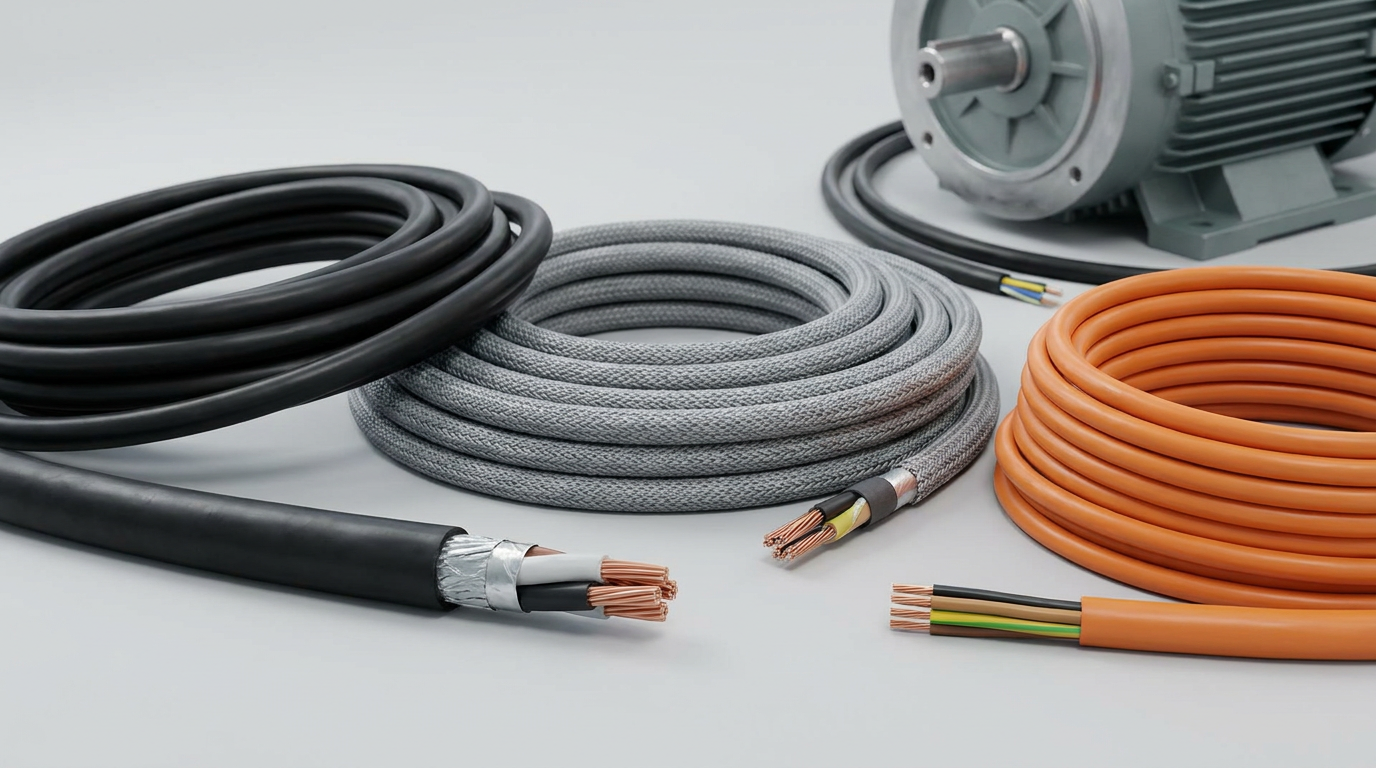
Operating Principle in Moving Equipment
The flexibility comes mainly from conductor design. Instead of one rigid conductor, flexible cables use many small copper strands twisted together. This spreads bending stress across multiple strands, reducing fatigue. Insulation protects each conductor electrically, while the outer jacket protects against oil, abrasion, coolant, heat, and mechanical damage.
A reliable flexible power cable system usually depends on these factors:
- Fine-stranded copper conductors to reduce fatigue during bending.
- Correct insulation thickness to maintain dielectric strength under operating voltage.
- Durable jacket material matched to oil, abrasion, UV, or chemical exposure.
- Proper bending radius to prevent internal conductor stress.
- Correct routing to avoid torsion, crushing, sharp edges, and excessive pulling force.
- Optional shielding when motors, drives, or signal-sensitive equipment may create electromagnetic interference.
In a machine, a flexible power cable for machines may be installed between moving axes, inside control cabinets, on robotic arms, or between motors and drives. If the cable is installed with a bend radius smaller than specified, conductor strands may break internally even when the jacket looks undamaged.
cwcables Pro Tip: I never judge cable health by the jacket alone. In moving applications, internal conductor fatigue often appears before visible outer damage, so continuity checks and bend-area inspections are essential.
What are the benefits of flexible power cable,flexible power cable types,flexible power cable for machines,rubber power cable,olflex cable?
Flexible power cable improves equipment reliability by allowing safe power transmission in moving, vibrating, or space-limited installations. Its benefits include easier routing, reduced conductor fatigue, better resistance to mechanical stress, improved uptime for machines, and options such as rubber power cable or olflex cable-style designs for demanding industrial environments.
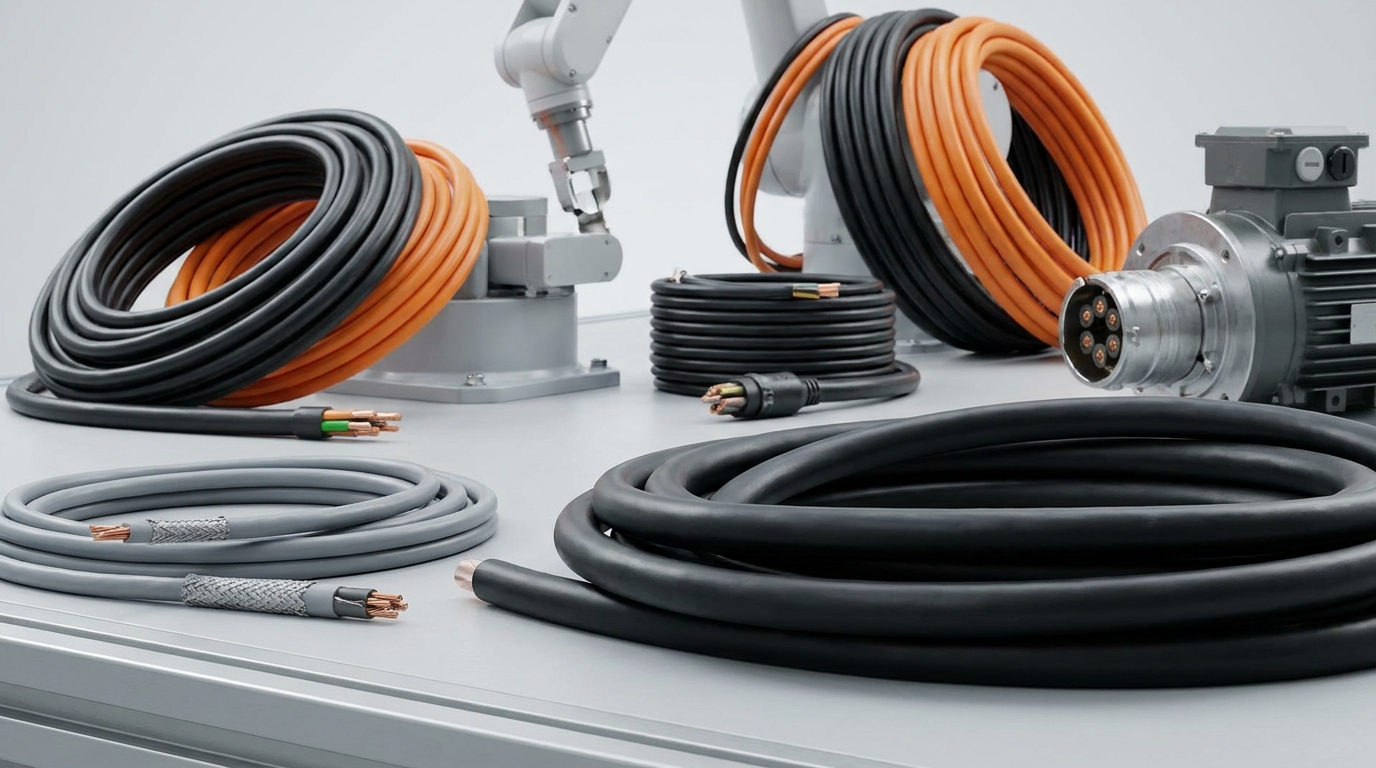
Practical Advantages for Industrial Users
The main value of flexible power cable is operational reliability. Standard rigid cable may be acceptable for fixed wiring, but machines often create movement through motors, conveyors, sliders, lifting systems, and service loops. Flexible cable reduces installation strain and helps prevent premature electrical failure.
Key benefits include:
- Improved bending performance in tight machine layouts.
- Reduced downtime caused by conductor breakage or insulation cracking.
- Better vibration tolerance for motors, pumps, compressors, and mobile equipment.
- Easier installation in control cabinets, machine frames, and cable trays.
- Material flexibility with PVC, PUR, rubber, and special compounds.
- Application-specific options for oil resistance, flame retardance, UV exposure, and drag-chain use.
- Cleaner machine design because cables can follow compact routes without excessive stiffness.
For harsh sites, rubber power cable provides excellent toughness and cold flexibility. For automation lines, PUR flexible cable often performs better due to abrasion and oil resistance. For machine wiring similar to olflex cable applications, flexible multi-core designs simplify power and control distribution.
cwcables Pro Tip: I usually advise customers not to select the cheapest flexible cable for moving equipment. A slightly better jacket and conductor design can save far more in avoided downtime than the initial price difference.
How to maintain a flexible power cable,flexible power cable types,flexible power cable for machines,rubber power cable,olflex cable?
Maintaining flexible power cable requires regular inspection for jacket damage, bending stress, overheating, oil degradation, loose terminations, and improper routing. For machines, maintenance teams should check moving sections more frequently, verify bend radius compliance, clean contaminants, and replace cables showing conductor fatigue, cracks, swelling, or intermittent power faults.
Inspection and Maintenance Checklist
Flexible cables need preventive maintenance because mechanical movement gradually affects conductors, insulation, and jacket materials. The inspection frequency should increase in high-cycle machines, oily environments, outdoor locations, and drag-chain systems.
Use this maintenance checklist:
- Inspect the outer jacket for cuts, cracks, flattening, swelling, hardening, or abrasion.
- Check moving cable sections near bend points, cable glands, clamps, and drag-chain entry points.
- Verify bend radius against the cable datasheet or supplier recommendation.
- Look for overheating signs such as discoloration, brittle insulation, or melted jacket areas.
- Tighten terminations where vibration may loosen terminals, plugs, or connectors.
- Remove oil, coolant, and debris that may degrade the jacket or increase friction.
- Test continuity and insulation resistance during planned downtime.
- Replace damaged cable immediately if copper is exposed, insulation is cracked, or intermittent faults appear.
Cable supports should not compress the jacket too tightly. In dynamic systems, avoid twisting the cable during installation because torsional stress can dramatically reduce service life.
cwcables Pro Tip: I mark the installation date on critical machine cables. It helps maintenance teams identify whether failures are random, environmental, or linked to predictable service-life cycles.
What is the price of flexible power cable,flexible power cable types,flexible power cable for machines,rubber power cable,olflex cable?
The price of flexible power cable depends on conductor size, core count, voltage rating, copper market cost, jacket material, flexibility class, shielding, certification, and application type. Basic PVC flexible cable is usually economical, while rubber power cable, PUR drag-chain cable, and olflex cable-style machine cables cost more due to enhanced performance.
Main Pricing Variables
Flexible power cable pricing is usually calculated by meter, roll, or project quantity. Larger conductor cross-sections require more copper, making them more expensive. Specialty jackets also raise cost because they improve oil resistance, abrasion resistance, low-temperature flexibility, flame performance, or continuous-flex capability.
Based on our internal data and market analysis, here is the breakdown:
| Buying Factor | Impact on Price | Why It Matters |
|---|---|---|
| Conductor size | High | Larger copper area increases material cost |
| Number of cores | Medium to high | More cores require more copper and insulation |
| Jacket material | Medium | PUR and rubber generally cost more than standard PVC |
| Shielding | Medium | Braided or foil shields add material and processing cost |
| Flex rating | High | Continuous-flex designs require special construction |
| Certifications | Medium | UL, CE, VDE, or other approvals may increase cost |
| Order quantity | Medium | Bulk purchasing can reduce unit price |
For general machine wiring, buyers often choose PVC flexible cable to control cost. For moving machine parts, the more expensive continuous-flex or drag-chain cable is usually the safer long-term choice.
cwcables Pro Tip: I recommend calculating cable cost by service life, not just meter price. A low-cost cable that fails in six months is usually more expensive than a properly selected cable that lasts for years.
Key Features & Comparison
The best flexible power cable is selected by comparing flexibility, jacket durability, oil resistance, temperature range, voltage rating, and motion requirements. PVC, PUR, rubber power cable, and olflex cable-style options each serve different needs, so matching the cable structure to the machine environment is more important than choosing by appearance.
Performance Comparison by Application
Based on our internal data and market analysis, here is the breakdown:
| Feature | PVC Flexible Cable | PUR Flexible Cable | Rubber Power Cable | Olflex Cable-Style Machine Cable |
|---|---|---|---|---|
| Flexibility | Good | Very good | Excellent | Good to very good |
| Abrasion resistance | Moderate | Excellent | Good to excellent | Moderate to good |
| Oil resistance | Moderate | Excellent | Good, depending on compound | Good, depending on model |
| Outdoor suitability | Limited unless rated | Good if UV-rated | Very good | Model-dependent |
| Drag-chain suitability | Only if designed for it | Excellent for dynamic types | Limited to specific designs | Available in selected types |
| Typical use | Panels, light machinery | Automation and robotics | Portable tools, construction, outdoor equipment | Machine wiring and control power |
| Cost level | Low to medium | Medium to high | Medium to high | Medium |
| Best selection priority | Budget and general flexibility | Motion and abrasion resistance | Rugged field use | Organized machine wiring |
This comparison shows why one cable cannot fit every application. A flexible power cable for machines may need shielding for inverter-driven motors, while a rubber power cable for outdoor use may prioritize impact resistance, cold flexibility, and water resistance. For cable chains, continuous-flex rating should be treated as mandatory.
cwcables Pro Tip: I always ask whether the cable will be fixed, occasionally moved, or continuously moving. That single question eliminates most wrong cable choices at the start of a project.
Cost & Buying Factors
When buying flexible power cable, evaluate the operating environment, electrical load, movement frequency, installation method, certification needs, and total lifecycle cost. The right choice balances price with safety and durability, especially for machines where downtime, replacement labor, and production loss can exceed the cable’s purchase price.
Selection Criteria Before Purchasing
A good buying decision starts with accurate technical requirements. Undersized conductors may overheat, while incorrect jacket materials may crack, swell, or wear prematurely. For industrial machines, cable flexibility and routing conditions are just as important as voltage and current capacity.
Consider these buying factors:
- Voltage and current rating: Match the cable to equipment load and safety standards.
- Conductor cross-section: Select the correct size for ampacity and voltage drop.
- Core count: Choose the number of conductors required for power, grounding, and control.
- Movement type: Identify whether the cable is fixed, flexed occasionally, or continuously flexed.
- Bend radius: Confirm installation space is sufficient for the specified minimum radius.
- Jacket material: Choose PVC, PUR, rubber, or specialty compounds based on exposure.
- Environmental resistance: Check oil, coolant, UV, water, flame, and temperature requirements.
- Shielding requirement: Use shielded cable for drives, motors, or EMI-sensitive equipment.
- Certifications: Confirm compliance with local and machine-export requirements, such as CE marking, UL, VDE, or other applicable approvals.
- Supplier support: Work with a supplier that can recommend alternatives and custom specifications.
For buyers comparing olflex cable-style products with other flexible cable types, the focus should be on performance equivalence, compliance, and installation conditions rather than brand name alone.
cwcables Pro Tip: I suggest preparing a simple cable data sheet before requesting a quotation. Include voltage, conductor size, core count, motion type, jacket preference, and environment—this prevents costly mismatches.
Conclusion
Flexible power cable is a critical component for safe, reliable power transmission in machines, automation systems, portable tools, and harsh industrial environments. By comparing flexible power cable types, including PVC, PUR, rubber power cable, and olflex cable-style options, buyers can improve uptime and reduce maintenance risk.
Final Selection Guidance
The right cable should match both the electrical requirements and the mechanical environment. A fixed control cabinet cable does not need the same construction as a robotic cable, and an outdoor rubber power cable may not be suitable for continuous drag-chain operation unless specifically designed for it.
Use this final selection process:
- Define the application and identify whether the cable is fixed, mobile, or continuously moving.
- Confirm electrical requirements including voltage, current, grounding, and core count.
- Choose the jacket material based on oil, abrasion, weather, coolant, or chemical exposure.
- Verify bend radius and flex life for machine movement or cable-chain systems.
- Check standards and certifications required for your market or equipment.
- Review total cost of ownership instead of choosing only by lowest meter price.
cwcables can support selection for flexible power cable for machines, rubber power cable, automation cable, and industrial flexible cable applications by helping match technical specifications to real working conditions.
cwcables Pro Tip: If you are unsure which flexible power cable to choose, send us the machine environment, movement pattern, voltage, current, and installation photos. I can usually narrow the correct cable type quickly with those details.