

A double shielded ethernet cable is designed for networks where ordinary cabling may struggle with electromagnetic interference, long runs, industrial equipment, or high-speed data demands. If you are installing Cat6A, 10Gbps links, outdoor routes, or cabling near power lines and machinery, double shielding can improve signal stability and reduce packet errors while giving your network a more durable, heavy duty ethernet cable foundation.
What is double shielded ethernet cable?
A double shielded ethernet cable uses two layers of protection around the twisted copper pairs, typically foil plus braided shielding or individual pair foil plus an overall shield. It is built to reduce electromagnetic interference, improve signal integrity, and support stable high-speed networking in demanding residential, commercial, and industrial environments.
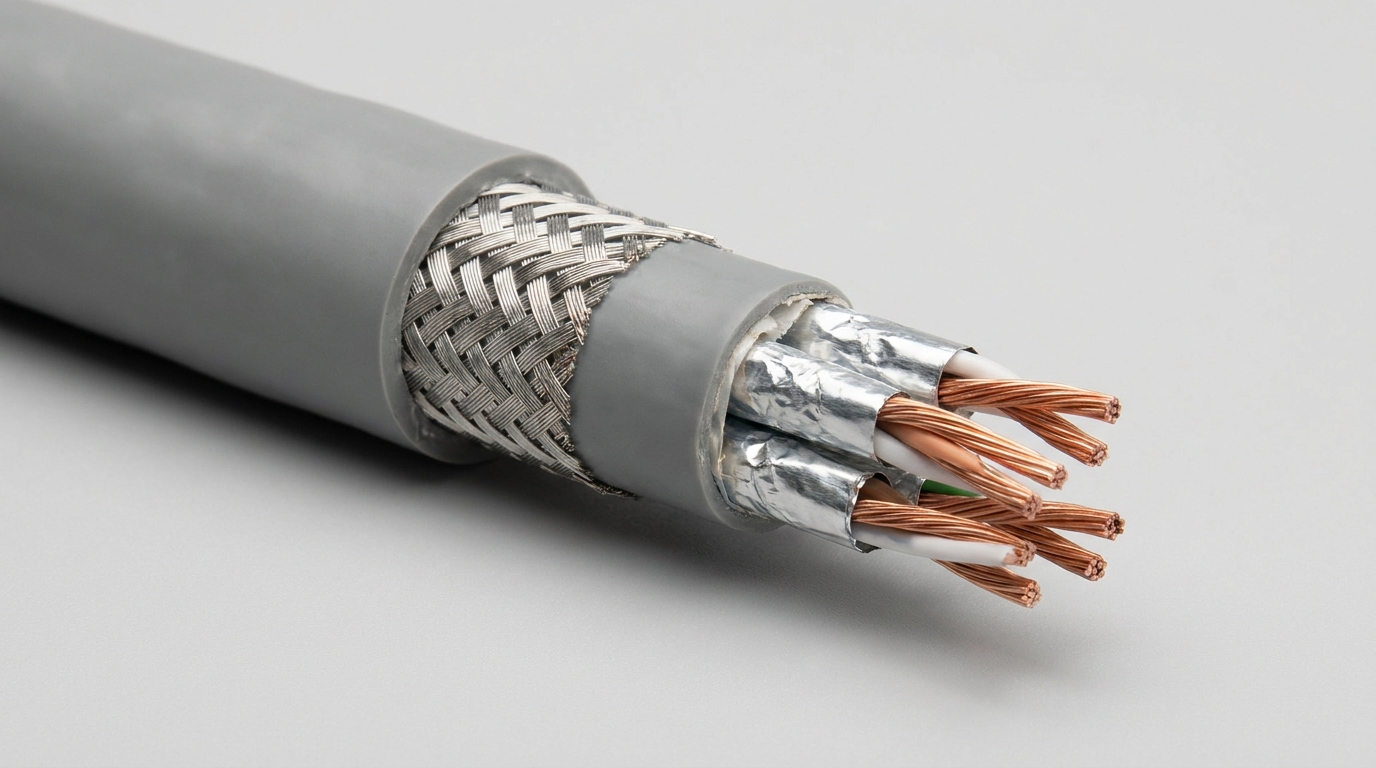
Construction and Shielding Design
Double shielding refers to the cable’s enhanced protection against external noise and internal crosstalk. In practical terms, the cable may use an overall foil shield, an overall braided shield, or foil around each twisted pair plus another outer shield. This construction is common in double shielded Cat6A cables used for 10 Gigabit Ethernet.
Based on our internal data and market analysis, here is the breakdown:
| Cable Type | Typical Shielding | Best Use Case | Interference Protection |
|---|---|---|---|
| UTP Ethernet Cable | No shield | Basic home or office networks | Low |
| Single Shielded Ethernet Cable | One foil or braid layer | Moderate EMI areas | Medium |
| Double Shielded Ethernet Cable | Two shielding layers | Industrial, outdoor, high-speed, noisy environments | High |
| Double Shielded Cat6A | Pair and/or overall shielding | 10Gbps structured cabling | Very high |
The shielding must be properly grounded through compatible connectors, patch panels, and network hardware. Without correct termination, shielded cable may not deliver its full benefit and can sometimes create grounding issues.
cwcables Pro Tip: I recommend double shielded cable when the run passes near motors, fluorescent lighting, elevator equipment, generators, power cabling, or production machinery. For normal desk-to-router connections in a quiet room, it may be more cable than you need.
How Does double shielded ethernet cable Work?
Double shielded ethernet cable works by surrounding the internal twisted pairs with conductive shielding that blocks or drains unwanted electromagnetic noise. The twisted pair design reduces crosstalk, while the added shields protect the signal from external interference, helping maintain cleaner data transmission over longer or more challenging cable routes.
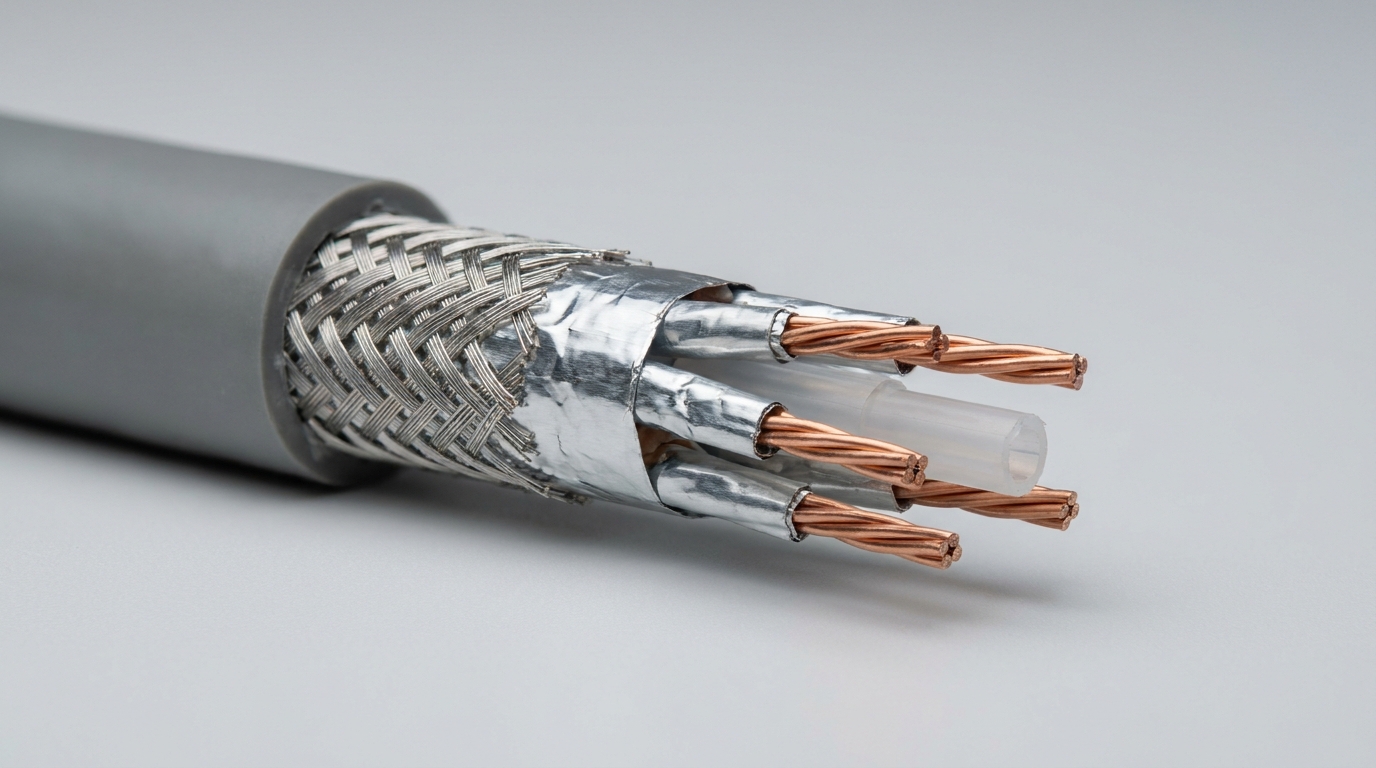
Signal Protection Mechanism
Ethernet cables transmit data through balanced electrical signals over twisted copper pairs. Twisting helps cancel noise, but high-interference environments can still disrupt the signal. Double shielding adds a physical and electrical barrier between the copper conductors and outside interference sources.
Key operating steps include:
- Twisted pairs reduce internal crosstalk by balancing opposing signal fields.
- Foil shielding blocks high-frequency interference from nearby electronics, lights, and radio sources.
- Braided shielding adds mechanical strength and low-frequency EMI protection.
- Drain wires and shielded connectors provide a path to ground when properly terminated.
- The network signal remains cleaner, reducing retransmissions, packet loss, and speed instability.
For double shielded Cat6A, this protection is especially useful because 10Gbps transmission uses higher frequencies than older Ethernet standards, making signal quality more sensitive to interference and cable installation quality.
cwcables Pro Tip: I always look at the full channel, not just the cable. A double shielded ethernet cable should be paired with shielded RJ45 plugs, keystone jacks, patch panels, and grounded equipment to perform as intended.
What are the benefits of double shielded ethernet cable?
The main benefits of double shielded ethernet cable are stronger EMI resistance, more stable high-speed performance, reduced signal errors, better protection in harsh environments, and improved reliability for long or mission-critical runs. It is especially useful when comparing double shielded vs single shielded cable in demanding network installations.
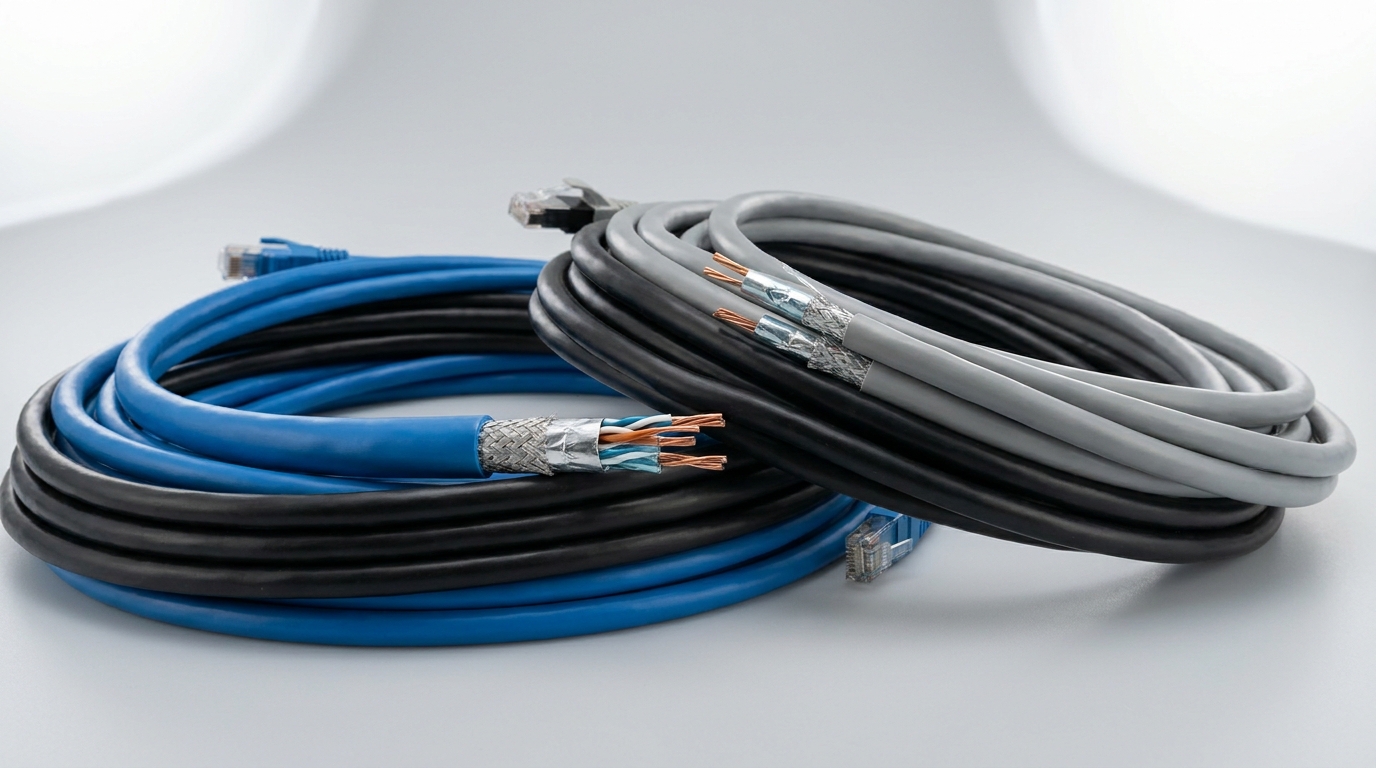
Performance Advantages in Real Installations
Double shielding is valuable when the cost of downtime, data loss, or unreliable speed is higher than the cost of better cabling. It is commonly selected for manufacturing floors, surveillance systems, outdoor network links, data closets, medical facilities, and high-density office cabling.
Based on our internal data and market analysis, here is the breakdown:
| Benefit | Why It Matters | Best Environment |
|---|---|---|
| Reduced EMI | Helps prevent signal disruption from electrical noise | Industrial and commercial sites |
| Better 10Gbps stability | Supports high-frequency Cat6A performance | Data-heavy networks |
| Lower packet loss | Reduces retransmissions and connection drops | Video, VoIP, servers |
| Improved durability | Often built with tougher jackets and shielding | Heavy duty ethernet cable applications |
| Cleaner long runs | Helps maintain signal quality near the 100m limit | Structured cabling |
Double shielded cable is not always about achieving faster theoretical speed; it is often about maintaining the speed your network is already designed to deliver. In noisy environments, a standard cable may technically connect but perform inconsistently.
cwcables Pro Tip: I suggest double shielded ethernet cable for IP cameras, access control, warehouse Wi-Fi access points, and production equipment because those runs often sit near electrical infrastructure that can cause hidden performance problems.
How to maintain a double shielded ethernet cable?
To maintain a double shielded ethernet cable, protect it from sharp bends, crushing, moisture intrusion, poor grounding, and damaged connectors. Regularly inspect terminations, verify shield continuity, avoid running it tightly parallel to power cables, and use proper cable management to preserve both signal performance and physical durability.
Installation and Care Practices
Double shielded cables are more robust than standard UTP cables, but they still require careful handling. The shielding layers can be damaged by excessive bending, over-tight cable ties, poor stripping technique, or incorrect connector installation.
Recommended maintenance steps:
- Check bend radius and avoid tight loops or kinks during installation.
- Use shielded connectors that match the cable category and shielding type.
- Inspect grounding points at patch panels, racks, and network cabinets.
- Avoid crushing the cable with staples, doors, furniture, or heavy equipment.
- Separate from power cables whenever practical, especially on long parallel runs.
- Test after installation using a cable certifier or network tester.
- Replace damaged patch cords instead of reusing cables with bent plugs or broken latch tabs.
For outdoor or industrial environments, jacket material matters. A double shielded cable with the wrong jacket may fail even if the shielding is excellent. Look for riser, plenum, outdoor, UV-rated, or direct burial options depending on the application.
cwcables Pro Tip: I avoid pulling shielded cable by the connector or forcing it through tight conduit. If the shield or pair twist is damaged during installation, the cable may look fine but fail certification or underperform at high speeds.
What is the price of double shielded ethernet cable?
The price of double shielded ethernet cable depends on category rating, copper quality, jacket type, length, certification, and connector style. Double shielded Cat6A generally costs more than standard Cat5e or Cat6, but the added cost is justified when interference protection, 10Gbps stability, or heavy duty ethernet cable durability is required.
Pricing Variables and Typical Cost Drivers
Double shielded cable pricing varies because not all shielded cables are built the same. Solid copper conductors, outdoor jackets, plenum ratings, factory-tested assemblies, and industrial-grade connectors all increase cost but can improve reliability and compliance.
Based on our internal data and market analysis, here is the breakdown:
| Buying Factor | Impact on Price | Why It Matters |
|---|---|---|
| Cable category | Medium to high | Cat6A usually costs more than Cat6 |
| Shielding design | Medium | Dual shields require more material and labor |
| Conductor material | High | Solid bare copper costs more than CCA but performs better |
| Jacket rating | Medium to high | Plenum, outdoor, UV, and burial jackets add cost |
| Length | High | Longer runs require more copper and shielding |
| Termination type | Medium | Pre-terminated shielded assemblies cost more |
| Certification/testing | Medium | Verified performance adds quality assurance |
When evaluating price, compare total project cost rather than cable price alone. A cheaper cable can become expensive if it causes troubleshooting time, failed certification, unstable camera feeds, or intermittent network drops.
cwcables Pro Tip: I recommend avoiding copper-clad aluminum for serious installations. For shielded Cat6A, solid copper is the safer choice because it supports better conductivity, PoE performance, and long-term reliability.
Key Features & Comparison
Double shielded ethernet cable stands out for its dual-layer interference protection, high-speed capability, durability, and suitability for challenging network environments. Compared with single shielded or unshielded cable, it is better suited for 10Gbps links, industrial settings, outdoor routes, PoE devices, and installations near electrical noise sources.
Double Shielded vs Single Shielded vs Unshielded Cable
Choosing between double shielded vs single shielded cable depends on the environment, not just the speed rating printed on the jacket. If the cable is installed in a quiet office, UTP may be enough. If it runs through an electrically noisy space, shielding becomes much more important.
Based on our internal data and market analysis, here is the breakdown:
| Feature | Unshielded Cable | Single Shielded Cable | Double Shielded Ethernet Cable |
|---|---|---|---|
| EMI protection | Basic | Good | Excellent |
| Crosstalk control | Depends on category | Improved | Strongest |
| Flexibility | Highest | Medium | Lower due to shielding |
| Installation difficulty | Easiest | Moderate | Most demanding |
| Grounding requirement | No shield grounding | Recommended/required | Required for best performance |
| Best speed match | Cat5e/Cat6 general use | Cat6/Cat6A business use | Cat6A 10Gbps and harsh environments |
| Best application | Home, light office | Moderate EMI office | Industrial, outdoor, data-heavy, PoE |
| Typical cost | Lowest | Medium | Highest |
Double shielded cable is not automatically “better” for every installation. It is better when the environment justifies it. The added stiffness, termination requirements, and grounding considerations should be part of the decision.
cwcables Pro Tip: I use single shielded cable for moderate EMI zones and double shielded cable for high-risk routes. If a cable path shares space with power infrastructure, motors, or high-output equipment, I prefer the extra protection.
Cost & Buying Factors
When buying double shielded ethernet cable, consider the network speed, EMI level, jacket rating, conductor material, PoE requirements, installation location, and connector compatibility. The best choice is not always the cheapest cable, but the one that protects signal quality and meets the physical demands of the installation.
Practical Buying Checklist
A good buying decision starts with the installation environment. Double shielded Cat6A is a strong choice for 10Gbps networks, but the cable must match the full system: patch panels, keystone jacks, grounding design, and equipment ports.
Use this checklist before purchasing:
- Confirm the cable category, such as Cat6A for 10Gbps structured cabling.
- Choose solid copper conductors for better PoE and long-distance performance.
- Match the jacket rating to the space: riser, plenum, outdoor, UV-resistant, or direct burial.
- Verify shielding compatibility with connectors, keystones, and patch panels.
- Check PoE requirements if powering cameras, access points, phones, or IoT devices.
- Measure the run length carefully and stay within Ethernet distance limits.
- Plan grounding properly to prevent shield performance issues.
- Buy from a reliable supplier, such as cwcables, when consistency and application support matter.
For a heavy duty ethernet cable installation, prioritize construction quality over minimal cost. A properly selected cable can reduce service calls and help the network remain stable under real-world conditions.
cwcables Pro Tip: I always ask where the cable will be installed before choosing it. Indoor office, outdoor camera pole, factory ceiling, and data center rack are very different environments, even if they all use RJ45 Ethernet.
Conclusion
You need a double shielded ethernet cable when your network faces electrical interference, long high-speed runs, industrial equipment, outdoor exposure, dense cabling, or critical uptime requirements. For ordinary low-noise environments, standard or single shielded cable may be enough, but demanding installations benefit from the added protection.
Final Selection Guidance
Double shielded ethernet cable is a smart investment when network reliability matters more than the lowest upfront price. It helps protect high-speed links from interference and supports cleaner performance in challenging environments, especially when used as part of a properly grounded shielded cabling system.
Best-fit applications include:
- Industrial automation and factory networks
- Outdoor IP cameras and security systems
- 10Gbps Cat6A backbone or workstation links
- Warehouses and commercial facilities
- PoE access points, phones, and surveillance devices
- Network routes near power cables, motors, generators, or fluorescent lighting
- Heavy duty ethernet cable installations where durability is important
If you are unsure whether your environment requires double shielding, compare the cable route against nearby interference sources and the importance of uptime. For demanding projects, cwcables can help you select the right shielded Ethernet solution for speed, durability, and installation conditions.
cwcables Pro Tip: My rule is simple: if the cable run is difficult to replace or supports critical equipment, I would rather install the right shielded cable from the start than troubleshoot intermittent network problems later.