

A 2 pair twisted shielded cable is designed for reliable low-voltage signal, data, audio, instrumentation, and control transmission in electrically noisy environments. With two twisted pairs, overall or individual shielding, and four insulated conductors, it helps reduce electromagnetic interference while maintaining stable communication between devices, panels, sensors, and industrial equipment.
What is 2 pair twisted shielded cable,2 pair shielded cable,2 pair twisted cable uses,4 core shielded cable?
A 2 pair twisted shielded cable is a four-conductor cable arranged as two twisted pairs, typically protected by foil, braid, or combined shielding. It is commonly used for balanced signal transmission, RS-485 networks, audio lines, sensors, control circuits, and other applications requiring noise resistance and dependable low-voltage performance.
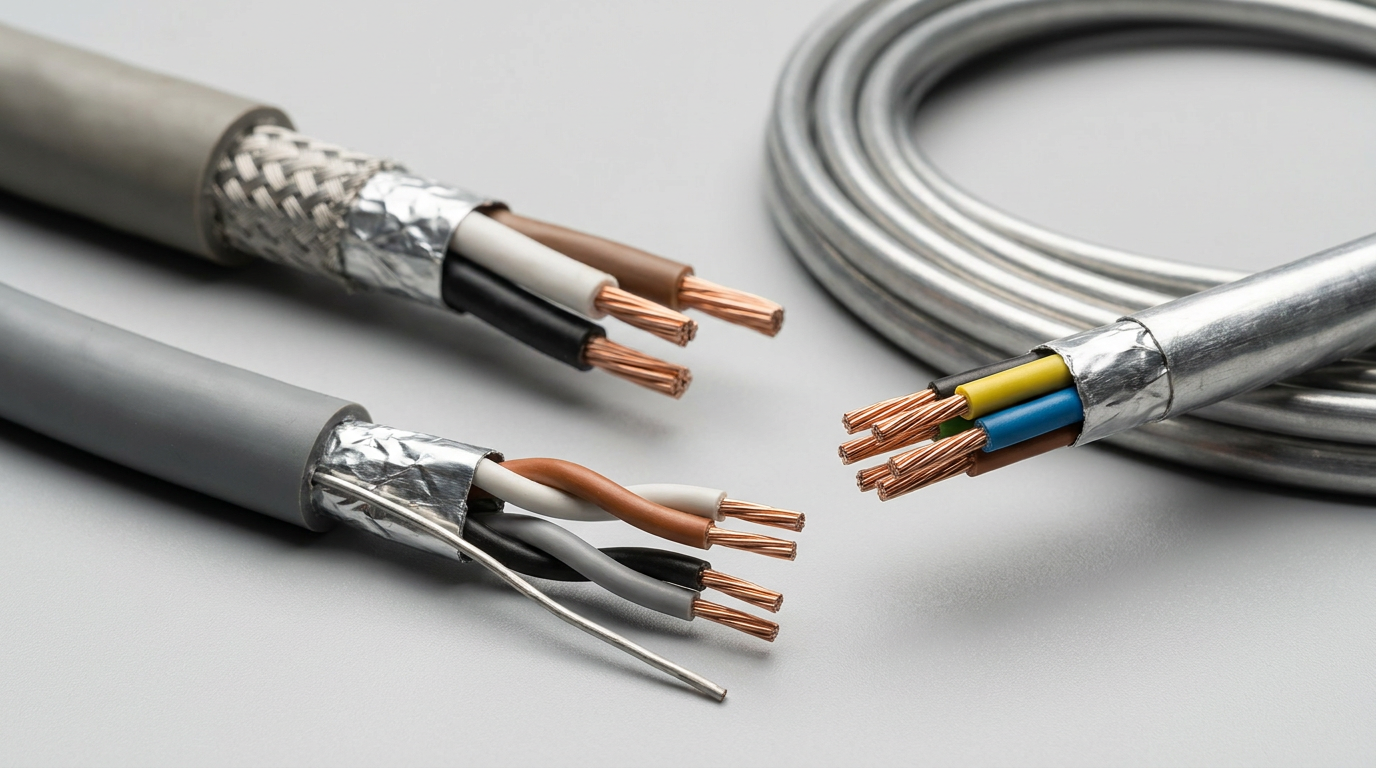
Cable Structure and Core Definition
A 2 pair shielded cable contains four insulated conductors grouped into two pairs. Each pair uses twisted pair construction to help cancel electromagnetic noise, while the shield provides an added barrier against external interference. This makes it different from a basic 4 core shielded cable, where conductors may not always be pair-twisted.
Based on our internal data and market analysis, here is the breakdown:
| Cable Term | Typical Meaning | Best Use Case | Key Advantage |
|---|---|---|---|
| 2 pair twisted shielded cable | Two twisted pairs with shielding | Data, signal, control | Strong noise rejection |
| 2 pair shielded cable | Two pairs with overall or pair shielding | Industrial communication | EMI protection |
| 2 pair twisted cable | Two twisted pairs, may be shielded or unshielded | Balanced signals | Crosstalk reduction |
| 4 core shielded cable | Four conductors with shield, not always twisted | General control wiring | Simple multi-core connection |
Common specifications include conductor size from 18 AWG to 24 AWG, copper or tinned copper conductors, PVC/PE/LSZH jackets, foil or braided shielding, and optional drain wire for grounding. The exact construction depends on whether the cable is used for fixed installation, flexible machinery wiring, outdoor routing, or precision signal transmission.
cwcables Pro Tip: I always confirm whether the project needs pair twisting, shielding, or both. A generic 4 core shielded cable may fit the conductor count, but it may not deliver the same signal stability as a true twisted pair shielded design.
How Does 2 pair twisted shielded cable,2 pair shielded cable,2 pair twisted cable uses,4 core shielded cable Work?
The cable works by twisting two conductors together to balance the signal path and cancel induced noise. The shield then diverts electromagnetic interference away from the conductors, especially when properly grounded. Together, twisting and shielding improve signal integrity in factories, buildings, audio systems, and communication networks.
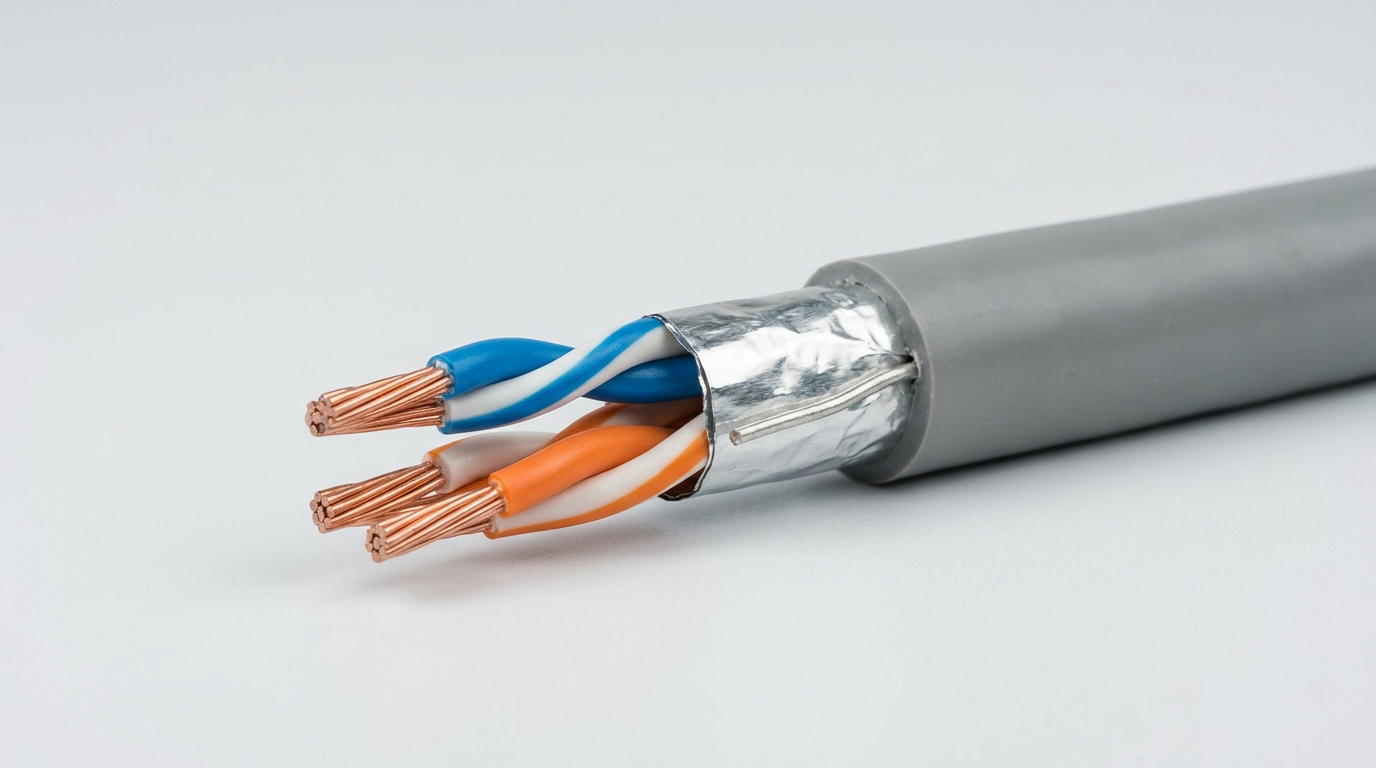
Noise Rejection and Signal Transmission
Twisted pair technology relies on the fact that both conductors in a pair are exposed to similar external noise. Because the signals are usually transmitted differentially, the receiving device can reject common-mode interference. The shield adds another protective layer by intercepting electric field noise before it reaches the conductors.
A typical operating sequence looks like this:
- A signal is sent through one conductor while the return or opposite polarity signal travels through its paired conductor.
- The twist ensures both conductors receive nearly equal external noise exposure.
- The receiving device compares the difference between the two conductors.
- Common noise is rejected, while the intended signal is retained.
- The shield and drain wire carry unwanted interference safely to ground when installed correctly.
Shielding performance depends heavily on installation quality. Foil shields provide excellent high-frequency coverage, braided shields improve durability and low-frequency protection, and foil-plus-braid designs offer broader protection. For sensitive systems, grounding at the correct end or points is critical to prevent ground loops.
cwcables Pro Tip: I recommend treating the shield as part of the signal system, not just as a mechanical layer. Poor grounding can make even a high-quality 2 pair shielded cable perform badly in the field.
What are the benefits of 2 pair twisted shielded cable,2 pair shielded cable,2 pair twisted cable uses,4 core shielded cable?
The main benefits are improved EMI resistance, reduced crosstalk, stable signal transmission, compact four-core wiring, and better reliability in electrically noisy locations. Compared with untwisted or unshielded cable, it supports cleaner communication for automation, audio, security, instrumentation, and low-voltage control applications.
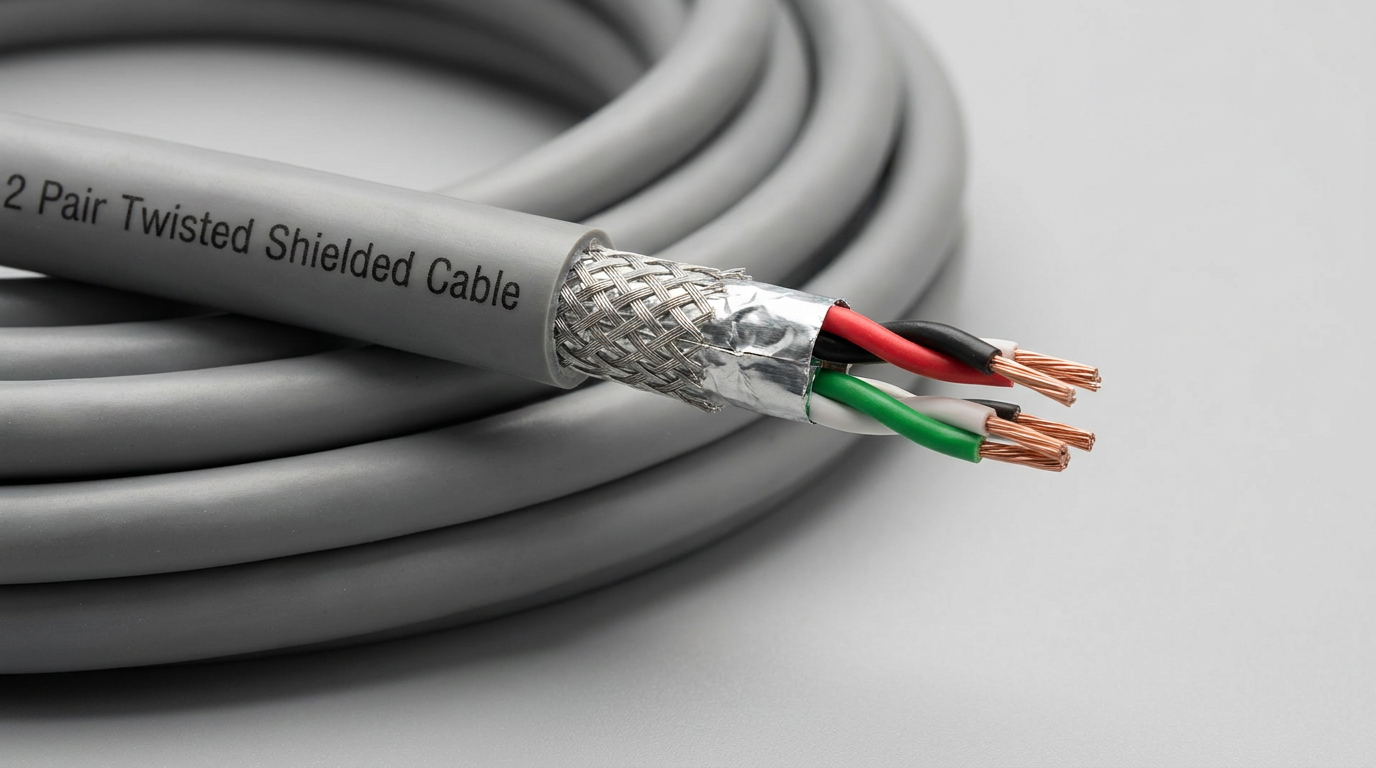
Performance Advantages in Real Installations
A 2 pair twisted shielded cable combines electrical balance, physical organization, and external interference protection. This makes it valuable where signal accuracy matters, especially near motors, drives, lighting systems, switchboards, relays, and other noise-generating devices.
Key benefits include:
- Improved electromagnetic compatibility: Shielding reduces interference from nearby power cables and equipment.
- Lower crosstalk: Twisted pair geometry helps prevent one circuit from disturbing another.
- Cleaner signal quality: Differential signals remain more stable over longer distances.
- Compact installation: Four conductors support two circuits or one full-duplex communication link.
- Flexible application range: Suitable for control, data, instrumentation, audio, alarms, and sensors.
- Better system uptime: Reduced signal errors help prevent false triggers, communication failures, and unstable readings.
For buyers comparing 2 pair twisted cable uses, the strongest value is usually found in environments where both cable routing and electrical noise are difficult to control. Instead of relying only on equipment-side filtering, the cable itself becomes part of the system’s protection strategy.
cwcables Pro Tip: I often suggest shielded twisted pair cable when signal cables must share trays or conduits with other low-voltage wiring. It gives the installer more tolerance against real-world routing limitations.
How to maintain a 2 pair twisted shielded cable,2 pair shielded cable,2 pair twisted cable uses,4 core shielded cable?
Maintenance involves inspecting jacket damage, checking shield continuity, confirming grounding quality, avoiding tight bends, and testing conductor resistance or signal performance when faults appear. Although this cable is generally low-maintenance, proper handling and periodic checks help preserve shielding effectiveness and long-term transmission reliability.
Inspection and Preventive Maintenance Steps
Most cable failures come from mechanical stress, moisture ingress, improper termination, excessive bending, or poor grounding. Preventive maintenance is especially important in moving machinery, outdoor runs, industrial panels, and cable trays with frequent modifications.
Use the following checklist:
- Inspect the outer jacket for cuts, cracks, abrasion, UV damage, or chemical exposure.
- Check bend radius to ensure the cable has not been sharply folded or crushed.
- Verify shield termination at the correct grounding point according to the system design.
- Test conductor continuity if communication faults, intermittent signals, or voltage drops occur.
- Look for loose terminals in panels, junction boxes, connectors, and field devices.
- Separate from power cables where possible, especially variable frequency drive and motor circuits.
- Replace damaged sections rather than splicing shielded signal cable in high-noise areas.
When cleaning or reorganizing panels, installers should avoid untwisting pairs more than necessary near the terminal. Excessive untwist reduces noise rejection and can affect signal quality, especially in data or instrumentation applications.
cwcables Pro Tip: I keep pair untwist as short as possible during termination. Even a well-shielded cable can lose performance if the pairs are opened too far at the connector or terminal block.
What is the price of 2 pair twisted shielded cable,2 pair shielded cable,2 pair twisted cable uses,4 core shielded cable?
The price depends on conductor material, copper size, shielding type, insulation, jacket material, certifications, voltage rating, flexibility, and order quantity. A standard 2 pair shielded cable is usually more affordable than high-flex, outdoor-rated, fire-rated, or individually shielded industrial versions.
Pricing Variables and Specification Impact
Cable pricing is usually driven by copper content first, then shielding construction and jacket performance. A larger conductor, heavier braid, tinned copper, LSZH jacket, oil resistance, UV resistance, or custom color coding can all increase cost.
Based on our internal data and market analysis, here is the breakdown:
| Factor | Lower-Cost Option | Higher-Cost Option | Price Impact |
|---|---|---|---|
| Conductor | Bare copper, smaller AWG | Tinned copper, larger AWG | High |
| Shield | Aluminum foil only | Foil plus copper braid | Medium to high |
| Jacket | Standard PVC | LSZH, PUR, PE, UV-resistant | Medium |
| Flexibility | Fixed installation | High-flex drag chain grade | High |
| Certification | General use | UL, CE, CPR, fire-rated | Medium |
| Quantity | Small cut length | Bulk reel or custom production | Variable |
For accurate pricing, buyers should define conductor size, voltage rating, cable length, operating temperature, shielding coverage, jacket type, color, printing, and compliance requirements. Bulk purchasing often reduces unit cost, while custom production may require minimum order quantities.
cwcables Pro Tip: I advise customers not to compare price by meter alone. A slightly higher-grade shield or jacket can prevent failures that cost far more than the cable itself.
Key Features & Comparison
A good 2 pair twisted shielded cable should be selected by conductor size, shielding coverage, jacket material, voltage rating, flexibility, and environmental resistance. Comparing it against unshielded twisted pair, standard 4 core cable, and individually shielded pair cable helps identify the best option for each installation.
Feature Comparison for Cable Selection
Based on our internal data and market analysis, here is the breakdown:
| Feature | 2 Pair Twisted Shielded Cable | 2 Pair Unshielded Twisted Cable | 4 Core Shielded Cable | Individually Shielded Pair Cable |
|---|---|---|---|---|
| Conductor layout | Two twisted pairs | Two twisted pairs | Four cores, may not be paired | Two pairs with separate shields |
| EMI protection | High | Low to moderate | Moderate to high | Very high |
| Crosstalk control | Good | Good | Depends on construction | Excellent |
| Installation complexity | Moderate | Easy | Easy to moderate | Higher |
| Typical cost | Medium | Low | Medium | Higher |
| Best applications | Data, control, audio, sensors | Low-noise communication | General control circuits | Precision instrumentation |
| Shield grounding need | Yes | No | Yes | Yes, more carefully managed |
| Recommended environment | Industrial and commercial noise areas | Clean electrical environments | Control panels and devices | High-noise or sensitive systems |
The right choice depends on how much interference the cable will face and how sensitive the signal is. For example, RS-485, analog sensors, and balanced audio lines benefit from twisted pair geometry. In contrast, simple relay or dry-contact wiring may only need a standard 4 core shielded cable if signal precision is less critical.
cwcables Pro Tip: I match the cable to the signal type first, then the environment. If the signal is differential, twisted pair construction matters just as much as shielding.
Cost & Buying Factors
When buying this cable, consider the electrical requirements, installation environment, compliance needs, termination method, and total lifecycle cost. The lowest-cost cable is not always the best value if it lacks the shielding, flexibility, flame rating, or durability required for the application.
Practical Buying Guide
A reliable buying decision starts with application details. The same 2 pair shielded cable may perform very differently in a clean office ceiling, an industrial machine, an outdoor conduit, or a control cabinet near inverters and motors.
Before purchasing, confirm:
- Signal type: RS-485, analog sensor, audio, alarm, control, or instrumentation.
- Conductor size: Choose based on distance, voltage drop, current, and terminal compatibility.
- Shielding type: Foil for coverage, braid for mechanical strength, or both for demanding sites.
- Jacket material: PVC for general use, LSZH for low-smoke requirements, PE for outdoor exposure, PUR for abrasion and flexibility.
- Temperature rating: Match the cable to ambient and equipment conditions.
- Fire and compliance standards: Check UL, CE, CPR, RoHS, or project-specific requirements.
- Installation method: Fixed tray, conduit, panel wiring, moving equipment, or direct outdoor routing.
- Supplier capability: Verify customization, labeling, packaging, test reports, and consistent production quality.
For cwcables customers, the most efficient buying path is to share drawings, standards, expected cable length, and environmental conditions early. This allows the cable construction to be matched to the project instead of adjusted after installation problems occur.
cwcables Pro Tip: I always ask where the cable will be installed before quoting. The environment often decides the jacket and shield design more than the basic conductor count does.
Conclusion
A 2 pair twisted shielded cable is a dependable choice for low-voltage systems that need clean, stable signal transmission in noisy environments. By selecting the right conductor size, shield type, jacket material, and compliance level, buyers can improve system reliability and reduce long-term installation risks.
Final Selection Guidance
This cable type is widely used because it balances compact construction with strong interference protection. It supports many 2 pair twisted cable uses, including industrial communication, building automation, access control, security systems, audio transmission, sensors, and process instrumentation.
For best results, specify the cable using a complete requirement list:
- Application and signal type
- Conductor size and material
- Shielding construction
- Jacket material and color
- Voltage and temperature rating
- Indoor, outdoor, or high-flex installation needs
- Required certifications and test standards
- Packaging length and labeling requirements
A well-specified cable helps prevent communication errors, maintenance issues, and premature replacement. If the installation includes motors, drives, long cable runs, sensitive signals, or shared cable pathways, a properly designed shielded twisted pair cable is usually a safer choice than a basic multi-core option.
cwcables Pro Tip: If you are unsure between a 2 pair twisted shielded cable and a standard 4 core shielded cable, send the signal type and installation environment first. I can usually identify the better construction from those two details.