

A PUR Ethernet cable is designed for network connections that must survive abrasion, oil exposure, movement, moisture, and harsh industrial environments. Unlike standard PVC patch cords, PUR-jacketed cable is built for durability and flexibility, making it a strong choice for automation systems, outdoor-adjacent equipment, machine vision, robotics, and demanding factory networks where uptime matters.
What is pur ethernet cable?
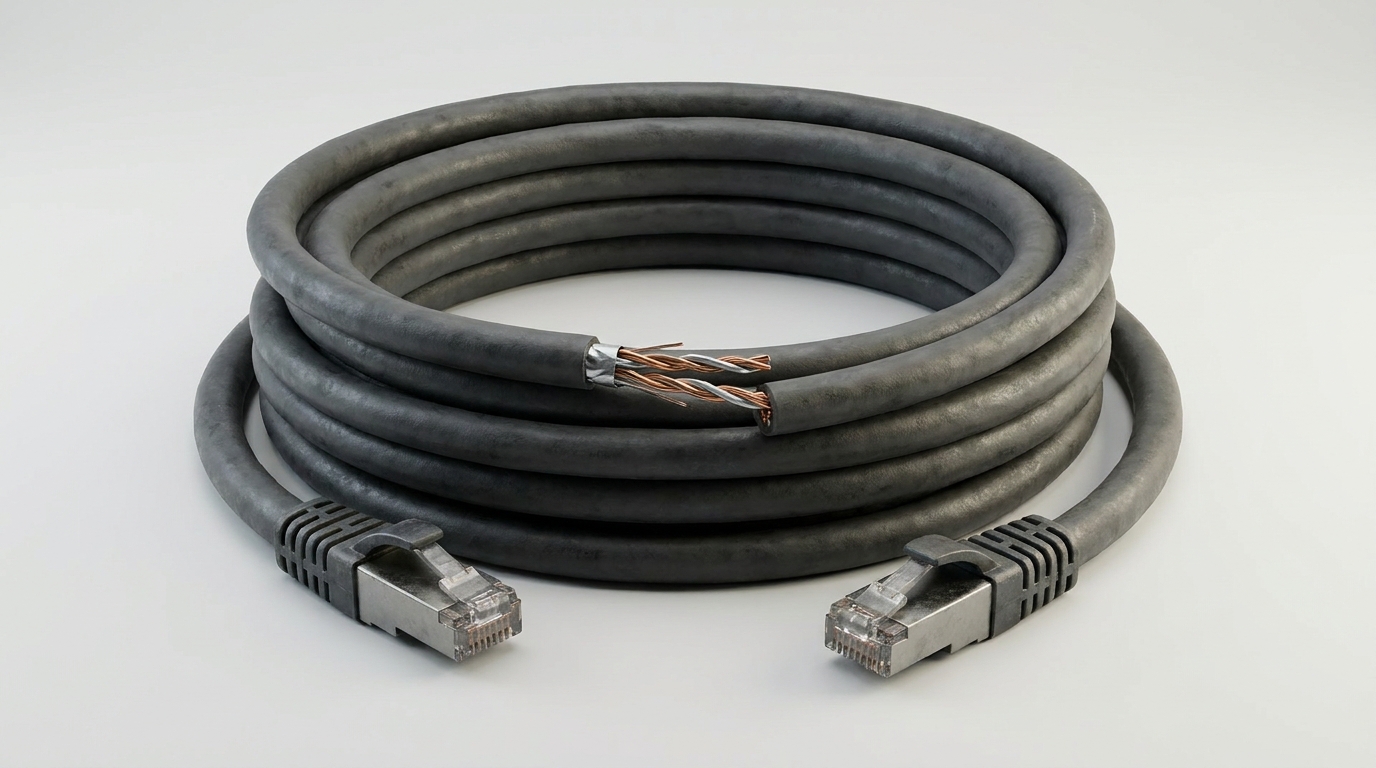
A pur ethernet cable is a network cable with a polyurethane outer jacket that protects the internal copper conductors from abrasion, oil, chemicals, bending, and mechanical stress. It is commonly used in industrial Ethernet, automation, robotics, and harsh environments where ordinary PVC Ethernet cable may crack, wear, or fail prematurely.
Industrial Cable Construction
PUR stands for polyurethane, a jacket material valued for toughness, flexibility, and resistance to oils and industrial fluids. Inside the jacket, the cable may use Cat5e, Cat6, Cat6a, or higher-grade twisted pairs depending on the required speed, bandwidth, shielding, and application environment.
Based on our internal data and market analysis, here is the breakdown:
| Component | Purpose | Why It Matters |
|---|---|---|
| PUR outer jacket | Protects against abrasion, oil, and mechanical wear | Extends cable life in demanding environments |
| Twisted copper pairs | Transmit Ethernet signals | Supports stable data communication |
| Shielding, if included | Reduces EMI/RFI interference | Important near motors, drives, and machinery |
| Flexible conductor stranding | Improves bend performance | Useful for robotics and moving equipment |
| Industrial connectors | Provide secure termination | Helps prevent vibration-related disconnects |
A PUR Ethernet cable may be supplied as a patch cable, bulk cable, drag-chain cable, M12 industrial Ethernet cable, or RJ45 assembly. For many industrial users, the jacket material is just as important as the category rating because physical cable failure can cause downtime even when electrical performance is adequate.
cwcables Pro Tip: I recommend choosing PUR when the cable will touch machine oil, move repeatedly, or run near rough surfaces. If the installation is clean, dry, and static, a standard PVC cable may be enough; if the environment is unpredictable, PUR is the safer long-term choice.
How Does pur ethernet cable Work?
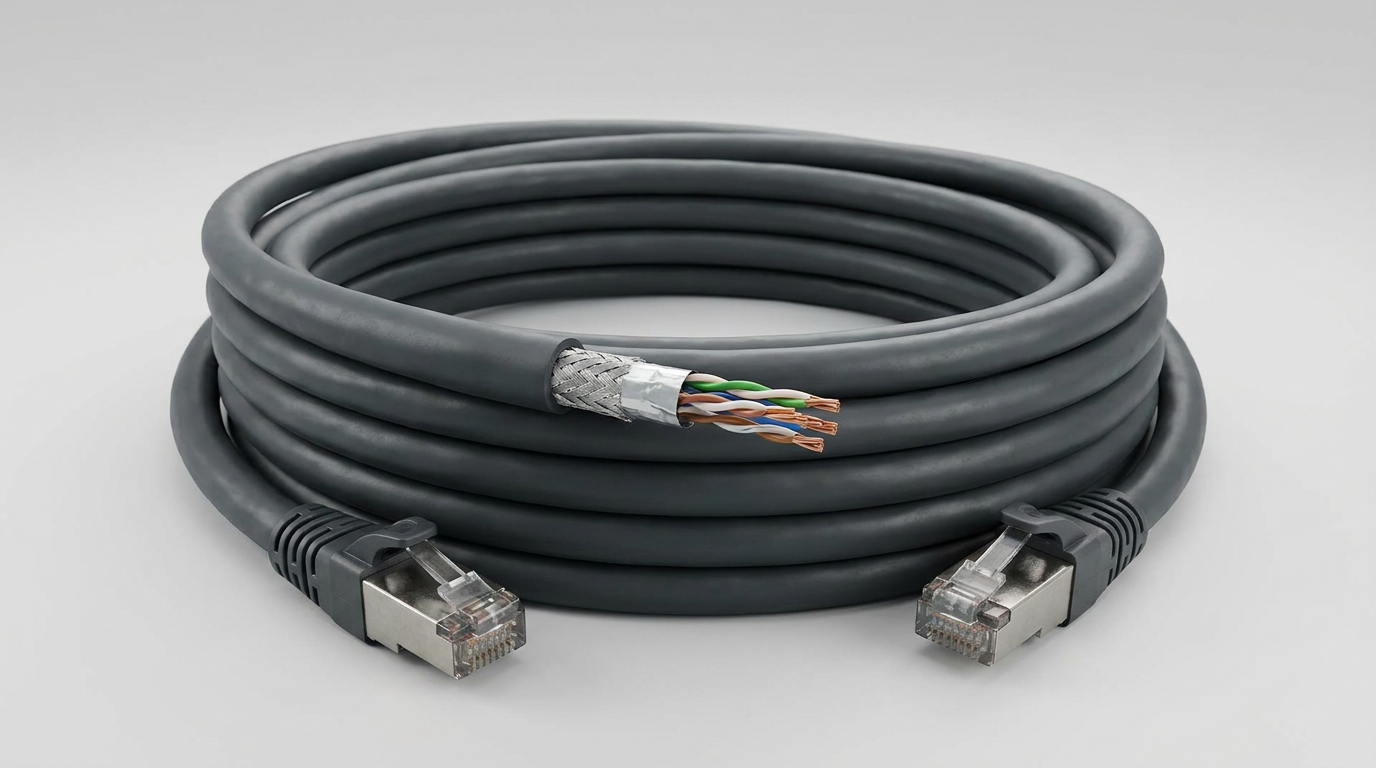
A pur ethernet cable works like a standard Ethernet cable electrically, using twisted copper pairs to transmit data signals between network devices. The difference is mechanical protection: the PUR jacket shields the cable from wear, oil, flexing, and environmental stress, helping maintain signal integrity in industrial and high-movement applications.
Signal Transmission and Jacket Protection
The cable’s internal twisted pairs carry Ethernet data by reducing electromagnetic interference and crosstalk. The PUR jacket does not change the basic communication protocol, but it protects the internal conductors so they continue performing reliably even when exposed to demanding conditions.
Typical operation involves:
- Network data travels through twisted copper pairs between devices such as PLCs, switches, cameras, sensors, or computers.
- Pair twisting helps reduce noise and maintain signal quality.
- Shielding, when specified, protects the signal in electrically noisy areas.
- The PUR jacket resists abrasion, oil, coolant, bending, and contact with machinery.
- Proper connectors maintain electrical continuity and mechanical retention.
For example, an industrial PUR Cat6 cable can support Gigabit Ethernet while surviving conditions that may quickly damage a standard office-grade patch cord. This makes it suitable for manufacturing lines, automated equipment, and field-deployed network systems.
cwcables Pro Tip: I always look at both the electrical category and the mechanical environment. A Cat6 rating tells you about bandwidth, but the PUR jacket tells you whether the cable can physically survive where it will be installed.
What are the benefits of pur ethernet cable?
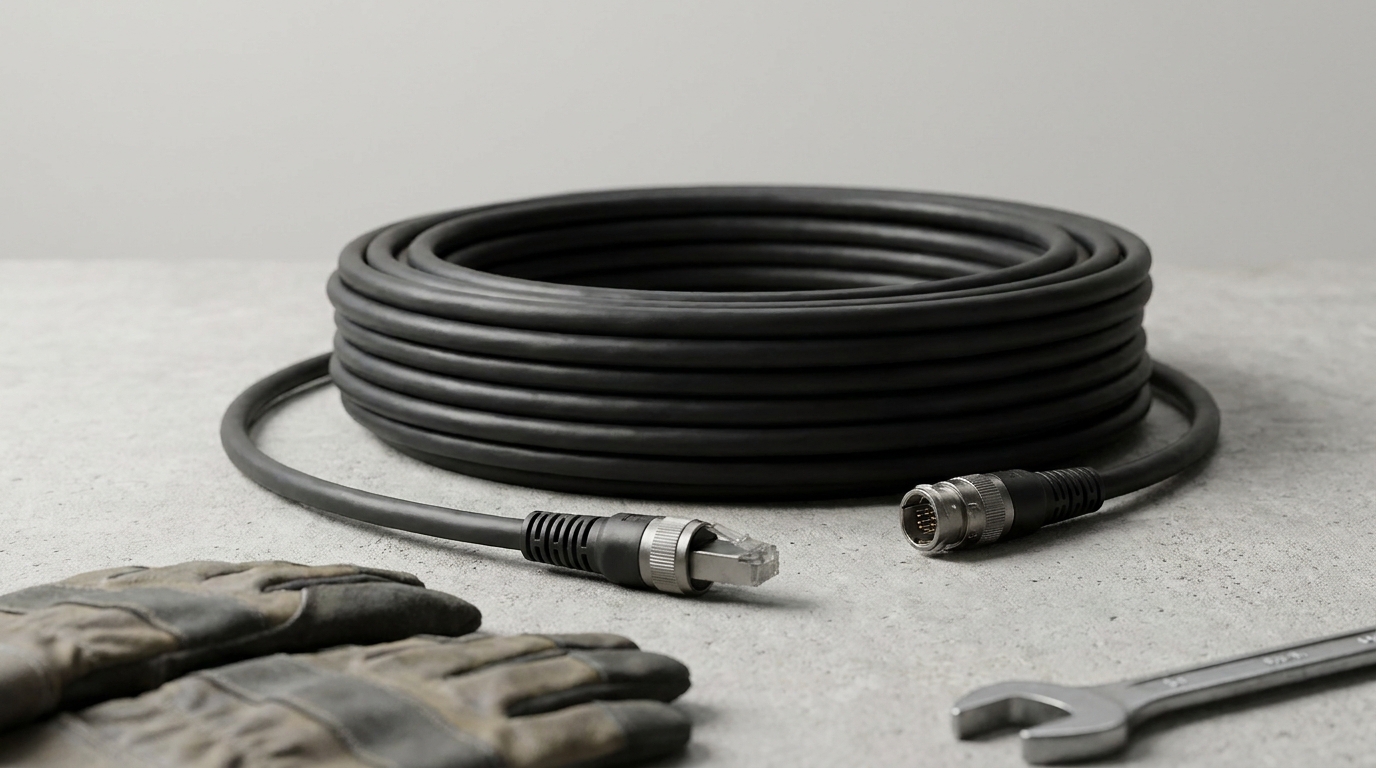
The main benefits of pur ethernet cable are oil resistance, abrasion resistance, flexibility, longer service life, and dependable network performance in harsh environments. It is especially valuable for industrial automation, robotics, production equipment, outdoor-protected runs, and applications where cable replacement is costly or downtime is unacceptable.
Performance Advantages in Harsh Environments
PUR Ethernet cable is selected when durability is a core requirement rather than an optional upgrade. Its jacket material helps protect the cable from the environmental and mechanical forces that often cause premature cable failure.
Key benefits include:
- Oil and chemical resistance: A pur ethernet cable oil resistant jacket helps protect against lubricants, coolants, and industrial fluids.
- Abrasion resistance: PUR handles scraping and friction better than many standard cable jackets.
- Flexibility: A flexible PUR cable is easier to route through machinery, panels, and moving systems.
- Cold-weather performance: PUR often remains more flexible in lower temperatures than PVC.
- Longer service life: Reduced jacket cracking and wear can lower replacement frequency.
- Improved uptime: Better physical durability supports more stable network operation.
- Industrial compatibility: It pairs well with factory Ethernet, PLCs, sensors, cameras, and industrial switches.
These benefits make PUR a practical choice when the installation site includes movement, vibration, fluid exposure, or repeated handling.
cwcables Pro Tip: I suggest using PUR cable anywhere the cost of replacing a failed cable is higher than the price difference between PUR and PVC. In factories, downtime often costs far more than the cable itself.
How to maintain a pur ethernet cable?
To maintain a pur ethernet cable, inspect the jacket regularly, avoid exceeding bend-radius limits, keep connectors clean, prevent crushing or over-tensioning, and replace damaged assemblies before signal problems occur. PUR is durable, but proper routing, strain relief, and periodic checks are essential for reliable industrial network performance.
Maintenance Practices for Long Cable Life
Even a rugged cable can fail if it is installed with sharp bends, pulled too tightly, crushed by equipment, or exposed to connector contamination. Preventive maintenance helps preserve both mechanical durability and network signal quality.
Recommended maintenance steps:
- Inspect the outer jacket for cuts, deep abrasion, swelling, or cracking.
- Check connector ends for bent pins, corrosion, looseness, or broken locking tabs.
- Verify bend radius so the cable is not kinked or sharply folded.
- Use strain relief near connectors, panels, and moving equipment.
- Keep cables away from pinch points such as doors, rails, rollers, and machine guards.
- Clean connectors carefully using appropriate electronics-safe methods.
- Test network performance if packet loss, intermittent disconnects, or speed drops occur.
- Replace damaged cable promptly rather than waiting for total failure.
For moving applications, such as robotics or drag chains, maintenance should include frequent inspection of bend zones because these areas experience the highest mechanical stress.
cwcables Pro Tip: I never judge a cable only by whether the network is still online. If the jacket is deeply damaged or the connector is loose, I replace it before the next production stop turns a small issue into an urgent failure.
What is the price of pur ethernet cable?
The price of pur ethernet cable depends on category rating, shielding, conductor type, length, connector style, jacket grade, and whether it is designed for fixed, flexible, or continuous-flex use. PUR cables usually cost more than standard PVC cables, but they often reduce replacement and downtime costs in demanding environments.
Pricing Variables and Typical Cost Drivers
PUR cable pricing is influenced by both electrical specifications and mechanical construction. A short unshielded patch cable will cost much less than a shielded industrial PUR Cat6 assembly with M12 connectors or continuous-flex construction.
Based on our internal data and market analysis, here is the breakdown:
| Cost Factor | Lower-Cost Option | Higher-Cost Option | Impact on Price |
|---|---|---|---|
| Category rating | Cat5e | Cat6a or higher | Higher bandwidth increases cost |
| Shielding | UTP | FTP, STP, S/FTP | More shielding adds material and labor |
| Flex rating | Fixed installation | Continuous-flex or drag-chain | Flex-rated designs cost more |
| Connector type | Standard RJ45 | Industrial RJ45 or M12 | Rugged connectors increase price |
| Cable length | Short patch cord | Long custom assembly | More material raises cost |
| Jacket requirements | Basic PUR | Oil-resistant, halogen-free, UV-rated PUR | Specialized compounds cost more |
For many buyers, the best value is not the lowest unit price but the cable that matches the environment accurately. Overbuying can waste budget, while underbuying can lead to premature failure.
cwcables Pro Tip: I recommend sharing the installation environment before asking for a quote. When we know the bend radius, oil exposure, shielding needs, and connector type, we can help specify a cable that avoids both underperformance and unnecessary cost.
Key Features & Comparison
The key features of pur ethernet cable include a polyurethane jacket, strong abrasion resistance, oil resistance, flexibility, optional shielding, and compatibility with industrial Ethernet systems. Compared with PVC and TPE alternatives, PUR usually provides a stronger balance of ruggedness, movement tolerance, and long-term reliability in harsh operating conditions.
PUR vs PVC vs TPE Ethernet Cable
Different jacket materials suit different environments. PUR is often selected for industrial networks because it combines toughness with flexibility, especially where cables face oil, motion, or rough handling.
Based on our internal data and market analysis, here is the breakdown:
| Feature | PUR Ethernet Cable | PVC Ethernet Cable | TPE Ethernet Cable |
|---|---|---|---|
| Abrasion resistance | Excellent | Moderate | Good |
| Oil resistance | Excellent, depending on compound | Limited to moderate | Good |
| Flexibility | Very good | Moderate | Very good |
| Continuous-motion suitability | Good to excellent when designed for flex | Poor to moderate | Good |
| Cost | Medium to high | Low | Medium to high |
| Industrial use | Excellent | Limited | Good |
| Outdoor exposure | Possible with proper rating | Possible with proper rating | Possible with proper rating |
| Chemical resistance | Good to excellent | Moderate | Good |
| Best use case | Automation, robotics, harsh environments | Office and light-duty installations | Flexible specialty applications |
For demanding factory networks, a flexible PUR cable is often the most practical option. In search terms, users may look for “industrial PUR Cat6” or even mistype it as “ndustrial pur cat6,” but the key requirement is the same: a cable that supports Ethernet performance while surviving industrial stress.
cwcables Pro Tip: I compare jacket material before I compare price. If the jacket is wrong for the environment, the cable may fail even if the category rating, conductor size, and connectors all look correct on paper.
Cost & Buying Factors
When buying pur ethernet cable, consider the installation environment, Ethernet category, shielding, connector type, flexibility requirement, oil exposure, temperature range, and compliance needs. The right choice balances upfront price with service life, maintenance effort, and the cost of downtime in industrial or mission-critical network applications.
Practical Buying Checklist
A good PUR cable purchase starts with defining the environment and network requirements. The more demanding the installation, the more important it is to specify the cable correctly before ordering.
Use this buying checklist:
- Ethernet category: Choose Cat5e, Cat6, Cat6a, or higher based on bandwidth and future needs.
- Shielding requirement: Use shielded cable near motors, VFDs, welders, or high-noise equipment.
- Jacket exposure: Confirm oil, coolant, abrasion, UV, chemical, or washdown exposure.
- Motion profile: Identify whether the cable is fixed, flexible, or continuous-flex.
- Connector style: Select RJ45, industrial RJ45, M12, or custom terminations as needed.
- Length and routing: Account for panel paths, service loops, and strain relief.
- Compliance needs: Check flame rating, halogen-free requirements, RoHS, or industry-specific standards.
- Supplier support: Work with a cable provider that can match specifications to real operating conditions.
Cost should be evaluated across the cable’s expected service life. A cheaper cable may be acceptable in a clean control cabinet, while a rugged PUR cable is usually a better investment on a moving machine or oil-exposed line.
cwcables Pro Tip: I always ask customers where the cable will live, not just what speed they need. Environment, motion, and connector strain usually determine whether a cable performs reliably for months or for years.
Conclusion
A pur ethernet cable is a dependable choice for networks exposed to oil, abrasion, motion, and industrial stress. By combining Ethernet data performance with a rugged polyurethane jacket, it helps protect uptime in automation, robotics, machine vision, and factory communication systems where standard office-grade cable is not durable enough.
Final Selection Guidance
PUR Ethernet cable is not required for every network, but it is highly valuable when mechanical durability matters. For industrial environments, the right cable can reduce failures, simplify maintenance, and support stable communication between critical devices.
Before selecting a cable, confirm:
- Required Ethernet speed and category rating.
- Fixed, flexible, or continuous-flex installation.
- Oil, chemical, abrasion, and temperature exposure.
- Shielding needs based on nearby electrical noise.
- Connector type and strain-relief requirements.
- Compliance, safety, and installation standards.
If you need help choosing a PUR Ethernet cable for a specific application, cwcables can support specification, sourcing, and custom assembly options based on your environment and performance requirements.
cwcables Pro Tip: I recommend treating cable selection as part of system reliability planning. If your network supports production equipment, choose the cable that protects uptime—not just the cable that meets the minimum data rating.