

In modern industry, Ethernet cables are becoming increasingly widely used, replacing many traditional signal cables with industrial cables. Ethernet cables are becoming increasingly common in drag chains, and the Ethernet cables used in industrial equipment drag chains are significantly different from ordinary civilian cables.
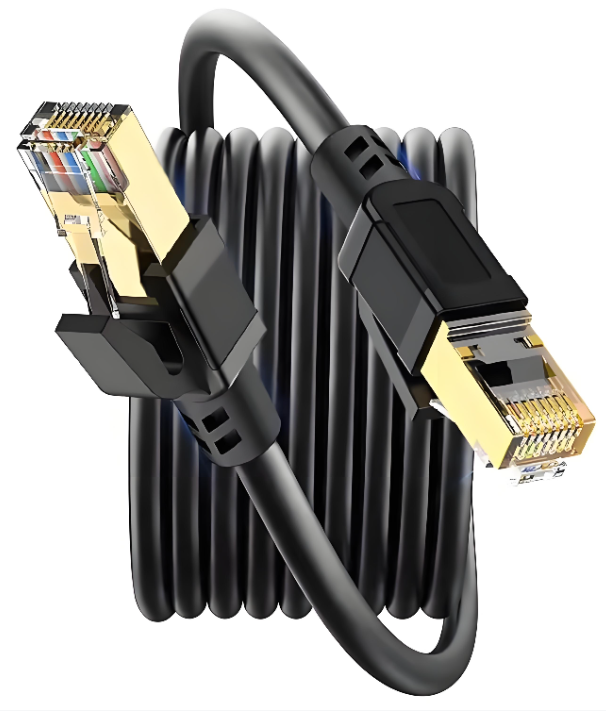
1.The purpose is vastly different
● Drag chain Ethernet cables are commonly used in devices that require repeated movement, such as robotic arms and automated production lines. In these scenarios, the Industrial Ethernet cable will continuously bend and stretch with the drag chain, causing friction with the chain groove or other components. If the outer layer of the Industrial Ethernet cable is not wear-resistant enough, it will be damaged in a short period of time, causing internal wires to be exposed, affecting signal transmission and even causing short circuits.
● Civil network cables are used for fixed wiring in homes, offices, and weak current boxes. Once laid up, it doesn’t move for several years.
2. The internal structure is completely different
conductor:
● Civilian network cable: single thick copper wire/a few twisted wires
Once folded, it becomes hard and easy to break.
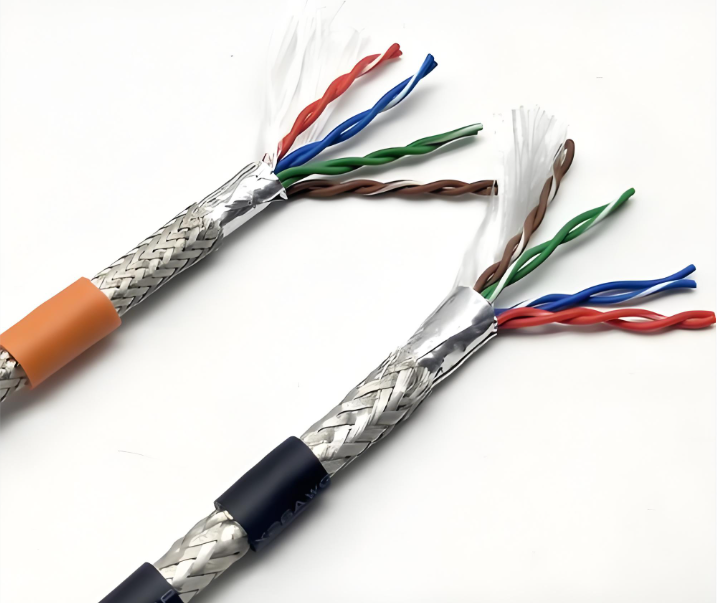
● Flexible ethernet cable: dozens of ultra-fine copper wires finely twisted
Like a strand of hair, soft and resistant to breakage without breaking.
block:
● Civilian Ethernet cables: mostly unshielded/simple aluminum foil
● Drag chain best ethernet cable : double-layer shielding (aluminum foil+tin plated copper mesh)
Strong anti-interference ability and no packet loss in industrial environments.
sheath:
● Civilian Ethernet Cable: Ordinary PVC, soft but not wear-resistant, oil resistant, or low-temperature resistant
● Flexible ethernet cable: PUR/TPE special material
Oil resistant, wear-resistant, bending resistant, and resistant to high and low temperatures.
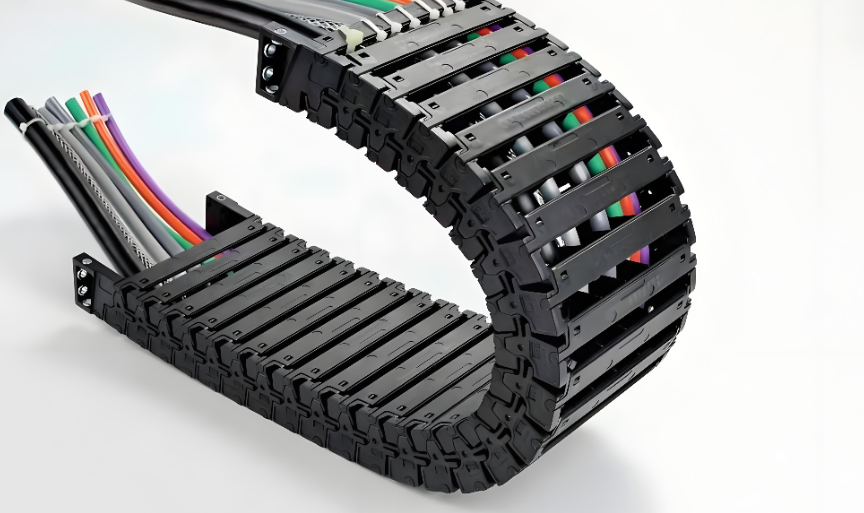
3.The difference in mission between civilian Ethernet cables and industrial flexible Ethernet cable
Civil Ethernet cables can only be used for fixed installations.
The drag chain Ethernet cable is used in situations where movement and bending are required, and the cable inside the drag chain must be a drag chain cable.
Civilian Ethernet cables used in drag chains will break in a few days.
The impact of a small bending radius of the network cable
When the bending radius of an outdoor ethernet cable is less than its recommended minimum value, it can cause physical damage to the internal structure, thereby affecting network performance:
Increased signal attenuation: Excessive bending can compress or stretch the copper wires inside, damaging the precise twisting structure of the twisted pair, resulting in increased signal reflection and crosstalk, leading to signal attenuation, manifested as slower network speed, download interruption, or increased delay.
Unstable connection: In extreme cases, bending may cause internal wire cores to break, resulting in a complete interruption of network connections.
Long term damage and aging: Repeatedly bending network cables at the same point can cause “metal fatigue” in metal conductors, accelerate insulation layer damage or copper wire oxidation, increase resistance, and cause signal quality to continue to decline over time.
So when we choose Ethernet cables, we must distinguish between regular Ethernet cables and flexible ethernet cable. If we choose high flexibility Ethernet cable, we also need to choose according to actual application requirements. PVC high flexibility Ethernet cables, PUR Ethernet cable, and flexible cat5e Ethernet cable or flexible cat6a ethernet cable should be selected according to transmission speed requirements.
