

Misconception 1:This is the easiest offense for users to makeThe habitual thinking misconception
Drag chain cable (high flexibility cable)=flexible cable
Wrong viewpoint: FLEX flexible/soft inertia thinking is soft, and placing it in the context of drag chain cables would appear very unprofessional.
Correct solution:
FLEX is not soft here, but flexible. Flexible cables are flexible and elastic cables, not flexible cables.
● More than 80% of cases of cable breakage in drag chains are caused by the breakage of copper conductors, which leads to the inability to continue using them. Copper conductor breakage is a physical phenomenon that occurs when metal fatigue reaches a critical point.
● Copper conductors can only be adjusted for softness and hardness by reducing their diameter, while rubber compounds can be adjusted for softness and hardness by changing their molecular structure. The softness and hardness of cables are mostly determined by the softness and hardness of the rubber material.
● Due to the special usage scenario of drag chain cable, the hardness of the adhesive and conductor is relatively close, which ensures that the entire cable is evenly stressed in order to extend its service life. This is the basic design concept of drag chain cables.
Misconception 2:This kind of misleading mainly comes from Pu Non professional flexible cable manufacturer Error guidance
The thinner the conductor of the drag chain cable (high flexibility cable), the better
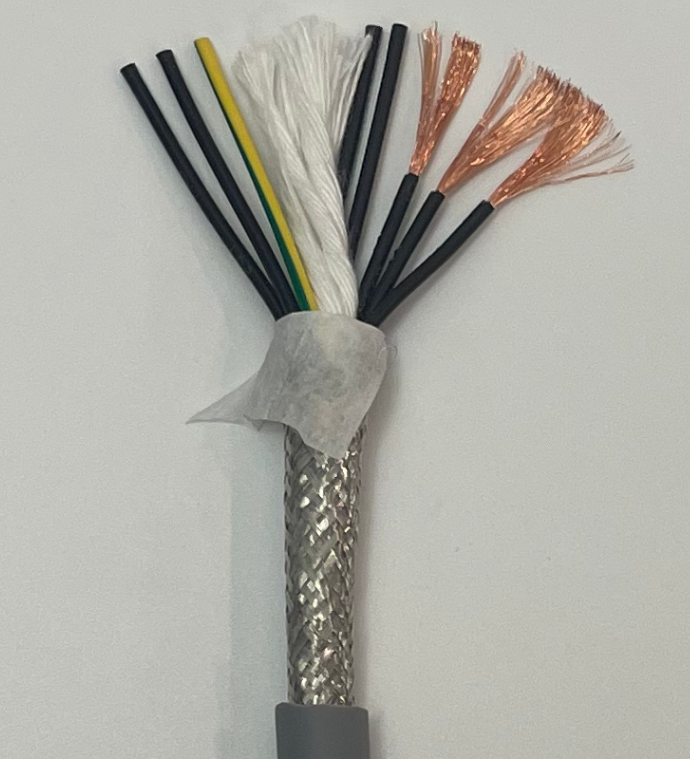
Wrong viewpoint: The thinner the conductor of the drag chain cable, the better. Some manufacturers claim that the copper wire they use is a thin copper wire with a diameter of 0.05mm, and even an ultra-fine copper wire with a diameter of 0.03mm (0.07mm), which is thinner than a human hair.
Correct solution:
The drag chain generates huge pulling and stretching forces during movement, so the tensile mechanical strength of copper conductors must be considered!
● The finer the copper conductor, the weaker its tensile mechanical strength ability, and it will be directly pulled apart during movement due to insufficient tensile mechanical strength.
● The diameter of the conductor should be selected according to the different cross-sections for matching, rather than blindly pursuing finer as better. For example, using 0.08mm diameter copper wire is suitable for a 0.2 square high flexibility signal line, but if we continue to use 0.08mm diameter copper wire for a 10 square high flexibility power cable, it will not be suitable.
● It is understandable that users may fall into the trap of habitual thinking due to their non professional nature, but the technical mistake made by professional flexible cable manufacturers highlights their lack of professionalism. This also illustrates that ‘there is a specialization in every profession’. Not all cable factories can do a good job in flexible cables, which requires technical and experience accumulation!
Misconception 3:This is irresponsible sales personnel The marketing method!
The drag chain cable only talks about the number of bending times it can withstand
Wrong viewpoint: Many salespeople simply emphasize that the bending resistance can reach 5 million times, 10 million times, 20 million times, or even higher! Pu Rou ≈ 2 million times, High Rou ≈ 5 million times, Special Rou ≈ 10 million times, Ultra High Rou ≈ 20 million times or more, which in turn misleads users into believing that the softer the cable, the higher its bending resistance.
Correct solution:
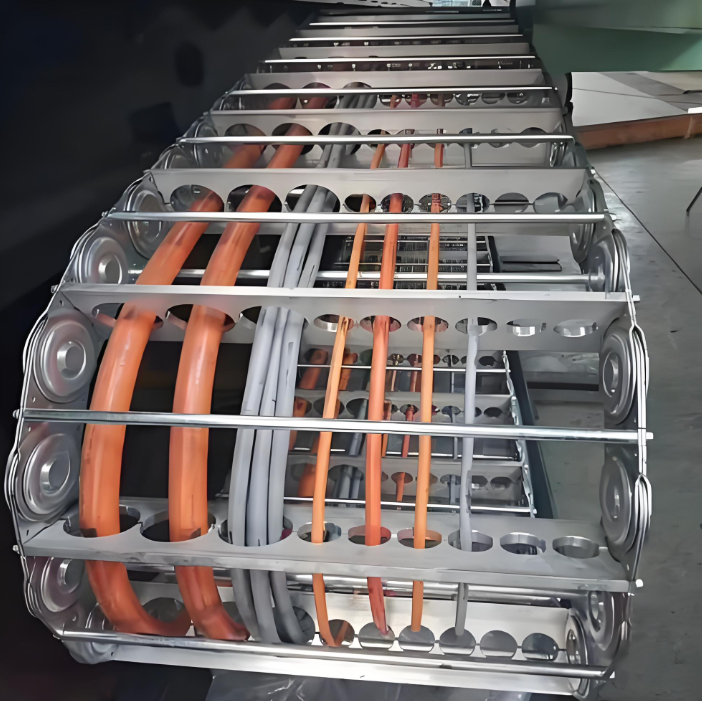
Professionals know that the number of bending cycles cannot be separated from the three prerequisite elements (bending radius/motion speed/drag chain stroke length), and the service life of drag chain cables is closely related to these three elements. Ignoring the three prerequisite elements and only mentioning the number of bending cycles is a very irresponsible approach.
For example, a drag chain cable with an outer diameter of D=8.0mm, a standard drag chain installation bending radius of ≥ 7.5D, a speed of ≤ 3 meters per second, and a bending resistance of up to 15 million times, if the movement speed and drag chain stroke remain unchanged and the bending radius is increased to ≥ 10D, the cable’s bending resistance life will definitely be greater than 15 million times. On the contrary, if the motion speed and drag chain travel remain unchanged and the bending radius is reduced to 5D, the service life of the cable will be much less than 15 million times.
The bending resistance and service life of drag chain cables should also consider the specific application scenarios of the cables, such as oil stains, acidity and alkalinity, wear resistance, humid or water environments, indoor or outdoor (UV/VU), environmental temperature, etc.
Misconception 4:This is also commonly used by many customers Verify the quality of the drag chain cable The wrong method.
The thicker and heavier the drag chain cable, the better!
Wrong viewpoint: What is the quality of the drag chain cable? Many customers simply judge by the thickness, size, or weight of the cable. A cable with a large outer diameter and heavy weight is considered a good drag chain cable, while a cable with a small outer diameter and light weight is considered a low-quality drag chain cable. Customers also believe that this is the most direct, simple, and effective way to judge the quality of drag chain cables!
Correct solution:
The special nature of drag chain cables requires cables to have a small outer diameter while ensuring electrical performance (the smaller the outer diameter of the cable, the lower the requirement for installation bending radius)
● The small outer diameter of the cable and achieving the same electrical performance indicators require higher production technology and stricter material requirements from the manufacturer.
● The exterior design involves selecting modified materials with better performance for the sheath/insulation, without cutting corners on the conductor. The two are fundamentally different.
Misconception 5:Wiring harness processing and assembly workers The least professional for drag chain cables Suggestions.
A drag chain cable that is difficult to process and assemble is not a good cable
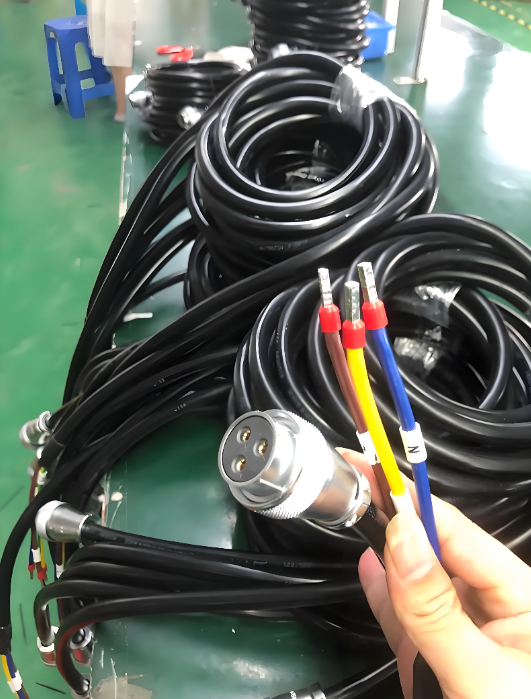
Wrong viewpoint: After customers purchase drag chain cables, they need to undergo different processes such as sheath and insulation peeling, conductor tinning, terminal crimping, and assembly of various connectors. Wiring harness processing and assembly workers will demand drag chain cables from the perspective of processing efficiency and difficulty. For example, we hope to improve efficiency by making it easy to peel and process like ordinary cables, and require no filling of tensile materials.
Correct solution:
● Ordinary PVC is prone to peeling, but it is highly fragile and cannot withstand the mechanical strength and friction of long-term reciprocating motion. To ensure the service life of the drag chain cable, modified PVC or PUR materials must be used. The mechanical strength of modified materials is 1-2 times or even more higher than that of ordinary PVC.
● Ordinary cables are produced using extrusion process, while the special nature of drag chain cables requires extrusion or semi extrusion process. The cables produced by this process do increase the difficulty of peeling. After adding tensile filling materials, an additional process of cutting, cleaning, and tensile filling is required for processing.
● Simply improving processing efficiency without considering the special characteristics and usage scenarios of drag chain cables can leave significant safety hazards for their use.
