

There are many correct or incorrect processes in the manufacturing process of the shielding layer. One of the important parameters is the weaving angle of the shielding layer.
In cables used for drag chains, the load borne by the shielding layer of the outer diameter of the flexible wire is taken into account. Unreasonable weaving angles of the shielding layer will further increase the tension load, leading to damage to the shielding layer. This will weaken the shielding effect, and when the sharp cable txible wireail pierces through the wool fabric or foil material and comes into contact with the core wire, it may even cause a short circuit.
The weaving angle of the shielding layer determined through long-term experiments can effectively counteract tension, making it very suitable for drag chains.
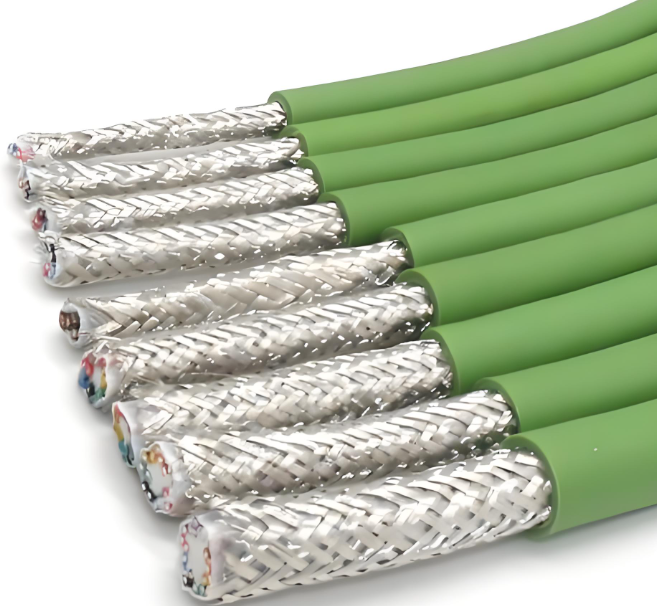
Why is the shielding layer of the drag chain cable broken? (Core 4 categories)
1. Repeated bending and twisting → metal fatigue fracture
● When the drag chain moves back and forth, the shielding woven mesh repeatedly bends and stretches along with it.
● The ultrafine copper wire gradually fatigues and breaks, and finally the entire shielding section fails.
● Typical manifestations:
• The signal is sometimes good and sometimes bad
• Occasional interference and communication interruption reported by the device
• Peel off the outer layer, the shielding wire shatters and turns black in segments when pinched
2. Excessive stress during flexible cord installation → Root concentrated fracture
● The flexible cord is hard bent at the entrance and exit of the drag chain, the fixed end, and the root of the robot.
● During exercise, only that small section is repeatedly subjected to force, and the shielding layer is the first to break.
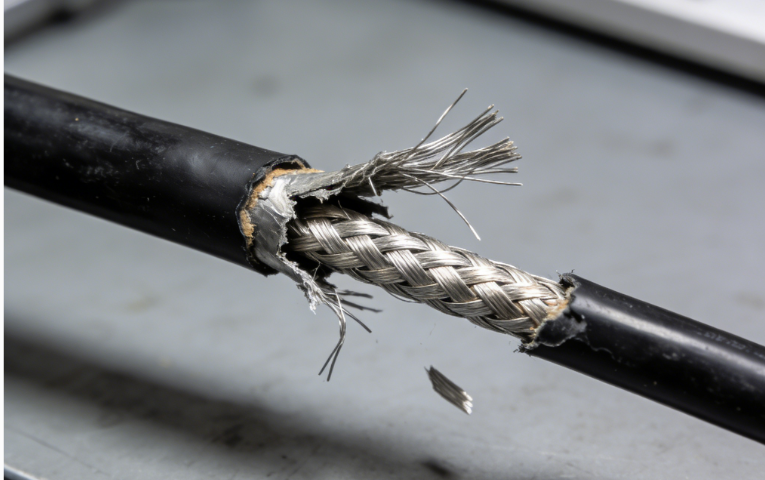
3. Friction, compression, and scratching
● Multiple flexible cables are squeezed and rubbed against each other in the drag chain
● The shielding net is worn out and thin, losing its shielding effect.
● Burrs on the cable tray and sharp metal corners directly scratch the shield.
4. Environmental corrosion
● Long term immersion in oil stains, coolant, and cutting fluid
● Copper shielding oxidizes, becomes brittle, and breaks easily when bent.
The direct consequence of damage to the shielding layer
● Servo driver reports overload and tracking error
● Encoder signal loss, position drift
● Communication instability: Profinet/EtherCAT flashing
● Intermittent faults in equipment are the most difficult to detect, often thought to be caused by faulty drivers or modules
The most effective preventive measures on site
1. Choose the right flexible wire: reduce shielding damage from the source
● Drag chain movement → Must use high flexibility cable specifically designed for drag chains
● Priority given to shielding structure:
• Double layer tinned copper braided shield
• Shielding coverage rate of over 85%
● The conductor is 6 types of ultra-fine copper wire, with good overall flexibility and shielding that is not easily broken
2. Control the bending radius (most critical)
● Dynamic bending radius of drag chain cable ≥ 7-10 × cable outer diameter
● Below this value, the lifespan of the shielding layer will be directly halved
3. Correct fixation: Prohibit “dead bends”
● The fixed end must be equipped with a stress relief ring
● The cable in and out of the drag chain cannot be bent 90 degrees hard
● Robot pipeline package needs to be supported along with movement
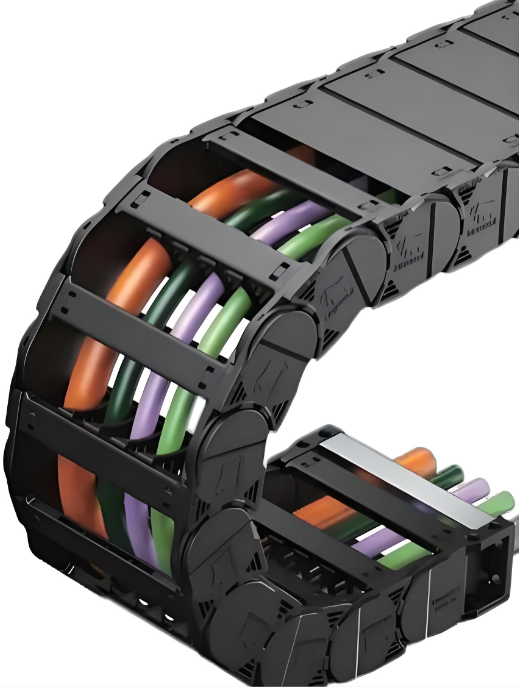
4. Internal layout specifications for drag chains
● Leave a 10% gap between cables and do not tie them too tightly
● Power lines and signal lines are arranged separately
● Do not use zip ties to forcefully fasten, to avoid breaking the shield、
5. Environmental protection
● Select oil resistant PUR/TPU sheathed cables
● Add protective sleeves to areas with cutting fluid and oil stains
6. Regular inspections (simple but highly effective)
● Check if the Flex cable at the entrance and exit of the drag chain is bulging, discolored, or flattened
● Touch the shielding position with your hand to see if it becomes hard or brittle
● Conditional use of a multimeter to measure shielding continuity
Quickly determine if the shielding is damaged (on-site tips)
1.Interference occurs when moving to a certain position, with a high probability of blocking the broken strand
2.Gently bend the encoder cable, communication is intermittent → shielding has broken
3.The outer shell is intact but the internal shielding turns black and brittle → metal fatigue
