

Festoon cable is a flexible power and control cable designed to move with equipment by hanging in loops from trolleys, tracks, or carriers. It is widely used on cranes, hoists, conveyors, ports, and automated handling systems. In hazardous areas, ATEX certified festoon cable safety standards help reduce ignition risks from sparks, heat, abrasion, static discharge, and mechanical damage.
What is festoon cable,atex certified festoon cable safety standards?
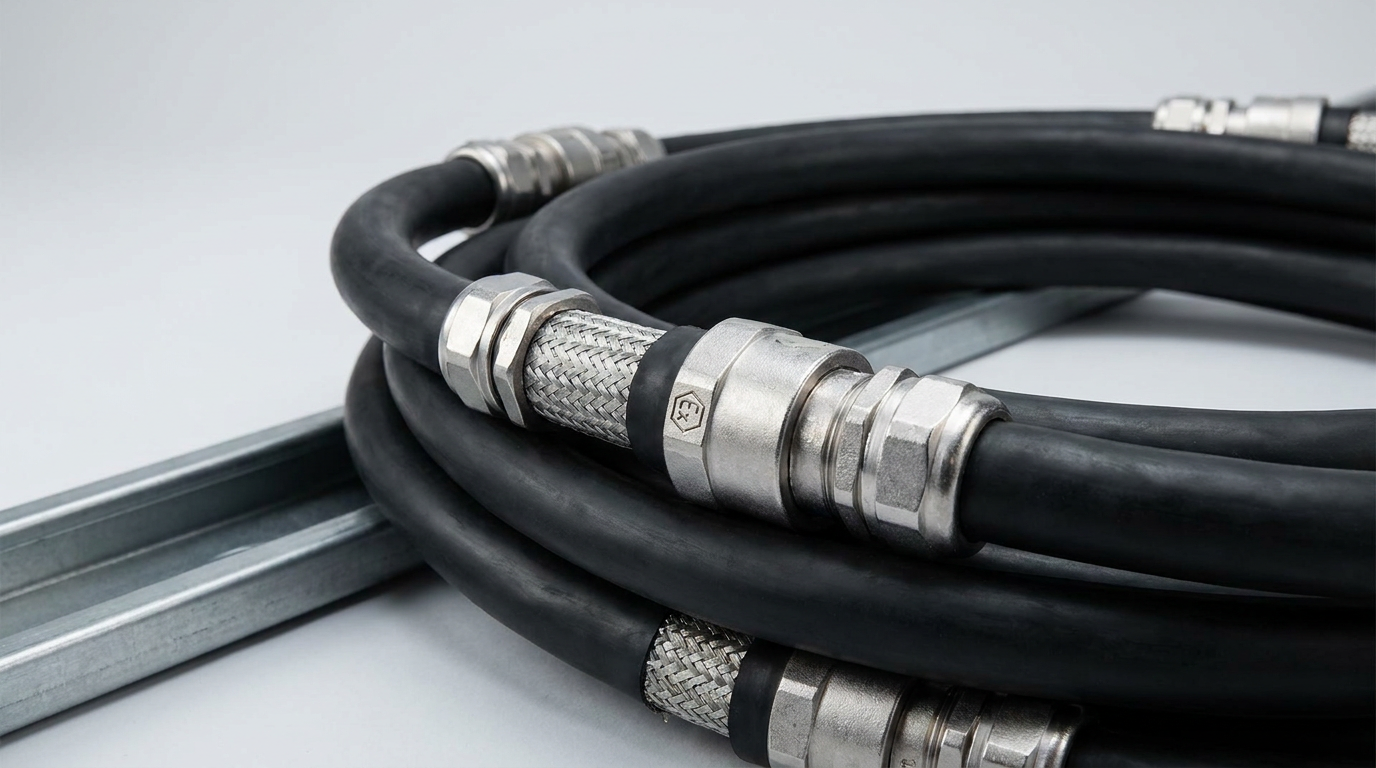
Festoon cable is a highly flexible cable system used to deliver power, control signals, or data to moving machinery. When specified for hazardous environments, ATEX certified festoon cable safety standards ensure the cable, accessories, installation, and documentation are suitable for explosive gas or dust atmospheres.
Definition and Safety Scope
A festoon cable system normally includes the cable, trolleys, clamps, track, junction boxes, strain relief devices, and end stops. The cable hangs in controlled loops and travels as the machine moves, preventing uncontrolled dragging, twisting, or crushing.
For hazardous locations, “ATEX certified” should be understood carefully. ATEX compliance is not only about the cable jacket; it also involves the full installation environment, equipment category, Ex components, grounding, mechanical protection, and documentation.
Based on our internal data and market analysis, here is the breakdown:
| Item | Standard Festoon Cable | ATEX-Oriented Festoon Cable System |
|---|---|---|
| Main purpose | Power/control for moving equipment | Power/control in explosive atmospheres |
| Common use | Cranes, hoists, conveyors, workshops | Chemical plants, paint shops, refineries, grain handling |
| Key risk | Wear, bending fatigue, tension | Ignition risk, static, heat, impact, chemical exposure |
| Typical material focus | Flexibility and abrasion resistance | Anti-static behavior, oil/chemical resistance, low ignition risk |
| Documentation | Datasheet and installation guide | Ex classification, certificates, zone suitability, inspection records |
cwcables Pro Tip: I recommend confirming the hazardous zone classification before selecting any festoon cable. A cable that works well on a normal crane may not be acceptable in a Zone 1, Zone 2, Zone 21, or Zone 22 environment without the correct system design and documentation.
How Does festoon cable,atex certified festoon cable safety standards Work?
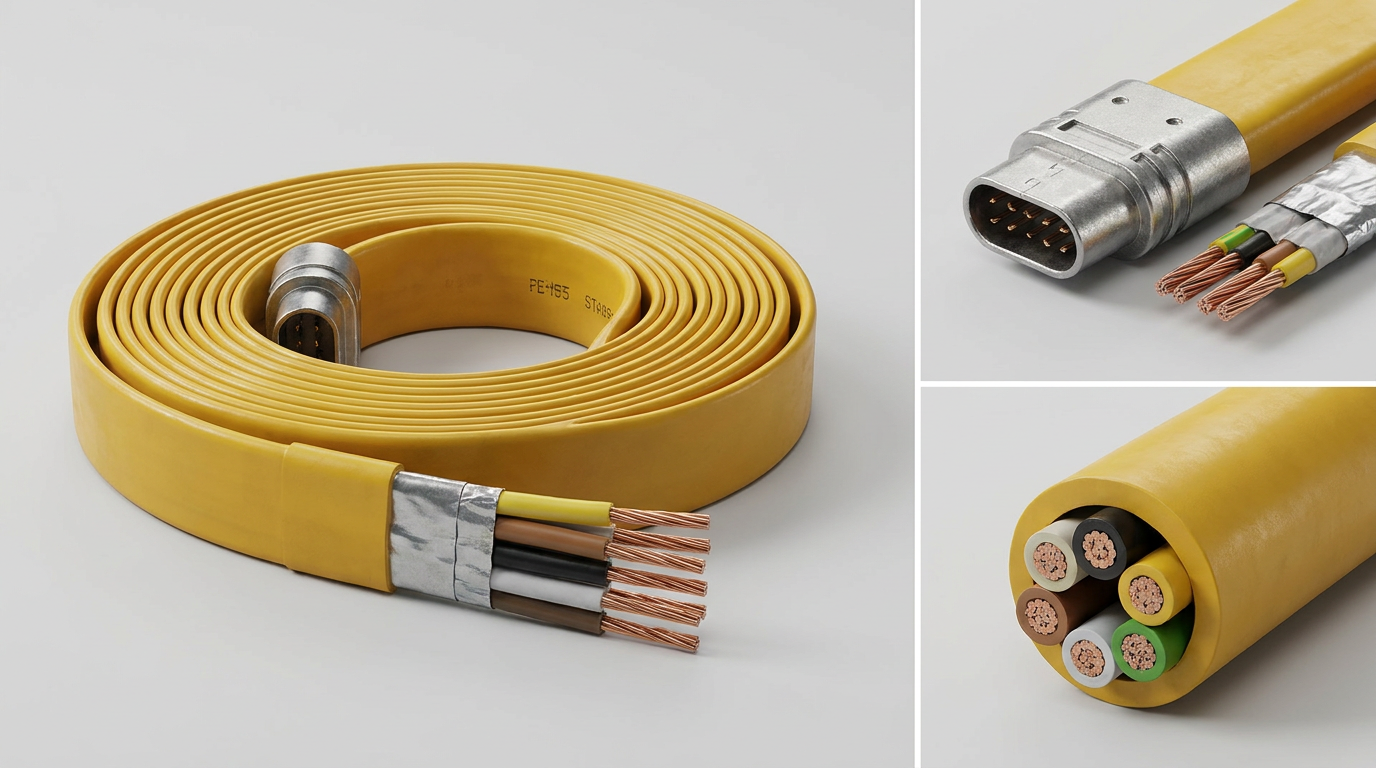
A festoon cable works by suspending flexible cables in loops between moving trolleys. As the machine travels, the trolleys roll along a track, allowing the cable loops to expand and contract smoothly. ATEX safety standards add controls for ignition prevention, grounding, material suitability, and hazardous-area installation.
Working Principle and Movement Control
The system is designed to manage repeated motion without over-stressing the cable. Instead of letting the cable drag on the floor or twist around machinery, the festoon arrangement keeps the cable supported, guided, and protected throughout travel.
In ATEX-related applications, the working principle must also control electrical and mechanical ignition risks.
- Power or signal starts from a fixed point such as a junction box, panel, or cable entry.
- The cable is clamped to moving trolleys that roll along a C-track, I-beam, or custom rail.
- Loops open and close during travel as the machine moves forward or backward.
- Strain relief prevents conductor stress at connection points and clamps.
- Grounding and bonding reduce static risk in hazardous areas.
- ATEX-compatible components help control ignition sources such as hot surfaces, sparks, poor connections, or mechanical impact.
cwcables Pro Tip: I always check the minimum bending radius under real operating conditions, not only from the datasheet. If the loop depth is too small, even a premium festoon cable can fail early from conductor fatigue.
What are the benefits of festoon cable,atex certified festoon cable safety standards?
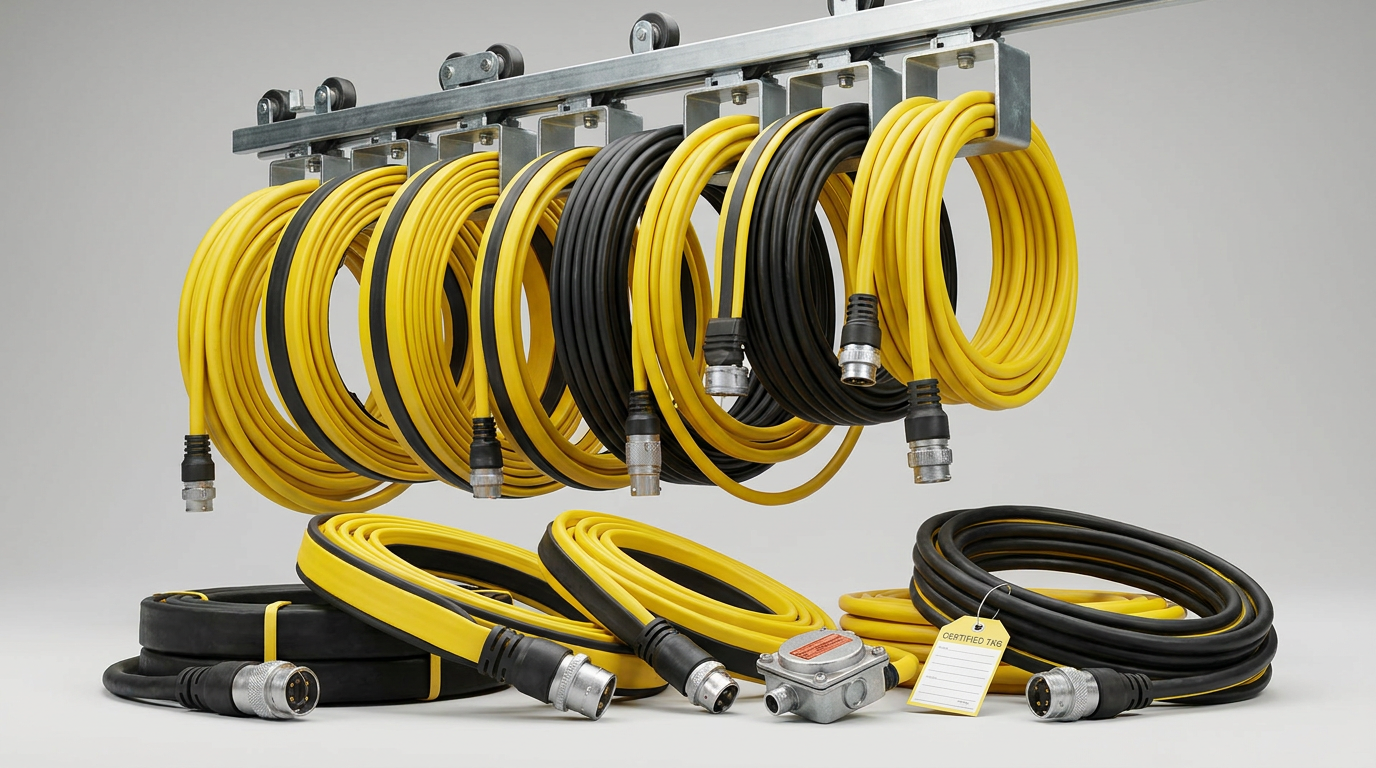
The main benefits are reliable cable movement, reduced mechanical damage, safer power delivery, and longer service life for moving equipment. In hazardous areas, ATEX certified festoon cable safety standards add another layer of protection by helping control ignition risks and ensuring the installation matches the classified environment.
Operational and Safety Advantages
Festoon cable systems are preferred where equipment travels repeatedly over a defined path. They provide a practical balance of flexibility, load capacity, serviceability, and cost compared with unmanaged trailing cables.
Based on our internal data and market analysis, here is the breakdown:
| Benefit | Practical Value | Importance in ATEX Areas |
|---|---|---|
| Controlled cable movement | Prevents tangling, dragging, and snagging | Reduces mechanical damage that could expose conductors |
| Long flex life | Handles repeated travel cycles | Lowers failure risk in critical hazardous processes |
| Easy inspection | Cable loops and trolleys are visible | Supports required safety inspections |
| Modular design | Trolleys, clamps, and cables can be replaced | Helps maintain compliance without redesigning the whole system |
| Better strain management | Protects terminals and conductors | Reduces arcing and overheating risks |
| Suitable for harsh environments | Can use oil, UV, flame, or chemical-resistant jackets | Supports operation in refineries, plants, and dusty zones |
cwcables Pro Tip: I suggest treating the festoon system as a complete safety assembly. The best cable cannot compensate for weak clamps, poor grounding, overloaded trolleys, or incorrect hazardous-area accessories.
How to maintain a festoon cable,atex certified festoon cable safety standards?
Maintenance involves regular visual inspection, tension checks, trolley movement testing, cleaning, grounding verification, and replacement of worn parts. For ATEX environments, maintenance must also confirm that Ex-rated components, cable glands, bonding points, and inspection records remain compliant with the site’s hazardous-area classification.
Inspection and Preventive Maintenance Checklist
A festoon cable system should be maintained before visible failure occurs. Small jacket cuts, flat spots, loose clamps, or misaligned trolleys can quickly become electrical and safety hazards, especially in explosive atmospheres.
Use the following maintenance routine:
- Inspect the cable jacket for cuts, swelling, cracking, abrasion, chemical attack, or exposed shielding.
- Check cable loops to confirm they are even, unrestricted, and not rubbing against steelwork.
- Test trolley movement to ensure smooth rolling without jamming, tilting, or excessive vibration.
- Verify clamps and strain relief so the cable is supported without being crushed.
- Confirm grounding and bonding continuity where required for static control and fault protection.
- Examine glands, junction boxes, and terminations for looseness, corrosion, moisture, or overheating marks.
- Clean dust or chemical deposits that may affect movement, heat dissipation, or hazardous-area safety.
- Document inspections according to site safety rules, ATEX procedures, and maintenance intervals.
cwcables Pro Tip: I prefer scheduled replacement for high-cycle festoon cables in critical ATEX zones. Waiting until failure may save cable cost temporarily, but it increases downtime, safety risk, and compliance exposure.
What is the price of festoon cable,atex certified festoon cable safety standards?
The price depends on cable type, conductor size, number of cores, jacket material, travel length, trolley system, hazardous-area requirements, and certification documentation. ATEX-oriented festoon systems usually cost more than standard systems because they require safer materials, compatible accessories, stricter engineering review, and traceable compliance records.
Pricing Factors and Typical Cost Drivers
There is no single universal price because a festoon cable is usually selected according to application data. A small indoor hoist may need a simple flat cable, while a petrochemical crane may require a complete engineered system with Ex-compatible accessories and detailed documentation.
Based on our internal data and market analysis, here is the breakdown:
| Cost Factor | Effect on Price | Notes |
|---|---|---|
| Cable length | High | Longer travel requires more cable plus loop allowance |
| Conductor cross-section | High | Larger power loads require more copper |
| Number of cores | Medium to high | More control, signal, or data cores increase complexity |
| Jacket material | Medium | PUR, rubber, flame-retardant, oil-resistant, or anti-static options vary |
| Trolley and track type | Medium | Heavy-duty carriers cost more than light-duty systems |
| ATEX zone requirements | High | Zone suitability affects components, documentation, and installation method |
| Accessories | Medium | Glands, junction boxes, clamps, end stops, and strain relief add cost |
| Testing and documentation | Medium | Certificates, inspection files, and traceability may be required |
cwcables Pro Tip: I recommend requesting a quotation based on travel distance, speed, load current, bend radius, environment, and ATEX zone. Without those details, any price estimate is only a rough placeholder.
Key Features & Comparison
Key festoon cable features include high flexibility, strong jacket protection, reliable strain relief, controlled loop movement, and compatibility with moving industrial equipment. For hazardous areas, ATEX certified festoon cable safety standards require additional attention to ignition prevention, static control, Ex-rated accessories, documentation, and correct installation practices.
Feature Comparison for Selection
Based on our internal data and market analysis, here is the breakdown:
| Feature | Basic Festoon Cable | Heavy-Duty Festoon Cable | ATEX-Oriented Festoon Cable System |
|---|---|---|---|
| Flexibility | Good | Very good | Application-specific |
| Mechanical resistance | Moderate | High | High, with added safety review |
| Chemical resistance | Optional | Often improved | Selected according to hazardous medium |
| Static control | Not always required | Optional | Often critical |
| Flame resistance | Optional | Common | Usually required or strongly recommended |
| Accessories | Standard clamps and trolleys | Reinforced trolleys and hardware | Ex-compatible glands, boxes, bonding, and documentation |
| Best use | Light cranes, workshops | Ports, steel plants, large cranes | Refineries, chemical plants, paint areas, dust environments |
| Compliance focus | General electrical safety | Mechanical durability | ATEX, IEC/EN 60079 principles, site classification |
cwcables Pro Tip: I advise comparing systems by lifecycle cost, not cable price alone. A cheaper cable with poor flex life or incomplete hazardous-area documentation can become the most expensive option after downtime or inspection failure.
Cost & Buying Factors
When buying festoon cable, the most important factors are application movement, electrical load, installation environment, bending radius, mechanical stress, and compliance requirements. For ATEX certified festoon cable safety standards, buyers should also verify hazardous zone suitability, Ex accessories, grounding design, documentation, and supplier engineering support.
Buying Guide for Industrial Applications
A good purchase specification should describe both electrical and mechanical requirements. This prevents under-sizing, premature wear, and compliance problems after installation.
Use this buying checklist:
- Define the equipment type: crane, hoist, conveyor, stacker, reclaimer, or automated transfer system.
- Confirm travel distance and speed: these determine loop design, trolley count, and cable length.
- Specify electrical requirements: voltage, current, conductor size, core count, shielding, and signal type.
- Check environmental exposure: oil, water, UV, chemicals, dust, temperature, and outdoor conditions.
- Confirm movement frequency: occasional operation needs different cable performance than continuous duty.
- Identify hazardous-area classification: gas or dust zone, temperature class, equipment group, and protection method.
- Request documentation: datasheets, certificates, declarations, installation instructions, and inspection guidance.
- Choose an experienced supplier: cwcables can help align cable construction with operating conditions and safety requirements.
cwcables Pro Tip: I always ask for the site’s hazardous-area classification drawing before recommending an ATEX-related festoon solution. It is the fastest way to avoid choosing the wrong cable or accessories.
Conclusion
Festoon cable is a practical and reliable solution for supplying power, control, and data to moving machinery. In hazardous environments, ATEX certified festoon cable safety standards help ensure the system is designed, installed, and maintained to reduce ignition risks while supporting safe, continuous industrial operation.
Final Recommendation
For standard applications, focus on flexibility, bend radius, travel length, and jacket durability. For hazardous areas, go further and verify the complete system against the site classification, not just the cable label.
Key points to remember:
- Festoon cable is designed for repeated motion in controlled loops.
- Correct sizing prevents conductor fatigue, overheating, and downtime.
- ATEX-related applications require attention to zones, ignition risks, grounding, and documentation.
- Maintenance is essential for both performance and safety.
- Supplier expertise matters because the cable, carriers, accessories, and installation must work together.
For engineered festoon cable solutions, cwcables can support product selection, customization, and application review based on your operating environment.
cwcables Pro Tip: I recommend sharing your travel length, load data, operating speed, environment, and ATEX zone when contacting us. With those details, we can recommend a safer and more accurate festoon cable solution from the start.