

In compact automation systems, cable movement is often limited by tight routing space, high cycle counts, and demanding bend requirements. A small bend radius drag chain cable is engineered to survive continuous flexing inside a compact cable carrier without conductor fatigue, jacket cracking, or signal instability. cwcables provides high flex small radius cable solutions for robotics, CNC equipment, packaging machines, and precision motion systems.
What is small bend radius drag chain cable?
A small bend radius drag chain cable is a flexible motion cable designed to operate reliably inside tight cable carriers where standard cables would fail. It uses fine-stranded conductors, optimized insulation, and abrasion-resistant jackets to withstand repeated bending, torsion control, and compact routing in high-cycle automated equipment.
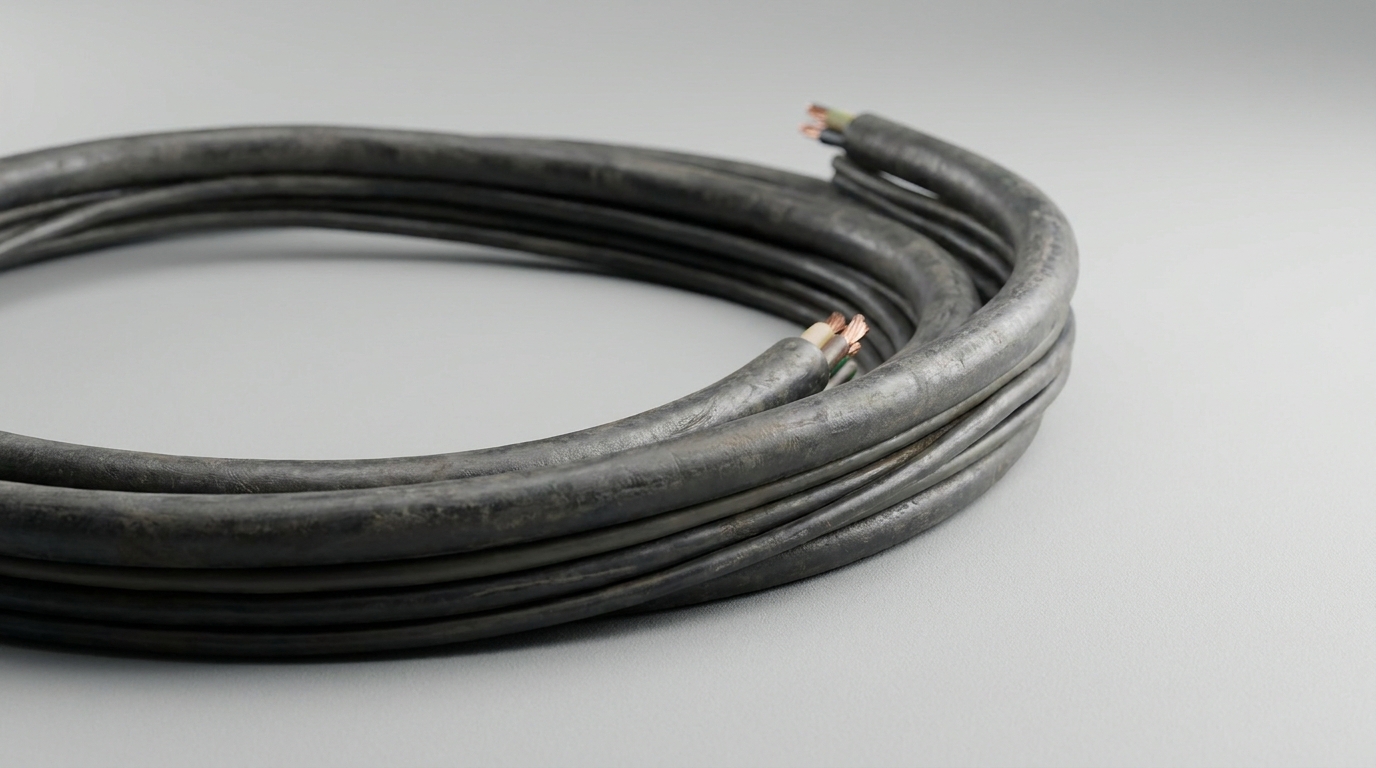
Compact Motion Cable Design
A small bend radius drag chain cable is built for continuous dynamic movement, not static installation. The cable must bend repeatedly around a tight curve while maintaining electrical performance, mechanical integrity, and jacket durability.
Unlike ordinary control or power cables, these cables are designed with conductor geometry, insulation materials, shielding, and jacket compounds that reduce internal stress during motion.
Based on our internal data and market analysis, here is the breakdown:
| Component | Purpose in Small Bend Radius Applications | Why It Matters |
|---|---|---|
| Fine-stranded copper conductor | Increases flexibility | Reduces conductor breakage during repeated flexing |
| Low-friction insulation | Allows internal cores to move smoothly | Minimizes stress concentration |
| Optimized core lay | Balances bending forces | Improves cable life in drag chains |
| Flexible shield design | Maintains EMC protection | Prevents signal interference in motion systems |
| Abrasion-resistant jacket | Protects against chain friction | Extends service life inside compact cable carriers |
cwcables Pro Tip: I always recommend confirming both the cable’s minimum bend radius and the cable carrier’s actual bend radius before installation. If the carrier radius is smaller than the cable rating, even a premium high flex cable can fail prematurely.
How Does small bend radius drag chain cable Work?
A small bend radius drag chain cable works by distributing mechanical stress evenly as it bends inside a moving cable carrier. Its fine copper strands, flexible insulation, balanced core structure, and durable outer jacket allow it to flex repeatedly without kinking, twisting, cracking, or losing electrical continuity.
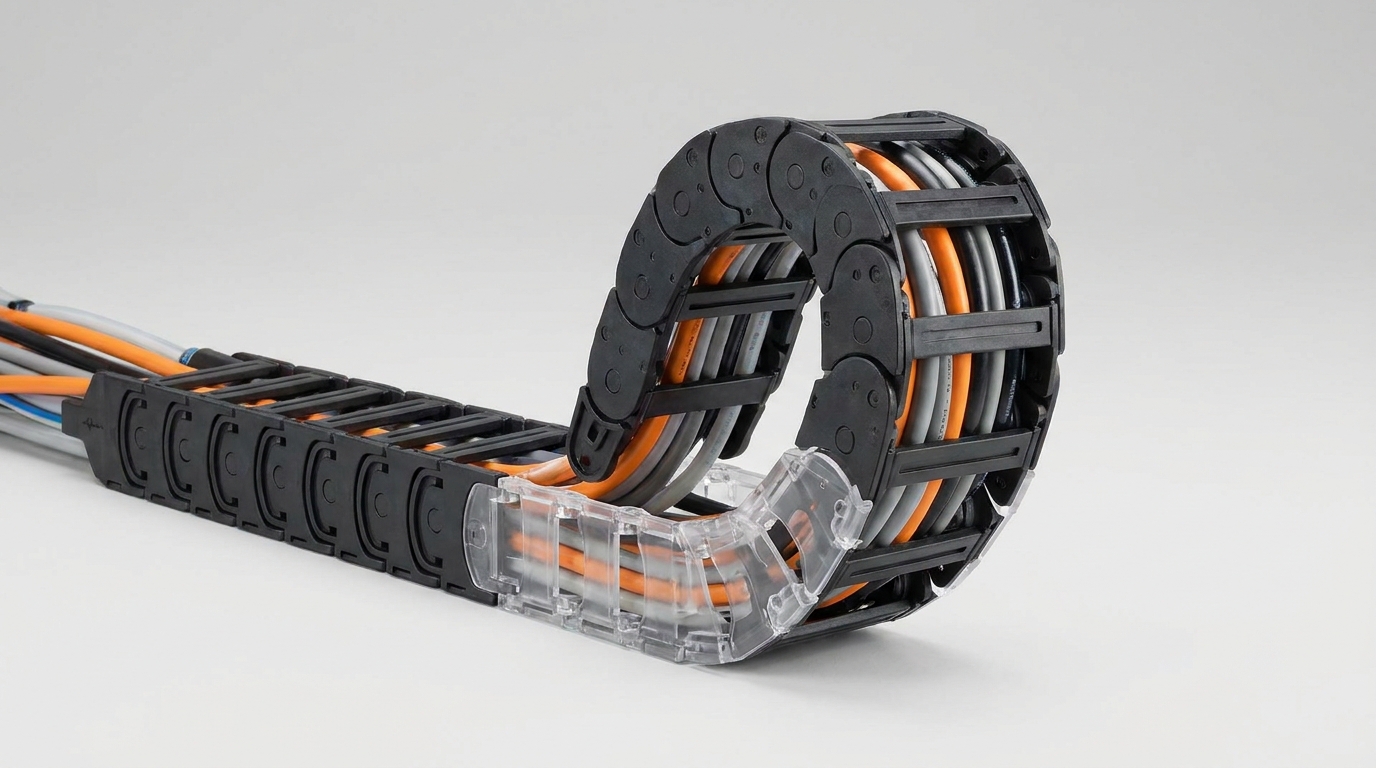
Flexing Mechanism Inside a Cable Carrier
When a cable moves in a drag chain, it does not simply “bend.” It experiences repeated compression on the inner curve and tension on the outer curve. A high-quality small bend radius drag chain cable controls these forces through material selection and construction geometry.
The working process usually follows this sequence:
- The cable is installed in the compact cable carrier with sufficient clearance.
- As the machine axis moves, the carrier guides the cable through a fixed bending path.
- The cable cores shift microscopically inside the jacket to relieve bending stress.
- Fine-stranded conductors absorb repeated movement without breaking.
- The jacket resists abrasion against the carrier walls and separators.
- Shielding, if present, maintains signal integrity during continuous motion.
For high flex small radius applications, cable movement must remain smooth and controlled. Overfilling the chain, forcing the cable into position, or mixing incompatible cables can create friction and shorten service life.
cwcables Pro Tip: I prefer to let the cable sit naturally in the chain instead of pulling it tight. A slight relaxed routing path helps the cable move freely and reduces axial stress during acceleration and deceleration.
What are the benefits of small bend radius drag chain cable?
The main benefits include longer service life, reduced downtime, compact installation, stable power or signal transmission, and better resistance to mechanical fatigue. These cables allow machine builders to design smaller, faster, and more efficient motion systems without compromising cable reliability inside tight drag chain spaces.
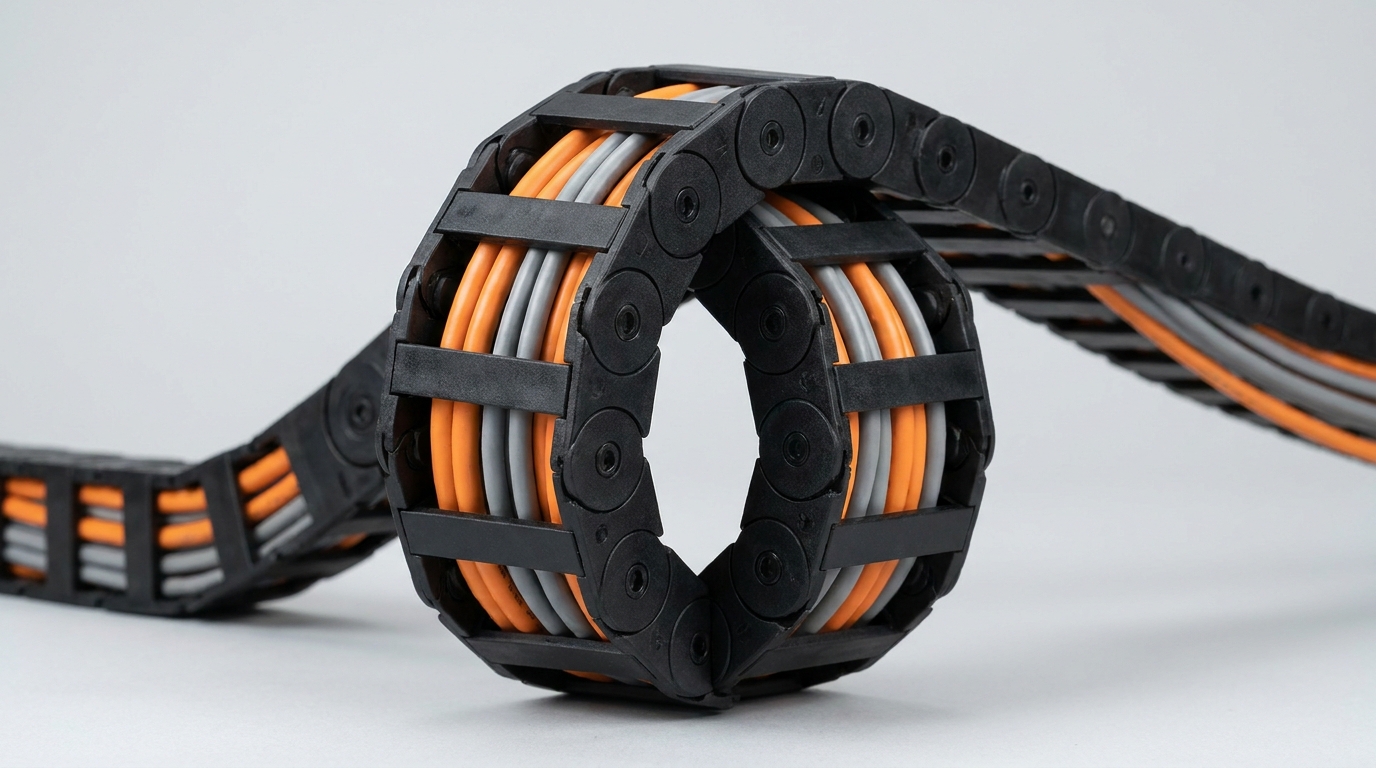
Practical Advantages for Automation Systems
Small bend radius drag chain cable is especially valuable where machines have limited installation space but still require continuous motion. It enables tighter mechanical layouts while protecting cable performance over millions of cycles.
Key benefits include:
- Space-saving design: Supports installation in compact cable carrier systems.
- Improved flex life: Reduces conductor fatigue in repetitive motion.
- Lower maintenance costs: Minimizes unexpected cable replacement.
- Stable electrical performance: Helps maintain consistent power, control, data, or signal transmission.
- Better abrasion resistance: Protects the cable jacket from chain contact.
- Cleaner machine layout: Reduces cable clutter in confined equipment spaces.
- Higher productivity: Limits downtime caused by cable failure.
These benefits are especially important in robotics, pick-and-place equipment, semiconductor tools, packaging lines, 3D printers, machine tools, and medical automation systems.
cwcables Pro Tip: I suggest choosing the cable based on real movement conditions, not only current rating or conductor size. Speed, acceleration, stroke length, bend radius, and cycle count all directly affect cable life.
How to maintain a small bend radius drag chain cable?
To maintain a small bend radius drag chain cable, inspect the jacket, carrier alignment, cable spacing, bend radius, and movement path regularly. Proper maintenance prevents abrasion, twisting, overloading, and conductor fatigue, helping the cable deliver reliable long-term performance in compact dynamic motion systems.
Inspection and Maintenance Checklist
Even the best high flex small radius cable needs correct installation and periodic inspection. Most failures come from poor routing, excessive tension, overfilled carriers, or incompatible cable combinations rather than cable quality alone.
Recommended maintenance steps include:
- Check the bend radius: Confirm the carrier radius still meets or exceeds the cable’s rated minimum bend radius.
- Inspect jacket wear: Look for cuts, flattening, cracking, abrasion, or discoloration.
- Verify cable movement: Make sure the cable glides smoothly without snagging or twisting.
- Check chain fill rate: Avoid overcrowding the compact cable carrier.
- Separate cable types: Keep power, signal, pneumatic, and hydraulic lines properly divided when needed.
- Inspect strain relief: Ensure cables are fixed correctly at both ends without clamping the moving section.
- Monitor electrical performance: Watch for intermittent signals, voltage drops, or communication errors.
- Replace damaged cables early: Do not wait for complete failure in high-cycle systems.
A consistent maintenance routine helps prevent unplanned downtime and protects connected drives, sensors, controllers, and motors.
cwcables Pro Tip: I always inspect the first few links near the moving end because that area often shows early signs of stress, especially in fast machines with short travel distances.
What is the price of small bend radius drag chain cable?
The price of a small bend radius drag chain cable depends on conductor size, core count, shielding, jacket material, voltage rating, certification, flex-life requirement, and order quantity. Basic control cables cost less, while shielded, servo, data, or specialty high-flex cables are priced higher.
Pricing Variables and Typical Cost Drivers
There is no single universal price because small bend radius drag chain cable can be designed for control, power, servo, encoder, Ethernet, data, or hybrid applications. The final cost depends on both electrical and mechanical requirements.
Based on our internal data and market analysis, here is the breakdown:
| Pricing Factor | Cost Impact | Explanation |
|---|---|---|
| Conductor size | Medium to high | Larger copper cross-sections increase material cost |
| Number of cores | Medium | More cores require more copper, insulation, and processing |
| Shielding | Medium | Braided or foil shields improve EMC but add cost |
| Jacket material | Medium | PUR, TPE, and specialty compounds cost more than basic PVC |
| Flex-life rating | High | Higher cycle performance requires advanced construction |
| Certifications | Medium | UL, CE, CSA, or other approvals may affect pricing |
| Custom design | High | Special colors, markings, hybrid cores, or low MOQ production add cost |
| Order quantity | Variable | Larger orders usually reduce unit price |
For an accurate quote, cwcables typically needs the application type, voltage/current, conductor size, core count, bend radius, chain length, travel speed, environmental exposure, and required approvals.
cwcables Pro Tip: I recommend requesting pricing with both the required specification and the expected cycle life. A cheaper cable may look attractive, but if it fails early, the real cost includes downtime, labor, lost production, and replacement parts.
Key Features & Comparison
Key features of a small bend radius drag chain cable include fine-stranded conductors, flexible insulation, compact outer diameter, durable jacket material, stable shielding, and high cycle endurance. Compared with standard flexible cable, it is specifically engineered for tighter bending, smoother carrier motion, and longer service life.
Feature Comparison for Cable Selection
Selecting the right cable requires comparing more than price. A standard flexible cable may bend during installation, but that does not mean it can survive continuous movement inside a drag chain.
Based on our internal data and market analysis, here is the breakdown:
| Feature | Standard Flexible Cable | Small Bend Radius Drag Chain Cable | Why It Matters |
|---|---|---|---|
| Bend radius | Moderate | Very tight | Supports compact equipment design |
| Flex cycle life | Limited | High to very high | Reduces replacement frequency |
| Conductor design | General stranded | Fine or extra-fine stranded | Improves fatigue resistance |
| Jacket durability | Basic to moderate | Abrasion and oil resistant | Protects against carrier friction |
| Core structure | General lay | Motion-optimized lay | Prevents internal stress buildup |
| Shield stability | Application dependent | Designed for movement | Maintains EMC performance |
| Installation space | Requires more room | Works in compact carriers | Enables smaller machine layouts |
| Best use case | Static or occasional movement | Continuous automated motion | Prevents premature failure |
For demanding automation, the key is matching cable construction to the actual dynamic environment. The tighter the bend radius and the higher the cycle count, the more important specialized cable design becomes.
cwcables Pro Tip: I do not recommend using ordinary flexible cable in a drag chain just because it “feels soft.” Softness is not the same as high flex performance, and poor internal construction can still lead to conductor breakage.
Cost & Buying Factors
When buying a small bend radius drag chain cable, evaluate the bend radius, flex cycle rating, conductor size, shielding, jacket material, operating environment, certification needs, and supplier support. The best choice balances upfront cost with long-term reliability, machine uptime, and installation compatibility.
Buying Guide for High Flex Small Radius Applications
A cost-effective cable is not always the lowest-priced option. In continuous-motion systems, the right cable should match mechanical movement, electrical load, environmental exposure, and service-life expectations.
Before purchasing, confirm the following:
- Minimum bend radius: Must be equal to or smaller than the compact cable carrier radius.
- Travel distance: Longer travel may require different cable construction and support.
- Speed and acceleration: Faster motion increases mechanical stress.
- Cycle life target: Choose cable performance based on expected machine lifetime.
- Electrical requirements: Verify voltage, current, impedance, and signal integrity needs.
- Shielding requirements: Use shielded cable for servo, encoder, data, and noise-sensitive circuits.
- Jacket material: Choose PUR, TPE, or other compounds based on oil, coolant, abrasion, and temperature exposure.
- Approvals: Check UL, CE, RoHS, REACH, or industry-specific requirements.
- Supplier capability: Work with a manufacturer that can support standard and custom cable designs.
cwcables can help evaluate these parameters and recommend a cable structure suited for compact, high-cycle drag chain systems.
cwcables Pro Tip: I always ask customers for photos or drawings of the cable carrier layout. Seeing the actual routing often reveals issues like overfill, poor separation, or an undersized bend radius before the cable is even ordered.
Conclusion
A small bend radius drag chain cable is essential for compact automated equipment that requires continuous, reliable movement. By choosing the correct high flex cable design, machine builders can reduce downtime, protect electrical performance, and improve long-term system reliability in tight cable carrier installations.
Final Selection Guidance
For applications with tight routing space, fast movement, and repeated flexing, a purpose-built small bend radius drag chain cable is the safest choice. It helps prevent conductor fatigue, jacket damage, signal loss, and unexpected machine stoppages.
Use this final selection checklist:
- Confirm the actual cable carrier bend radius.
- Match the cable flex rating to the required cycle life.
- Select conductor size and core count based on electrical load.
- Choose shielding if the system includes servo, encoder, data, or communication signals.
- Select a jacket material suitable for oil, abrasion, coolant, temperature, and chemical exposure.
- Avoid overfilling the drag chain.
- Request technical support when designing compact or high-speed motion systems.
For reliable cable performance in compact cable carrier systems, cwcables can support both standard and customized high flex small radius solutions.
cwcables Pro Tip: I recommend treating the cable as part of the motion system, not just an electrical component. When the cable, carrier, bend radius, and machine movement are designed together, reliability improves dramatically.