Selecting the right flexible cable for CNC equipment is critical to motion reliability, signal integrity, and long-term machine uptime. CNC systems expose cables to repeated bending, coolant, oil, chips, vibration, and electrical noise, so ordinary wiring is not enough. A well-matched flexible cable for CNC applications helps protect servo drives, spindles, encoders, sensors, and control circuits while reducing maintenance risk.
What is flexible cable for cnc?
A flexible cable for CNC is a motion-rated electrical cable designed to withstand repeated bending, torsion, abrasion, oil exposure, and machine vibration. It is commonly used in drag chains, servo systems, spindle connections, sensors, and control circuits where standard stationary cable would fail prematurely under continuous movement.
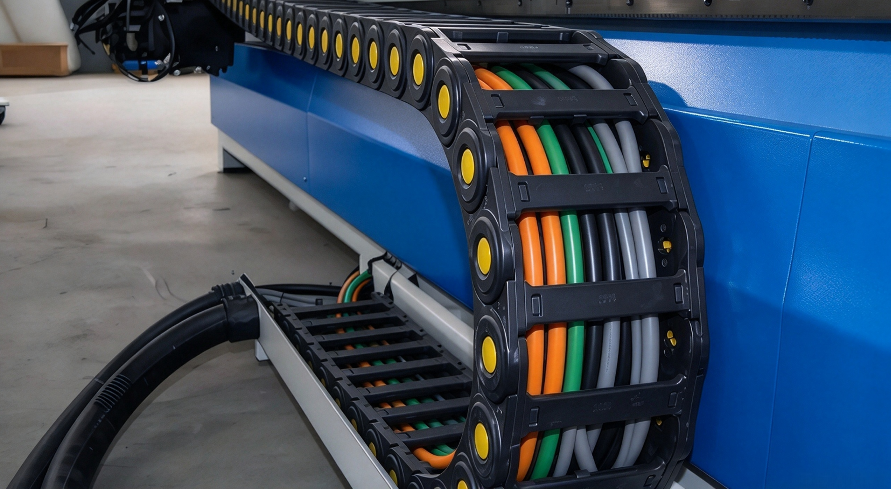
drag chain cnc cable
CNC Motion Cable Basics
Flexible CNC cable is engineered for dynamic machine environments. Unlike general-purpose wire, it uses fine-stranded copper conductors, specialized insulation, durable outer jackets, and often shielding to support reliable power, control, or signal transmission while the machine axis moves repeatedly.
Based on our internal data and market analysis, here is the breakdown:
Cable Element
Purpose in CNC Machines
Why It Matters
Fine-stranded conductor
Improves bending flexibility
Reduces conductor fatigue
PVC, PUR, or TPE jacket
Protects against oil, abrasion, and coolant
Extends cable service life
Shielding braid or foil
Reduces EMI interference
Protects encoder and signal accuracy
Twisted pairs
Supports stable signal transmission
Minimizes crosstalk
Drag-chain rating
Confirms suitability for repeated flexing
Prevents early cable failure
Common cnc cable types include power cable, servo cable, encoder cable, spindle cable, control cable, sensor cable, and Ethernet or data cable for industrial networks.
cwcables Pro Tip: I always recommend identifying whether the cable will be stationary, flexing, or installed in a drag chain before selecting the jacket or conductor class. Most premature CNC cable failures happen because a static cable was used in a moving axis.
How Does flexible cable for cnc Work?
A flexible cable for CNC works by maintaining stable electrical transmission while absorbing continuous mechanical stress from axis movement, bending, acceleration, and vibration. Its conductor design, insulation structure, shielding, and jacket material work together to prevent fatigue, signal loss, short circuits, and electromagnetic interference.
How Dynamic CNC Cabling Handles Motion
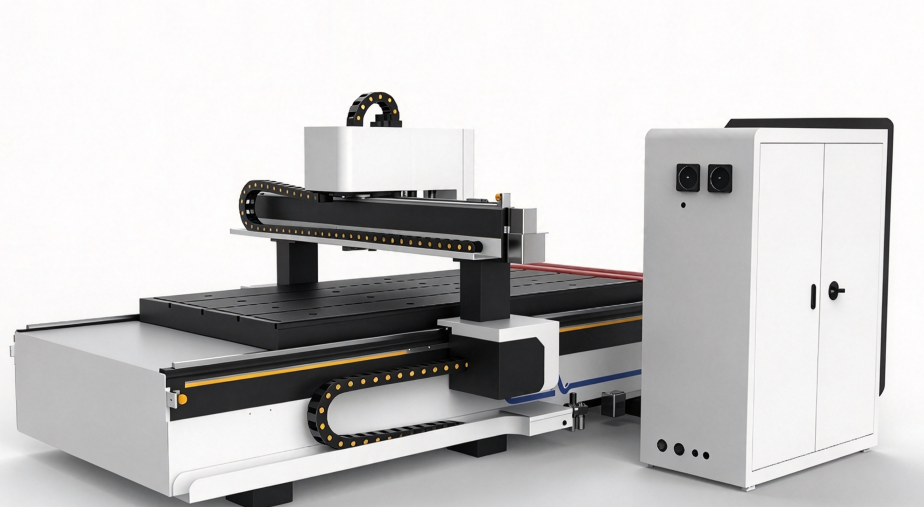
In CNC machines, cables often move with linear axes, gantries, tool changers, spindles, and robotic loaders. A flexible cable for machine tools is built so the internal cores bend evenly instead of concentrating stress at one point.
The operating principle can be understood in four stages:
Motion absorption: Fine copper strands distribute bending stress across many small wires.
Core stability: Fillers, tapes, and twisted construction help the cable maintain its round shape during movement.
Electrical protection: Insulation prevents conductor contact and voltage breakdown.
Noise control: Shields block electrical interference from motors, drives, and high-frequency spindle systems.
Outer protection: The jacket resists abrasion, coolant, oil, chips, and mechanical wear.
For drag chain cnc cable, the cable must also move smoothly inside the carrier without twisting, bunching, or rubbing excessively against adjacent cables.
cwcables Pro Tip: When I review CNC cable failures, I look first at bend radius, chain layout, and whether the cable was allowed to move freely. Even a high-quality cable can fail quickly if it is clamped too tightly or forced below its minimum bend radius.
What are the benefits of flexible cable for cnc?
The main benefits of flexible cable for CNC include longer service life, better machine uptime, improved signal stability, reduced electrical noise, safer movement, and lower maintenance costs. It is especially valuable in high-speed machining centers, routers, lathes, mills, plasma cutters, and automated production cells.
Performance Advantages in CNC Equipment
Using the correct flexible cable improves both mechanical reliability and electrical performance. In CNC applications, cable failure can stop production, damage components, or create positioning errors, so choosing motion-rated cabling is a preventive maintenance decision.
Based on our internal data and market analysis, here is the breakdown:
Benefit
Practical CNC Impact
Typical Application
High flex life
Reduces cable replacement frequency
X/Y/Z axis motion
Oil and coolant resistance
Prevents jacket swelling or cracking
Milling and turning centers
EMI shielding
Protects feedback and control signals
Servo and encoder circuits
Abrasion resistance
Handles drag chain and machine contact
Routers, plasma tables, gantries
Compact construction
Saves space in cable carriers
Multi-axis CNC systems
Stable transmission
Maintains accuracy and repeatability
Sensors, data, and feedback lines
The right cable selection also helps prevent intermittent faults, which are often harder to diagnose than complete cable breaks.
cwcables Pro Tip: I tell buyers not to evaluate CNC cable only by purchase price. A slightly higher-grade cable can save far more in avoided downtime, especially on machines running multiple shifts or unattended production.
Flexible Cable for CNC Machines
How to maintain a flexible cable for cnc?
Maintaining a flexible cable for CNC requires regular inspection, proper bend radius control, clean drag chain routing, secure but not over-tight clamping, and protection from coolant buildup, metal chips, and abrasion. Preventive checks help detect jacket wear, twisting, shielding damage, or conductor fatigue before machine failure occurs.
Maintenance Checklist for CNC Cable Life
Flexible CNC cable should be inspected as part of routine machine maintenance, especially on high-cycle axes and drag chains. The goal is to identify stress points before they become electrical faults.
Use this practical maintenance checklist:
Inspect the outer jacket for cracks, swelling, cuts, flattening, or abrasion.
Check the drag chain layout to confirm cables are not crossed, twisted, or tightly packed.
Verify bend radius against the cable manufacturer’s recommended minimum.
Look for coolant and oil exposure that may degrade incompatible jacket materials.
Confirm clamp placement so moving cable sections are not rigidly locked at the wrong point.
Test signal stability if encoder alarms, servo faults, or intermittent I/O errors appear.
Replace damaged cable early rather than waiting for total failure during production.
For flexible cable for machine tools, maintenance should focus on both mechanical routing and electrical performance.
cwcables Pro Tip: I prefer replacing a visibly damaged CNC cable during planned downtime instead of trying to “get one more week” from it. Once the jacket or shield is compromised, the failure risk usually rises fast.
drag chain cnc cable
What is the price of flexible cable for cnc?
The price of flexible cable for CNC depends on conductor count, wire gauge, shielding, jacket material, flex rating, certification, voltage rating, and whether it is designed for drag chain use. Standard control cable costs less, while servo, encoder, spindle, and high-flex industrial data cables are more expensive.
Typical CNC Cable Pricing Variables
CNC cable pricing is not based on length alone. A cable carrying low-voltage sensor signals has very different requirements than a shielded servo motor cable carrying power and feedback in a moving drag chain.
Based on our internal data and market analysis, here is the breakdown:
For accurate pricing, buyers should define voltage, current, motion type, bend radius, shielding need, and environmental exposure before requesting a quote.
cwcables Pro Tip: When customers ask for the lowest-cost cable, I first confirm whether the machine uses a drag chain. If it does, choosing a non-drag-chain cable to save money usually becomes more expensive after the first unexpected failure.
Key Features & Comparison
Key features of flexible cable for CNC include high flex life, fine-stranded conductors, oil-resistant jackets, EMI shielding, abrasion resistance, compact diameter, and stable signal performance. Comparing cnc cable types by motion level, environment, and electrical function helps match the cable correctly to the machine.
CNC Cable Type Comparison
Different CNC circuits require different cable constructions. Power, control, feedback, and data lines should not automatically use the same cable type, especially in high-speed or electrically noisy environments.
Based on our internal data and market analysis, here is the breakdown:
The best selection depends on whether the cable is fixed, occasionally flexed, continuously flexed, or exposed to torsion.
cwcables Pro Tip: I avoid mixing noisy motor power cables and sensitive encoder cables too closely in the same carrier unless shielding, grounding, and separation are properly planned. Signal noise can look like a machine accuracy problem.
Cost & Buying Factors
When buying flexible cable for CNC, consider machine motion, bend radius, cable carrier dimensions, oil and coolant exposure, shielding requirements, voltage, current, conductor count, certifications, and replacement accessibility. The best-value cable is the one that balances upfront cost with reliability and downtime prevention.
Practical Buying Guide
A good cable specification starts with the machine environment rather than the catalog page. Before choosing a flexible cable for CNC, define how the cable will move and what electrical function it must support.
Bend radius: Must match the cable’s minimum dynamic bend radius.
Jacket material: PVC for general use; PUR or TPE for tougher oil, abrasion, and coolant resistance.
Shielding: Required for servo, encoder, spindle, and communication circuits in noisy environments.
Approvals: Confirm UL, CE, RoHS, or other standards required by your market.
Installation space: Check outer diameter, drag chain cavity, and fill ratio.
Supplier support: Work with a cable supplier that can help verify construction, routing, and performance requirements.
For buyers comparing options, cwcables can help match cable construction to machine motion, electrical function, and operating environment.
cwcables Pro Tip: I recommend documenting the original cable markings, conductor count, gauge, shield type, and machine axis before ordering replacements. This prevents mismatches that may not become obvious until installation.
Conclusion
A reliable flexible cable for CNC should be selected according to movement, environment, electrical load, shielding needs, and service life expectations. By choosing the correct cable type for each machine circuit, manufacturers can improve uptime, reduce maintenance, and protect critical CNC performance.
Final Selection Guidance
Flexible cable is a small component compared with the cost of a CNC machine, but it has a major impact on reliability. Poor cable selection can cause servo alarms, inaccurate positioning, data errors, and unplanned downtime.
Use this final decision checklist before purchasing:
Choose drag chain cnc cable for continuous moving axes.
Use shielded cable for servo, encoder, spindle, and communication circuits.
Select PUR or TPE jackets for harsh oil, coolant, or abrasion exposure.
Confirm dynamic bend radius and cable carrier compatibility.
Separate power and signal cables where possible.
Match cable certifications to machine and export requirements.
Work with a knowledgeable supplier such as cwcables for application-specific recommendations.
A well-specified CNC cable supports smoother operation, longer machine life, and more predictable production performance.
cwcables Pro Tip: My final advice is simple: treat CNC cable as a motion component, not just an electrical component. If the cable moves every cycle, its mechanical design matters as much as its voltage or conductor size.