

The core of flexible cable selection lies in matching the actual working conditions of the equipment based on two major dimensions: mechanical motion parameters and installation environment conditions. This avoids failures such as conductor breakage and sheath cracking caused by improper selection. The specific selection logic is as follows:

I. Select flexible cable Grade Based on Mechanical Motion Parameters
| Operating Condition Characteristics | Applicable Cable Type | Typical Application Scenarios |
|---|---|---|
| Low moving speed (< 0.5 m/s), large drag chain bending radius (≥ 15 times the cable outer diameter), short stroke (< 5 m), few daily moving cycles (< 100 times) | Low-speed drag chain cable (general flexible cable) | Laser cutting machines, small assembly line equipment |
| Medium moving speed (0.5-2 m/s), moderate drag chain bending radius (≥ 10 times the cable outer diameter), medium stroke (5-20 m), frequent daily moving cycles (100-1000 times) | Medium-high speed drag chain cable (high flex cable) | Woodworking machinery, CNC milling machines, automated conveyor lines |
| High moving speed (> 2 m/s), small drag chain bending radius (≥ 8 times the cable outer diameter), long stroke (> 20 m), extremely frequent daily moving cycles (> 1000 times) | High-speed drag chain cable (ultra-flexible cable) | Injection molding manipulators, industrial robots, high-speed sorting equipment |
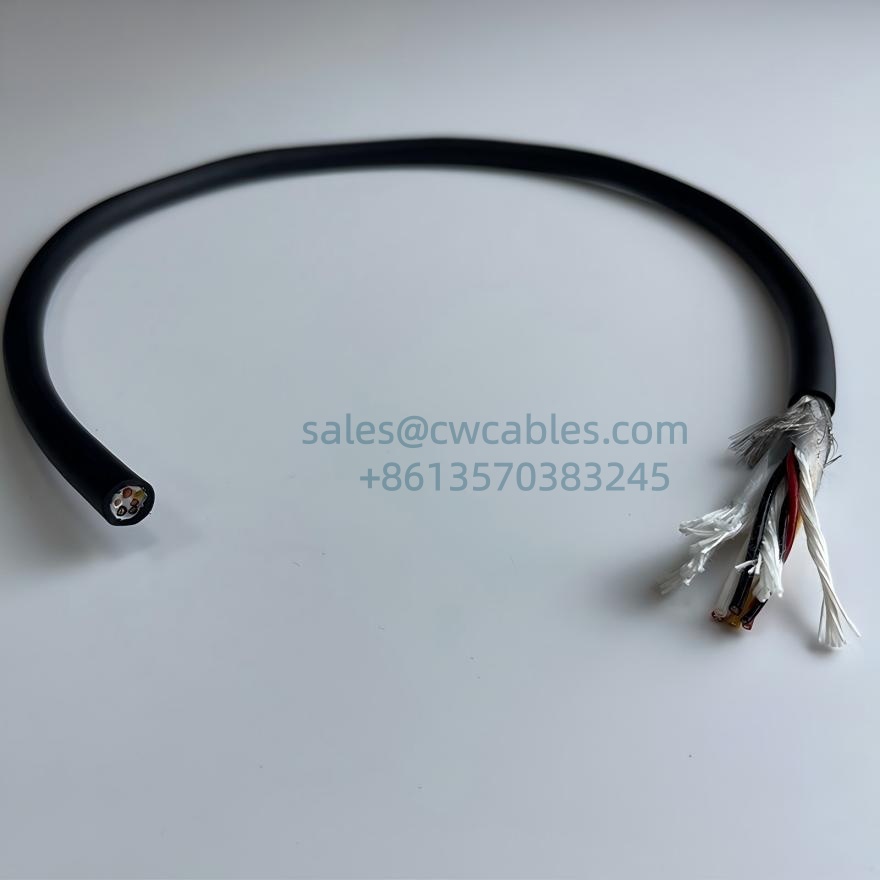
II. Select Flexible Cable Outer Sheath Material Based on Installation Environment
| Performance Indicator | PVC Material | PUR Material |
|---|---|---|
| Oil resistance/Cutting fluid resistance | Not oil-resistant; prone to softening and cracking when in contact with oil stains | Excellent resistance to oil and cutting fluid corrosion; suitable for harsh industrial fluid environments |
| Low-temperature resistance | Obvious low-temperature brittleness; usually prone to cracking below -5℃ | Strong low-temperature resistance; operating temperature range can reach -40℃ to 90℃, suitable for low-temperature workshops or outdoor equipment |
| Wear resistance | Moderate | High wear resistance; superior scratch resistance compared to PVC |
| Flexibility | Good flexibility at room temperature; hardens at low temperatures | Maintains good flexibility at both high and low temperatures |

So the selection of flexible cables is crucial. Choosing the wrong model can cause cable breakage, equipment shutdown, decreased production efficiency of the entire production line, and high maintenance costs. The correct selection can ensure the stability of power and signal transmission in the production line, reduce the failure rate of the entire production line, improve production efficiency, and increase economic benefits.
There’s noticeably a bundle to know about this. I assume you made sure good points in features also.