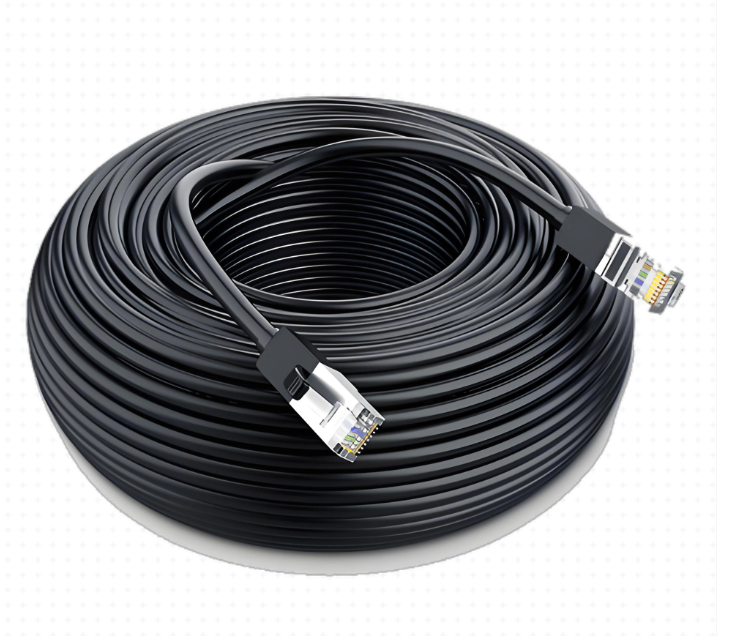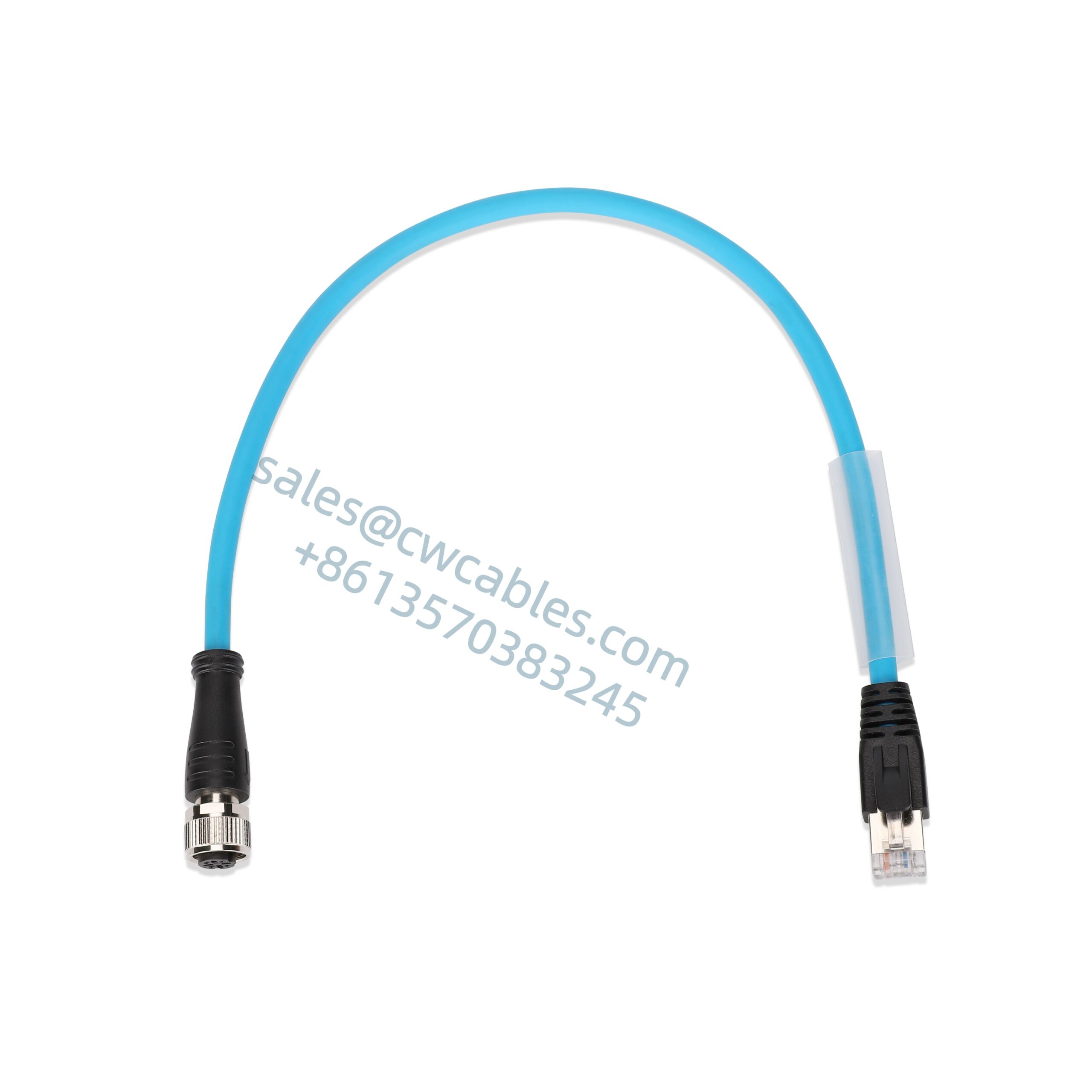

Today, let’s discuss which factors are related to the maximum transmission distance of a 유연한 이더넷 케이블 signal without attenuation.

Firstly, share a customer’s oral case:

This is the first time using such a long ethernet cable on an automated device, with a 25 meter full drag chain. It is still an industrial vision camera that requires extremely high signal stability. To be honest, I was a bit nervous at first. But this 높은 유연성의 이더넷 케이블 really changed me – I ran continuously for 6 months, bending back and forth thousands of times every day, with zero data loss, no screen lag, and almost no noticeable delay.

Its outer skin is made of matte high flexibility material, which feels a bit like the strap of a sports wristband, soft but resilient. The most reassuring thing for me is the shielding layer, which is tightly woven with copper wire and has not been disturbed even in strong electrical environments. The screw interface is tightly tightened and has not loosened after several insertions and removals, unlike some wires that have poor contact after two uses.

I have tried using a regular Ethernet cable before and started losing frames within 5 meters. After switching to this one, not only 25 meters, but also a few more meters, I estimate it can withstand it. And the entire 유연한 네트워크 케이블 is particularly neat, with no knots when running through the cable tray, and the sliding in the drag chain is smooth without any jamming feeling.

The most unexpected thing is durability. Our workshop environment is complex, with oil stains, vibrations, and frequent movements being the norm, yet it managed to withstand them. There are no cracks on the surface and no bulges at the bends. Compared to the days when I had to change my internet cable every two months, it’s much easier now.

유연한 이더넷 케이블
유연한 이더넷 케이블

Based on the feedback from the customer above, we can draw some experience.What factors are related to the maximum effective transmission distance of flexible Ethernet cables?

The hardware of the 유연한 이더넷 케이블 itself is the basis for determining the transmission distance

The inherent quality of network cables directly determines attenuation, impedance, and fatigue resistance, widening the gap in distance upper limit.

1.Copper core conductor specification (AWG wire gauge)

The thicker the copper core, the lower the conductor resistance, the lower the high-frequency signal loss, and the smaller the PoE power supply voltage drop.

Sorting: 23AWG Class 6 Coarse Core>24AWG Standard Category 5e>26/28AWG Ultra fine Non standard Wire.

Long term bending of the wire core is prone to copper wire micro damage, long-term attenuation continues to increase, and the usable distance is greatly reduced.

2.Ethernet cable category (Cat5e/Cat6a/CAT7)

The higher the bandwidth, the more sensitive the signal is to loss, and the shorter the safe transmission distance:

Cat5e Category 5e: compatible with gigabit sports bus, with a maximum stability of 50 meters under normal operating conditions;

Cat6a Category 6: Supports 10 Gigabit image transmission, with a dynamic drag chain scene stability limit of only 30 meters.

3.Twisting and insulation process of twisted pair cables

Differentiated twisting distance of each pair of wires can reduce crosstalk; High density PE insulation material has low dielectric loss.

Low priced cables have chaotic twisting distances, severe crosstalk in long cables, and the stable distance can be directly reduced by one-third under the same length.

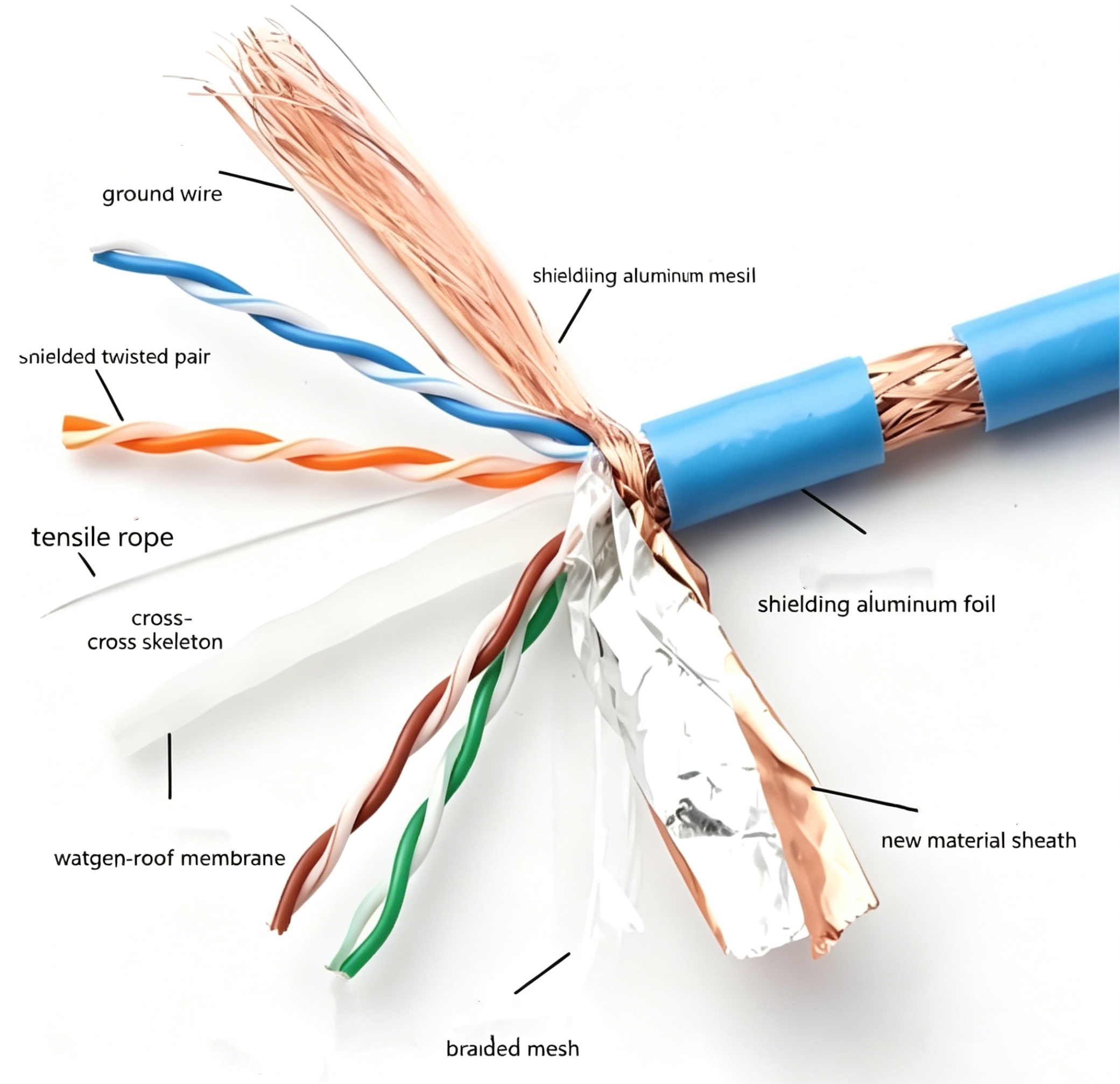
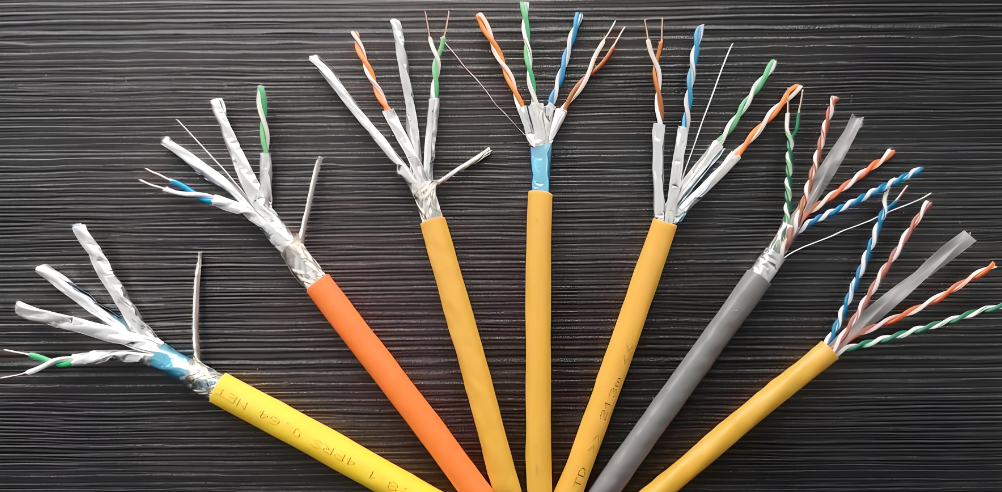
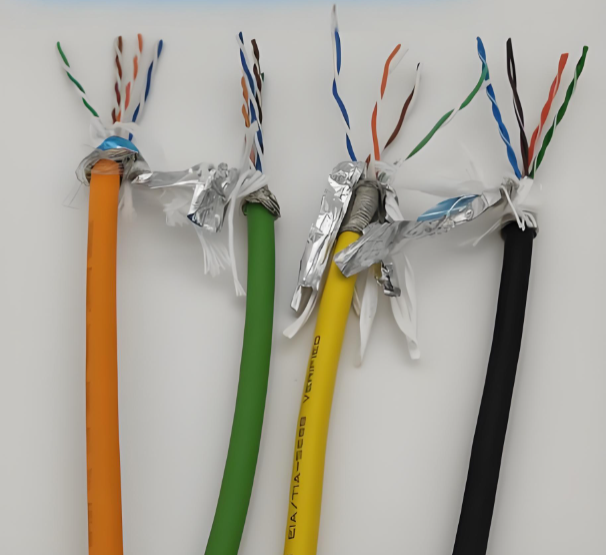
4.Shielding structure of ethernet cable

LIYY has no shielding, single-layer aluminum foil shielding, double-layer aluminum foil+copper mesh shielding, with a huge difference in anti-interference ability.

Double layer shielding (LIYCY-TP) in frequency converters and welding workshops can provide 10-15 meters more stability than unshielded cables; If the grounding is not in place, the shielding will fail and the distance will be directly reduced.

5.Material of Ethernet cable sheath (PVC/PUR)

PUR is oil resistant, resistant to repeated bending, anti-aging, and has stable insulation performance for long-term use; PVC will accelerate aging and decay year by year due to long-term heating and oil pollution environment, shortening its service life and transmission distance.

유연한 이더넷 케이블
유연한 이더넷 케이블

The mechanical working conditions of the drag chain and the unique limitations of flexible Ethernet cables

There is no continuous bending loss in static fixed wiring, and the 드래그 체인 케이블 moves back and forth tens of thousands of times a day, continuously damaging the internal structure of the cable, which is the core reason for distance reduction.

1. Minimum bending radius of Ethernet cable

The bending radius is less than 7 times the outer diameter of the cable, the twisted pair twist is deformed, the impedance is unbalanced, the signal return loss is soaring, and the design length needs to be directly shortened by 10-20 meters. The industry recommended standard is ≥ 10 times the outer diameter of the cable.

2. Trailer travel length

Longmen and truss long stroke equipment (stroke>10m), cables are continuously stretched and twisted, and internal conductors are prone to hidden damage. It is recommended to control the stable use distance within 40 meters.

3.The service life and bending frequency of Ethernet cables

After millions of bends, the cable structure will experience irreversible losses, and the difference in signal stability between old and new wires of equal length is significant.

유연한 이더넷 케이블
유연한 이더넷 케이블

Communication speed and data load, the larger the data flow, the shorter the distance

Ethernet belongs to high-frequency signals, and the higher the transmission bandwidth and data volume, the lower the tolerance of devices for signal loss:

1.100Mbps low-speed control signal: high fault tolerance space, limit can be relaxed to 60-70 meters;

2.Gigabit EtherCAT/Profinet motion bus: conventional machine tool stability ≤ 50 meters, strong interference workshop tightened to 40 meters;

3.GigE industrial camera, 10G image transmission: Big data streams are extremely sensitive to attenuation and crosstalk, with a reliable upper limit of only 30 meters.

유연한 이더넷 케이블
유연한 이더넷 케이블

On site electromagnetic interference environment, directly compress transmission margin

Industrial workshop frequency converters, welding equipment, and high-power power cables all generate electromagnetic noise, which squeezes the signal-to-noise ratio and significantly shortens the available distance

Strong interference scenarios: Automotive welding and assembly lines, stamping equipment, multiple frequency converter workstations, all specifications of network cables are uniformly reduced in length by 10 meters;

Clean small assembly workshop without high-power equipment, can be designed according to the standard upper limit;

The complete grounding of both ends of the shielding layer is a key operation to improve the stability of the long line.

유연한 이더넷 케이블
유연한 이더넷 케이블

The joints, wiring construction, and terminal equipment of flexible Ethernet cables determine stability through details

Many long-term faults are not caused by the ethernet cable itself, but by substandard construction accessories:

1.Industrial connector: M12 X encoding, shielded RJ45 plug. Poor crimping and shielding faults can cause impedance changes, and long wires are prone to packet loss; Metal shielded joints are superior to plastic ones;

2.Equipment reception sensitivity: High end industrial switches and cameras have greater signal reception margin, and the same cable can achieve longer transmission; Economic equipment has low fault tolerance and needs to shorten the wiring length;

3.Cable wiring specifications for drag chains: Cables should not be tightly stretched or squeezed, with a 5% slack allowance reserved to avoid long-term pulling and damaging the twisted pair structure.

답장을 남겨주세요

귀하의 이메일 주소는 공개되지 않습니다. 필수 입력란이 표시되어 있습니다 *