

Choosing between Cat6 and Cat6A comes down to speed requirements, cable distance, installation environment, and long-term network plans. Cat6 is cost-effective for most homes and small offices, while Cat6A is the stronger choice when you need reliable 10 gigabit cable performance across longer runs, higher shielding, and better protection against interference.
What is cat6 vs cat6a?
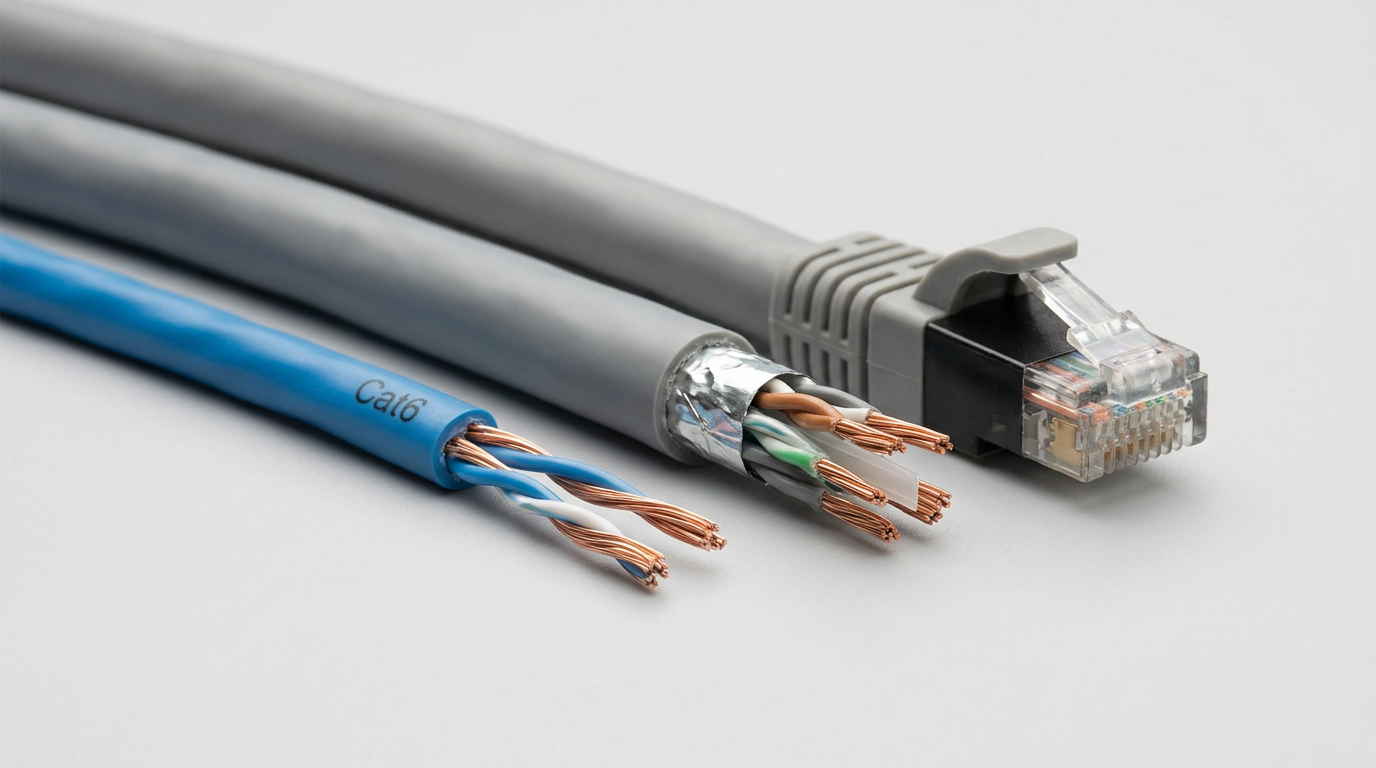
Cat6 vs Cat6A compares two 이더넷 cable standards used for wired networking. Cat6 supports up to 10 Gbps only over shorter distances, while Cat6A is designed for full 10 Gbps performance up to 100 meters, making it better for high-density, business, and future-ready installations.
Ethernet Cable Category Basics
Cat6 and Cat6A are both 연선 copper Ethernet cables, but they are built to different performance standards. Cat6 is commonly used for 기가비트 이더넷 and can support 10기가비트 이더넷 over limited distances. Cat6A, short for Category 6 Augmented, improves bandwidth, alien crosstalk resistance, and distance capability.
내부 데이터와 시장 분석을 바탕으로 분석한 내용은 다음과 같습니다.
| 케이블 유형 | 최대 속도 | Max Distance at 10 Gbps | 대역폭 | 일반적인 사용 |
|---|---|---|---|---|
| Cat6 | 1 Gbps up to 100m, 10 Gbps up to about 55m | ~55 meters | 250MHz | Homes, small offices, standard LANs |
| Cat6A | 10 Gbps up to 100m | 100 meters | 500MHz | Data centers, offices, PoE systems, future-ready networks |
Cat6 is often easier to handle because it is thinner and more flexible. Cat6A usually has a larger diameter, tighter twists, and often better shielding or separation inside the jacket. That added structure helps maintain signal quality in demanding installations.
cwcables 프로 팁: If I’m wiring a short home network today, Cat6 is usually enough. If I’m pulling cable through walls, ceilings, or conduit where replacement is difficult, I prefer Cat6A because it protects the installation from becoming outdated too quickly.
How Does cat6 vs cat6a Work?
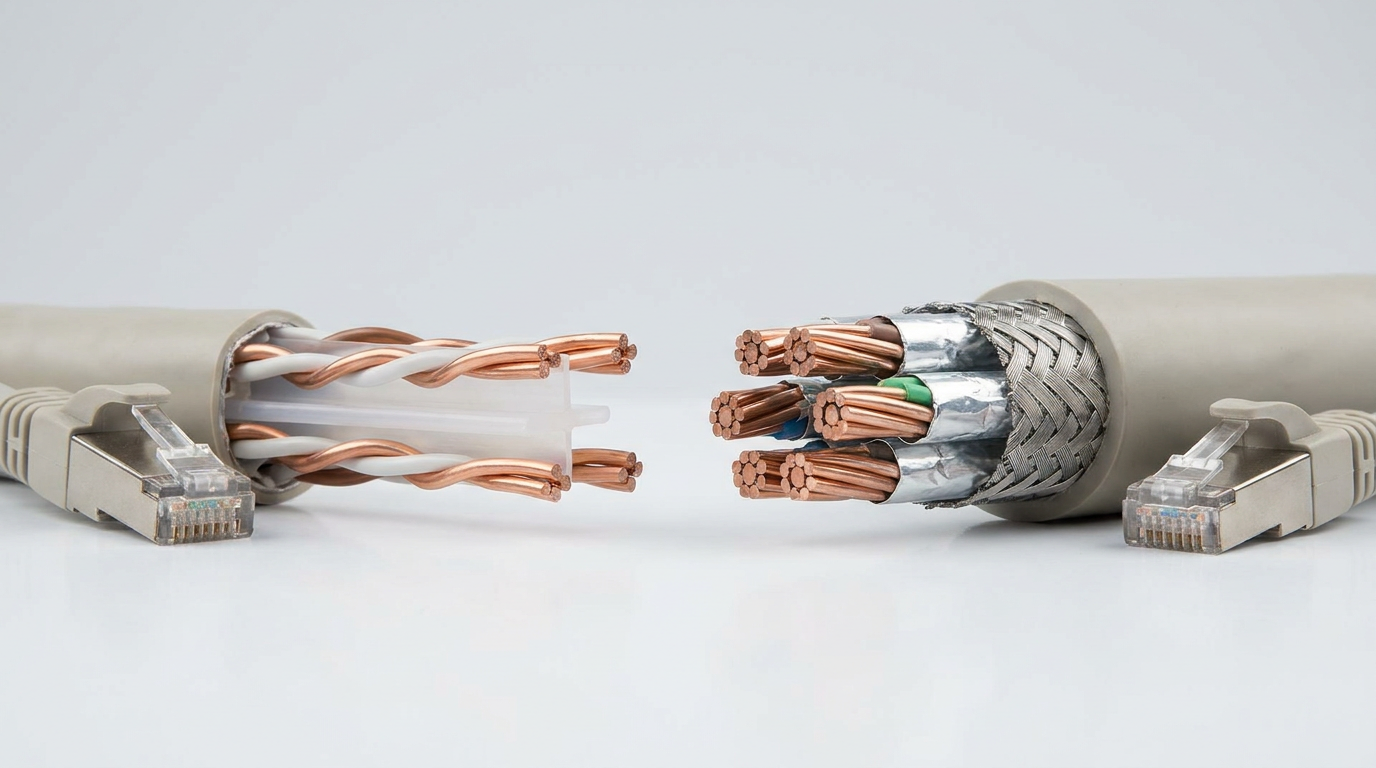
Cat6 and Cat6A work by transmitting data through four twisted copper wire pairs. The difference is signal control: Cat6A uses improved construction to reduce crosstalk and interference, allowing stable 10 Gbps transmission over longer cable runs than standard Cat6.
신호 전송 및 누화 제어
Ethernet cables send electrical signals through twisted pairs. The twists help cancel 전자기 간섭, while insulation, spacing, and shielding help preserve signal integrity. Cat6A improves this design to better control 외계인 누화, which is interference from nearby cables.
The cat6a vs cat6 speed difference becomes most important when distance and interference increase. Cat6 can technically run 10 Gbps, but only under ideal conditions and shorter lengths. Cat6A is engineered for full 10 Gigabit Ethernet at the standard 100-meter channel distance.
주요 성능 요소는 다음과 같습니다.
- Twist rate: Tighter and more consistent twists reduce internal interference.
- 케이블 분리: Cat6A often uses separators or thicker jackets to reduce pair-to-pair noise.
- 차폐 옵션: Cat6A is more commonly available in shielded versions for noisy environments.
- 설치 품질: Poor terminations, tight bends, and cheap connectors can reduce real-world speed.
- Channel length: Patch cords, keystone jacks, and horizontal cable all count toward total channel performance.
A network cable does not automatically increase internet speed beyond the service plan, router, or switch capability. However, better cabling prevents the physical layer from becoming the bottleneck.
cwcables 프로 팁: I always match the cable to the switch and device roadmap. If 10G switches, NAS systems, Wi-Fi 6/6E access points, or high-power PoE devices are part of the plan, Cat6A is the safer backbone.
What are the benefits of cat6 vs cat6a?
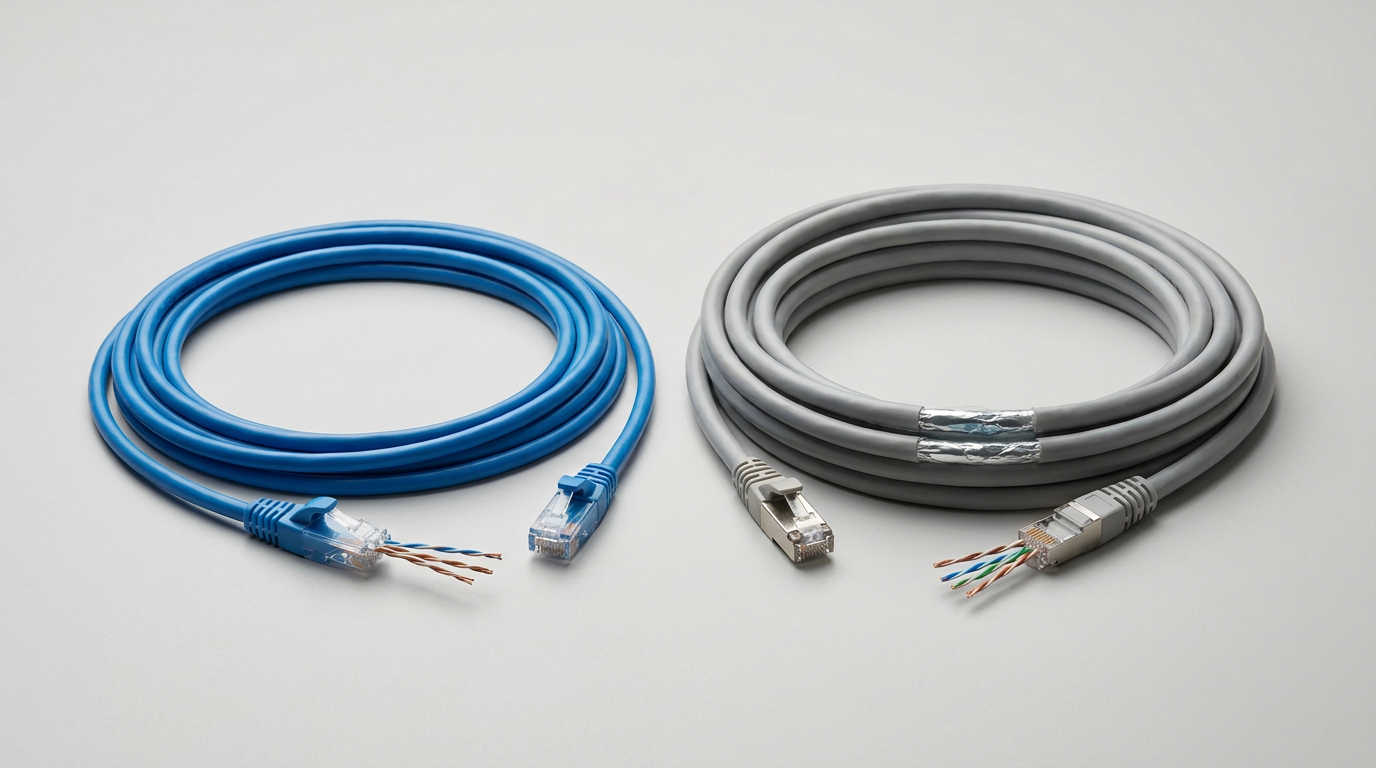
The main benefit of Cat6 is lower cost and easier installation, while the main benefit of Cat6A is stronger long-distance 10 Gbps performance. Cat6 works well for everyday networks, but Cat6A provides better future-proofing, interference protection, and support for demanding applications.
Practical Advantages by Installation Type
The right choice depends less on the label and more on how the cable will be used. A home office with short runs may not need Cat6A, but a business network with long pathways, bundled cables, and high-bandwidth equipment can benefit significantly.
내부 데이터와 시장 분석을 바탕으로 분석한 내용은 다음과 같습니다.
| 혜택 | Cat6 Advantage | Cat6A Advantage |
|---|---|---|
| Cost control | Lower material and labor cost | Higher upfront cost, lower upgrade risk |
| Ease of installation | More flexible and easier to terminate | Thicker cable requires more planning |
| 10G performance | Works on shorter runs | Reliable up to 100 meters |
| 간섭 저항 | Good for normal environments | Better for dense or noisy cable paths |
| 미래 준비 | Suitable for current Gigabit networks | Better for long-term infrastructure |
| PoE 지원 | Good when properly rated | Better thermal handling in many installations |
For many residential networks, Cat6 is a practical and budget-friendly choice. For commercial networks, new construction, server rooms, surveillance systems, and access point cabling, Cat6A often provides a better return over the life of the system.
cwcables 프로 팁: When customers ask where to save money, I usually recommend Cat6 for patch cords and short non-critical runs, but Cat6A for permanent in-wall or business infrastructure where replacement labor costs more than the cable difference.
How to maintain a cat6 vs cat6a?
Maintaining Cat6 and Cat6A means protecting cable geometry, avoiding physical damage, using compatible connectors, and testing performance after installation. Both cable types are low-maintenance, but Cat6A requires more care with bend radius, grounding, and termination quality to preserve 10G performance.
Installation Care and Long-Term Reliability
Ethernet cable maintenance starts during installation. Twisted-pair cable depends on consistent spacing and geometry, so crushing, kinking, or over-bending the cable can affect performance. Cat6A is especially sensitive because it is designed for higher-frequency signaling.
Recommended maintenance practices:
- Avoid tight bends: Follow the manufacturer’s bend-radius guidelines, especially around wall plates and racks.
- Do not over-tighten cable ties: Use Velcro straps instead of zip ties whenever possible.
- Keep distance from power cables: Avoid running parallel to high-voltage lines for long distances.
- Use rated connectors: Match Cat6 cable with Cat6 components and Cat6A cable with Cat6A-rated jacks and patch panels.
- Label both ends: Clear labeling reduces troubleshooting time and prevents accidental disconnects.
- Test after installation: Use a cable tester or certifier to verify continuity, wire map, and performance.
- Protect outdoor runs: Use outdoor-rated or direct-burial cable where required.
- Ground shielded cable properly: Shielded Cat6A must be bonded correctly to avoid grounding issues.
Poor termination is one of the most common causes of network problems. Untwisting too much wire at the connector, using low-quality keystones, or mixing mismatched parts can reduce the real-world benefit of higher-category cable.
cwcables 프로 팁: I never judge a cable run by link lights alone. A connection can “work” and still perform below spec, so I recommend testing critical Cat6A runs before walls are closed or racks are finalized.
What is the price of cat6 vs cat6a?
Cat6 usually costs less than Cat6A because it uses a lighter construction and is easier to install. Cat6A costs more per foot and may increase labor time, but it can be worth it when 10 gigabit cable performance, longer runs, or future upgrades matter.
Typical Cost Differences
Pricing depends on cable type, jacket rating, shielding, copper quality, certification, and installation complexity. Plenum-rated cable costs more than riser-rated cable, and shielded Cat6A usually costs more than unshielded Cat6A. Labor can also differ because Cat6A is thicker and less flexible.
내부 데이터와 시장 분석을 바탕으로 분석한 내용은 다음과 같습니다.
| 비용 요소 | Cat6 | Cat6A |
|---|---|---|
| Bulk cable cost | 낮추다 | 더 높은 |
| Connector cost | 낮추다 | 더 높은 |
| Labor difficulty | 더 쉽게 | 보통 이상 |
| Patch panel cost | 낮추다 | Higher for Cat6A-rated parts |
| Best value use case | Gigabit networks and short 10G runs | Long 10G runs and future-ready cabling |
| Long-term upgrade risk | 보통의 | 낮추다 |
As a general buying principle, compare total installed cost rather than cable price alone. If a Cat6A run costs slightly more during construction but avoids opening walls later, the upgrade can be financially sensible.
cwcables 프로 팁: I look at replacement difficulty first. If the cable will be easy to access later, Cat6 may be fine. If it will be buried in walls, ceilings, or conduit, I usually recommend budgeting for Cat6A upfront.
주요 기능 및 비교
The key difference in cat6 vs cat6a is that Cat6 is optimized for cost-effective Gigabit networking, while Cat6A is optimized for full-distance 10 Gigabit Ethernet. Cat6A offers higher bandwidth, stronger interference control, and better future readiness, but it costs more and is harder to install.
기능별 구매 비교
내부 데이터와 시장 분석을 바탕으로 분석한 내용은 다음과 같습니다.
| 특징 | Cat6 | Cat6A | 최선의 선택 |
|---|---|---|---|
| Maximum bandwidth | 250MHz | 500MHz | Cat6A |
| 10G distance | Up to about 55m in ideal conditions | 최대 100m | Cat6A |
| 1G distance | 최대 100m | 최대 100m | Tie |
| 케이블 두께 | Thinner | 더 두껍게 | Cat6 for tight spaces |
| 유연성 | 더 쉬운 라우팅 | Less flexible | Cat6 |
| 누화 저항 | 좋은 | 훌륭한 | Cat6A |
| Shielded availability | 사용 가능 | 흔한 | Cat6A |
| 설치비용 | 낮추다 | 더 높은 | Cat6 |
| Long-term scalability | 좋은 | 훌륭한 | Cat6A |
| 최고의 환경 | Homes, small offices, basic LANs | Offices, data rooms, PoE, Wi-Fi APs | Depends on need |
If you only need reliable Gigabit Ethernet, Cat6 remains a strong choice. If you are planning for 10G switches, high-performance workstations, NAS storage, enterprise wireless access points, or dense cable bundles, Cat6A is the more robust option.
cwcables 프로 팁: I recommend avoiding mixed-category assumptions. A Cat6A cable connected to lower-rated jacks or patch panels may not deliver Cat6A channel performance, so the full link should be built to the same standard.
비용 및 구매 요인
The upgrade from Cat6 to Cat6A is worth it when cable runs are long, replacement access is difficult, interference is likely, or 10G networking is planned. If your network is simple, short, and primarily Gigabit, Cat6 often delivers the best cost-to-performance balance.
How to Decide Before You Buy
Before purchasing, consider both today’s network and tomorrow’s equipment. Cable is usually one of the longest-lasting parts of a network, so the decision should account for routers, switches, access points, servers, security cameras, and PoE 장치.
다음 구매 체크리스트를 사용하세요.
- Choose Cat6 if:
- Most runs are short.
- You only need 1 Gbps today.
- Budget is the top priority.
- Cable pathways are easy to access later.
- The installation is for a small home or basic office.
- Choose Cat6A if:
- You want reliable 10G up to 100 meters.
- The cable will be installed inside walls or ceilings.
- You are wiring a business, data room, or new construction.
- You expect high PoE usage.
- You have many cables bundled together.
- You want longer infrastructure life.
For buyers comparing cat6a vs cat6 speed, the most important point is distance. Both can support fast networking, but Cat6A is built to hold 10G performance across the full standard channel length.
cwcables 프로 팁: I tell buyers to spend where the network is hardest to change. It is easy to replace a patch cable, but expensive to replace horizontal cabling hidden behind finished walls.
결론
Cat6 is the practical choice for many everyday networks, while Cat6A is the better upgrade when long-distance 10G performance and future readiness matter. The right decision depends on speed goals, installation difficulty, environment, and budget, not just the cable category printed on the jacket.
최종 권고사항
For most homes and small offices, Cat6 provides excellent performance at a reasonable price. It supports Gigabit Ethernet comfortably and can handle limited 10G use on shorter runs. For professional installations, long cable paths, high-density wiring, and future 10G networks, Cat6A is the stronger investment.
간단한 결정 경로:
- Need only Gigabit? Choose Cat6.
- Need 10G over long distances? Choose Cat6A.
- Installing inside finished walls? Strongly consider Cat6A.
- Working with a tight budget and short runs? Cat6 is usually enough.
- Planning for future switches, NAS, or Wi-Fi 6 upgrades? Cat6A offers better headroom.
cwcables can help you choose the right Ethernet cable, connectors, and installation accessories based on your speed target, cable length, and environment.
cwcables 프로 팁: My final rule is simple: buy Cat6 for value, buy Cat6A for longevity. If the cable is part of permanent infrastructure, the Cat6A upgrade is often worth the extra planning and cost.