

Moving machinery needs cable chain cable that can survive repeated bending, acceleration, abrasion, and tight installation spaces without signal loss or premature conductor fatigue. Choosing the right construction, jacket, shielding, and bend radius helps prevent downtime in automation, 로봇공학, CNC 장비, cranes, and material-handling systems where ordinary cable often fails quickly.
What is cable chain cable?
Cable chain cable is a flexible electrical cable designed to run inside a drag chain, energy chain, or 케이블 캐리어 on moving machinery. It is built with fine-stranded conductors, specialized insulation, optimized twisting, and durable jackets so it can bend repeatedly while carrying power, control, data, or signal connections reliably.
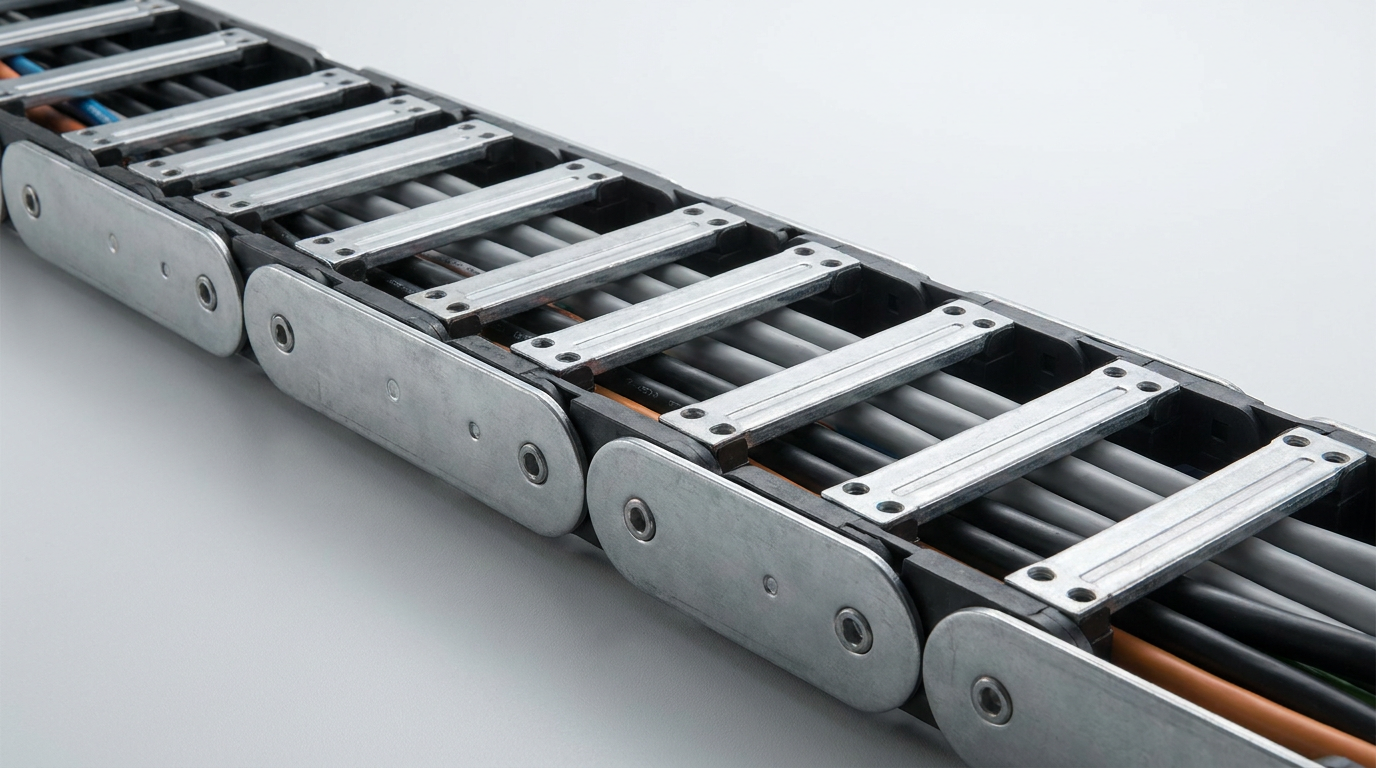
Cable Chain Cable Fundamentals
A cable chain cable is engineered for dynamic motion rather than static installation. In moving equipment, cables are repeatedly flexed along the same path. Standard cable may twist, crack, or develop conductor breakage under these conditions, while chain-rated cable is designed to distribute mechanical stress evenly.
내부 데이터와 시장 분석을 바탕으로 분석한 내용은 다음과 같습니다.
| 케이블 유형 | 최고의 사용 | 굴곡 기능 | Typical Risk if Misused |
|---|---|---|---|
| 표준 케이블 | 고정배선 | 낮은 | Conductor breakage in motion |
| 유연한 케이블 | 간헐적인 움직임 | 중간 | Jacket fatigue over time |
| 케이블 체인 케이블 | Continuous drag-chain motion | 높은 | Lowest when correctly selected |
| 서보 케이블 | Motors and drives | 높은 | EMI issues if shielding is poor |
| Data chain cable | Industrial communication | 높은 | Signal loss if bend radius is ignored |
Cable chain cable is commonly used in robotic arms, gantry systems, machine tools, packaging lines, automated warehouses, and transfer systems. The key difference is not only flexibility, but controlled flexibility: the internal structure prevents conductors from migrating, rubbing, or compressing unevenly during millions of cycles.
cwcables 프로 팁: I always check whether the application is continuous flex, torsion, or simple reciprocating motion before recommending a cable, because each movement pattern needs a different internal cable design.
How Does cable chain cable Work?
Cable chain cable works by moving in a controlled bend inside a cable carrier while maintaining electrical continuity. Its fine-stranded conductors, low-friction insulation, balanced lay length, shielding, and abrasion-resistant jacket reduce mechanical stress so the cable can flex repeatedly without kinking, twisting, or breaking prematurely.
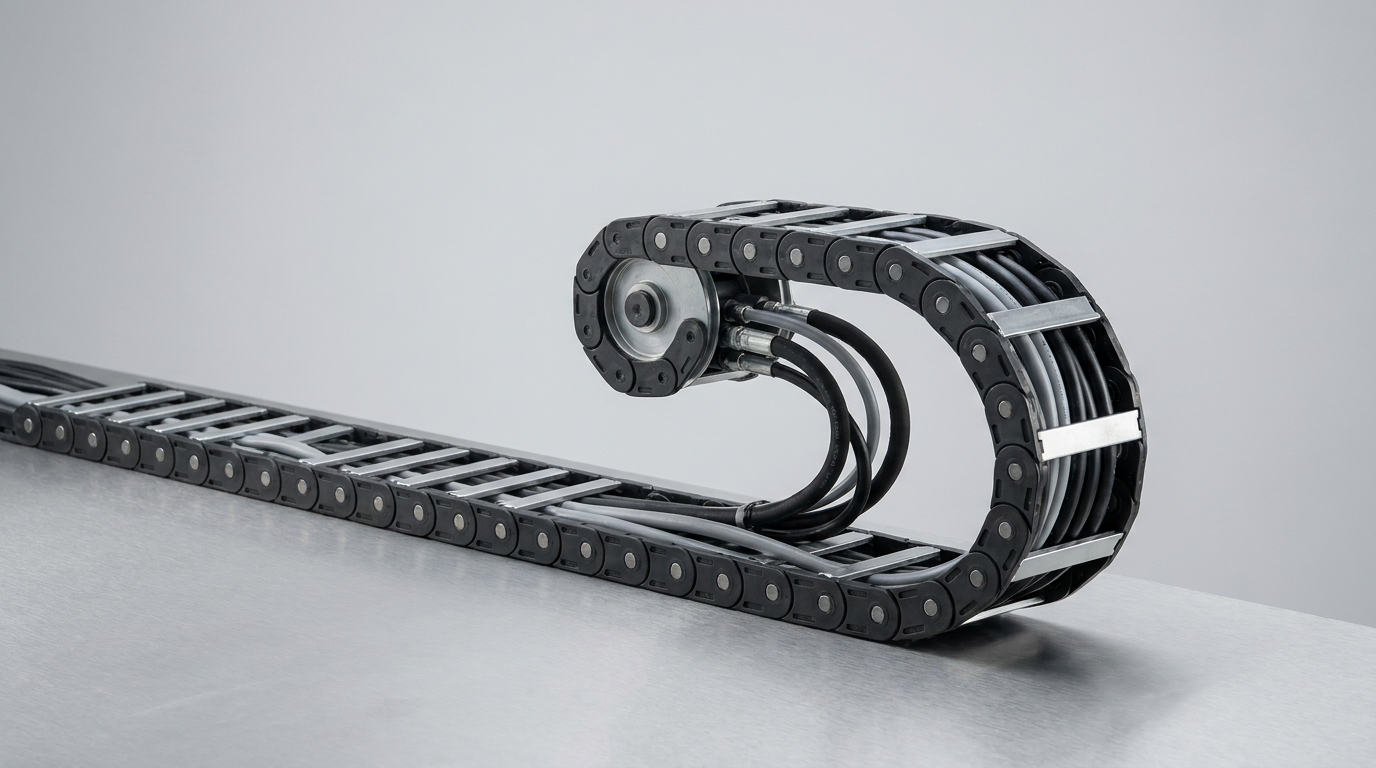
Dynamic Flexing Mechanism
Inside a cable chain, the cable travels back and forth along a guided path. The cable must bend smoothly at the chain radius while avoiding compression on the inside curve and excessive stretching on the outside curve. Proper construction keeps these forces balanced and helps extend service life.
The working process can be understood in simple steps:
- The machine axis moves and pulls the cable carrier along its travel path.
- The cable bends only within the designed radius of the chain.
- Fine copper strands flex together instead of snapping under repeated stress.
- Insulation layers reduce internal friction between conductors.
- Shielding, if present, protects signals from 전자기 간섭.
- The outer jacket resists abrasion against the cable carrier and nearby components.
- The cable returns to its original position without permanent deformation.
Correct installation is just as important as cable construction. Cables should lie freely in the carrier, with enough clearance to move slightly but not so much space that they collide aggressively during travel.
cwcables 프로 팁: I avoid overfilling the drag chain; even the best cable chain cable can fail early if it is squeezed tightly, twisted during installation, or forced below its minimum bend radius.
What are the benefits of cable chain cable?
The main benefits of cable chain cable are longer service life, lower downtime, stable power and signal transmission, improved safety, and better resistance to bending, abrasion, oil, and industrial environments. It helps moving machinery operate consistently while reducing maintenance costs and unexpected cable-related failures.
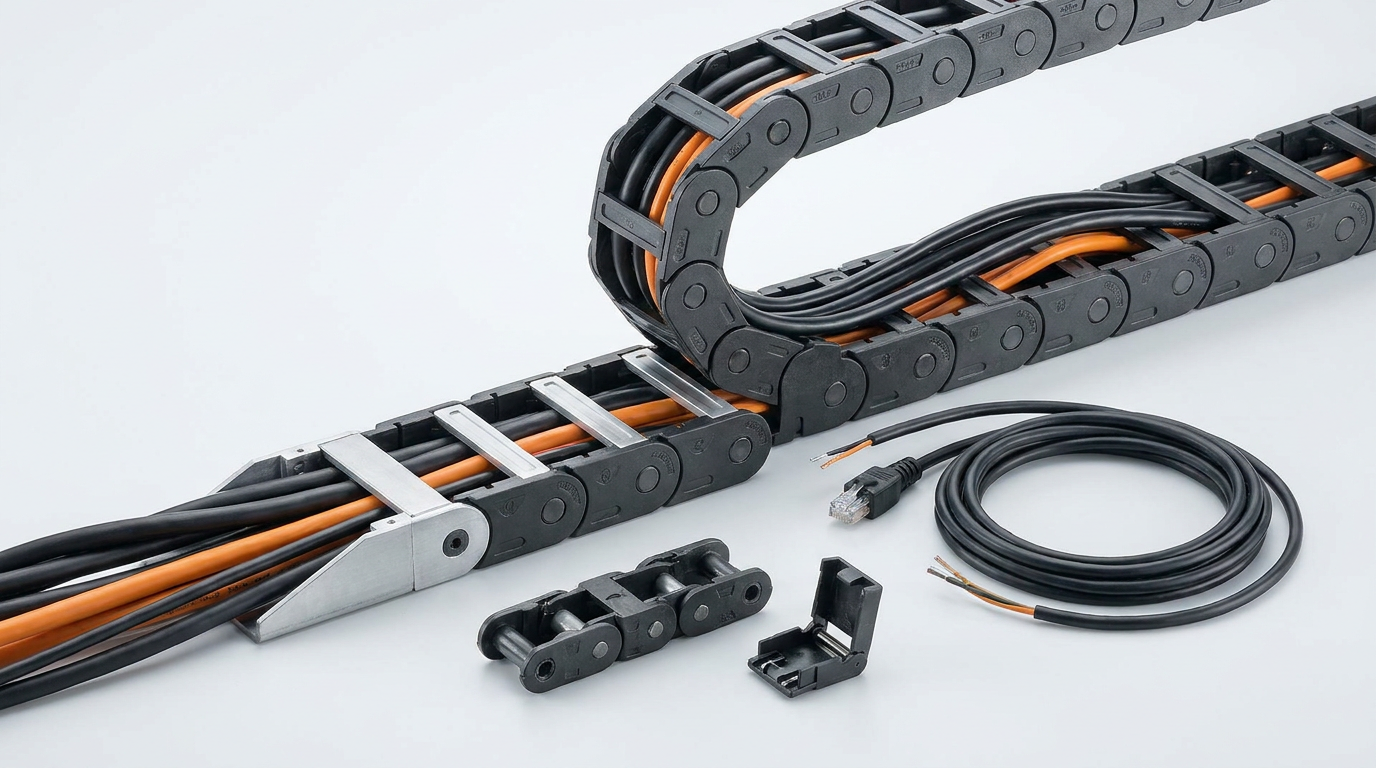
Performance Advantages in Moving Machinery
Cable failures in automation systems are expensive because they often stop production immediately. A properly selected cable chain cable reduces this risk by matching the mechanical and electrical demands of the machine.
주요 이점은 다음과 같습니다.
- High flex life: Designed for repeated bending cycles in cable carriers.
- Reliable electrical performance: Maintains stable conductivity during continuous movement.
- 가동 중지 시간 감소: Helps prevent unexpected stops from conductor fatigue or jacket damage.
- 향상된 신호 무결성: Shielded options support encoders, sensors, 서보 드라이브, and industrial networks.
- 마모 저항: Jackets are built to withstand contact with chain separators and carrier surfaces.
- Chemical and oil resistance: Suitable options are available for harsh factory environments.
- Space efficiency: Smaller cable diameters can fit compact automation systems.
- 더 나은 안전성: Reduced risk of exposed conductors, shorts, and intermittent electrical faults.
For high-speed systems, the benefits become even more important because acceleration, deceleration, and vibration increase mechanical stress. In these applications, cable choice directly affects machine reliability.
cwcables 프로 팁: I recommend looking beyond the purchase price and calculating downtime risk; one failed cable in a production line can cost far more than choosing the correct chain-rated cable from the start.
How to maintain a cable chain cable?
To maintain a cable chain cable, inspect the jacket, bend radius, chain fill, separators, strain relief, and connector points regularly. Look for abrasion, twisting, flattening, cracking, or intermittent signals. Preventive maintenance helps identify mechanical stress before it becomes conductor failure or machine downtime.
Inspection and Preventive Maintenance
Cable chain systems should be checked as part of routine machine maintenance, especially in high-cycle automation. Many cable problems begin gradually, showing visible signs before complete failure occurs.
다음 유지 관리 체크리스트를 사용하세요.
- 외부 재킷 검사 for cuts, cracks, flattening, swelling, or heavy abrasion.
- 케이블 움직임 확인 inside the chain to confirm the cable can move freely without binding.
- 굽힘 반경 확인 against the cable manufacturer’s minimum specification.
- Look for twisting along the cable length, especially near connectors and strain relief points.
- Check chain separators to ensure cables and hoses do not rub aggressively.
- 커넥터 검사 for looseness, contamination, corrosion, or vibration damage.
- Monitor signals for intermittent faults, encoder errors, or communication dropouts.
- Clean the chain path if chips, dust, oil sludge, or debris accumulate.
- 손상된 케이블을 조기에 교체하세요 before they cause unplanned shutdowns.
Maintenance frequency depends on speed, stroke length, environment, and duty cycle. A high-speed gantry may need more frequent checks than a low-speed indexing system.
cwcables 프로 팁: I mark the cable position during installation, then check later whether it has shifted or twisted; movement outside the expected path is often an early warning sign of incorrect routing.
What is the price of cable chain cable?
The price of cable chain cable depends on conductor size, core count, shielding, jacket material, voltage rating, data protocol, flex-life rating, certifications, and order quantity. Basic control cable may be economical, while servo, encoder, bus, or high-flex specialty cables usually cost more due to advanced construction.
Pricing Variables That Matter
There is no single price for cable chain cable because applications vary widely. A small sensor cable for a compact automation axis costs much less than a shielded servo cable for a high-power motor in a high-speed drag chain.
내부 데이터와 시장 분석을 바탕으로 분석한 내용은 다음과 같습니다.
| 비용 요소 | 가격에 미치는 영향 | 중요한 이유 |
|---|---|---|
| 도체 크기 | 중간에서 높음 | 구리 단면적이 클수록 재료 비용이 증가합니다. |
| 코어 수 | 중간 | 더 많은 도체에는 더 많은 절연 및 처리가 필요합니다. |
| 차폐 | 중간 | Braided or foil shields improve EMC performance |
| 재킷 소재 | 중간 | PUR, TPE, and special compounds cost more than basic PVC |
| 플렉스 등급 | 높은 | Higher cycle life requires advanced design and materials |
| 인증 | 중간 | UL, CE, oil resistance, and flame ratings may add cost |
| Data performance | 높은 | Ethernet, bus, and encoder cables require precise impedance control |
| 주문량 | 변하기 쉬운 | Larger quantities can reduce unit cost |
For budgeting, it is best to define the electrical load, movement type, travel distance, bend radius, and environment before requesting pricing. This avoids under-specifying the cable and replacing it too soon.
cwcables 프로 팁: I always ask for the machine stroke length, chain radius, speed, and cycle rate before quoting, because those details decide whether a standard flexible cable is enough or a higher-grade cable chain cable is required.
주요 기능 및 비교
Key features of cable chain cable include fine-stranded copper conductors, high-flex insulation, optimized core layout, optional shielding, oil-resistant jackets, abrasion resistance, and controlled bend performance. Comparing these features helps determine whether a cable is suitable for control, power, servo, data, or sensor applications in moving machinery.
선택을 위한 기능 비교
Cable chain cable should be selected by matching mechanical motion with electrical requirements. Power transmission, data accuracy, signal noise resistance, and environmental durability all influence the final specification.
내부 데이터와 시장 분석을 바탕으로 분석한 내용은 다음과 같습니다.
| 특징 | Basic Flexible Cable | Standard Cable Chain Cable | High-Flex Cable Chain Cable | 최고의 응용 프로그램 |
|---|---|---|---|---|
| Flex cycle capability | 낮음 ~ 중간 | 높은 | 매우 높음 | Continuous automation |
| 굴곡 반경 | 더 크게 | 보통의 | 더 작게 | Compact machine axes |
| 지휘자 디자인 | 표준 연선 | 가는 좌초 | 극세 연선 | Repeated dynamic motion |
| 재킷 내구성 | General purpose | Abrasion resistant | High abrasion and oil resistant | Harsh industrial use |
| 차폐 옵션 | 제한된 | 사용 가능 | Advanced shield designs | Servo, encoder, data lines |
| 신호 안정성 | 보통의 | 좋은 | 훌륭한 | Industrial communication |
| 비용 수준 | 낮은 | 중간 | 더 높은 | Critical moving systems |
| Service life in drag chain | 제한된 | 긴 | Longest | High-cycle machinery |
When comparing options, the most important question is not simply whether the cable is flexible. The cable must be specifically rated for movement inside a chain and must match the bend radius, acceleration, and environmental exposure of the machine.
cwcables 프로 팁: I do not judge a cable chain cable by jacket softness alone; a soft cable can still fail early if the conductor lay, shielding, and insulation system are not designed for continuous flexing.
비용 및 구매 요인
When buying cable chain cable, consider motion type, cycle life, bend radius, stroke length, voltage, current, signal type, shielding, jacket material, certifications, and installation space. The right choice balances upfront cost with reliability, because underspecified cable often leads to downtime, troubleshooting, and replacement expense.
실용적인 구매 체크리스트
A good purchasing decision starts with the machine requirements, not just the cable size. Two cables with the same number of cores and conductor gauge may perform very differently in a moving cable carrier.
주문하기 전에 다음을 확인하세요.
- 신청 유형: Control, power, servo, encoder, sensor, 이더넷, or bus communication.
- Motion pattern: Linear travel, torsion, robotic movement, vertical movement, or high-speed reciprocation.
- 최소 굽힘 반경: Must match both the cable and cable carrier design.
- 여행 길이: Longer travel may require special support or gliding chain designs.
- 속도 및 가속도: High dynamics require higher flex performance.
- 환경: Oil, coolant, weld spatter, UV, chemicals, temperature, or abrasion exposure.
- 차폐 요구 사항: Essential for sensitive signals, drives, and communication cables.
- 규정 준수 요구 사항: UL, CE, RoHS 규제, flame retardancy, or machine-specific standards.
- 커넥터 호환성: Confirm outer diameter, termination method, and strain relief.
- Lead time and quantity: Custom cables may need planning for production schedules.
A reliable supplier should help interpret these requirements and recommend a cable construction that fits the machine instead of offering only the cheapest option.
cwcables 프로 팁: I recommend sharing photos or drawings of the cable chain layout when requesting support, because routing details often reveal risks that are not obvious from an electrical specification alone.
결론
Cable chain cable is essential for moving machinery because it protects power, control, and data connections from repeated flexing stress. By choosing the right flex rating, jacket, shielding, bend radius, and installation method, manufacturers can improve machine uptime, reduce maintenance, and extend cable service life.
최종 선정 안내
The best cable chain cable is the one matched to the complete operating condition. Electrical ratings matter, but mechanical movement is usually what determines service life in drag-chain applications.
For a reliable selection, focus on these final points:
- Confirm the cable is designed for continuous movement in a cable carrier.
- Match the minimum bend radius to the chain design.
- Select shielding for servo, encoder, VFD, and communication applications.
- Choose jacket material based on oil, abrasion, temperature, and chemical exposure.
- Avoid overfilling the cable chain.
- Use proper separators and strain relief.
- Inspect the system regularly after installation.
- Work with a supplier that understands moving machinery applications.
For projects involving automation, robotics, CNC systems, packaging equipment, or material handling, cwcables can help identify cable chain cable options suited to your operating conditions and performance expectations.
cwcables 프로 팁: I treat cable chain cable as a reliability component, not just a wiring item; when the cable is correctly specified and installed, the entire moving system becomes more predictable and easier to maintain.