

正しい選択 イーサネット patch cable strategy affects performance, troubleshooting speed, scalability, and long-term network reliability. A パッチパネル creates a structured, serviceable cabling environment, while a direct run can be simple and cost-effective for small setups. The best approach depends on cable distance, device count, change frequency, installation environment, and how much room you need for future expansion.
What is ethernet patch cable?
An ethernet patch cable is a short, flexible network cable used to connect devices such as computers, switches, routers, servers, and patch panels. In structured cabling, it provides the final connection between permanent cabling and active equipment, making network changes faster, cleaner, and easier to manage.
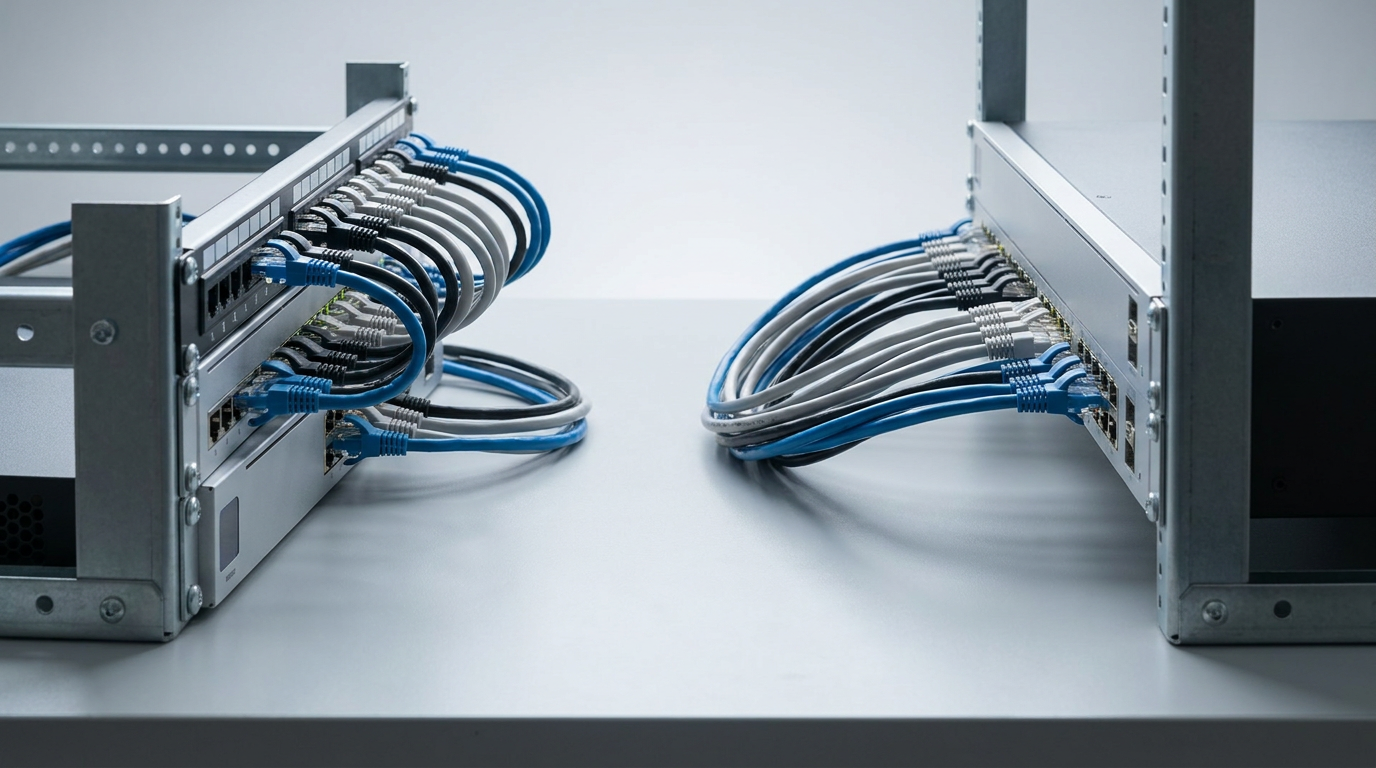
Role in Structured and Direct Network Connections
An ethernet patch cable is typically made with stranded copper conductors for flexibility, RJ45コネクタ, and a category rating such as Cat5e, Cat6, キャット6A, or Cat8. It is different from in-wall horizontal cable, which usually uses solid copper conductors and is designed for fixed installations.
In a patch panel setup, the permanent cable runs from wall outlets or work areas back to a patch panel. Short patch cables then connect patch panel ports to a switch. In a direct-run setup, a cable may run directly from the device to the switch without an intermediate patch panel.
当社の内部データと市場分析に基づく内訳は次のとおりです。
| 使用事例 | Typical Cable Type | ベストフィット | 主な利点 |
|---|---|---|---|
| Desk to wall outlet | Cat6パッチケーブル | Office workstations | Flexible and easy to replace |
| Patch panel to switch | Cat6 or Cat6A patch cable | Network racks | すっきりとしたケーブル管理 |
| Router to switch | Cat6パッチケーブル | Small networks | Simple connection |
| Server to switch | Cat6Aパッチケーブル | High-speed racks | Better 10Gb support |
| 一時的なテスト | Any certified patch cable | Troubleshooting | Fast validation |
cwcables プロのヒント: I recommend using patch cables for movable connections and solid-core bulk cable for fixed in-wall runs. This keeps the network standards-compliant and avoids premature connector or conductor failure.
How Does ethernet patch cable Work?
An ethernet patch cable works by carrying electrical data signals between network ports using twisted copper pairs. The twists reduce electromagnetic interference, while the RJ45 connectors align each conductor with the correct pin position, allowing devices to negotiate speed, duplex, and communication standards automatically.
ツイストペアによる信号伝送
Most ethernet patch cable types contain four twisted pairs. Depending on the network speed, some or all pairs are used to transmit and receive data. The cable category determines bandwidth, frequency capability, and distance support.
For example, Cat5e commonly supports 1Gbps up to 100 meters, while Cat6A supports 10Gbps up to 100 meters under proper installation conditions. Patch cables must be correctly terminated to either T568A または T568B wiring standards, with T568B being common in many commercial installations.
Key operating factors include:
- ケーブルカテゴリ — Determines bandwidth and speed capability.
- Conductor quality — Bare copper performs better than 銅被覆アルミニウム。
- Termination accuracy — Poor pin alignment causes packet loss or link failure.
- ケーブル長 — Longer runs can increase 減衰。
- シールド — Helps in high-interference environments.
- 曲げ半径 — Tight bends can degrade signal quality.
cwcables プロのヒント: I always test patch cables after installation, even if they are factory-made. A simple continuity and certification check can prevent hours of troubleshooting later.
What are the benefits of ethernet patch cable?
The main benefits of an ethernet patch cable are reliable wired performance, low latency, easy replacement, organized connectivity, and compatibility with standard network equipment. Compared with wireless links, patch cables provide more predictable bandwidth, making them ideal for offices, server rooms, surveillance systems, and high-demand workstations.
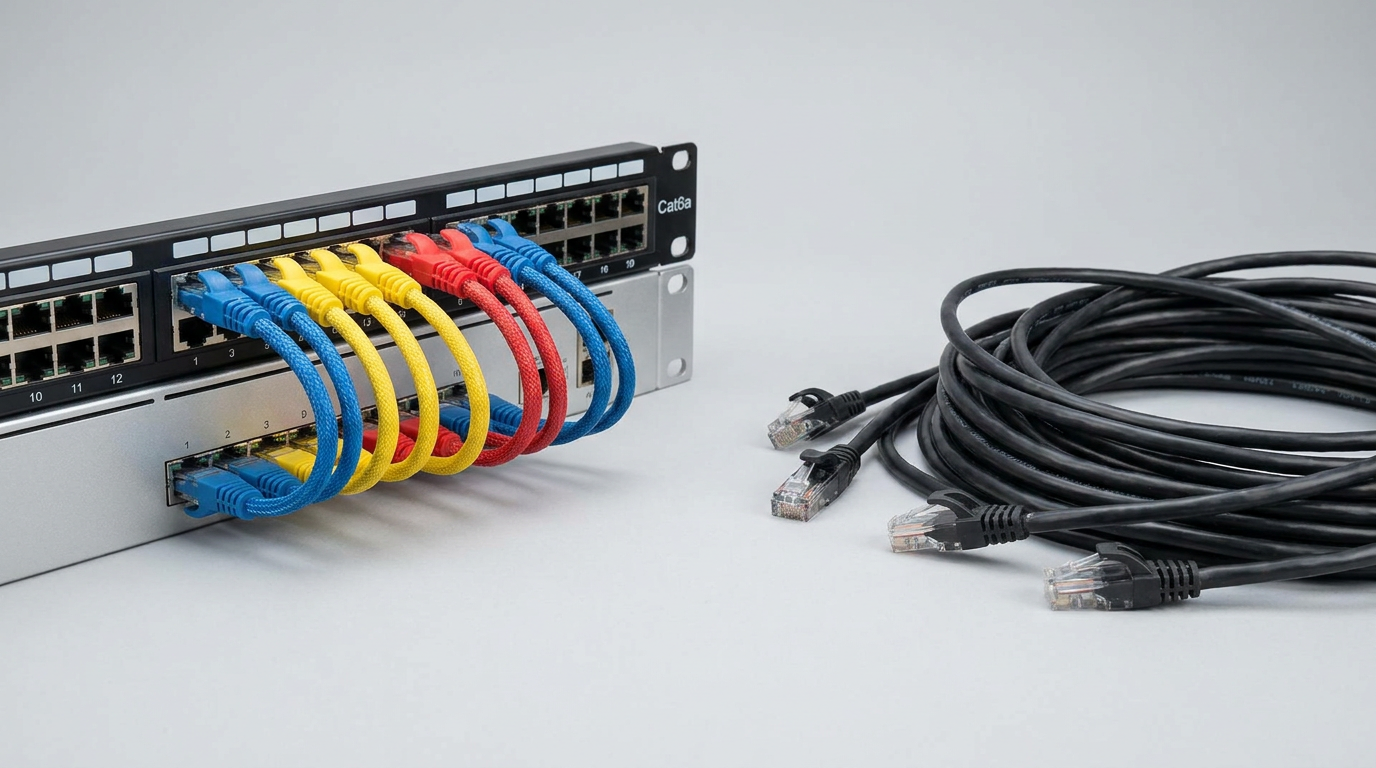
Practical Advantages for Patch Panel and Direct-Run Layouts
An ethernet patch cable gives network administrators flexibility. In a patch panel environment, cables can be moved, labeled, replaced, or rerouted without disturbing permanent cabling. In a small direct-run setup, patch cables reduce installation complexity and keep costs low.
Patch cables are also valuable because they isolate wear and tear. Instead of repeatedly plugging and unplugging expensive switches or fixed cabling, you can replace an inexpensive patch cable when a connector becomes loose or damaged.
当社の内部データと市場分析に基づく内訳は次のとおりです。
| 利点 | Patch Panel Setup | Direct Run Setup |
|---|---|---|
| Organization | Excellent for racks and large networks | Limited unless carefully labeled |
| Troubleshooting | Easier port-to-port tracing | Simple in very small networks |
| スケーラビリティ | 高い | 低から中程度 |
| 初期費用 | より高い | より低い |
| Long-term maintenance | より簡単に | Can become difficult as network grows |
| Professional appearance | とても強い | ケーブルの配線に依存 |
cwcables プロのヒント: I use patch panels when a network has more than a few drops or may grow later. Direct runs are fine for very small spaces, but they can become messy fast.
How to maintain a ethernet patch cable?
To maintain an ethernet patch cable, keep it properly routed, avoid sharp bends, inspect connectors, label both ends, clean dusty ports, and replace damaged cables immediately. Good maintenance prevents intermittent drops, reduced speeds, and hard-to-find network faults, especially in racks with frequent equipment changes.
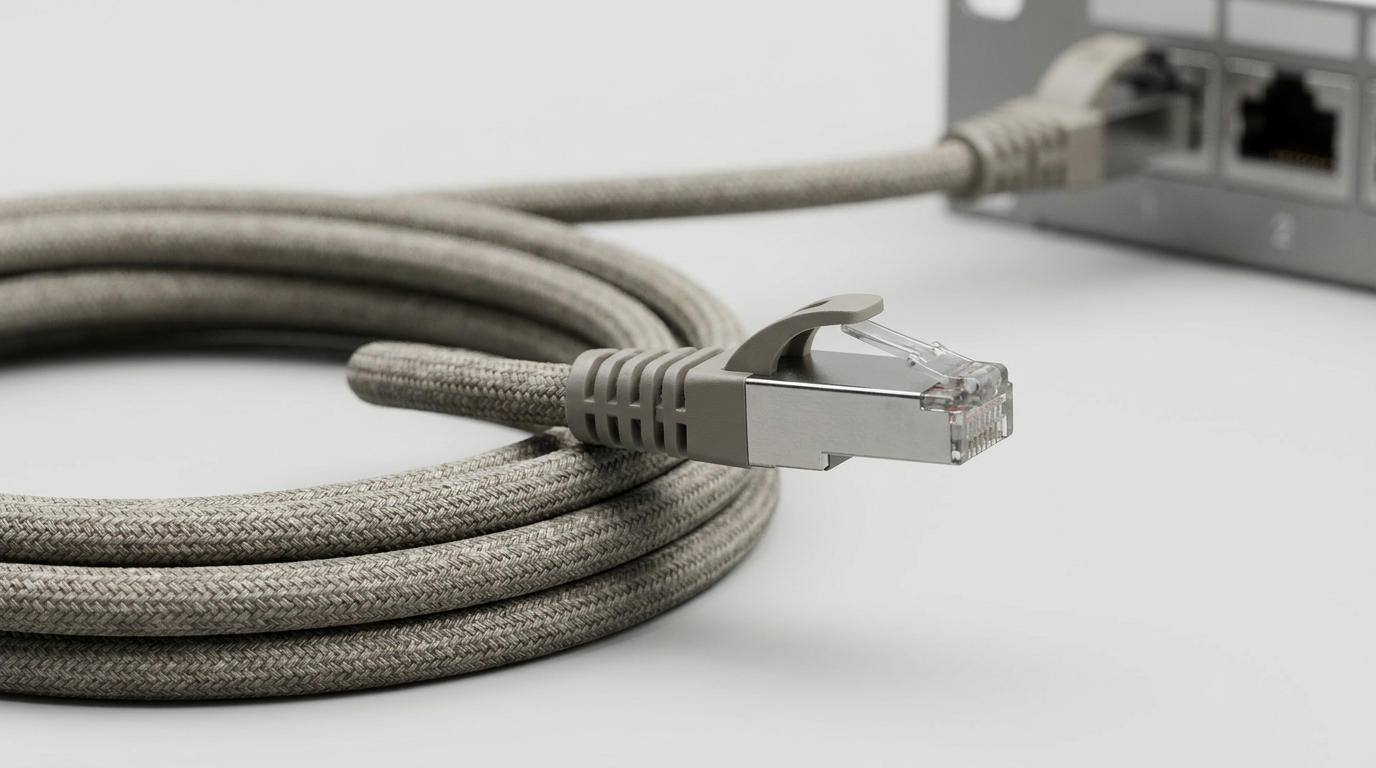
Maintenance Practices That Prevent Network Failures
Patch cables are often handled more than permanent cables, so they need routine inspection. The most common failures involve broken latch clips, crushed jackets, excessive pulling, tight bends, and poor cable management inside crowded racks.
Good maintenance is not complicated, but it must be consistent. Use Velcro ties instead of zip ties where possible, because overtightened zip ties can deform the cable jacket and affect pair geometry.
推奨されるメンテナンス チェックリスト:
- Inspect RJ45 clips for cracks, looseness, or missing retention tabs.
- Check cable jackets for cuts, kinks, crushing, or heat damage.
- Confirm labels at both ends to reduce troubleshooting time.
- Avoid tight bends near switch ports and patch panels.
- Use proper cable lengths to reduce slack and airflow blockage.
- 電源ケーブルから離す when possible to reduce interference.
- Test suspicious cables before blaming switches, routers, or endpoints.
- Replace worn cables instead of re-crimping low-quality patch cords.
cwcables プロのヒント: I keep a few tested spare patch cables in every network room. Swapping in a known-good cable is one of the fastest ways to confirm whether the issue is physical-layer related.
What is the price of ethernet patch cable?
The price of an ethernet patch cable depends on category rating, length, shielding, conductor material, jacket type, certification, and connector quality. Short Cat6 patch cables are usually inexpensive, while longer Cat6A or shielded cables cost more because they require better materials and tighter manufacturing controls.
総コストに影響を与える価格設定の変数
When comparing patch cable prices, the cheapest option is not always the best value. Poor-quality cables can cause unstable links, failed speed negotiation, or premature connector wear. For business networks, certified bare copper patch cables are usually worth the small added cost.
当社の内部データと市場分析に基づく内訳は次のとおりです。
| ケーブルの種類 | 共通使用 | Typical Relative Cost | 購入メモ |
|---|---|---|---|
| Cat5eパッチケーブル | Basic 1Gb networks | 低い | Good for legacy systems |
| Cat6パッチケーブル | Standard office networks | 低から中程度 | Best general-purpose choice |
| Cat6Aパッチケーブル | 10Gb networks | 中~高 | Better for high-performance racks |
| Shielded Cat6A | EMIの影響を受けやすいエリア | 高い | Requires compatible grounding |
| Slim patch cable | Dense patch panels | 中くらい | Improves airflow and cable management |
| Outdoor-rated patch cable | Harsh locations | 高い | Check UV and moisture rating |
Price is also influenced by length. A 1-foot cable for patch panel-to-switch connections costs less than a 50-foot cable used across a room. However, using many cables of the wrong length can create hidden costs through messy racks, blocked airflow, and slower troubleshooting.
cwcables プロのヒント: I focus on total network value, not just unit price. A certified Cat6 or Cat6A cable from cwcables can save time by reducing avoidable failures and replacement cycles.
主な機能と比較
The key features to compare in an ethernet patch cable are category rating, length, shielding, conductor type, jacket material, flexibility, and connector quality. These details determine whether the cable is suitable for a patch panel, direct run, data center, office workstation, or high-interference environment.
Feature Differences Between Patch Panel and Direct-Run Use
Patch panel and direct-run designs can both work well, but they solve different problems. A patch panel is best when you want a structured, scalable, and serviceable network. A direct run is best when the network is small, stable, and unlikely to change.
当社の内部データと市場分析に基づく内訳は次のとおりです。
| 特徴 | Patch Panel Approach | Direct Run Approach | ベストプラクティス |
|---|---|---|---|
| Cable organization | 高い | 中程度から低程度 | Use patch panels for multi-room or multi-drop networks |
| Troubleshooting | Easier with labels and ports | Easy only when cable count is small | Label both ends regardless of method |
| スケーラビリティ | 素晴らしい | 限定 | Choose patch panels when expansion is likely |
| 設置費用 | 前払い額が高い | 前下がり | Balance first cost against future labor |
| Cable strain | Reduced at switch ports | Higher if cables are moved often | Use proper strain relief and cable management |
| Professional appearance | Clean and standardized | Can look cluttered | Use racks, managers, and correct lengths |
| Change management | Fast and controlled | More disruptive | Use patch cords for frequent changes |
| 最高の環境 | Offices, racks, data rooms | Small rooms, temporary setups | Match design to network size |
For most business installations, a hybrid structured cabling approach works best: permanent horizontal cabling terminates at a patch panel, and short ethernet patch cable connections link the patch panel to switches. Direct runs may still be practical for a home office, lab bench, or a single-device connection.
cwcables プロのヒント: I avoid plugging long horizontal cables directly into switches in professional racks. A patch panel protects the permanent cabling and makes future moves much easier.
コストと購入要素
When buying an ethernet patch cable, consider network speed, cable category, installation environment, length, flexibility, shielding needs, and future upgrades. The right cable should meet today’s bandwidth requirements while leaving enough performance margin for equipment changes, higher-speed switches, and denser network layouts.
How to Choose the Right Cable Before Purchase
A good buying decision starts with the network requirement, not the cable color or lowest price. For standard office networks, Cat6 is often the practical baseline. For 10Gbps links, especially in racks or high-performance environments, Cat6A is usually the safer choice.
購入チェックリスト:
- 必要な速度を確認する
Use Cat6 for most 1Gbps networks and Cat6A for stronger 10Gbps support. - Measure the actual path
Avoid excessive slack, but leave enough length for service loops and rack movement. - Choose the right jacket
Use riser, plenum, outdoor, or standard patch cable jackets according to the environment. - シールドを決める
Use shielded cable only when needed and when the system supports proper grounding. - Check conductor material
Prefer bare copper over copper-clad aluminum for reliable performance. - Match cable to rack density
Slim patch cables can improve airflow in crowded patch panels. - Buy consistent colors
Use color coding for VLANs, device types, departments, or service priority. - Prioritize tested products
Choose reputable suppliers such as cwcables for consistent termination and performance.
A direct run may reduce the initial hardware cost because it avoids patch panels and extra short patch cords. However, in growing networks, the cost of future troubleshooting and cable rework can exceed the original savings.
cwcables プロのヒント: I always buy a few extra cables in the same category, color, and length as the installation. Matching spares keep repairs clean and consistent.
結論
An ethernet patch cable is a small component with a major impact on network reliability. Patch panels are best for organized, scalable installations, while direct runs can work for simple setups. For professional results, choose certified cables, label everything, manage lengths carefully, and plan for future growth.
Final Recommendation for Reliable Network Design
For homes, small offices, and temporary environments, direct runs can be practical when the cable count is low and the layout is simple. For commercial spaces, data closets, multi-room offices, surveillance networks, and server racks, a patch panel-based design is usually the better long-term choice.
Best-practice summary:
- Use a パッチパネル when the network has multiple drops, frequent changes, or future expansion plans.
- Use a direct run only when the connection is simple, short, protected, and unlikely to change.
- 選択 猫6 for most modern office networks.
- 選択 キャット6A for higher-speed, 10Gb-ready infrastructure.
- 使用 proper cable management to protect bend radius and airflow.
- Label both ends of every ethernet patch cable.
- Buy from a trusted supplier such as cwケーブル for consistent performance and dependable installation quality.
cwcables プロのヒント: I treat patch cables as part of the network infrastructure, not accessories. Choosing the right cable and layout at the beginning prevents performance issues, messy racks, and expensive rework later.