

で モーションコントロールシステム, a Drag Chain Cable is not just a flexible cable placed inside a carrier; it is engineered, tested, and rated for continuous bending under controlled conditions. “Chain-rated” means the cable construction, materials, 曲げ半径, shielding, and test cycles are designed to survive repetitive movement without premature conductor breakage, jacket cracking, or signal failure.
What is Drag Chain Cable?
A Drag Chain Cable is a motion-rated cable designed to operate inside cable carriers, also called drag chains or energy chains. Unlike standard flexible cable, it is built for repeated bending, controlled torsion limits, abrasion resistance, and long service life in automated machinery, robotics, CNC equipment, and moving production systems.
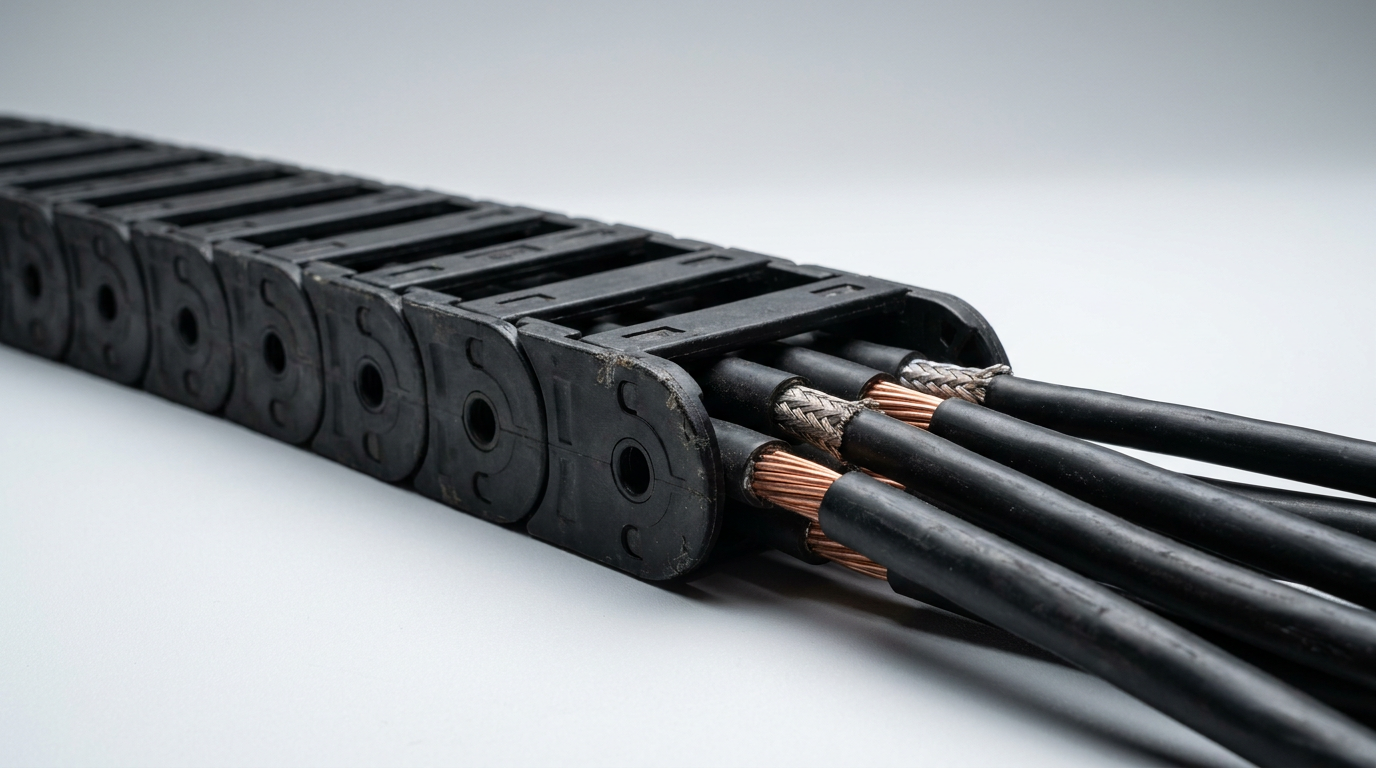
Construction That Makes It Chain-Rated
A true chain-rated cable is engineered as a system, not simply labeled as “flexible.” The conductor stranding, insulation, shielding, filler design, and outer jacket must all work together to handle repeated bending while maintaining electrical performance.
通常、主要な構築要素には次のものが含まれます。
- Fine-stranded copper conductors for fatigue resistance
- Low-friction insulation materials to reduce internal wear
- Optimized conductor lay length to prevent twisting and corkscrewing
- Textile wraps, fillers, or separators for mechanical stability
- Braided or foil shielding designed to flex without breaking
- Abrasion-resistant ピュア、 TPE, or PVC jackets depending on the environment
- Clearly defined minimum bend radius and cycle-life rating
A cable may bend easily in your hand but still fail quickly in a drag chain if it lacks the correct internal geometry. Chain-rated performance depends on repeatable movement under load, not basic flexibility.
cwcables プロのヒント: I always recommend checking the rated bend radius and cycle count before choosing a Drag Chain Cable. If those values are missing from the datasheet, treat the cable as general flexible cable—not a proven chain-rated option.
How Does Drag Chain Cable Work?
A Drag Chain Cable works by managing mechanical stress during repetitive linear or rotational movement. Inside the drag chain, the cable bends along a controlled radius while its internal conductors, insulation, and jacket absorb movement without excessive friction, twisting, compression, or fatigue that could cause electrical failure.
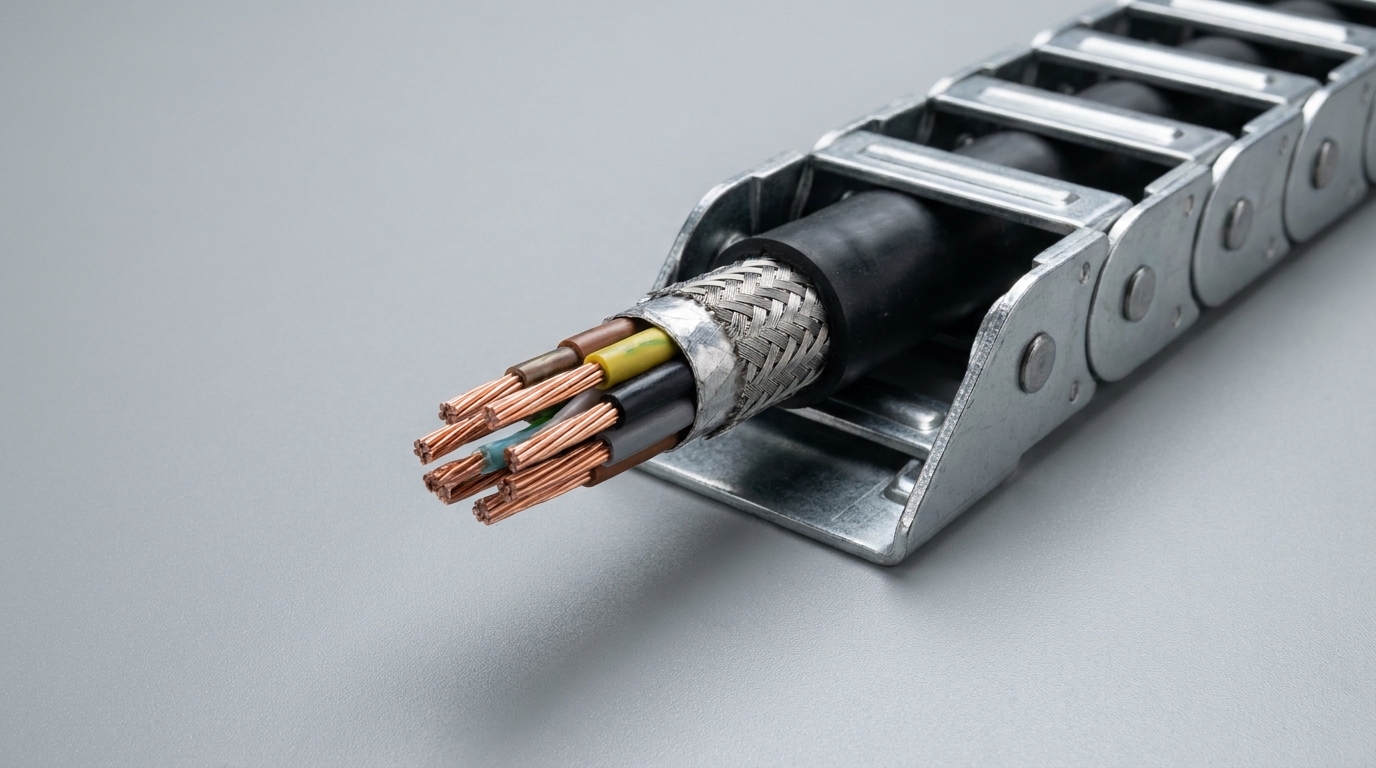
ケーブルキャリア内のモーションコントロール
The drag chain guides the cable path, but the cable itself must tolerate millions of bending cycles. During each machine stroke, the cable moves through a defined bend zone. If the cable is too stiff, too loosely constructed, or installed incorrectly, stress concentrates in the conductors and shielding.
A properly installed Drag Chain Cable should follow these principles:
- Maintain the manufacturer’s minimum bend radius.
- Lay freely inside the chain without being stretched.
- Avoid crossing or twisting with other cables.
- Use separators when multiple cables or hoses are installed.
- Leave adequate clearance so the cable can move naturally.
- Anchor only at the fixed and moving ends, not along the moving radius.
- Match the cable design to stroke length, speed, acceleration, and environment.
The goal is controlled movement. The drag chain prevents random whipping, while the cable construction prevents internal fatigue. Together, they protect power, signal, data, and control circuits in dynamic machinery.
cwcables プロのヒント: I never pull a Drag Chain Cable tight inside the carrier. A small amount of free movement is essential because the cable must glide through the bend radius rather than act like a tensioned rope.
What are the benefits of Drag Chain Cable?
The main benefits of Drag Chain Cable are longer service life, lower downtime, safer motion control, better signal reliability, and reduced maintenance in moving equipment. It protects conductors from repeated bending damage while maintaining power, control, servo, encoder, or data transmission in demanding automated applications.
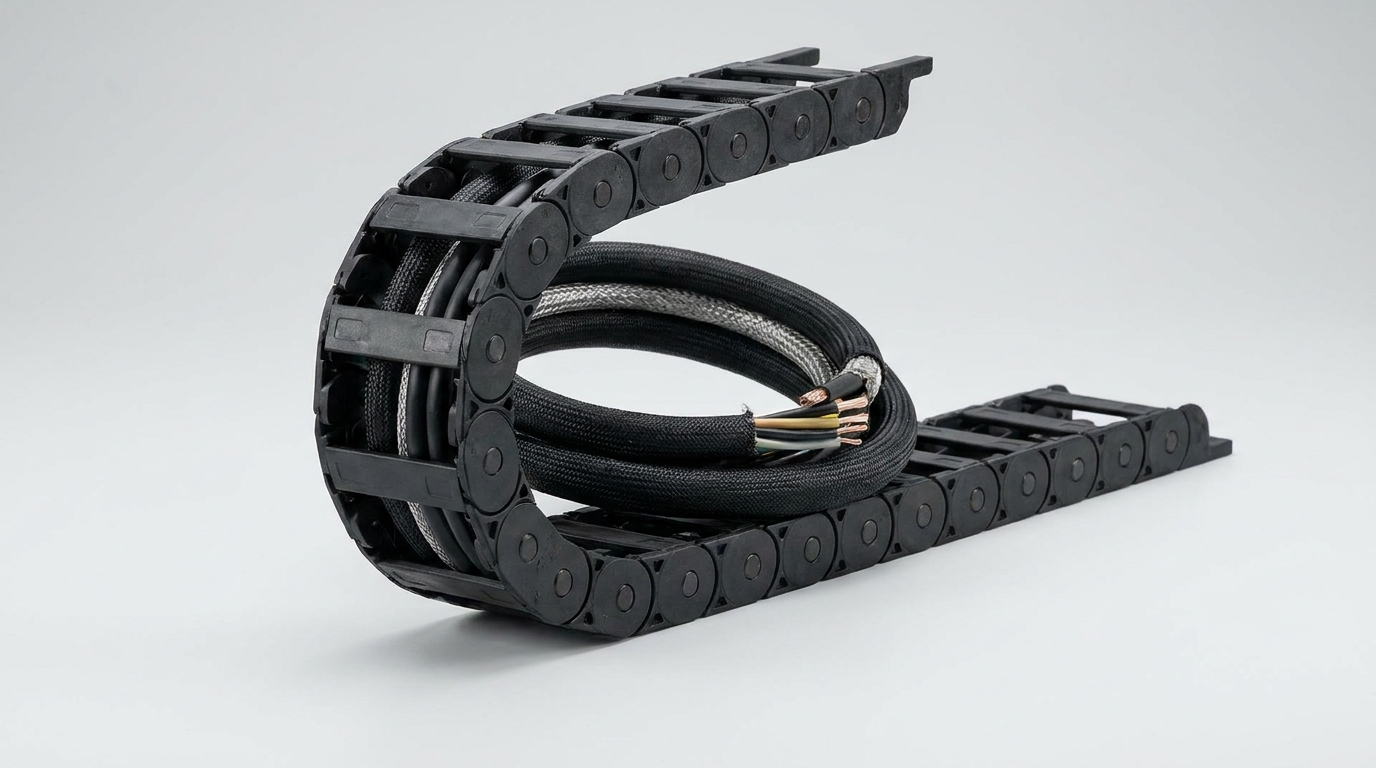
Operational Advantages in Automated Systems
Using a chain-rated cable improves machine reliability because it is designed for predictable motion. Standard cable may function at startup, but repetitive bending can quickly lead to broken conductors, intermittent faults, shielding failure, or jacket damage.
当社の内部データと市場分析に基づく内訳は次のとおりです。
| 利点 | なぜそれが重要なのか | 典型的な影響 |
|---|---|---|
| より長い屈曲寿命 | Reduces conductor fatigue during repeated movement | Fewer cable replacements |
| Stable signal transmission | Protects shielding and conductor geometry | Lower risk of intermittent faults |
| 耐摩耗性 | Jacket withstands contact inside the carrier | 耐久性の向上 |
| Controlled bending | Cable matches drag chain movement | Less mechanical stress |
| ダウンタイムの削減 | Prevents unexpected cable failure | Higher machine availability |
| Cleaner installation | Organized routing inside the chain | Easier maintenance and troubleshooting |
For applications such as ロボット工学, pick-and-place systems, gantry machines, packaging lines, and CNC machining centers, the cost of downtime is often far greater than the cost difference between standard cable and a properly selected Drag Chain Cable.
cwcables プロのヒント: I look at Drag Chain Cable as downtime insurance. Saving a small amount on non-rated cable rarely makes sense when a single production stop can cost more than the entire cable set.
How to maintain a Drag Chain Cable?
Maintaining a Drag Chain Cable requires regular inspection of jacket wear, bend radius, carrier alignment, cable spacing, strain relief, and signs of twisting or abrasion. Good maintenance focuses on preventing mechanical stress before it becomes conductor breakage, intermittent signal loss, or complete machine shutdown.
Inspection and Preventive Care
Drag Chain Cable maintenance is mostly about confirming that the cable is still moving correctly. Even a high-quality chain-rated cable can fail early if the carrier is misaligned, overfilled, contaminated, or installed with improper strain relief.
Recommended maintenance steps include:
- Inspect the outer jacket for cracks, flattening, swelling, or abrasion.
- Check that the cable is not twisted inside the drag chain.
- Confirm that the bend radius matches the cable specification.
- Verify that separators are in place where needed.
- Look for debris, chips, oil buildup, or sharp edges inside the carrier.
- Ensure cable clamps are secure at both ends but not crushing the jacket.
- Monitor for intermittent faults during machine movement.
- Replace damaged cables before they cause secondary equipment damage.
Maintenance intervals depend on cycle frequency, travel speed, contamination, and environment. High-speed automation lines may require more frequent inspection than slower-duty equipment.
cwcables プロのヒント: I always check the moving section while the machine cycles slowly. Many cable problems are invisible when the system is stopped but obvious when the cable begins to twist, jump, or bind.
What is the price of Drag Chain Cable?
The price of Drag Chain Cable depends on conductor count, wire gauge, shielding, jacket material, voltage rating, approvals, flex-life rating, and order quantity. Basic control cables cost less, while servo, encoder, data, hybrid, and high-cycle PUR or TPE cables are typically priced higher.
総コストに影響を与える価格設定の変数
Drag Chain Cable pricing is driven by both electrical and mechanical requirements. A simple unshielded control cable for moderate movement will cost significantly less than a high-flex servo cable with power conductors, brake pairs, signal pairs, shielding, and oil-resistant PUR jacket.
当社の内部データと市場分析に基づく内訳は次のとおりです。
| コスト要因 | 低コストのオプション | より高価なオプション |
|---|---|---|
| ジャケット素材 | PVC | PURまたはTPE |
| シールド | シールドなし | Braided shield, foil shield, or combined shielding |
| フレックス評価 | 中程度のサイクル寿命 | High-cycle continuous-flex rating |
| ケーブルの種類 | コントロールケーブル | Servo, encoder, data, or hybrid cable |
| 環境 | Clean indoor use | Oil, coolant, abrasion, UV, or low-temperature exposure |
| コンプライアンス | Standard industrial use | UL, CE, CSA, or application-specific approvals |
| 量 | Short custom length | Bulk reel or production volume |
The lowest purchase price is not always the lowest ownership cost. If the application runs continuously, a higher-rated cable can reduce maintenance labor, lost production, and emergency replacement costs.
cwcables プロのヒント: I recommend pricing Drag Chain Cable by expected service life, not just by meter. A cable that lasts three times longer can be the more economical option even if its initial price is higher.
主な機能と比較
Key Drag Chain Cable features include fine-stranded conductors, high-flex insulation, abrasion-resistant jackets, controlled lay construction, dynamic shielding, oil resistance, and documented bend-radius ratings. Comparing these features against standard cable helps determine whether a cable is truly suitable for continuous movement inside a drag chain.
Chain-Rated Cable Versus Standard Flexible Cable
当社の内部データと市場分析に基づく内訳は次のとおりです。
| 特徴 | Chain-Rated Drag Chain Cable | 標準フレキシブルケーブル | なぜそれが重要なのか |
|---|---|---|---|
| 導体設計 | Fine or ultra-fine stranded copper | Standard stranded copper | 耐疲労性の向上 |
| Internal construction | 繰り返しの曲げに最適化 | General flexibility only | Prevents twisting and conductor stress |
| Bend radius rating | Clearly specified for dynamic use | Often static or limited flex rating | Ensures correct installation |
| Cycle-life testing | Designed for repeated motion cycles | Usually not tested for drag chain duty | Predicts service reliability |
| ジャケット素材 | PUR、TPE、またはハイフレックス PVC | General PVC or rubber compounds | 耐摩耗性と耐油性の向上 |
| シールド | Flex-compatible braid or foil designs | Standard shield construction | Reduces shield breakage |
| 設置環境 | ケーブルキャリア, robotics, moving axes | 固定または不定期の動き | Matches actual machine duty |
| Failure risk in motion | Lower when properly selected | Higher under continuous flexing | ダウンタイムの削減 |
A cable can be flexible without being chain-rated. The difference is proof of performance under repeated bending. In industrial automation, that distinction matters because cable failure often appears as intermittent faults before complete failure, making troubleshooting costly and time-consuming.
When comparing options, focus on application data: travel length, speed, acceleration, bend radius, ambient conditions, oil exposure, voltage, signal sensitivity, and required certifications.
cwcables プロのヒント: I do not accept “highly flexible” as a substitute for “drag-chain rated.” I want to see dynamic bend radius, cycle-life expectations, and suitable jacket material before approving a cable for a moving carrier.
コストと購入要素
Buying Drag Chain Cable requires balancing price, flex life, electrical performance, environment, approvals, and installation conditions. The right choice is not always the most expensive cable, but it must match the machine’s movement profile, bend radius, signal requirements, and expected operating conditions.
How to Choose the Right Cable for the Application
A good buying decision starts with the machine, not the catalog. Before selecting a Drag Chain Cable, define exactly how the cable will move and what it must carry electrically.
重要な購入要素には次のようなものがあります。
- Cable function: power, control, サーボ、 エンコーダ、 イーサネット, data, or hybrid
- Conductor size and conductor count
- Voltage and current requirements
- Shielding requirements for EMI-sensitive systems
- Minimum dynamic bend radius
- Travel distance, speed, and acceleration
- Cycle frequency and expected machine life
- Jacket resistance to oil, coolant, chemicals, abrasion, or temperature
- Required approvals such as UL, CSA, CE, or RoHS
- Availability of standard stock lengths or custom assemblies
For cost control, avoid both under-specifying and over-specifying. An under-rated cable may fail early, while an unnecessarily premium cable may increase project cost without improving performance in a moderate-duty application.
cwcables プロのヒント: I always ask for the drag chain dimensions before final cable selection. Even the best cable can fail early if the carrier is too small, overfilled, or designed with an aggressive bend radius.
結論
A Drag Chain Cable is chain-rated when it is specifically engineered and tested for repetitive motion inside a cable carrier. The rating depends on construction, bend radius, jacket material, shielding, and cycle performance—not just flexibility. Correct selection and installation are essential for reliable automation performance.
最終選考ガイダンス
Choosing the right Drag Chain Cable means looking beyond basic electrical specifications. The cable must match the mechanical movement, environmental exposure, and reliability expectations of the equipment.
購入する前に、この最終チェックリストを使用してください。
- Confirm the cable is intended for dynamic drag chain use.
- Check the minimum bend radius against the carrier design.
- Match conductor size, shielding, and voltage to the application.
- Select the jacket material for oil, abrasion, coolant, and temperature exposure.
- Verify approvals and documentation requirements.
- Review installation space, separators, and strain relief.
- Consider total cost of ownership, not only purchase price.
For industrial automation, robotics, CNC machinery, packaging systems, and other moving equipment, a properly selected Drag Chain Cable helps reduce downtime, protect signals, and extend service life.
cwcables プロのヒント: If you are unsure whether your cable is truly chain-rated, share the movement profile, bend radius, and electrical requirements with cwcables before ordering. It is much easier to specify correctly upfront than replace failed cable after production is running.