

Câbles souples ne sont pas équivalents à câbles de chaîne porte-câbles, car il existe des différences significatives entre les deux en termes de portée conceptuelle et de structure interne. Une analyse détaillée suit :
Différentes portées conceptuelles
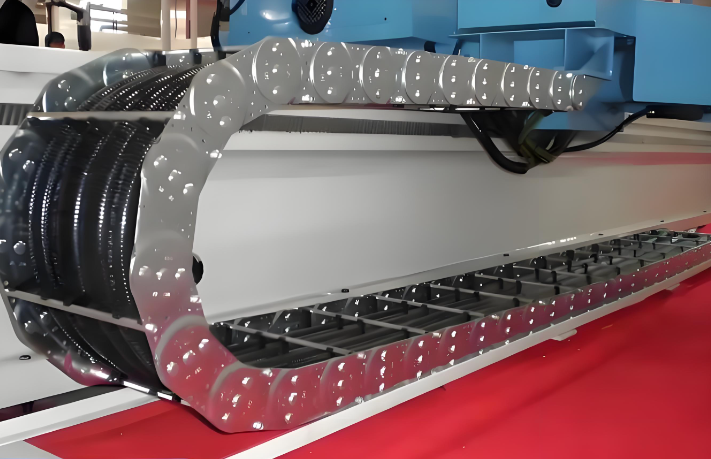
1.Câble de chaîne de traînage est un type spécifique de câble flexible : le câble de la chaîne porte-câbles doit être installé à l'intérieur de la coque de la chaîne porte-câbles pour aller et venir, et sa flexibilité est une caractéristique importante, appartenant à la catégorie des câble flexible. Par exemple, dans les équipements automatisés, le câble de la chaîne porte-câbles se plie à plusieurs reprises lorsque la chaîne porte-câbles se déplace, et sa nature flexible lui permet de s'adapter à ce mode de mouvement.
2.Câble souple comprennent divers câbles spéciaux : en plus de câbles de chaîne porte-câbles, les câbles de traction, les câbles anti-torsion, les câbles de robots, les câbles d'ascenseur, etc. appartiennent également aux câbles flexibles. Ces câbles sont également flexibles, mais leurs scénarios d'application et leurs caractéristiques fonctionnelles sont différents de ceux des câbles pour chaînes porte-câbles. Les câbles de traction sont principalement utilisés dans les situations où ils doivent résister à des forces de traction élevées, comme les câbles de connexion pour les équipements de travail à haute altitude ; Les câbles anti-torsion conviennent aux environnements nécessitant des torsions fréquentes, comme le câblage interne de certaines machines tournantes.
Différentes structures internes
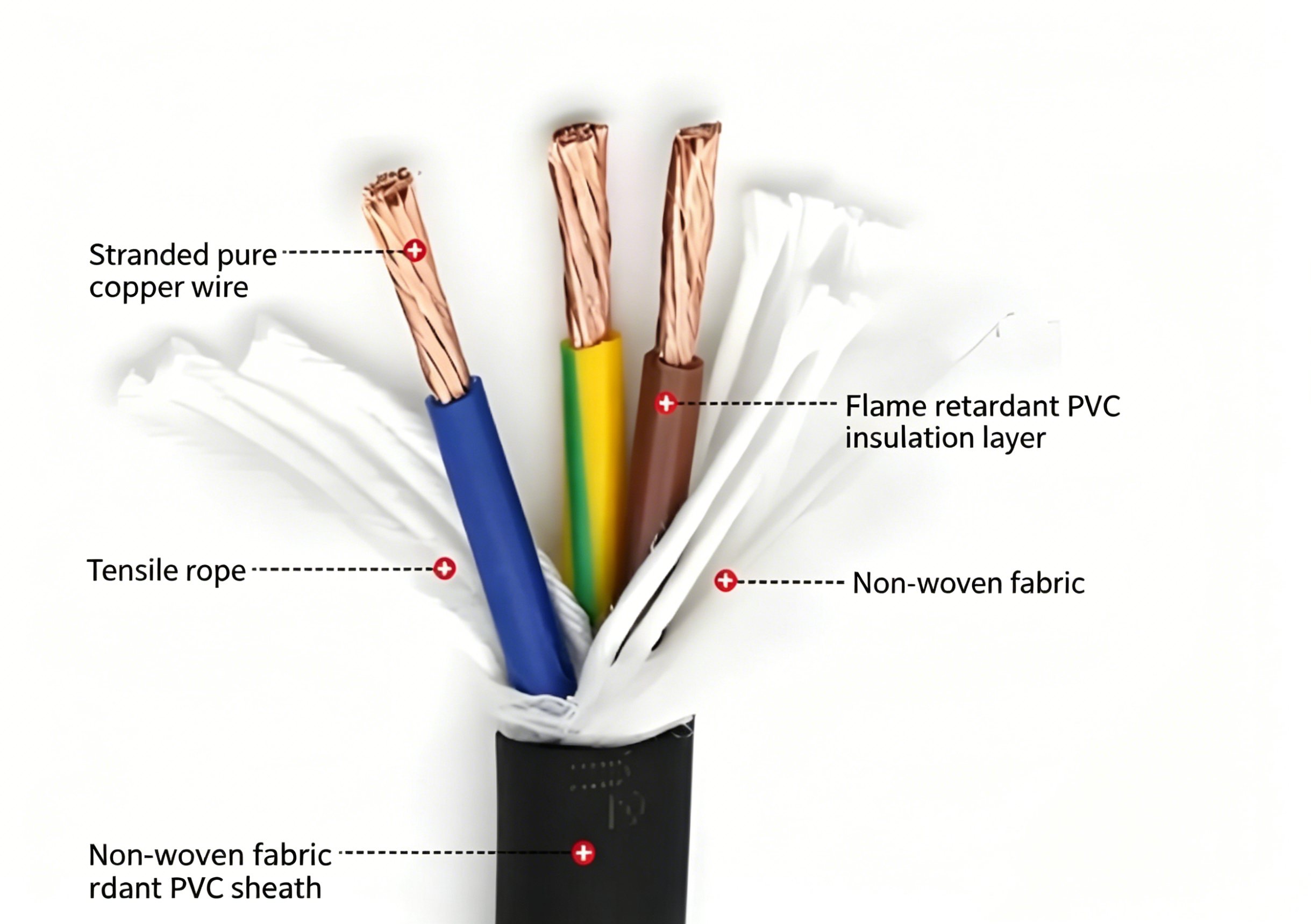
1. Les câbles de chaîne de traînée sont communément appelés câble haute flexibilité ou câble ultra haute flexibilité. La structure interne du câble de la chaîne porte-câbles est déterminée par sa trajectoire de mouvement : comme le câble de la chaîne porte-câbles doit se déplacer d'avant en arrière, la conception du conducteur interne et de la couche de blindage doit surmonter les forces externes pour équilibrer les contraintes internes. Par exemple, les conducteurs peuvent adopter des structures filamenteuses plus fines pour augmenter la flexibilité ; La couche de protection peut adopter une méthode de tissage spéciale, qui peut garantir l'effet de protection et s'adapter aux flexions répétées.
2.La structure interne des autres câbles flexibles est déterminé par leurs caractéristiques de fonctionnement respectives :
● Câble de traction : à l'intérieur, des âmes renforcées peuvent être ajoutées ou des matériaux à haute résistance peuvent être utilisés pour résister à des forces de traction plus importantes. Par exemple, dans les câbles d'ascenseur, des âmes de renfort en fil d'acier sont utilisées pour empêcher les câbles de se séparer pendant le processus de levage.
● Câble anti-torsion : La disposition des conducteurs et des couches d'isolation peut être spécialement conçue pour réduire les contraintes générées lors de la torsion. Par exemple, l'utilisation d'une structure torsadée multicouche permet aux câbles de glisser les uns par rapport aux autres lors de la torsion, réduisant ainsi les dommages causés au câble par la torsion. Par exemple, dans les situations où les câbles et câbles communs du robot doivent être torsadés.
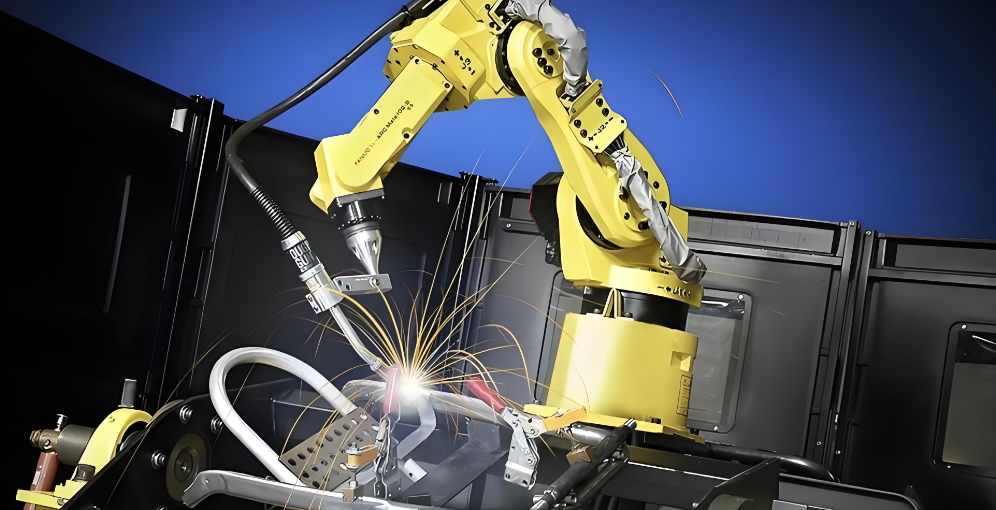
● Câble robotique: Différentes structures internes doivent être conçues en fonction de la trajectoire et de la fréquence des mouvements du robot. Par exemple, pour les câbles situés dans la zone de jonction, il peut être nécessaire d'utiliser des conducteurs plus souples et des couches d'isolation plus fines pour s'adapter aux courbures fréquentes du jonction.
● Câble d'ascenseur : En plus de prendre en compte les performances de traction, il est également nécessaire de prendre en compte le poids et la flexibilité du câble pour garantir le bon fonctionnement de l'ascenseur. Par conséquent, les câbles d’ascenseur peuvent utiliser des matériaux légers et des conceptions structurelles spéciales.
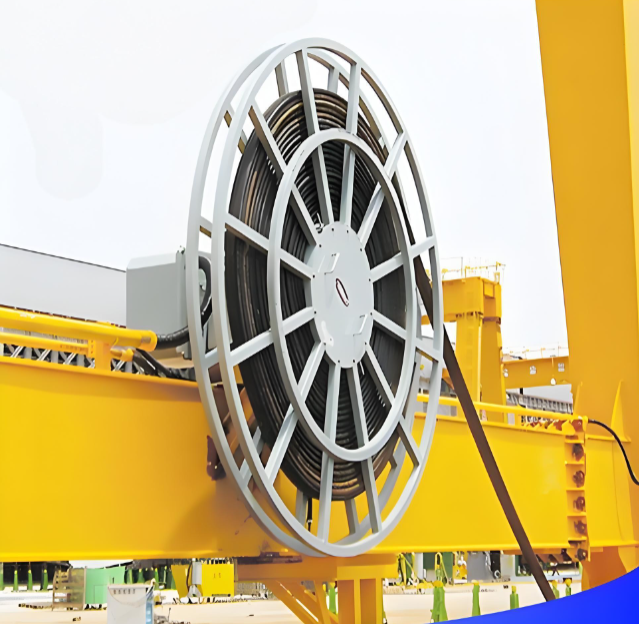
● Câble de grue: un câble mobile spécialisé avec une flexibilité élevée, une résistance à la traction élevée et une résistance à l'enroulement/à la traînée, appartenant à une catégorie de subdivision de force robuste, à longue course et à force dynamique de fil flexible; Il croise le câble de chaîne porte-câbles mais n'est pas équivalent.
Un accent différent sur la performance
Câble de chaîne porte-câbles : se concentre principalement sur la stabilité et la durabilité lors de mouvements de flexion répétés, garantissant qu'il n'y aura pas de problèmes tels que des circuits ouverts ou des courts-circuits pendant le fonctionnement à long terme de la chaîne porte-câbles. Par exemple, sur une ligne de production automatisée, les câbles de chaîne porte-câbles peuvent devoir subir des milliers de mouvements de flexion chaque jour. Leurs performances se concentrent donc sur la résistance à la fatigue de flexion.
Autres câbles flexibles : :
● Câble de traction: se concentre sur la capacité à résister à la tension, garantissant l'intégrité structurelle et la stabilité électrique du câble sous tension. Par exemple, les câbles de traction utilisés dans les grues doivent pouvoir résister à plusieurs tonnes de tension.
● Câble anti torsion: se concentre sur la résistance aux contraintes générées par la torsion et sur la prévention des dommages aux câbles pendant le processus de torsion. Par exemple, dans une éolienne, la rotation des pales provoque une torsion des câbles, et les câbles anti-torsion doivent pouvoir s'adapter à cet environnement de torsion.
● Câble robot : se concentre sur l'adaptation aux mouvements complexes et rapides des robots, garantissant la stabilité et la transmission des signaux en temps réel. Par exemple, lors du mouvement des bras des robots industriels, les câbles doivent suivre rapidement les mouvements du bras tout en garantissant que les signaux ne soient pas perdus.
● Câbles d'ascenseur : concentrez-vous sur la sécurité et la fiabilité pendant le processus de levage de l'ascenseur, tout en tenant compte de l'impact du poids du câble sur le fonctionnement de l'ascenseur. Par exemple, les câbles des ascenseurs doivent avoir une bonne isolation et une bonne résistance au feu pour garantir la sécurité des passagers.
● Câbles de grue : se concentrer sur la résistance à la traction, la résistance à la traînée, la résistance à la torsion et les longs déplacements ; Utilisé pour le moulinet, le remorquage et la suspension ; Plus plat et moins circulaire ; La gaine est plus résistante à la déchirure et à l'huile.
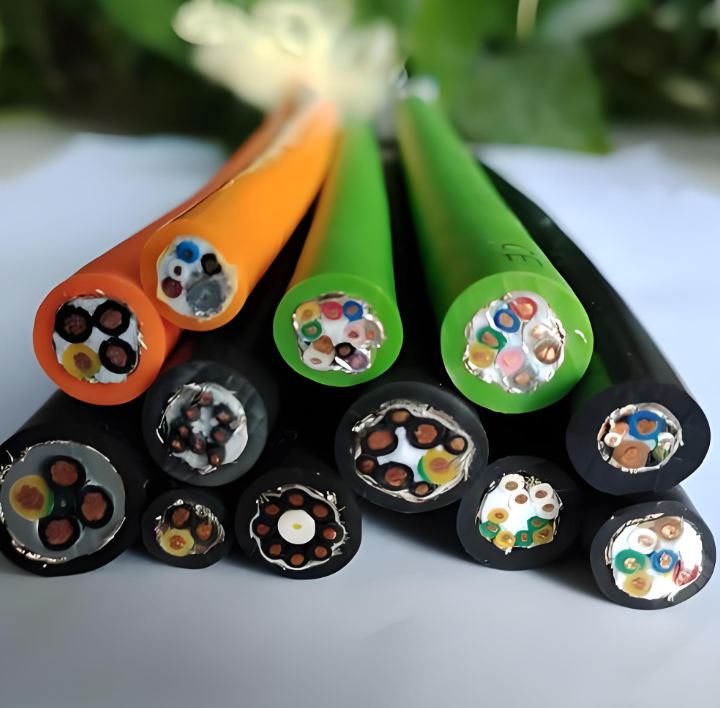
En résumé, les câbles de chaîne porte-câbles doivent être des câbles flexibles, mais des câbles flexibles ≠ des câbles de chaîne porte-câbles. Les câbles flexibles comprennent des câbles provenant de plusieurs industries spéciales, et les câbles flexibles ordinaires ne peuvent pas être utilisés pendant longtemps dans les chaînes porte-câbles.