

Oui, un Câble Cat6 is a type of Ethernet cable used for wired network connections. More precisely, “Cat6” describes the cable category and performance standard, while “Ethernet” describes the networking technology it supports. For homes, offices, data rooms, and device-to-router connections, Cat6 is one of the most common Ethernet cabling choices.
What is a Cat6 networking cable as an Ethernet cable?
A Cat6 networking cable is an Ethernet cable designed to carry data between network devices such as routers, switches, computers, access points, cameras, and servers. Cat6 refers to the cable’s performance category, supporting faster speeds and better signal quality than older Cat5e cables when installed correctly.
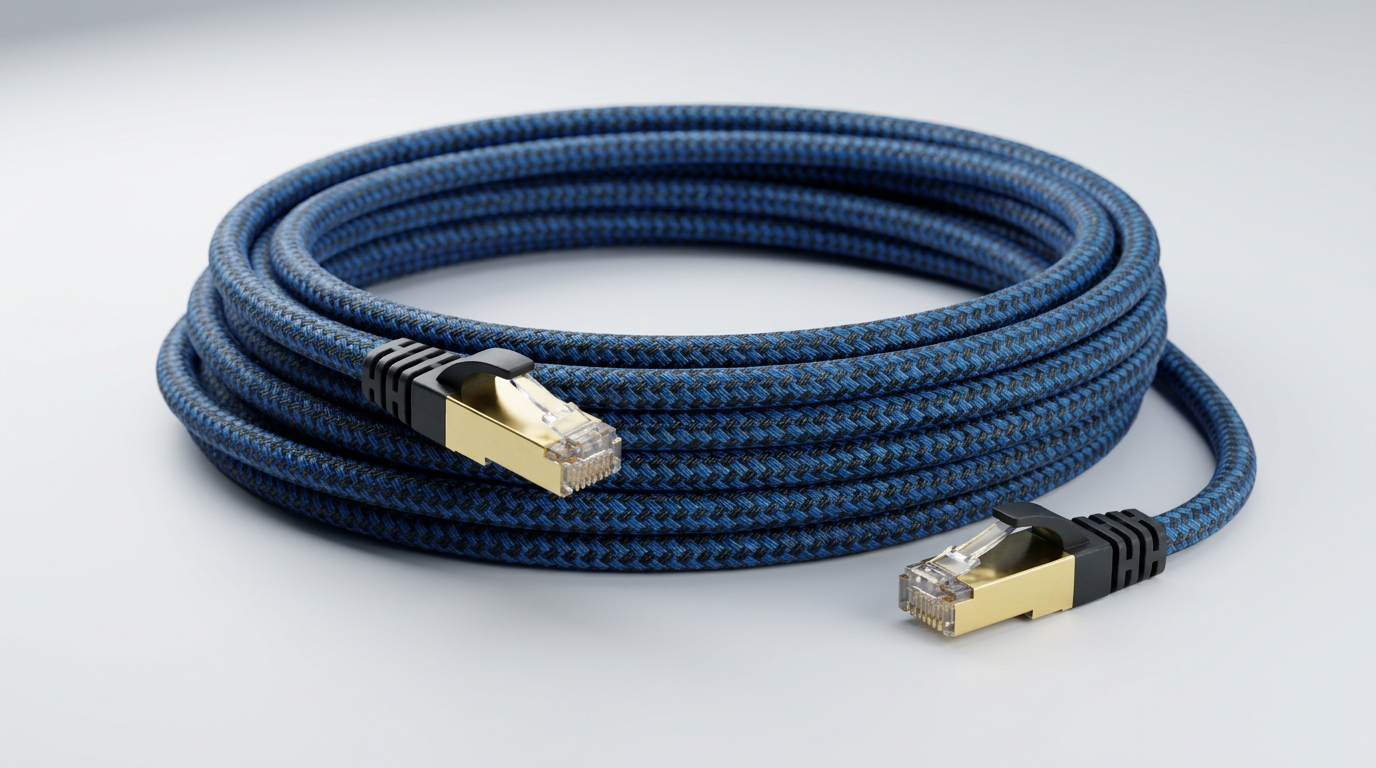
Cat6 as an Ethernet Cable Category
Cat6 is part of the paire torsadée copper cable family commonly used for Ethernet networks. It usually has four twisted wire pairs inside the jacket and typically uses RJ45 connectors, which fit standard Ethernet ports on most networking equipment.
Sur la base de nos données internes et de notre analyse de marché, voici la répartition :
| Terme | Ce que cela signifie | Signification pratique |
|---|---|---|
| Ethernet | Norme de communication réseau | How devices send data over a wired network |
| Cat6 | Cable performance category | Defines bandwidth, speed capability, and construction quality |
| RJ45 | Common connector type | The plug used for most Ethernet ports |
| Paire torsadée | Conception des câbles | Reduces interference and improves signal quality |
| Patch Cable | Finished cable with connectors | Used to connect devices directly |
In simple terms, if you plug a Cat6 cable into a router, switch, PC, or network wall port, you are using it as an Ethernet cable. The cable itself does not “create” Ethernet, but it is one of the physical media Ethernet commonly runs over.
Conseil de pro cwcables : I recommend choosing Cat6 when you want a reliable everyday Ethernet cable that supports modern home and business networks without overpaying for higher categories you may not need.
How does a Cat6 networking cable work as an Ethernet cable?
A Cat6 Ethernet cable works by transmitting electrical data signals through four twisted copper wire pairs. The twisting helps reduce interférence électromagnétique et diaphonie, allowing stable communication between connected network devices. When paired with compatible hardware, Cat6 can support Gigabit-Ethernet et jusqu'à Ethernet 10 Gbit/s over shorter distances.
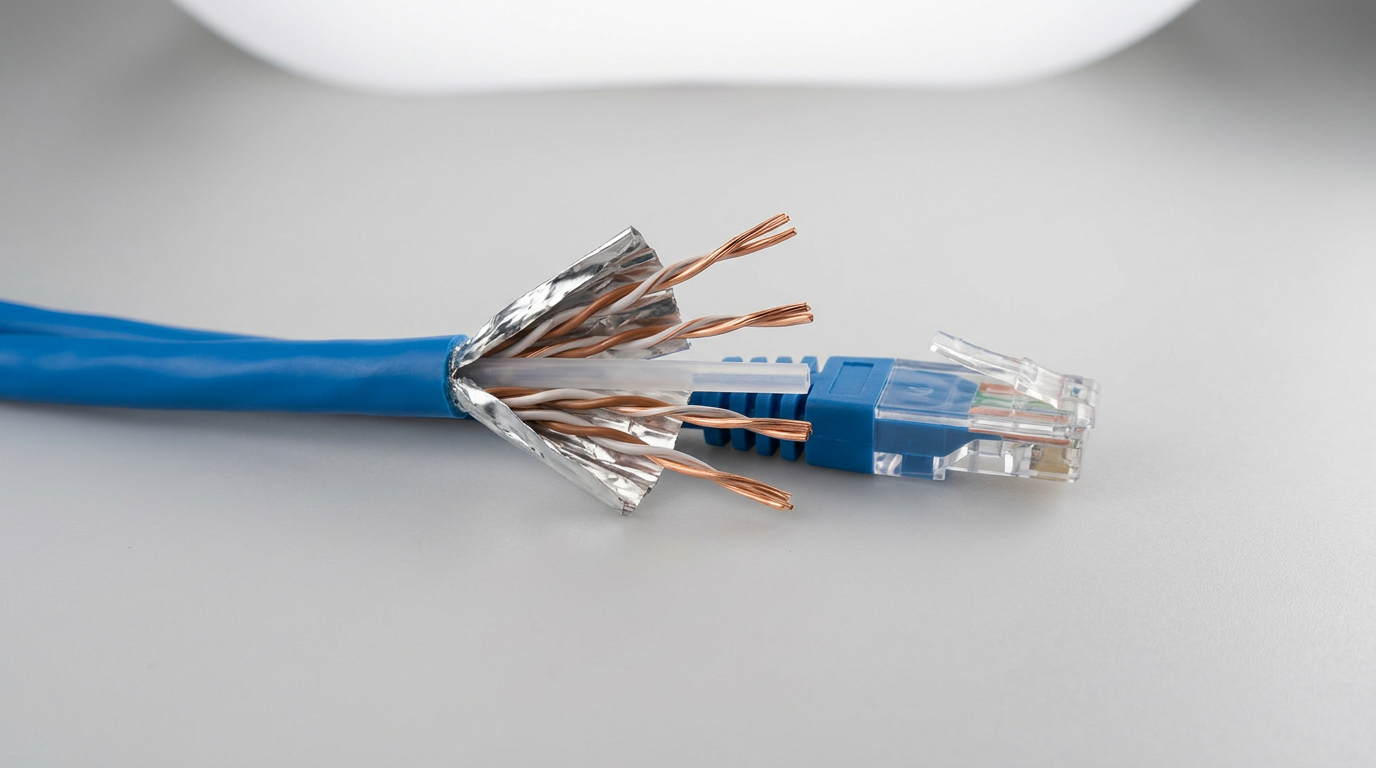
Transmission du signal via des paires torsadées
Inside a Cat6 cable, each copper pair carries part of the data signal. Ethernet equipment converts digital data into electrical signals, sends them through the cable, and then converts them back into usable data at the receiving device.
The process typically works like this:
- A device, such as a computer, sends data through its Ethernet port.
- The RJ45 connector transfers the signal into the Cat6 cable conductors.
- The twisted pairs carry the data while reducing interference.
- A switch, router, or another device receives and interprets the signal.
- Network protocols manage traffic, error checking, and delivery.
Cat6 cables are built with tighter twist rates and better internal separation than many older cables. This improves performance, especially in environments with multiple cables, electrical equipment, or higher network traffic.
Conseil de pro cwcables : I always advise avoiding sharp bends, crushed jackets, and poor-quality terminations because even a good Cat6 cable can perform badly if the physical installation damages the internal pair geometry.
What are the benefits of a Cat6 networking cable as an Ethernet cable?
The main benefits of Cat6 Ethernet cable are faster network performance, better interference resistance, broad compatibility, and strong long-term value. It works with common Ethernet devices while offering higher bandwidth than older cable types, making it suitable for streaming, gaming, office networks, surveillance systems, and business infrastructure.
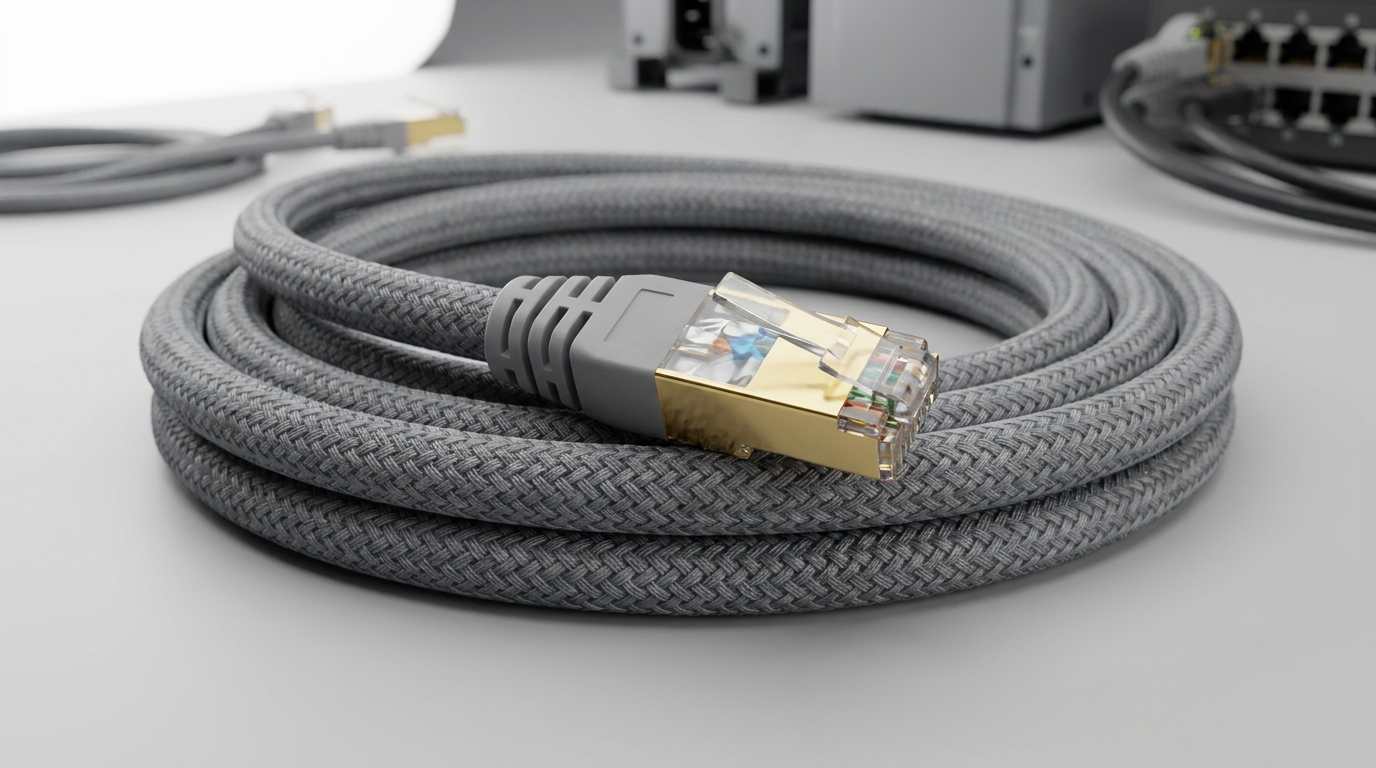
Practical Advantages for Modern Networks
Cat6 is popular because it balances performance, availability, and cost. It is often the preferred choice for new installations where users want reliable wired connections without jumping to more expensive Cat6A or fiber solutions.
Les principaux avantages comprennent :
- Supports up to 1Gbps Ethernet over the standard 100-meter channel distance.
- Can support 10Gbps Ethernet up to approximately 55 meters under suitable conditions.
- Offers 250MHz bandwidth, higher than Cat5e.
- Reduces crosstalk and signal noise compared with older cable categories.
- Works with standard RJ45 Ethernet ports.
- Suitable for PoE devices such as IP cameras, VoIP phones, and wireless access points.
- Backward compatible with Cat5e and Cat5 networks.
For many users, Cat6 is the “safe middle ground”: it is more capable than legacy cabling but still affordable and easy to deploy.
Conseil de pro cwcables : I suggest using Cat6 for most new home and office runs because it gives you room for network upgrades without making the installation unnecessarily expensive.
How to maintain a Cat6 networking cable as an Ethernet cable?
To maintain a Cat6 Ethernet cable, protect it from physical damage, moisture, excessive bending, connector wear, and electrical interference. Good maintenance keeps signal quality stable, reduces packet loss, and extends service life, especially in business networks, structured cabling systems, and high-traffic equipment rooms.
Maintenance Practices That Preserve Performance
Cat6 cable maintenance is mostly about protecting the cable’s physical structure. Because the internal twists are essential for performance, rough handling can reduce speed and reliability even if the cable still looks usable from the outside.
Étapes d'entretien recommandées :
- Keep bend radius gentle; avoid tight loops or sharp corners.
- Do not crush cables under furniture, racks, doors, or cable trays.
- Keep connectors clean and fully seated in Ethernet ports.
- Replace cables with broken clips, cracked jackets, or intermittent connections.
- Separate network cables from high-voltage power lines where possible.
- Use cable management accessories to reduce strain.
- Label cables clearly to prevent unnecessary unplugging and pulling.
- Test installed runs with a cable tester when troubleshooting.
For installed cabling, maintenance should also include checking patch panels, wall plates, keystone jacks, and patch cords—not just the long cable run inside the wall or ceiling.
Conseil de pro cwcables : I never pull Cat6 cable by the connector during removal; I grip the boot or cable body carefully because repeated connector stress is one of the most common causes of intermittent Ethernet problems.
What is the price of a Cat6 networking cable as an Ethernet cable?
The price of a Cat6 Ethernet cable depends on length, shielding, jacket material, conductor type, certification, connector quality, and whether it is a patch cable or bulk cable. Short patch cables are inexpensive, while plenum-rated, shielded, outdoor, or professionally certified cables cost more.
Typical Price Factors
Cat6 cable pricing varies widely because “Cat6” describes the performance category, not a single product type. A short indoor patch cable and a 1,000-foot bulk installation box serve different purposes and have very different prices.
Sur la base de nos données internes et de notre analyse de marché, voici la répartition :
| Facteur d'achat | Option à moindre coût | Option plus coûteuse | Pourquoi c'est important |
|---|---|---|---|
| Longueur | 1–10 ft patch cable | 100 ft+ or bulk box | More copper and material increase cost |
| Blindage | PTU | FTP/STP/SFTP | Shielding improves noise protection |
| Veste | PVC | Plenum, riser, outdoor-rated | Required by building codes or environments |
| Conducteur | CCA in low-cost cables | Cuivre nu massif | Copper performs better, especially for PoE |
| Attestation | Câble de base | Tested/certified cable | Ensures category performance |
| Connecteur | Norme RJ45 | Molded boot, snagless, shielded | Improves durability and handling |
For reliable networking, the cheapest cable is not always the best choice. Poor conductor material, loose connectors, or mislabeled products can cause speed drops, PoE issues, or unstable links.
Conseil de pro cwcables : I recommend prioritizing pure copper Cat6 from a reputable supplier like cwcables, especially for PoE, business use, or any cable that will be difficult to replace later.
Principales caractéristiques et comparaison
Cat6 Ethernet cable is defined by stronger performance than Cat5e, including higher bandwidth, improved crosstalk control, and better support for demanding network environments. Compared with Cat6A, it is usually more affordable and easier to handle, making it ideal for many residential and commercial installations.
Category Comparison for Ethernet Cabling
Sur la base de nos données internes et de notre analyse de marché, voici la répartition :
| Catégorie de câble | Max Common Ethernet Speed | Bande passante | Typical Max Channel Length | Meilleur cas d'utilisation | Remarques |
|---|---|---|---|---|---|
| Cat5e | 1 Gbit/s | 100 MHz | 100m | Réseaux de base pour la maison et le bureau | Budget-friendly, older standard |
| Cat6 | Courts trajets de 1 Gbit/s à 10 Gbit/s | 250 MHz | 100 m pour 1 Gbit/s, plus court pour 10 Gbit/s | Modern homes, offices, access points, cameras | Strong balance of cost and performance |
| Cat6A | 10 Gbit/s | 500 MHz | 100m | Des réseaux d'entreprises performants | Better for full-distance 10Gbps |
| Chat7 | 10 Gbit/s | 600 MHz+ | 100m | Installations blindées spécialisées | Less common in standard RJ45 networks |
| Fibre | 10Gbps+ | Varie | Long distance | Backbone and high-speed links | Immune to EMI, requires fiber hardware |
Cat6 is often the best choice when you want better performance than Cat5e but do not need the size, stiffness, and higher cost of Cat6A. It is widely supported by consumer and business networking hardware.
Important Cat6 features include:
- 250MHz rated bandwidth.
- Four twisted copper pairs.
- RJ45 compatibility.
- UTP and shielded options.
- Solid and stranded conductor versions.
- Support for many PoE applications.
- Common availability in patch and bulk formats.
Conseil de pro cwcables : I usually choose Cat6 patch cables for desk-to-switch connections and solid copper Cat6 bulk cable for permanent wall, ceiling, or rack installations.
Facteurs de coût et d’achat
When buying Cat6 Ethernet cable, consider more than just price. The right choice depends on installation location, required speed, cable length, PoE usage, fire-rating requirements, shielding needs, and whether the cable is for temporary patching or permanent structured cabling.
Comment choisir le bon câble Cat6
Buying Cat6 cable becomes easier when you match the cable type to the job. A flexible patch cable is ideal for connecting a laptop or switch, while solid bulk cable is better for permanent in-wall runs.
Utilisez cette liste de contrôle d'achat :
- Choose the correct length without excessive slack.
- Select pure copper conductors for performance and PoE reliability.
- Use stranded patch cables for flexible device connections.
- Use solid cable for permanent structured cabling.
- Choose plenum or riser ratings if required by building codes.
- Consider shielded Cat6 in high-interference environments.
- Verify RJ45 connector quality and strain relief.
- Buy from a trusted supplier with clear specifications.
Sur la base de nos données internes et de notre analyse de marché, voici la répartition :
| Scénario | Recommended Cat6 Type | Priorité d'achat |
|---|---|---|
| Routeur domestique vers PC | Cat6 UTP patch cable | Length and flexibility |
| Office workstation | Câble de raccordement Cat6 | Durability and labeling |
| In-wall installation | Solid copper Cat6 bulk cable | Code rating and certification |
| PoE camera | Cuivre pur Cat6 | Power handling and reliability |
| Industrial area | Shielded Cat6 | Protection EMI |
| Ceiling air space | Plenum-rated Cat6 | Safety compliance |
The lowest upfront price may cost more later if the cable fails, cannot support PoE properly, or does not meet code requirements. A reliable Cat6 cable should clearly state category rating, conductor material, jacket rating, and intended use.
Conseil de pro cwcables : I always match the cable to the environment first, then compare price; that approach prevents buying a cheap cable that is unsafe, underperforming, or unsuitable for the installation.
Conclusion
A Cat6 cable is absolutely an Ethernet cable when used for wired networking. Cat6 identifies the cable’s performance category, while Ethernet identifies the network technology it supports. For most modern homes and businesses, Cat6 offers a dependable mix of speed, compatibility, durability, and value.
Final Recommendation for Cat6 Ethernet Use
Cat6 is a smart choice for users who want stable wired networking for computers, routers, switches, gaming systems, smart TVs, access points, IP cameras, VoIP phones, and office equipment. It is widely compatible, easy to source, and suitable for both short patch connections and permanent cabling runs.
Avant d'acheter, confirmez :
- The cable is truly Cat6 rated.
- The conductor is pure copper if performance and PoE matter.
- The length fits your network layout.
- L'indice de protection correspond à l'environnement d'installation.
- The connector type matches standard Ethernet ports.
- Shielding is selected only when the environment requires it.
For dependable network performance, choose quality Cat6 cables from a trusted source such as cwcables, especially for installations where reliability, safety, and long service life are important.
Conseil de pro cwcables : If you are unsure which Cat6 cable fits your setup, I recommend starting with your speed requirement, installation location, and PoE needs—those three details usually point to the right cable quickly.