

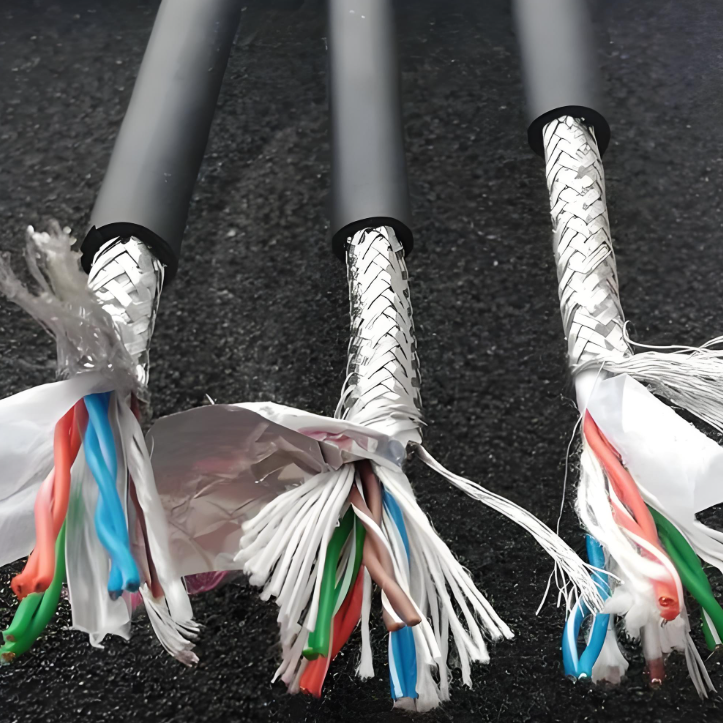
1.Quelle est la différence entre Câble PUR haute flexibilité et Câble PVC haute flexibilité?
| Performance | Câble de chaîne de traînée PUR | Câble de chaîne de traînée en PVC |
|---|---|---|
| Résistance à l'abrasion | Durée de vie extrêmement élevée, 3 à 5 fois plus longue que celle du PVC | Moyen, sujet à l'usure et aux fissures |
| Résistance aux huiles et aux produits chimiques | Excellent, résistant à l'huile hydraulique, au liquide de refroidissement, aux acides et aux alcalis | Passable, ramollit ou se fissure dans l'huile |
| Plage de température | -40°C à 80°C (court terme 100°C), flexible à basse température | -20°C à 80°C, cassant par temps froid |
| Flexibilité et résilience | Exceptionnel, idéal pour la flexion et la torsion à grande vitesse | Modéré, sujet à la fatigue après une flexion prolongée |
| Résistance aux intempéries et à l’hydrolyse | Excellent, résistant aux UV, adapté à une utilisation en extérieur | Mauvais, vieillit facilement à l'extérieur, pas pour une utilisation extérieure à long terme |
| Ignifuge et éco-sécurité | Faible fumée, sans halogène, faible toxicité | Bonne ignifugation, libère du HCl lorsqu'il est brûlé |
| Coût | Plus élevé (1,5 à 2 × PVC) | Moins cher, plus rentable |
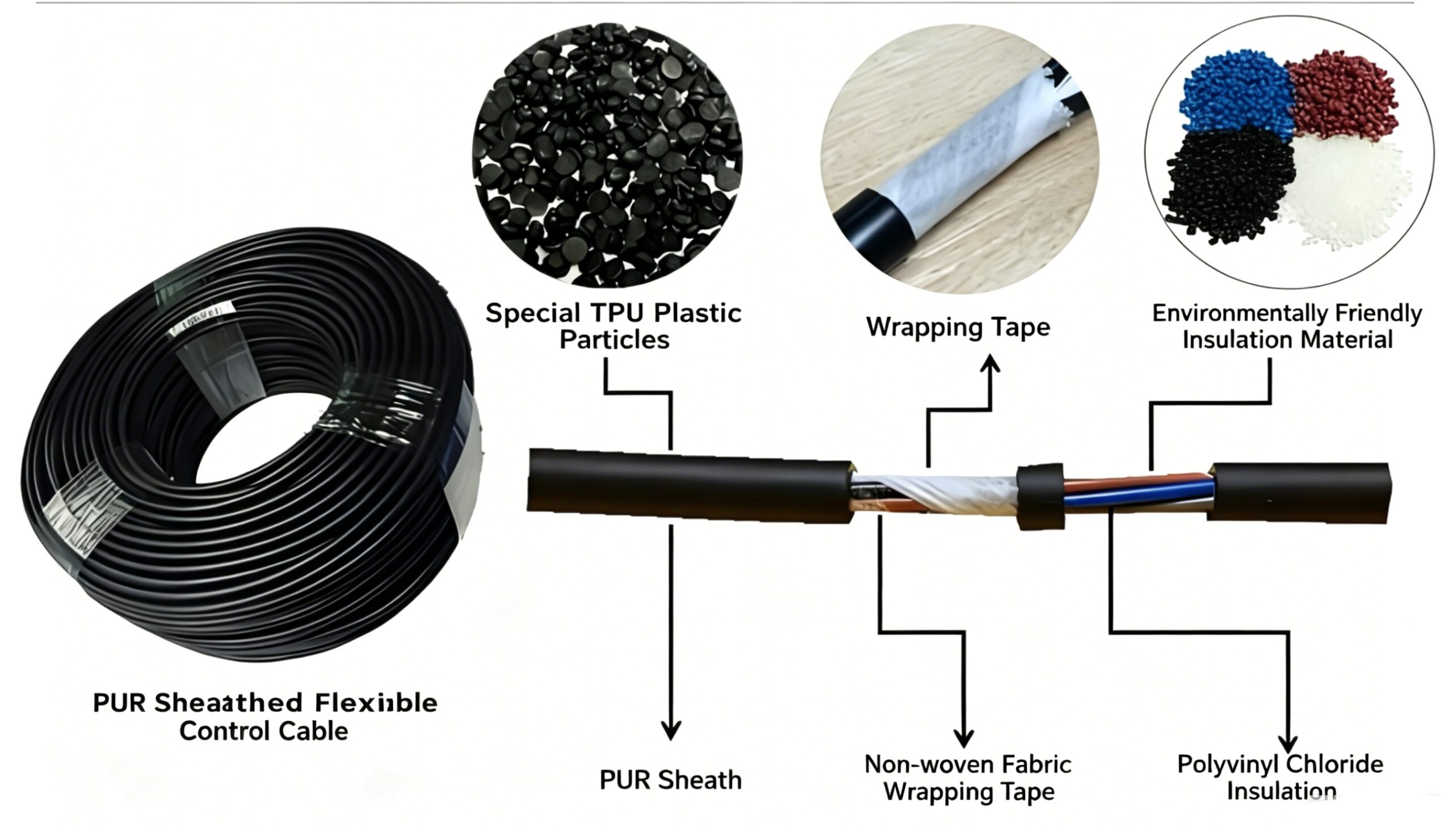
2.Quels sont les scénarios et les équipements Câbles de chaîne porte-câbles en PUR et PVC câbles de chaîne porte-câbles utilisé pour ?
Applications des câbles de chaîne de traînage en PUR et PVC
Câble de chaîne de traînée PUR – Pour les environnements difficiles et les mouvements à haute fréquence
Équipement typique
- Tours CNC, centres d'usinage, machines-outils à grande vitesse
- Robots industriels (manipulateurs, robots 6 axes)
- Lignes de production automatisées, robots de manutention, AGV
- Machines à graver, machines à découper, équipements alternatifs haute fréquence
- Machines de moulage par injection, bras robotisés
- Machines portuaires, grues, équipement mobile extérieur
- Équipements de stockage frigorifique et basse température
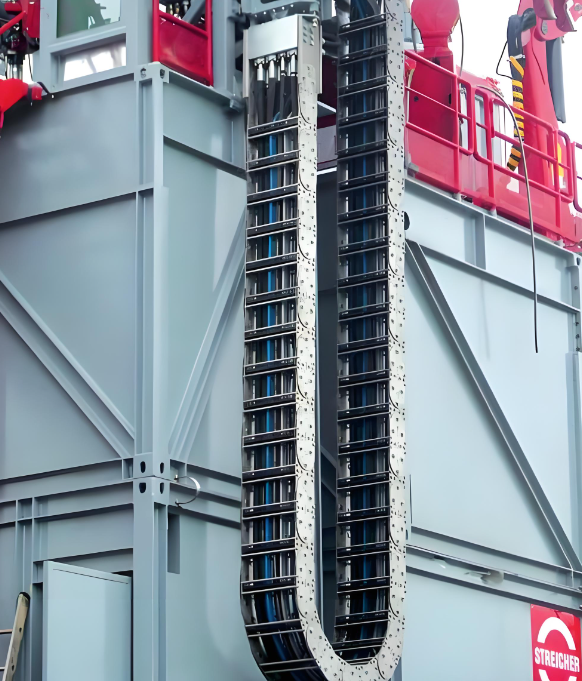
Scénarios typiques
- Exposition à huile, liquide de coupe, liquide de refroidissement
- Flexions fréquentes et mouvements à grande vitesse
- Environnements extérieurs, ensoleillés, humides et résistants à l'hydrolyse
- Environnements à basse température (inférieure à -20°C)
- Haute résistance à l'abrasion, longue durée de vie, faible entretien
Câble de chaîne de traînage en PVC – Pour une utilisation générale en intérieur et pour travaux légers
Équipement typique
- Machines-outils générales, petit matériel
- Machines d'emballage, lignes d'assemblage
- Machines à bois, équipement d'automatisation simple
- Fixe ou mouvement basse fréquence chaînes de traînage
- Équipement électrique dans des environnements intérieurs secs
Scénarios typiques
- Intérieur, température normale, sec, sans huile
- Faible fréquence de mouvement, peu de cycles de flexion
- Applications sensibles aux coûts et à gros volumes
- Câblage temporaire, équipement léger
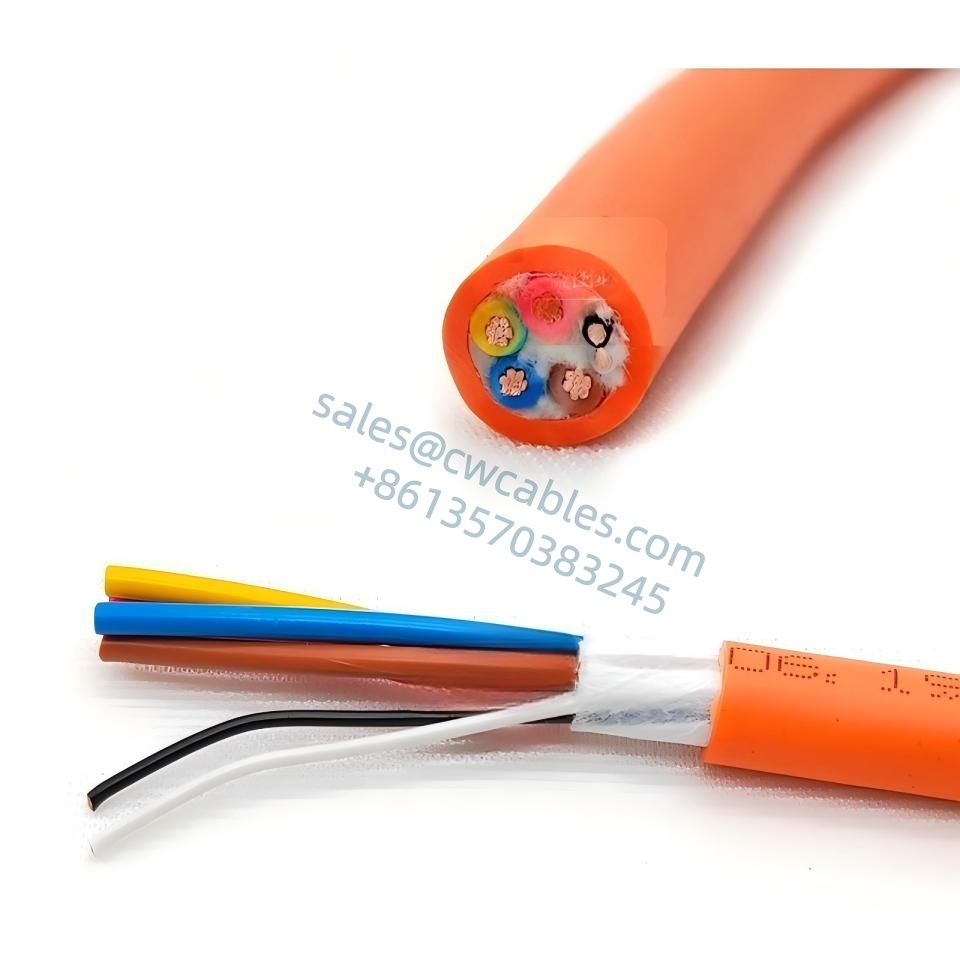
Dans la pratique, en raison de problèmes de coût, la plupart des clients choisissent des câbles PVC haute flexibilité, tandis que certains clients passent aux câbles PUR haute flexibilité après avoir rencontré des problèmes lors de l'utilisation de câbles PVC haute flexibilité.
Quelques câble souple les fabricants choisissent des matériaux PUR bon marché et de qualité inférieure afin de réduire les coûts et d'augmenter les profits, comme le polyester PUR, qui ne résiste pas à l'hydrolyse. Ce type de Câble souple PUR ne peut pas être utilisé à l’extérieur, même à l’intérieur, car l’air est humide. Après 1 à 3 ans, la gaine extérieure en polyester PUR sera décomposée par l'humidité de l'air et la gaine extérieure perdra ses performances d'origine, conduisant finalement à la rupture de la gaine extérieure.
Ainsi, lorsque nous choisissons des câbles flexibles, nous ne prenons pas seulement en compte le coût, mais également les performances matérielles du câble.