

Choosing the right flexible cable for oil and chemical resistance is essential in factories, automation systems, machine tools, processing lines, and harsh industrial environments. An oil resistant flexible cable is designed to keep power, control, or signal circuits stable while exposed to lubricants, coolants, fuels, solvents, and repeated movement. At cwcables, the focus is on matching jacket material, conductor flexibility, voltage rating, and installation conditions to real operating risks.
What is oil resistant flexible cable?
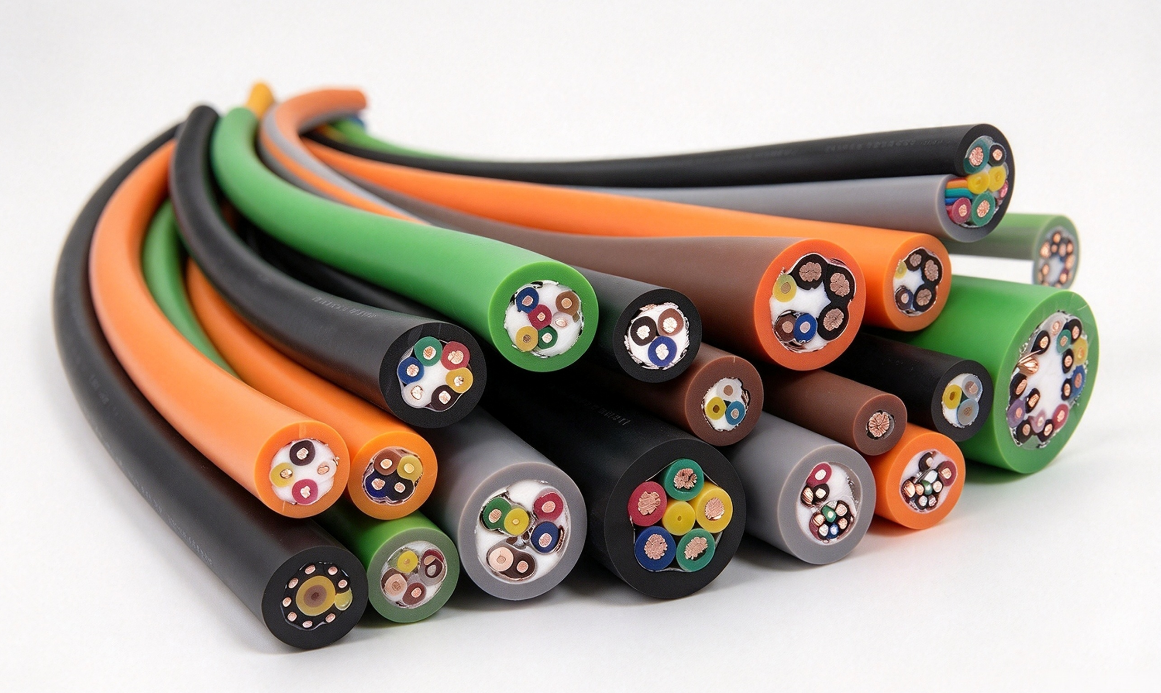
An oil resistant flexible cable is an industrial cable built with flexible conductors and protective insulation or jacket materials that resist degradation from oils, greases, coolants, and selected chemicals. It is commonly used in moving machinery, cable carriers, robotic systems, machine tools, and production equipment where standard cables may crack, swell, or fail prematurely.
Construction and Material Design
An oil resistant cable combines mechanical flexibility with chemical durability. The cable typically uses finely stranded copper conductors to support bending, while the insulation and outer jacket are selected to resist oil absorption, softening, swelling, cracking, and abrasion.
Sur la base de nos données internes et de notre analyse de marché, voici la répartition :
| Composant | Matériel commun | Fonction principale | Pourquoi c'est important |
|---|---|---|---|
| Conducteur | Cuivre à brins fins | Carries current or signal | Améliore la flexibilité et la résistance à la fatigue |
| Isolation | PVC, XLPE, TPE, or rubber compound | Electrically separates conductors | Maintient rigidité diélectrique under stress |
| Veste | Oil-resistant PVC, PUR, TPE, or rubber | Protects against oil, chemicals, abrasion | Extends service life in harsh environments |
| Blindage | Copper braid or foil, optional | Réduit Interférence EMI | Important for control and data cables |
| Filler/Separator | Non-wicking or compatible material | Maintains roundness and stability | Helps prevent fluid migration |
The best cable depends on the exact exposure. For light oil contact, oil-resistant PVC may be enough. For dynamic drag chain use, PUR or high-performance TPE jackets often provide better abrasion resistance and flexibility.
Conseil de pro cwcables : I always recommend checking both the oil type and motion pattern before selecting a cable. A cable that resists lubricant in a static tray may not survive continuous flexing inside a drag chain.
How Does oil resistant flexible cable Work?
An oil resistant flexible cable works by using chemically stable jacket and insulation compounds that slow or prevent oil penetration, swelling, hardening, and cracking. Its finely stranded conductor structure allows repeated bending, while the protective outer sheath maintains electrical safety and mechanical integrity during exposure to oils, coolants, and industrial chemicals.
Protection Mechanism in Harsh Environments
Oil and chemicals can attack ordinary cable jackets by extracting plasticizers, weakening polymer chains, or causing the sheath to swell. An oil resistant flexible cable uses compounds engineered to resist these effects while maintaining bendability.
Les principes de travail clés comprennent :
- Chemical barrier protection
The outer jacket limits contact between oil or chemicals and the internal insulation. - Stable polymer formulation
Special compounds reduce swelling, softening, and cracking caused by oils and industrial fluids. - Flexible conductor design
Fine copper strands distribute bending stress better than solid or coarse-stranded conductors. - Abrasion-resistant outer sheath
The jacket protects against scraping, dragging, and contact with machine parts. - Blindage en option
Shielded versions protect sensitive signals from electromagnetic interference in motor-driven environments. - Compatibilité de température
Proper compounds maintain performance within the cable’s rated operating temperature range.
For best performance, the cable must be matched to real installation conditions, including oil concentration, chemical type, movement frequency, bend radius, voltage, and ambient temperature.
Conseil de pro cwcables : I avoid selecting cable based only on the word “oil-resistant.” The actual jacket material, test standard, bend radius, and chemical exposure time are what determine long-term reliability.
What are the benefits of oil resistant flexible cable?
The main benefits of an oil resistant flexible cable include longer service life, improved safety, reduced downtime, better motion performance, and stronger resistance to industrial fluids. It helps prevent insulation failure, jacket cracking, electrical faults, and maintenance interruptions in machinery, automation systems, processing equipment, and other oil-exposed environments.
Operational Advantages for Industrial Use
Using the correct industrial oil cable can significantly improve system reliability. Standard cables may work initially, but repeated exposure to oil and movement can cause early failure. A purpose-built chemical resistant cable is designed to reduce these risks.
Sur la base de nos données internes et de notre analyse de marché, voici la répartition :
| Avantage | Impact pratique | Application typique |
|---|---|---|
| Résistance à l'huile | Reduces jacket swelling and cracking | Machine tools, presses, Équipement CNC |
| Flexibilité | Supports repeated bending and movement | Drag chains, robotics, moving gantries |
| Résistance chimique | Protects against coolants, solvents, and cleaning agents | Processing lines, maintenance areas |
| Résistance à l'abrasion | Handles mechanical wear and contact | Factory floors, cable carriers |
| Downtime reduction | Lowers cable replacement frequency | Continuous production systems |
| Electrical stability | Helps maintain insulation performance | Control panels, motors, sensors |
For facilities with high production demands, cable failure can be more expensive than the cable itself. Choosing a suitable oil resistant cable helps protect equipment uptime and worker safety.
Conseil de pro cwcables : I tell buyers to calculate cable value by downtime risk, not only by purchase price. In automated production, one unexpected cable failure can cost far more than upgrading to a better jacket material.
How to maintain an oil resistant flexible cable?
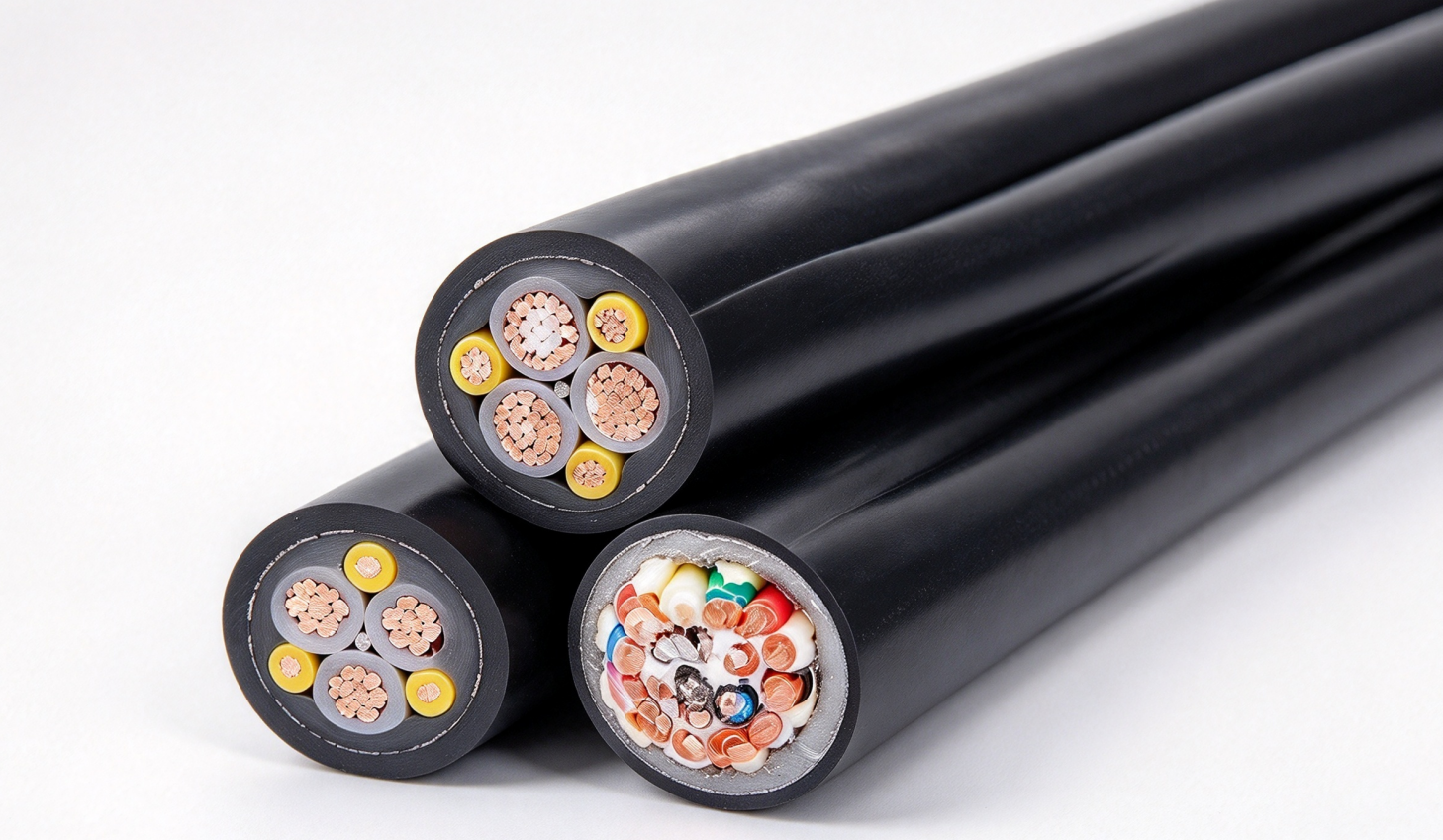
To maintain an oil resistant flexible cable, inspect the jacket regularly, clean off excessive oil buildup, verify bend radius, check connectors, avoid crushing or twisting, and replace cables showing swelling, cracks, cuts, or insulation damage. Good maintenance preserves flexibility, prevents electrical faults, and extends operating life in demanding industrial environments.
Inspection and Care Procedures
Even a high-quality oil resistant flexible cable needs proper installation and routine inspection. Oil resistance improves durability, but it does not make the cable immune to poor routing, excessive tension, sharp edges, or incompatible chemicals.
Étapes d'entretien recommandées :
- Inspectez régulièrement la gaine extérieure
Look for cracks, swelling, cuts, flattening, hardening, or discoloration. - Check bend radius compliance
Ensure the cable is not bent tighter than the manufacturer’s minimum bend radius. - Clean heavy oil deposits
Remove excessive buildup using compatible cleaning methods and approved agents. - Avoid torsional stress
Do not twist the cable during installation or operation unless it is rated for torsion. - Secure cable routing
Use correct clamps, trays, drag chains, or guides to prevent abrasion and pulling. - Inspect terminations and glands
Confirm that connectors, cable glands, and seals remain tight and undamaged. - Document exposure conditions
Track oil type, chemical exposure, temperature, movement frequency, and failures. - Replace damaged cables promptly
Do not continue using cables with visible insulation exposure or severe sheath damage.
Routine maintenance is especially important for drag chain cables, robotic cables, and equipment exposed to cutting oil, hydraulic fluid, coolants, or washdown chemicals.
Conseil de pro cwcables : I recommend photographing cable routes during scheduled maintenance. Visual records make it much easier to spot progressive jacket wear, clamp movement, or bend radius problems before failure occurs.
What is the price of oil resistant flexible cable?
The price of oil resistant flexible cable depends on conductor size, core count, jacket material, voltage rating, shielding, certification, flexibility class, and order quantity. Basic oil resistant cable is generally more economical, while high-flex PUR, shielded, chemical resistant cable for drag chains or robotics costs more due to advanced materials and construction.
Pricing Variables and Specification Drivers
There is no single price for an oil resistant flexible cable because the design can vary widely. A simple control cable for light oil exposure will cost less than a shielded high-flex cable for continuous motion in a CNC machine or robotic cell.
Sur la base de nos données internes et de notre analyse de marché, voici la répartition :
| Facteur de prix | Option à moindre coût | Option plus coûteuse | Impact sur les coûts |
|---|---|---|---|
| Matériau de la veste | PVC résistant à l'huile | PUR, TPE, specialty rubber | Haut |
| Évaluation de la flexibilité | Mouvement occasionnel | Chaîne à flexion continue ou porte-câbles | Haut |
| Blindage | Non blindé | Copper braid or foil shield | Moyen |
| Nombre de cœurs | Moins de conducteurs | Multi-core control or signal cable | Moyen à élevé |
| Taille du conducteur | Smaller cross-section | Larger power conductors | Haut |
| Attestation | General industrial use | UL, CE, CSA, flame-retardant ratings | Moyen |
| Exposition chimique | Light oil contact | Solvents, coolant, fuel, aggressive chemicals | Haut |
| Quantité | Petit lot | Bulk production order | Peut réduire le coût unitaire |
When requesting a quote from cwcables, the most useful information includes cable size, number of cores, application, oil or chemical type, voltage, temperature range, bending frequency, and required certifications.
Conseil de pro cwcables : I suggest sending the oil or chemical name with the inquiry whenever possible. “Oil resistant” is broad, but the exact fluid tells us which jacket material is most suitable and cost-effective.
Principales caractéristiques et comparaison
A high-quality oil resistant flexible cable should combine oil resistance, chemical compatibility, mechanical flexibility, abrasion resistance, reliable insulation, and application-specific ratings. Comparing jacket materials such as PVC, PUR, TPE, and rubber helps determine the best balance between cost, flexibility, durability, and exposure resistance for each industrial environment.
Jacket Material Comparison for Oil and Chemical Resistance
Different materials perform differently in oil-exposed environments. The best choice depends on whether the cable is static, occasionally moved, continuously flexed, exposed to coolants, or installed near fuels and solvents.
Sur la base de nos données internes et de notre analyse de marché, voici la répartition :
| Fonctionnalité | PVC résistant à l'huile | PUR | TPE | Rubber Compound |
|---|---|---|---|---|
| Résistance à l'huile | Bien | Excellent | Très bon à excellent | Bon à excellent |
| Résistance chimique | Modéré à bon | Très bien | Très bien | Cela dépend du composé |
| Flexibilité | Bien | Excellent | Excellent | Très bien |
| Résistance à l'abrasion | Modéré | Excellent | Bon à très bon | Bien |
| Adéquation de la chaîne porte-câbles | Limité à modéré | Excellent | Excellent | En fonction de l'application |
| Niveau de coût | Inférieur | Plus haut | Moyen à supérieur | Moyen |
| Temperature performance | Modéré | Bien | Bon à très bon | Bien |
| Utilisation typique | Machines générales | CNC, robotics, drag chains | Automation, flexible control | Heavy-duty industrial environments |
For many general industrial applications, oil-resistant PVC offers a practical balance of cost and performance. For high-flex machinery, PUR or TPE is often the better long-term option because of stronger abrasion resistance and dynamic bending capability.
Conseil de pro cwcables : I usually recommend PUR for moving applications where oil and abrasion occur together. If the cable is static and cost-sensitive, a correctly rated oil-resistant PVC cable may be the smarter choice.
Facteurs de coût et d’achat
When buying an oil resistant flexible cable, evaluate the total operating environment rather than selecting by price alone. Important buying factors include oil type, chemical exposure, bending cycle, conductor size, shielding, voltage, temperature, installation method, certification requirements, and expected service life. The right specification reduces replacement cost and downtime.
Selection Checklist for Buyers
A good purchasing process starts with application details. This helps avoid both under-specification, which causes early failure, and over-specification, which increases cost unnecessarily.
Utilisez cette liste de contrôle avant de commander :
- Type de demande : Static installation, occasional movement, continuous flex, drag chain, robotic motion, or torsion.
- Fluid exposure: Lubricating oil, hydraulic oil, cutting oil, coolant, fuel, solvent, cleaning chemical, or mixed exposure.
- Fonction du câble : Power, control, instrumentation, signal, servo, data, or hybrid cable.
- Electrical rating: Voltage, current, insulation class, grounding requirements, and shielding needs.
- Contraintes mécaniques : Bend radius, tensile load, abrasion, crushing, vibration, and cable carrier speed.
- Écart de température: Ambient temperature, conductor temperature, and heat from nearby equipment.
- Besoins de conformité : UL, CE, CSA, RoHS, flame-retardant, low-smoke, or industry-specific approvals.
- Longueur d'installation : Cable length, routing path, connectors, glands, and strain relief design.
- Maintenance access: Ease of inspection and replacement during scheduled downtime.
- Budget priority: Lowest initial cost or lowest lifetime cost.
For professional procurement, cwcables can help align material selection with operating conditions, avoiding unnecessary cost while maintaining durability.
Conseil de pro cwcables : I ask customers to describe the worst-case condition, not the normal condition. Cables usually fail during heat spikes, heavy oil exposure, tight bends, or unexpected mechanical stress.
Conclusion
An oil resistant flexible cable is the right choice when standard cable materials cannot reliably withstand oil, chemicals, movement, abrasion, and industrial operating stress. By selecting the proper jacket, conductor construction, shielding, and flexibility rating, manufacturers can improve safety, reduce downtime, and extend cable service life in demanding environments.
Final Recommendation for Industrial Applications
For oil-exposed machinery, automation systems, and chemical-contact environments, cable selection should be based on real operating conditions. The best cable is not always the most expensive one; it is the one correctly matched to fluid exposure, movement, electrical load, and service expectations.
A practical selection process includes:
- Identify the oil, coolant, or chemical exposure.
- Confirm whether the cable is static, flexible, high-flex, or torsion-rated.
- Choose the correct jacket material for the environment.
- Verify voltage, temperature, conductor size, and shielding requirements.
- Check certifications and installation standards.
- Request technical support before finalizing large-volume purchases.
cwcables provides oil resistant cable, chemical resistant cable, and industrial oil cable solutions for demanding applications, helping buyers select durable and cost-effective cable designs for real production environments.
Conseil de pro cwcables : I recommend treating cable selection as part of equipment reliability planning. The right oil resistant flexible cable protects not only the electrical system, but also the productivity of the entire operation.