

Cat5e remains one of the most practical Ethernet cable choices because it balances cost, compatibility, and reliable gigabit performance. Real-world cat5e cable speed depends on more than the printed rating: cable length, installation quality, connector termination, interference, switch capability, and device network cards all influence actual throughput, latency, and stability.
What is cat5e cable speed,cat5e bandwidth,cat5e data rate?
Cat5e cable speed typically refers to the Ethernet performance the cable can support, most commonly 1 Gbps up to 100 meters. Cat5e bandwidth is rated at 100 MHz, while cat5e data rate depends on the networking standard, connected equipment, cable quality, and installation conditions.
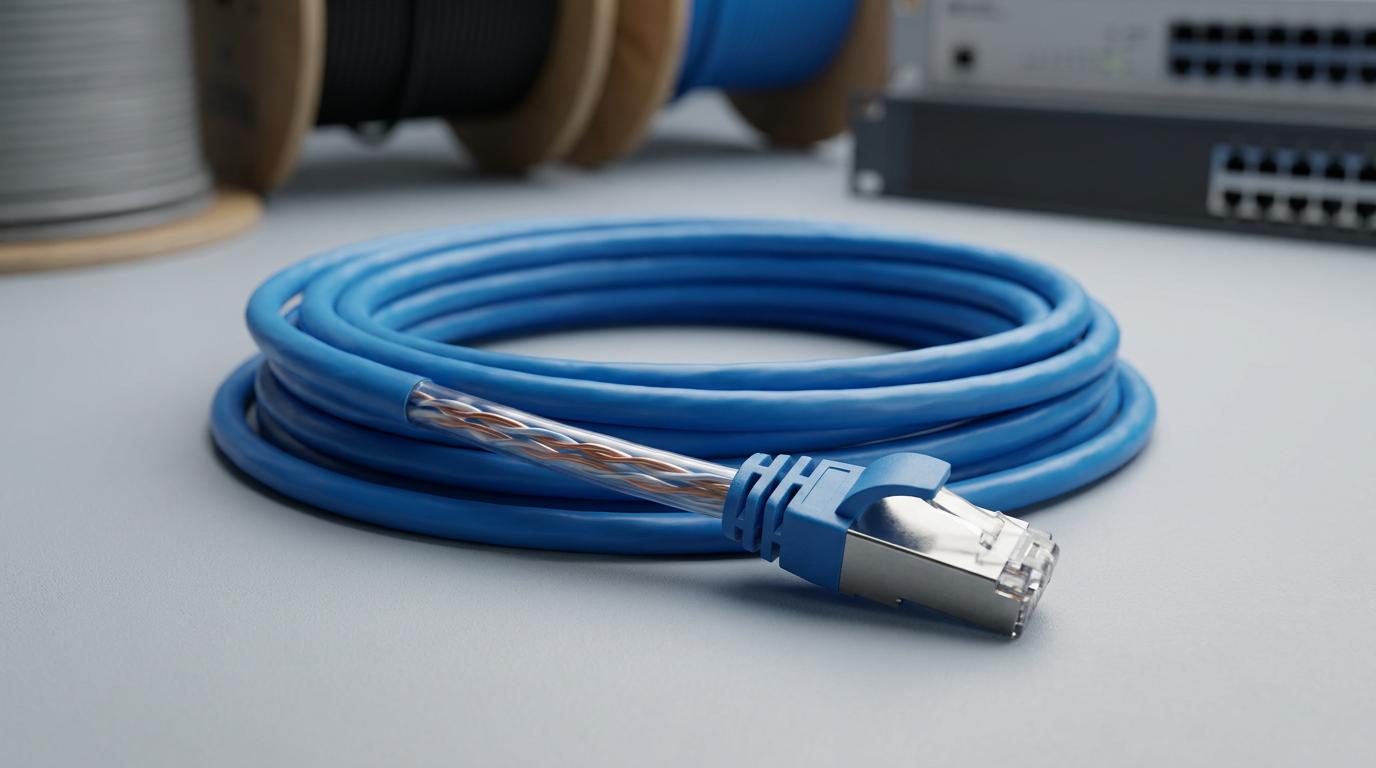
Core Definitions and Real-World Meaning
Cat5e, short for Category 5 enhanced, is a twisted-pair copper Ethernet cable standard designed to reduce diaphonie compared with older Cat5 cable. Its 100 MHz bandwidth rating describes the frequency range the cable is designed to carry, not the same thing as internet speed.
In practical networking, users often care about the data rate: how much digital information can move through the cable per second. For most homes, offices, cameras, access points, and industrial networks, Cat5e commonly supports Gigabit-Ethernet when installed correctly.
Sur la base de nos données internes et de notre analyse de marché, voici la répartition :
| Terme | Ce que cela signifie | Typical Cat5e Value | Impact pratique |
|---|---|---|---|
| Cat5e cable speed | Network speed supported by the cable system | Usually 1 Gbps | Determines file transfer and LAN performance |
| Cat5e bandwidth | Signal frequency capacity | 100 MHz | Affects how well the cable carries data signals |
| Cat5e data rate | Actual data throughput standard | 10/100/1000 Mbps; often 2.5 Gbps possible | Depends on switches, NICs, cable length, and installation |
| Maximum channel length | End-to-end certified distance | 100 meters / 328 feet | Longer runs can reduce reliability |
| Type de connecteur | Plug/jack used at each end | RJ45 / 8P8C | Poor termination can reduce speed |
Conseil de pro cwcables : I always separate “bandwidth” from “speed” when diagnosing Cat5e performance. A cable can be rated for 100 MHz and still deliver poor data rates if the connectors, patch panels, or switch ports are the real bottleneck.
How Does cat5e cable speed,cat5e bandwidth,cat5e data rate Work?
Cat5e works by transmitting balanced electrical signals over four twisted copper pairs. The twists help reduce electromagnetic interference and crosstalk, allowing Ethernet equipment to encode and decode data reliably. Actual cat5e cable speed is achieved only when the cable, connectors, and network devices all support the target data rate.
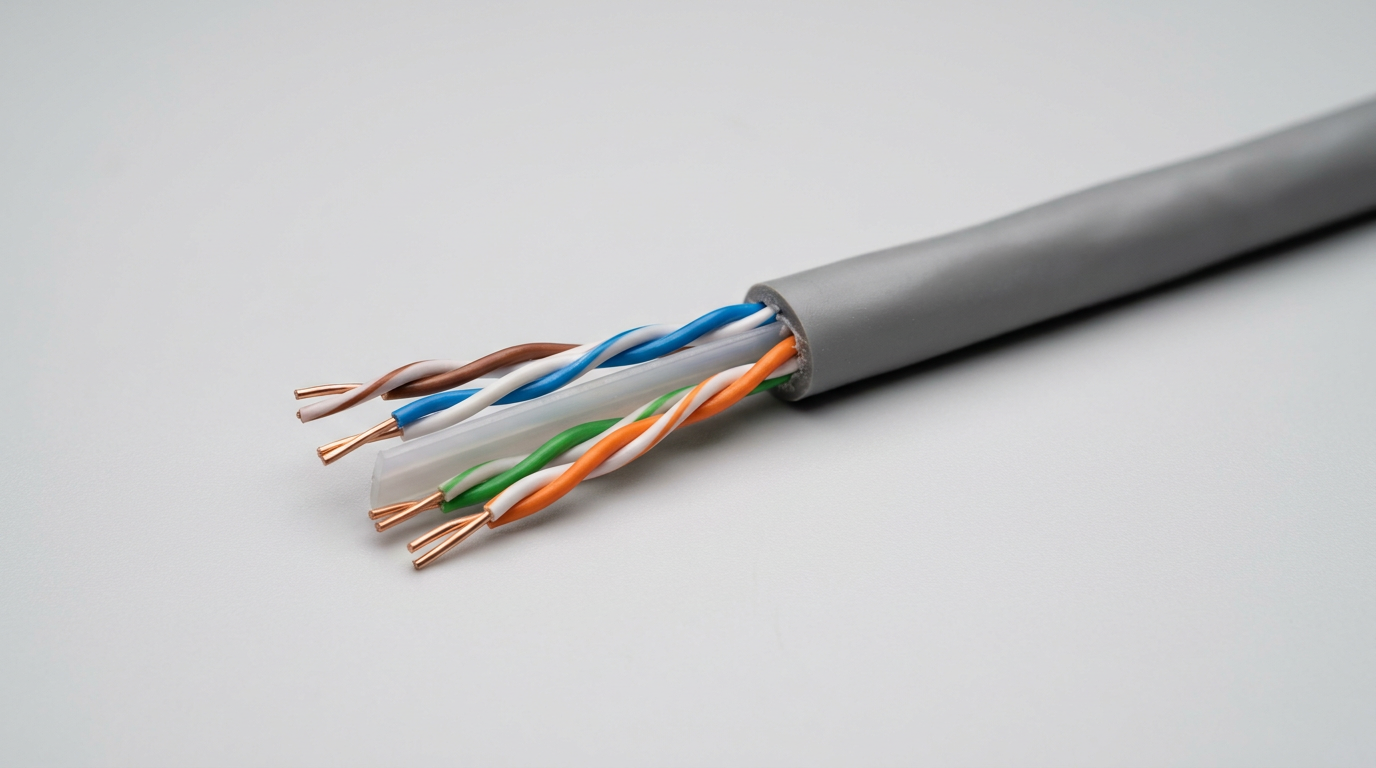
Transmission du signal via des paires torsadées
Cat5e cable uses four pairs of insulated copper conductors. Each pair is twisted at a specific rate to reduce noise and prevent one pair from interfering with another. Gigabit Ethernet uses all four pairs simultaneously, which is why proper termination and pair order are essential.
When a computer sends data, the network interface card converts digital information into electrical signals. Those signals travel through the cable to a switch, router, access point, or another network device. If the receiving device detects too much noise, reflection, or signal loss, performance may drop or packets may need to be retransmitted.
Key factors that influence operation include:
- Longueur du câble — Cat5e is designed for Ethernet channels up to 100 meters.
- Pair twist integrity — Untwisting too much cable near the connector can increase crosstalk.
- Qualité de terminaison — Incorrect pinouts or loose contacts can force lower speeds.
- External interference — Power cables, motors, and fluorescent lighting can create noise.
- Device negotiation — Switches and network cards automatically choose the highest stable speed.
- Construction de câbles — Solid copper usually performs better than copper-clad aluminum for permanent links.
Conseil de pro cwcables : When I test a Cat5e run, I don’t stop at continuity. A simple wire map can pass while the link still fails at gigabit speeds. For serious installations, use a cable tester that checks performance, not just pin order.
What are the benefits of cat5e cable speed,cat5e bandwidth,cat5e data rate?
The main benefit of Cat5e is dependable gigabit networking at a lower cost than higher-category cable. It offers enough bandwidth for most offices, IP cameras, VoIP phones, Wi-Fi access points, printers, and smart building devices while remaining easy to install, widely compatible, and affordable.
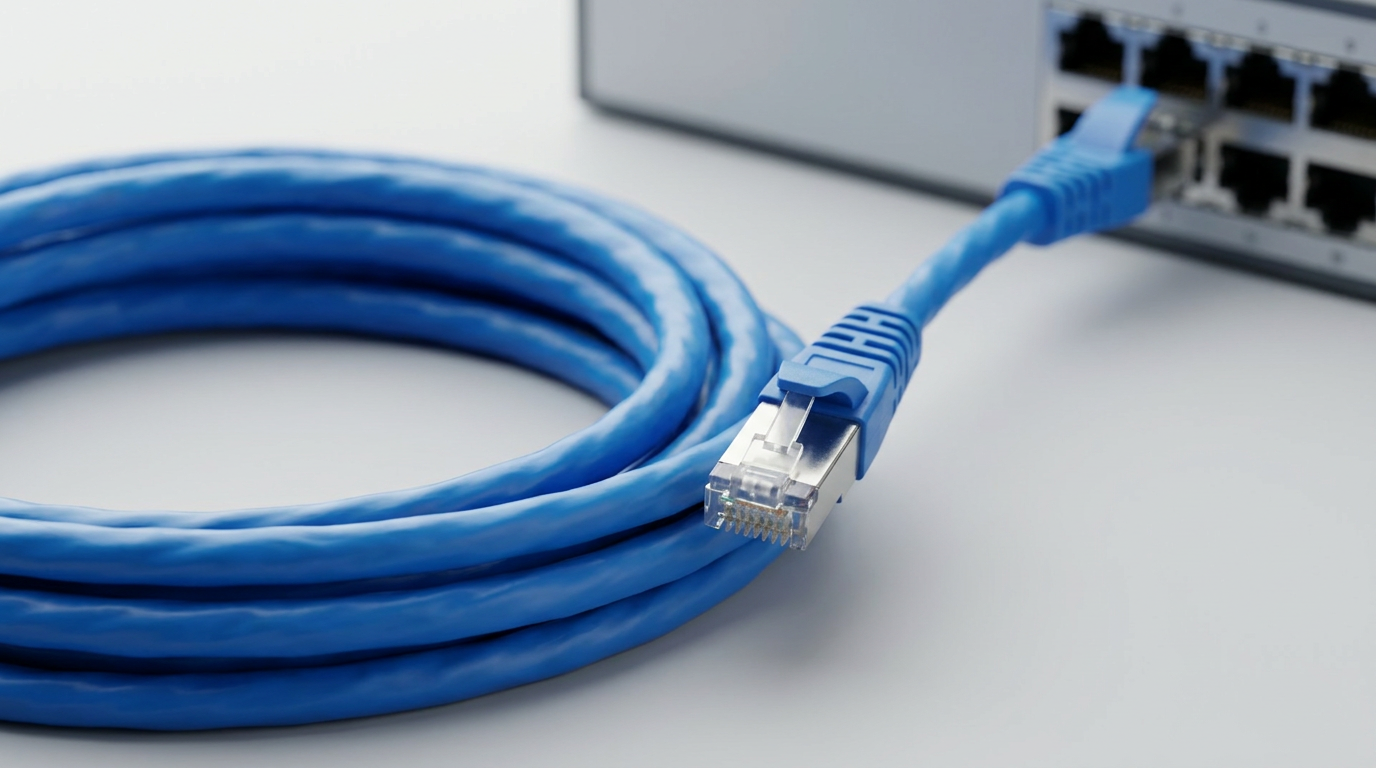
Practical Advantages for Modern Networks
Cat5e is popular because it is a mature, standardized, and cost-effective cabling choice. While Cat6 and Cat6A provide higher frequency ratings, Cat5e is still more than adequate for many everyday networks where 1 Gbps connections are sufficient.
Its flexibility and smaller cable diameter can also make installation easier in tight conduits, wall cavities, racks, and patch panels. For many users, the performance-to-cost ratio is the biggest advantage.
Sur la base de nos données internes et de notre analyse de marché, voici la répartition :
| Avantage | Pourquoi c'est important | Meilleur cas d'utilisation |
|---|---|---|
| Rentabilité | Lower material cost than Cat6/Cat6A | Budget-conscious office and home networks |
| Gigabit support | Handles 1 Gbps over standard distances | PCs, switches, printers, NAS devices |
| Large compatibilité | Works with RJ45 Ethernet equipment | Routers, cameras, access points, VoIP |
| Installation plus facile | More flexible than many higher-category cables | Retrofits and dense cable pathways |
| Prise en charge PoE | Can power compatible devices | IP cameras, phones, wireless APs |
| Mature standard | Widely tested and understood | Reliable long-term network infrastructure |
Conseil de pro cwcables : I recommend Cat5e when the customer needs reliable gigabit performance without overspending. But if the site is being built from scratch and future upgrades are likely, I compare the labor cost too—sometimes cable material is only a small part of the project.
How to maintain a cat5e cable speed,cat5e bandwidth,cat5e data rate?
To maintain Cat5e performance, protect the cable from sharp bends, excessive pulling force, moisture, crushed jackets, poor terminations, and nearby interférence électromagnétique. Regularly inspect patch cords, label runs, test suspect links, and replace damaged connectors or cables before they cause speed drops or intermittent network failures.
Maintenance Practices That Preserve Performance
Cat5e cabling usually requires little maintenance once properly installed, but physical damage and poor cable management can gradually reduce performance. Many speed problems come from patch cords that are bent, stepped on, pinched behind desks, or repeatedly plugged and unplugged.
Good maintenance keeps the cable’s geometry intact. The twists, jacket, conductor spacing, and termination quality all help preserve signal quality.
Liste de contrôle d'entretien recommandée :
- Avoid tight bends: Keep bend radius gentle, especially near wall plates and patch panels.
- Do not crush the cable: Avoid staples, zip ties pulled too tightly, or heavy furniture pressure.
- Separate from power cables: Maintain distance from electrical wiring and high-noise equipment.
- Inspecter les connecteurs : Replace plugs with broken locking tabs, corrosion, or loose contacts.
- Use proper patch cords: Avoid very cheap or uncertified cords in high-speed links.
- Label both ends: Clear labeling reduces accidental disconnection and troubleshooting time.
- Retest after changes: Test the link after moving racks, desks, cameras, or access points.
- Keep terminations clean: Dust and oxidation can affect contact quality over time.
Conseil de pro cwcables : I treat patch cords as wear items. If a Cat5e link suddenly negotiates at 100 Mbps instead of 1 Gbps, I replace the patch cord first before opening walls or blaming the switch.
What is the price of cat5e cable speed,cat5e bandwidth,cat5e data rate?
Cat5e pricing depends on cable length, conductor material, jacket rating, shielding, certification, packaging, and whether you buy bulk cable or finished patch cords. It is generally one of the most economical Ethernet cable options, especially for gigabit networks that do not require Cat6A-level performance.
Typical Price Drivers and Budget Ranges
Cat5e cable is affordable, but the lowest price is not always the best value. Solid bare copper cable generally costs more than aluminium cuivré, but it offers better conductivity, PoE performance, durability, and standards compliance.
For professional installations, jacket rating also matters. Plenum-rated cable costs more than riser-rated cable because it must meet stricter fire and smoke requirements for air-handling spaces.
Sur la base de nos données internes et de notre analyse de marché, voici la répartition :
| Product Type | Niveau de coût typique | What Affects Price | Common Buyer |
|---|---|---|---|
| Cat5e patch cord | Faible | Length, boot style, certification | Home users, offices, IT desks |
| Bulk Cat5e UTP cable | Faible à moyen | Copper quality, box length, jacket type | Installers, contractors |
| Shielded Cat5e cable | Moyen | Foil/braid shielding, drain wire, grounding needs | Industrial or noisy environments |
| Plenum Cat5e cable | Moyen à élevé | CMP jacket compliance | Commercial buildings |
| Outdoor Cat5e cable | Moyen à élevé | UV resistance, gel fill, waterproof jacket | Cameras, gates, exterior links |
| Pre-terminated custom assemblies | Moyen | Labor, testing, connectors, labeling | Projects needing ready-to-install cabling |
Conseil de pro cwcables : I avoid judging Cat5e by price per foot alone. For PoE cameras, access points, and long runs, conductor quality matters. Saving a small amount on cable can cost much more later in troubleshooting and replacements.
Principales caractéristiques et comparaison
Cat5e offers 100 MHz bandwidth, gigabit Ethernet support, RJ45 compatibility, PoE capability, and cost-effective deployment. Compared with Cat6 and Cat6A, it is easier to manage and less expensive, but it has less headroom for future multi-gigabit upgrades and high-noise environments.
Cat5e Compared With Common Ethernet Cable Categories
Choosing between Cat5e, Cat6, and Cat6A should depend on required speed, installation distance, budget, pathway space, and future network plans. Cat5e remains highly useful, but higher categories provide additional frequency capacity and stronger performance margins.
Sur la base de nos données internes et de notre analyse de marché, voici la répartition :
| Catégorie de câble | Rated Bandwidth | Common Data Rate | Typical Max Ethernet Distance | Niveau de coût | Meilleur ajustement |
|---|---|---|---|---|---|
| Cat5e | 100 MHz | 1 Gbps; 2.5 Gbps often supported | 100 m for 1G/2.5G | Faible | Homes, offices, cameras, VoIP |
| Cat6 | 250 MHz | 1 Gbps; 10 Gbps short distance | 100 m for 1G, shorter for 10G | Moyen | New office cabling, higher headroom |
| Cat6A | 500 MHz | 10 Gbit/s | 100 m for 10G | Plus haut | Data-heavy offices, enterprise networks |
| Cat7/Class F | 600 MHz+ | 10 Gbps depending system | 100 m in supported systems | Plus haut | Installations blindées spécialisées |
| Fibre optique | Très élevé | 1G à 100G+ | Much longer distances | Varie | Backbone, long distance, EMI-heavy sites |
Conseil de pro cwcables : I choose Cat5e when the network requirement is clear and stable. If walls are open, labor is expensive, and the customer expects future 10G upgrades, I usually discuss Cat6A before finalizing the cable plan.
Facteurs de coût et d’achat
When buying Cat5e, evaluate more than the advertised speed. The best choice depends on copper quality, shielding, jacket rating, installation location, PoE load, certification, connector compatibility, and supplier reliability. A slightly better cable can improve long-term stability and reduce service calls.
How to Choose the Right Cat5e Cable
The right Cat5e cable should match both the network performance target and the installation environment. A short desktop patch cord has different requirements from a 90-meter permanent link feeding a PoE camera outdoors.
Before purchasing, confirm whether the cable will be used indoors, in ceilings, outdoors, near power equipment, or in a high-density rack. These conditions determine whether you need UTP, shielded, riser, plenum, or outdoor-rated construction.
Les principaux facteurs d’achat comprennent :
- Matériau conducteur : Choose solid bare copper for permanent links and PoE-heavy applications.
- Type de câble : Use stranded patch cords for flexibility and solid cable for in-wall runs.
- Évaluation de la veste : Select CM, CMR, CMP, or outdoor-rated jackets based on code and environment.
- Blindage : Use shielded cable only when needed and ensure proper grounding.
- Planification de la longueur : Keep total channel length within Ethernet standards.
- Qualité du connecteur : Match plugs, keystone jacks, and patch panels to the cable type.
- Testing and certification: Request tested cable assemblies for critical projects.
- Assistance fournisseur : Buy from a source that can help with technical specifications and compliance.
Conseil de pro cwcables : I always ask where the cable will be installed before recommending a product. The same Cat5e speed rating does not mean the same cable is suitable for ceilings, outdoor cameras, PoE devices, and office patching.
Conclusion
Cat5e cable can still deliver excellent real-world performance when installed correctly and matched with the right equipment. Its 100 MHz bandwidth and common gigabit data rate make it a practical choice for many networks, but performance depends on cable quality, distance, termination, interference, and device capability.
Final Recommendation for Reliable Cat5e Performance
Cat5e is not outdated for many applications. It remains a dependable option for homes, small businesses, surveillance systems, VoIP, Wi-Fi access points, and general office networking. The key is to treat the entire channel as a system, not just the cable itself.
For the best results:
- Use standards-compliant Cat5e cable from a trusted supplier.
- Keep cable runs within recommended distance limits.
- Avoid poor terminations and excessive untwisting.
- Select the correct jacket rating for the installation area.
- Test links after installation, especially for gigabit or PoE use.
- Upgrade to Cat6 or Cat6A when future 10G performance is a priority.
If you need help choosing the right Cat5e cable for your project, cwcables can help match cable construction, length, jacket rating, and performance requirements to your network environment.
Conseil de pro cwcables : My final advice is simple: don’t buy Cat5e only by category name. Look at the full installation—devices, distance, PoE load, environment, and termination quality. That is what determines whether the cable actually performs as expected.