

Choosing the right industrial Cat5e cable is not just about bandwidth; it is about signal stability, electrical noise, grounding quality, installation environment, and long-term uptime. In factories, control cabinets, warehouses, and automation networks, the decision between shielded and unshielded Cat5e can directly affect communication reliability, maintenance costs, and equipment performance.
What is Shielded vs Unshielded Cat5e,Shielded Cat5e Cable, Industrial Cat5e?
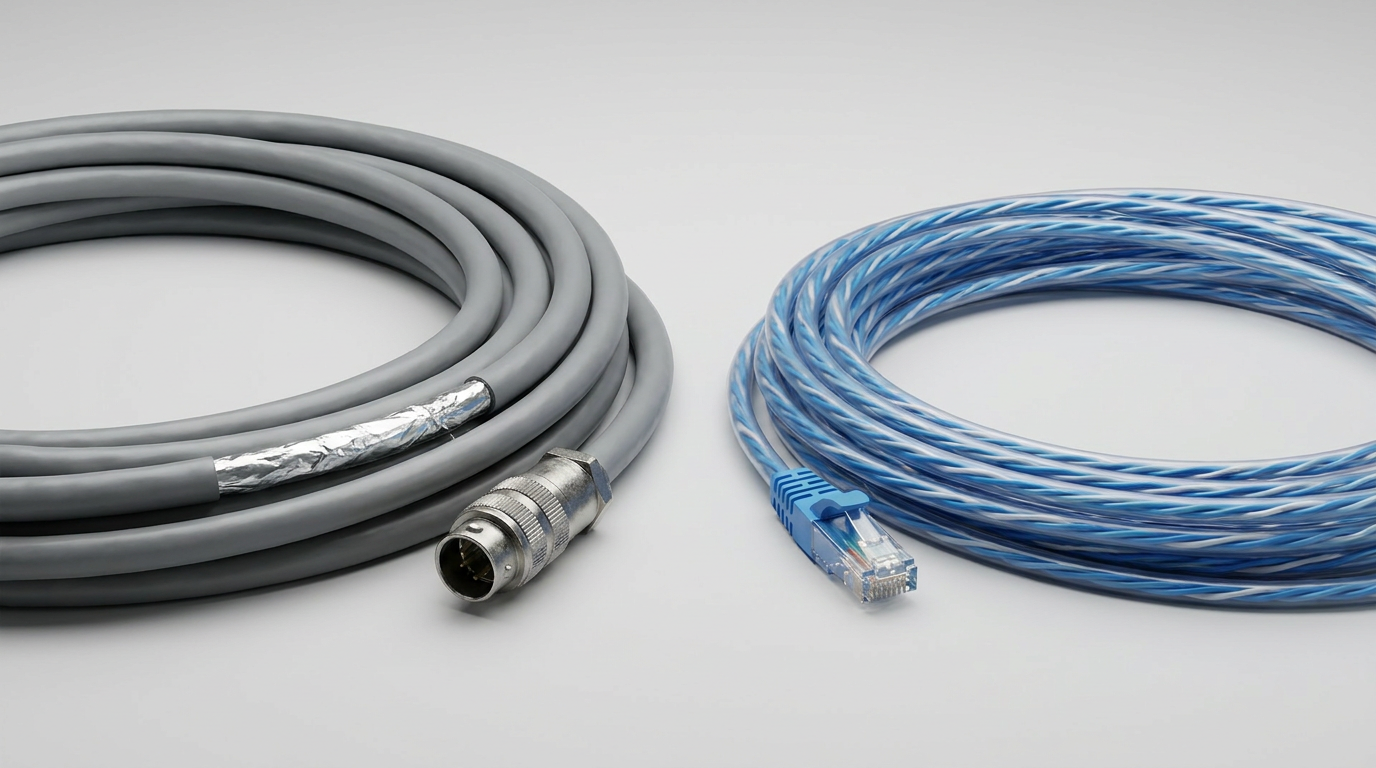
Shielded Cat5e includes foil or braided protection around the conductors to reduce electromagnetic interference, while unshielded Cat5e relies only on twisted pairs for noise rejection. Industrial Cat5e is built for harsher environments, often with stronger jackets, oil resistance, temperature tolerance, and better mechanical durability.
Cable Construction and Use Cases
Shielded vs unshielded Cat5e refers to how the cable manages electrical noise. Standard UTP Cat5e is common in offices and low-noise commercial spaces, while shielded Cat5e cable is preferred near motors, drives, welders, relays, and high-voltage power lines. Industrial Cat5e adds rugged materials and application-specific protection.
Según nuestros datos internos y análisis de mercado, aquí está el desglose:
| Tipo de cable | Blindaje | Mejor ambiente | Ventaja principal | Limitación principal |
|---|---|---|---|---|
| UTP Cat5e | Sin escudo | Offices, clean rooms, low-noise spaces | Lower cost and easier termination | Less protection from EMI |
| FTP Cat5e | Escudo de aluminio | Light industrial areas | Good EMI reduction | Requires correct grounding |
| STP Cat5e | Blindaje par o total | Control panels, machinery zones | Stronger signal protection | More installation-sensitive |
| Industriales Cat5e | Optional shield plus rugged jacket | Factories, automation, outdoor-rated runs | Durabilidad y tiempo de actividad | Mayor costo de material |
Consejo profesional de cwcables: I recommend starting with the environment, not the cable category. If the run is close to VFDs, motors, welding equipment, or power cables, shielded industrial Cat5e is usually the safer long-term choice.
How Does Shielded vs Unshielded Cat5e,Shielded Cat5e Cable, Industrial Cat5e Work?
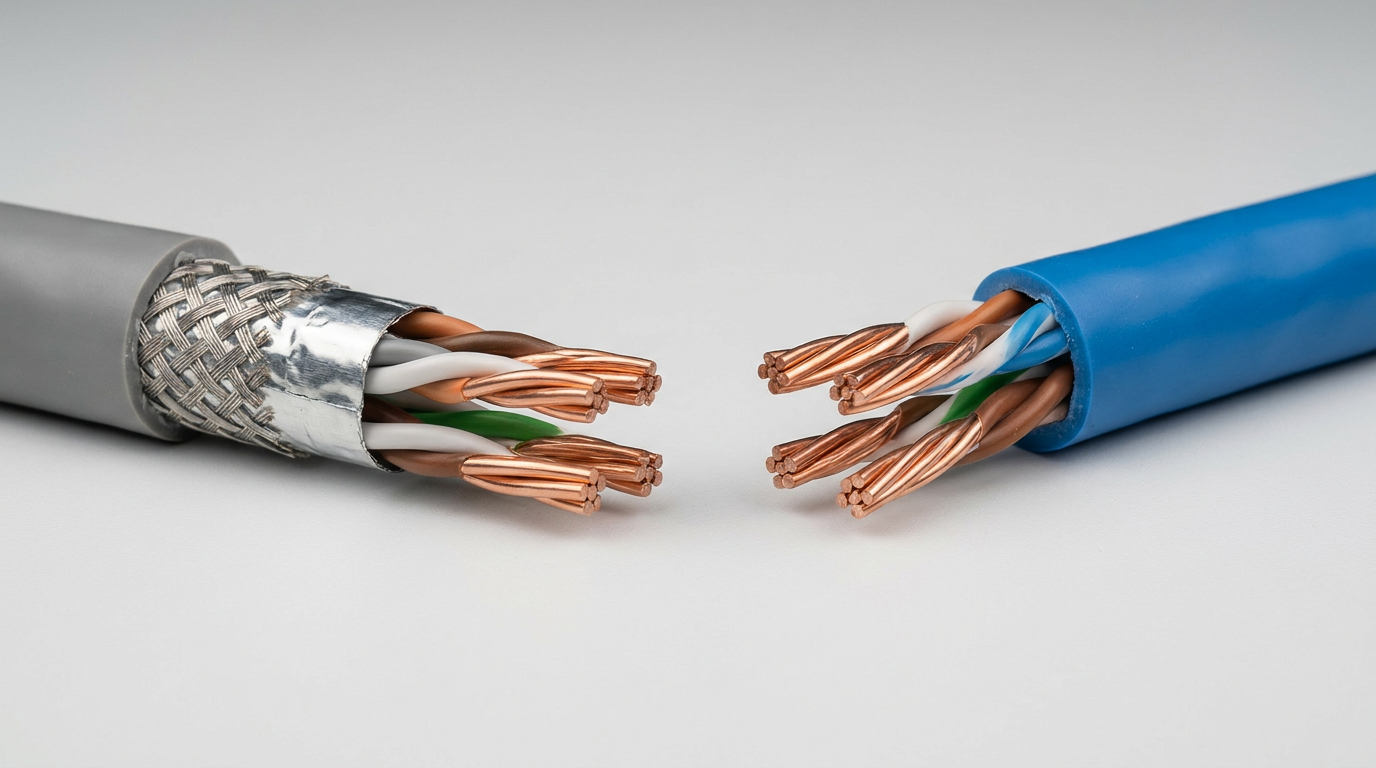
Cat5e works by sending Ethernet signals through tightly twisted copper pairs that reduce crosstalk. Shielded Cat5e adds a conductive barrier that redirects electromagnetic interference away from the signal path. Industrial Cat5e combines this electrical performance with tougher jackets and construction for demanding installation conditions.
Mecanismo de protección de señal
All Cat5e cables use balanced twisted-pair transmission. The twists help cancel external noise and pair-to-pair interference. In shielded Cat5e cable, foil or braid adds another layer of defense by capturing interferencia electromagnética and draining it through a properly grounded connector and bonding system.
Los principios operativos clave incluyen:
- Twisted pairs reduce diafonía by keeping conductors balanced and evenly exposed to external fields.
- Shielding absorbs or redirects EMI before it reaches the data conductors.
- Grounding completes the shield path so captured noise can safely dissipate.
- Industrial jackets protect the cable from abrasion, oil, moisture, UV exposure, and temperature stress.
- Correct termination preserves performance by maintaining pair twist and shield continuity at connectors or patch panels.
Consejo profesional de cwcables: I always tell installers that shielded cable only works as intended when the shield is bonded correctly. Poor grounding can turn a shielded installation into a noise antenna instead of a noise barrier.
What are the Benefits of Shielded vs Unshielded Cat5e,Shielded Cat5e Cable, Industrial Cat5e?
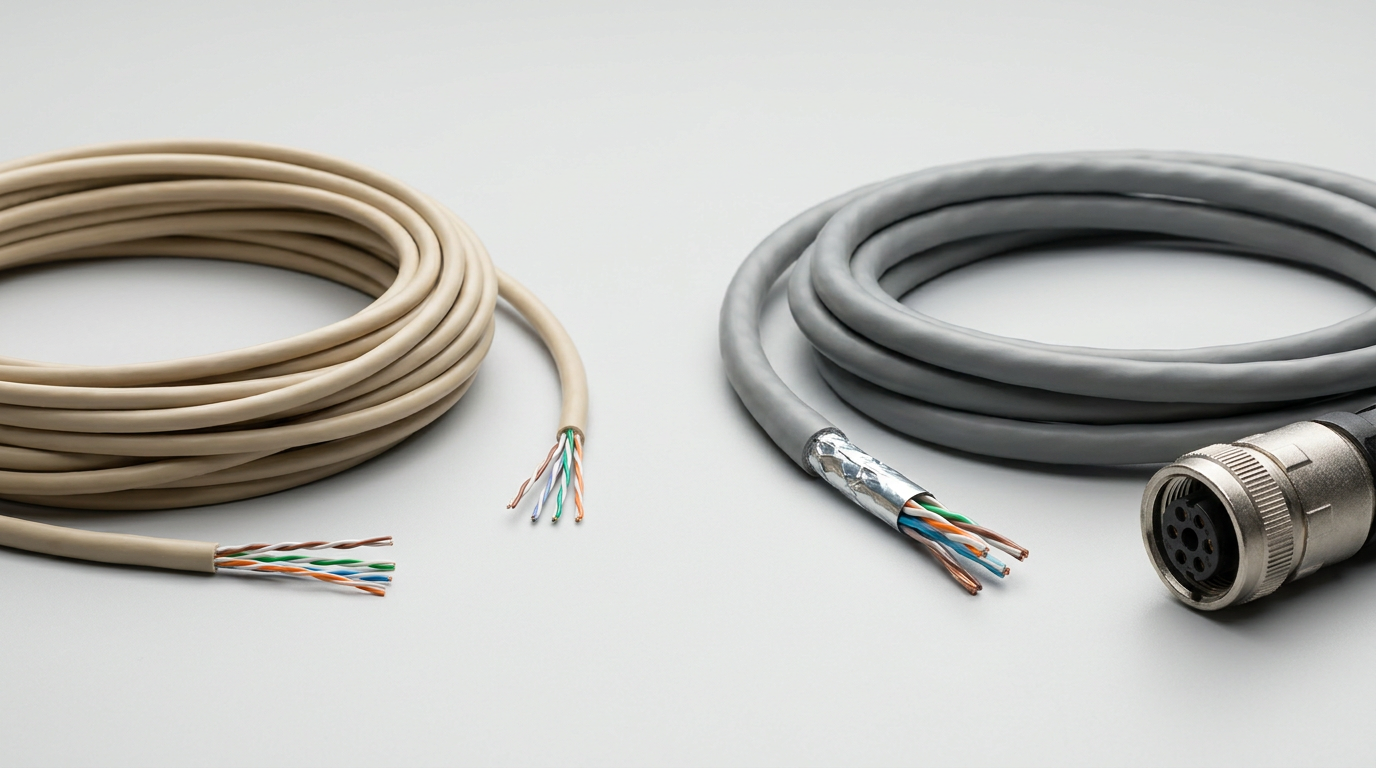
The main benefit is selecting the right balance between cost, ease of installation, and noise protection. Unshielded Cat5e is economical and simple for clean environments, while shielded industrial Cat5e improves reliability where electromagnetic interference, mechanical stress, oil, moisture, or temperature variation may affect network performance.
Ventajas de rendimiento y confiabilidad
Industrial Ethernet networks often support PLC, HMIs, sensors, cameras, access points, and machine controls. A poor cable choice can cause packet loss, intermittent disconnects, or difficult-to-diagnose communication faults. Shielded industrial Cat5e helps reduce these risks in electrically noisy areas.
Según nuestros datos internos y análisis de mercado, aquí está el desglose:
| Beneficio | Cat5e sin blindaje | Cable blindado Cat5e | Industriales Cat5e |
|---|---|---|---|
| Resistencia EMI | Moderado | Alto | High, depending on shielding |
| Simplicidad de instalación | Alto | Medio | Medio |
| Material cost | Más bajo | Medio | Medio a alto |
| Durabilidad mecánica | Estándar | Estándar a mejorado | Alto |
| Best value scenario | Low-noise networks | EMI-sensitive runs | Harsh or mission-critical sites |
| Long-term uptime | Bueno en áreas limpias | Mejor en zonas ruidosas | Best in harsh environments |
Consejo profesional de cwcables: I do not recommend overspecifying every run with shielded cable. Use shielded industrial Cat5e where risk is real, and use quality UTP where the environment is clean and properly separated from power circuits.
How to Maintain a Shielded vs Unshielded Cat5e,Shielded Cat5e Cable, Industrial Cat5e?
Maintenance involves inspecting cable jackets, connectors, bend radius, grounding continuity, and exposure conditions. Shielded Cat5e requires extra attention to bonding and termination quality, while industrial Cat5e should be checked for abrasion, chemical exposure, vibration damage, moisture ingress, and connector sealing over time.
Inspection and Preventive Maintenance
Cat5e maintenance is mostly about preventing physical and electrical degradation. Industrial sites change over time: new power cables are added, machines are relocated, cabinets are modified, and cable trays become crowded. Periodic checks help prevent small installation issues from becoming network failures.
Pasos de mantenimiento recomendados:
- inspeccionar la chaqueta for cuts, crushing, oil swelling, UV damage, or abrasion.
- Compruebe el alivio de tensión del conector to ensure vibration has not loosened plugs or glands.
- Verify shield bonding on shielded Cat5e cable using approved test equipment.
- Maintain separation from power wiring especially near motors, contactors, and VFD outputs.
- Confirm bend radius compliance because tight bends can affect pair geometry.
- Test link performance periodically for continuity, wire map, NEXT, return loss, and transmission errors.
- Replace damaged patch cords quickly because they are often the weakest point in industrial networks.
Consejo profesional de cwcables: I treat industrial patch cords as wear items. If a machine-side cord is repeatedly flexed, dragged, or exposed to oil, replacing it on a schedule is cheaper than troubleshooting random downtime later.
What is the Price of Shielded vs Unshielded Cat5e,Shielded Cat5e Cable, Industrial Cat5e?
Pricing depends on shielding type, conductor material, jacket rating, certification, length, connector style, and environmental protection. Unshielded Cat5e is typically the lowest-cost option, shielded Cat5e costs more due to shielding and termination requirements, and industrial Cat5e is priced higher for rugged materials and reliability features.
Pricing Variables That Matter
The cable price is only part of the total installed cost. Shielded Cat5e may require shielded connectors, grounded patch panels, careful bonding, and more skilled termination. Industrial Cat5e may include PUR, TPE, PE, or CMX-rated jackets, molded connectors, water resistance, or high-flex construction.
Según nuestros datos internos y análisis de mercado, aquí está el desglose:
| Factor de costo | Impacto en el precio | Por qué es importante |
|---|---|---|
| Tipo de blindaje | Medio a alto | Foil, braid, or pair shielding increases material and labor needs |
| Material de la chaqueta | Medio | Industrial jackets improve oil, abrasion, UV, or chemical resistance |
| Tipo de conductor | Medio | Solid copper performs better than copper-clad alternatives |
| Certificación | Medio | Verified performance reduces installation risk |
| Estilo de conector | De menor a mayor | M12, RJ45, IP-rated, or molded ends affect cost |
| Calificación flexible | Alto | Continuous-flex cables require specialized construction |
| Installation labor | Medio a alto | Shielded cable needs careful grounding and termination |
Consejo profesional de cwcables: I advise buyers to compare total installed cost, not just cable price per meter. A cheaper cable that causes one production stoppage can cost far more than a properly selected industrial Cat5e solution.
Características clave y comparación
The key comparison is simple: unshielded Cat5e is cost-effective and easy to install in low-noise environments, while shielded Cat5e provides stronger protection against interference. Industrial Cat5e focuses on reliability under stress, combining suitable shielding, rugged jacketing, and application-specific construction for demanding network conditions.
Guía de selección característica por característica
Choosing between cable types requires matching electrical protection and physical durability to the site conditions. A clean office network rarely needs heavy-duty shielding, but an automation cell with servo drives, power cables, and moving equipment may require shielded industrial Cat5e.
Según nuestros datos internos y análisis de mercado, aquí está el desglose:
| Característica | Cat5e sin blindaje | Cable blindado Cat5e | Industriales Cat5e |
|---|---|---|---|
| Ancho de banda típico | Hasta 100MHz | Hasta 100MHz | Hasta 100MHz |
| Ethernet support | Commonly supports GigabitEthernet up to standard limits | Commonly supports Gigabit Ethernet up to standard limits | Commonly supports Gigabit Ethernet up to standard limits |
| Protección EMI | Básico | Fuerte | Strong when shielded |
| Requisito de conexión a tierra | No shield grounding required | Required for best performance | Required if shielded |
| Durabilidad de la chaqueta | Standard indoor | Standard or enhanced | Rugged, oil/UV/abrasion-resistant options |
| Mejor zona de instalación | Offices and low-noise commercial spaces | Electrical rooms and moderate EMI areas | Factories, machines, outdoor-rated industrial zones |
| Dificultad de terminación | Más fácil | More careful | Dependiente de la aplicación |
| Nivel de costo | Bajo | Medio | Medio a alto |
| Downtime risk in noisy sites | Más alto | Más bajo | Lowest when properly specified |
Consejo profesional de cwcables: I usually specify the cable by zone: UTP for clean IT spaces, shielded Cat5e for electrical-noise transition areas, and industrial Cat5e for machine-level or harsh-environment connections.
Costo y factores de compra
When buying Cat5e for industrial use, evaluate interference level, jacket material, conductor quality, connector type, certifications, installation labor, and expected service life. The best purchase is not always the cheapest cable; it is the one that prevents communication faults and avoids unnecessary overengineering.
Lista de verificación práctica de compras
A good buying decision starts with the installation map. Identify cable tray routes, nearby power sources, cabinet grounding, chemical exposure, temperature conditions, and movement requirements. This prevents selecting a cable that looks suitable on paper but fails in the field.
Utilice esta lista de verificación antes de comprar:
- Ambiente ruidoso: Are there VFD, motors, welders, relays, or high-current power lines nearby?
- Cable route: Will the cable share trays or conduits with power wiring?
- Jacket exposure: Is the cable exposed to oil, coolant, sunlight, moisture, or abrasion?
- Movement: Is the cable fixed, occasionally moved, or continuously flexed?
- Connector needs: Are standard Conectores RJ45 enough, or are M12/IP-rated connectors required?
- Grounding system: Can shielded cable be properly bonded end-to-end?
- Cumplimiento: Are UL, ETL, RoHS, CM, CMR, CMX, or industrial ratings required?
- Replacement access: Is the cable easy to replace, or is downtime expensive?
Consejo profesional de cwcables: I prefer documenting the installation environment before quoting cable. A few photos of the route, cabinet, and nearby power equipment can prevent the wrong shield, jacket, or connector choice.
Conclusión
For industrial use, the right Cat5e choice depends on electrical noise, physical exposure, grounding quality, and uptime requirements. Unshielded Cat5e is suitable for clean environments, shielded Cat5e cable is better near interference, and industrial Cat5e is the strongest option for demanding factory and automation applications.
Recomendación de selección final
A practical approach is to separate the network into clean, moderate-risk, and harsh zones. Use unshielded Cat5e where EMI is minimal, shielded Cat5e cable where electrical noise is present, and industrial Cat5e where environmental stress or downtime risk justifies a more rugged cable.
Ruta de selección recomendada:
- Choose UTP Cat5e for offices, control rooms, and clean network cabinets.
- Choose shielded Cat5e near power equipment, drives, machinery, and EMI sources.
- Choose industrial Cat5e for factory floors, outdoor-rated runs, oily areas, moving equipment, or mission-critical links.
- Confirm grounding and termination quality before finalizing any shielded installation.
- Work with cwcables when you need application-specific cable selection for industrial Ethernet environments.
Consejo profesional de cwcables: I always recommend designing for reliability first. If the network supports production equipment, spending a little more on the correct industrial Cat5e cable is usually far less expensive than troubleshooting avoidable downtime.