

Choosing between solid and stranded كابل إيثرنت affects signal performance, installation durability, RJ45 termination, and long-term reliability. Solid cable is typically best for permanent in-wall or الكابلات المنظمة, while stranded cable is better for patch cords and frequent movement. Understanding the difference helps you choose the right cable for home networks, offices, data centers, and cwcables-compatible connectivity projects.
What is solid vs stranded ethernet cable?
Solid Ethernet cable uses one continuous copper conductor per wire, while stranded Ethernet cable uses multiple thin copper strands twisted together. Solid cable is stiffer and better for permanent runs; stranded cable is more flexible and better for patch cables, short device connections, and applications where movement is common.
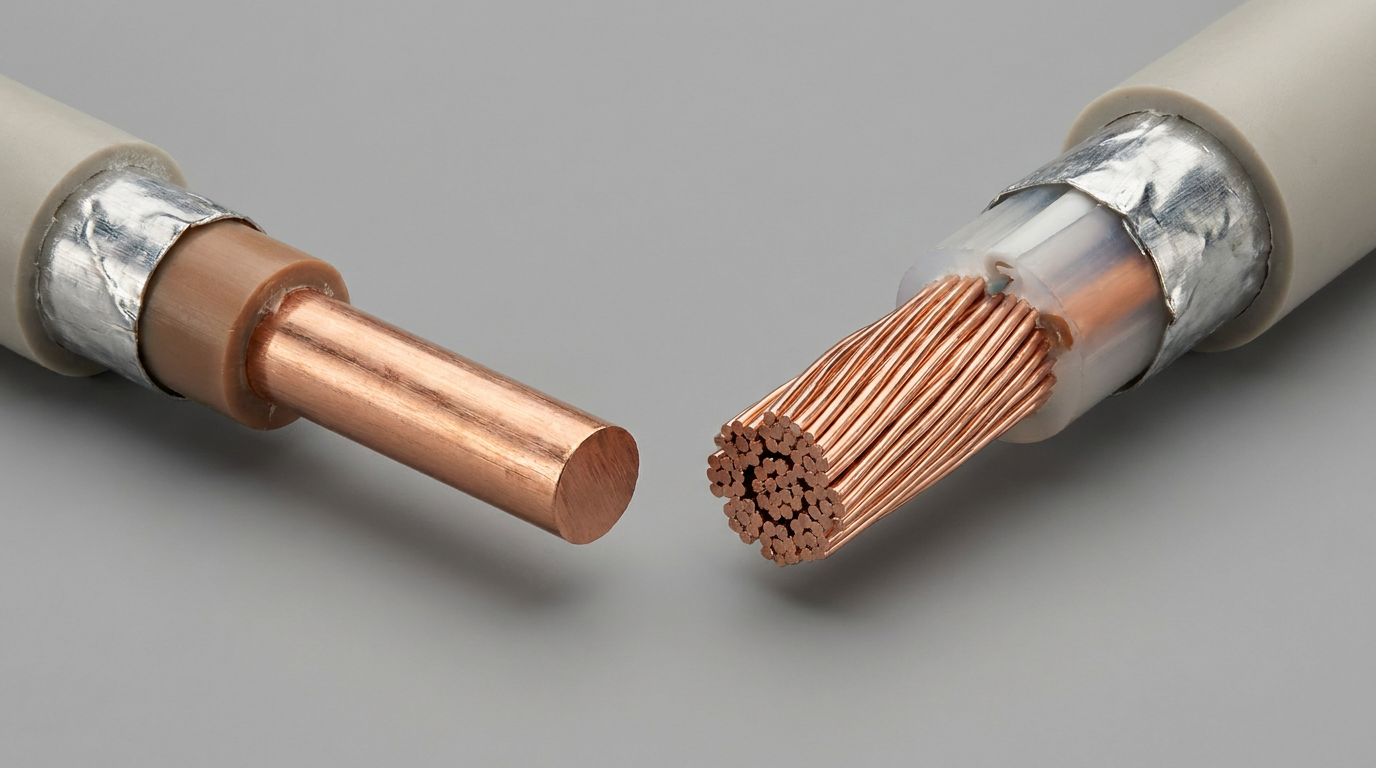
Conductor Construction and Best-Use Scenarios
The main difference is inside each conductor. Ethernet cable contains eight conductors arranged into four أزواج ملتوية. In a solid cable, each conductor is a single piece of copper. In a stranded cable, each conductor is made of several smaller copper strands bundled together.
واستنادًا إلى بياناتنا الداخلية وتحليلات السوق، إليك التفاصيل:
| نوع الكابل | Conductor Design | أفضل استخدام | المرونة | Typical Installation |
|---|---|---|---|---|
| Solid Ethernet Cable | One solid copper wire per conductor | Long permanent runs | أدنى | Walls, ceilings, patch panels |
| Stranded Ethernet Cable | Multiple small copper strands per conductor | Short movable connections | أعلى | Patch cords, desks, racks |
| Solid Copper CCA-Free Cable | Pure copper solid conductors | Reliable structured cabling | أدنى | Professional network installs |
| Stranded Patch Cable | Flexible copper strands | اتصالات الجهاز للتبديل | أعلى | Workstations and network cabinets |
Solid cable generally provides better electrical performance over longer distances because its conductor geometry is stable. Stranded cable sacrifices a small amount of distance efficiency for flexibility and bend resistance.
نصيحة احترافية لـ cwcables: I use solid cable for permanent links from patch panel to wall jack, then stranded patch cords from the wall plate to the device. That combination gives you strong signal integrity and better day-to-day durability.
How Does solid vs stranded ethernet cable Work?
Both cable types transmit Ethernet signals through twisted copper pairs that reduce interference and maintain data integrity. Solid conductors provide stable electrical paths for fixed runs, while stranded conductors tolerate repeated bending. The network function is the same, but installation style determines which construction performs better.
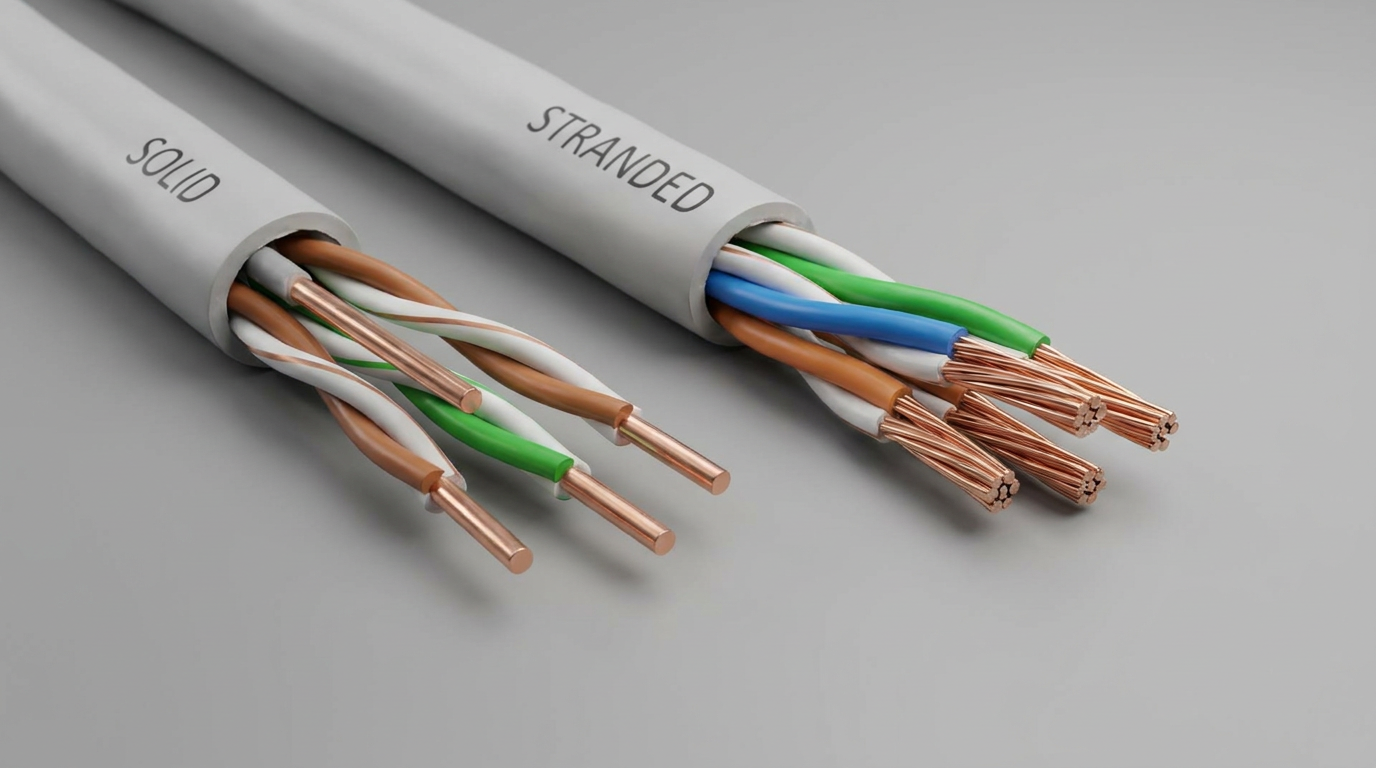
Signal Transmission and Mechanical Behavior
Ethernet cable works by sending balanced electrical signals through twisted pairs. The twisting helps cancel التداخل الكهرومغناطيسي و الحديث المتبادل. Whether the conductor is solid or stranded, the cable must preserve twist rate, مقاومة, and conductor quality to support stable data transmission.
For practical selection, consider the cable’s operating environment:
- Permanent link: Use solid cable for wall, ceiling, conduit, or patch-panel-to-jack runs.
- Patch connection: Use stranded cable between devices, switches, routers, keystone jacks, or patch panels.
- High movement area: Use stranded cable where cables are unplugged, moved, bent, or coiled often.
- Longer channel distance: Use solid copper cable for the fixed horizontal portion of the network.
- RJ45 plug selection: Match the connector to the conductor type; solid and stranded RJ45 plugs are not always interchangeable.
A common question is which Ethernet cable for RJ45 termination is best. The answer depends on the RJ45 connector. Some plugs are designed for solid conductors, some for stranded conductors, and some are universal. Using the wrong plug can cause poor contact, intermittent links, or failed certification.
نصيحة احترافية لـ cwcables: I always check whether the RJ45 plug is rated for solid, stranded, or both before crimping. A cable can test fine at first and still fail later if the contacts do not properly bite into the conductor.
What are the benefits of solid vs stranded ethernet cable?
The biggest benefit of comparing solid and stranded Ethernet cable is choosing the right cable for the job. Solid cable offers better long-run performance and cleaner structured cabling, while stranded cable delivers flexibility, easier handling, and better resistance to damage from repeated movement.
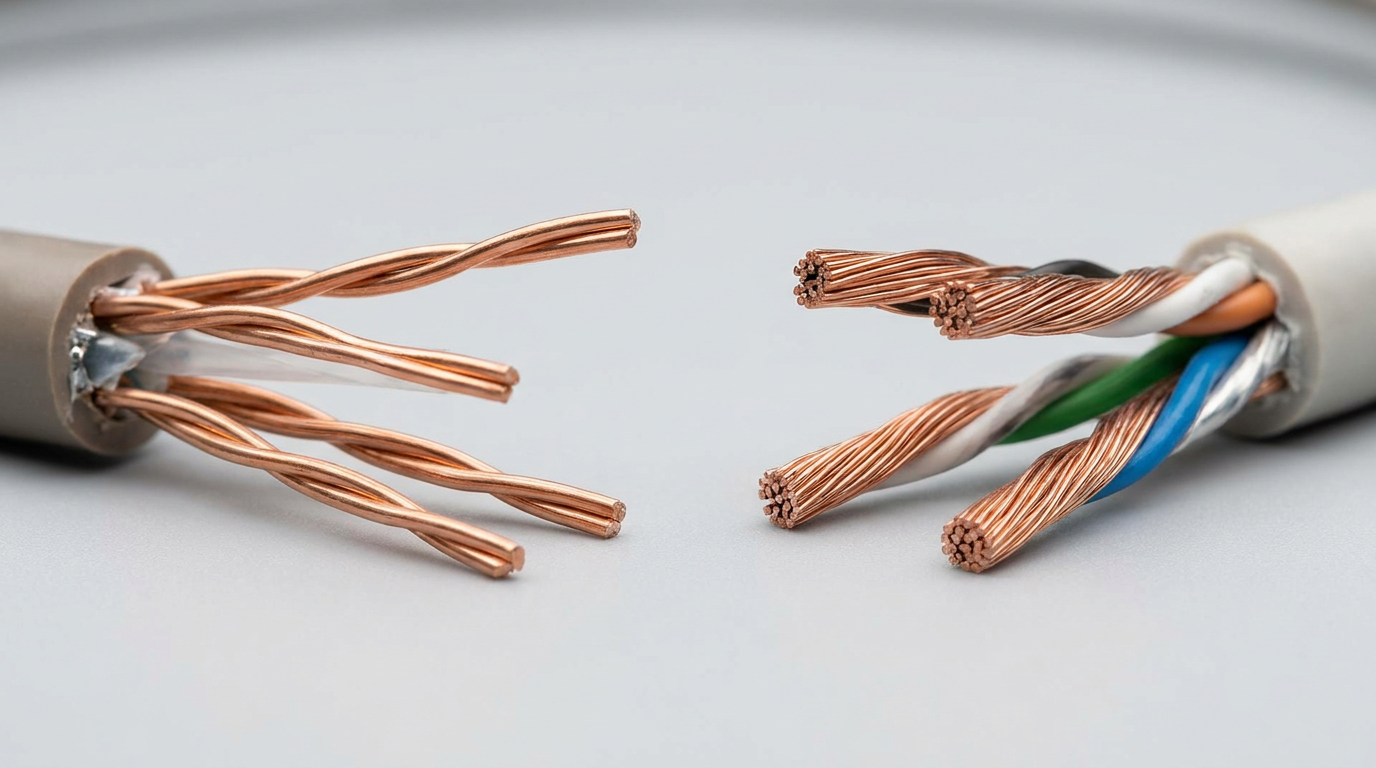
Performance, Durability, and Installation Advantages
Each cable type has strengths. Neither is universally “better”; the correct choice depends on whether the cable will stay fixed or move regularly.
واستنادًا إلى بياناتنا الداخلية وتحليلات السوق، إليك التفاصيل:
| منطقة المنفعة | Solid Ethernet Cable | Stranded Ethernet Cable |
|---|---|---|
| Signal Consistency | Excellent for permanent runs | Good for short patch runs |
| المرونة | محدود | ممتاز |
| Bend Resistance | Better when installed once | Better under repeated movement |
| Termination Style | Punch-down blocks, keystone jacks, patch panels | RJ45 patch plugs |
| Installation Appearance | Clean and organized in structured cabling | Convenient for desks and racks |
| Long-Term Reliability | Strong in fixed environments | Strong in movable environments |
Solid cable helps preserve signal quality over longer runs because the conductor is continuous and stable. Stranded cable is less likely to break internally when flexed repeatedly, making it ideal for patch leads and user-facing connections.
نصيحة احترافية لـ cwcables: I avoid using solid cable as a movable patch cord, even if it works electrically. Repeated bending near the RJ45 plug can weaken the conductor and create hard-to-diagnose intermittent network issues.
How to maintain a solid vs stranded ethernet cable?
To maintain Ethernet cable properly, avoid sharp bends, excessive pulling force, crushed jackets, and mismatched connectors. Solid cable should remain fixed after installation, while stranded cable should be inspected regularly in high-use areas where plugging, unplugging, bending, and movement are frequent.
Handling Practices That Extend Cable Life
Good cable maintenance protects both electrical performance and mechanical integrity. Ethernet cable is durable, but poor handling can untwist pairs, deform conductors, or damage RJ45 terminations.
Use these maintenance practices:
- Respect bend radius: Avoid sharp bends, especially near connectors, wall plates, and patch panels.
- Do not over-pull: Excessive pulling can stretch conductors and disturb pair geometry.
- Use proper strain relief: Support cable weight in racks, trays, and vertical runs.
- Keep solid cable stationary: Once installed, avoid repeated repositioning.
- Inspect patch cords: Replace stranded patch cables with broken clips, kinked jackets, or intermittent connections.
- Label both ends: Clear labeling reduces unnecessary unplugging and cable stress.
- Avoid tight zip ties: Use hook-and-loop straps when possible to prevent jacket deformation.
- Test after changes: Use a cable tester after re-termination, relocation, or rack maintenance.
For solid cable, maintenance is mostly about protecting the permanent pathway. For stranded cable, maintenance is about monitoring wear, especially at RJ45 plugs and boot areas.
نصيحة احترافية لـ cwcables: I prefer hook-and-loop cable ties in network racks. They hold cables neatly without crushing the jacket, and they make future maintenance much easier than tight plastic zip ties.
What is the price of solid vs stranded ethernet cable?
Solid Ethernet cable is usually purchased in bulk boxes or reels for permanent installation, while stranded cable is commonly sold as pre-made patch cords. Pricing depends on category rating, copper quality, shielding, jacket type, length, certification, and whether the cable is bulk or factory-terminated.
Pricing Variables That Affect Total Cost
The price difference is not just about solid versus stranded construction. Category rating, jacket material, shielding, and conductor material can matter more than the conductor style alone.
واستنادًا إلى بياناتنا الداخلية وتحليلات السوق، إليك التفاصيل:
| عامل التسعير | خيار أقل تكلفة | خيار التكلفة الأعلى | لماذا يهم؟ |
|---|---|---|---|
| فئة الكابلات | كات5e | Cat6A أو أعلى | Higher bandwidth and stricter performance specs |
| مادة الموصل | التقييم القطري المشترك | النحاس العاري الصلب | Copper offers better reliability and compliance |
| Cable Format | Pre-made short patch cord | Bulk installation cable | Bulk cable requires termination labor |
| التدريع | UTP | F/UTP، S/FTP | Shielding improves noise resistance in demanding environments |
| تقييم السترة | بولي كلوريد الفينيل | Plenum or outdoor-rated | Specialty jackets meet code or environmental needs |
| الإنهاء | Field-crimped | Factory-tested | Tested assemblies reduce failure risk |
Solid bulk cable may have a higher upfront roll cost, but it is economical for multiple permanent runs. Stranded patch cords are usually cheaper per individual connection and save labor because they arrive terminated and tested.
نصيحة احترافية لـ cwcables: I recommend pricing the full channel, not just the cable. Include connectors, keystone jacks, patch panels, labor, testers, and replacement risk when comparing options.
الميزات الرئيسية والمقارنة
The key comparison between stranded vs solid Ethernet cable comes down to installation type. Solid cable is better for fixed infrastructure, longer permanent links, and punch-down termination. Stranded cable is better for flexible patching, RJ45 plug use, and areas where cables are handled frequently.
مقارنة المواصفات جنبًا إلى جنب
واستنادًا إلى بياناتنا الداخلية وتحليلات السوق، إليك التفاصيل:
| ميزة | Solid Ethernet Cable | Stranded Ethernet Cable | توصية عملية |
|---|---|---|---|
| Internal Conductor | One solid copper conductor | Multiple thin copper strands | Choose based on movement level |
| المرونة | أكثر صلابة | أكثر مرونة | Stranded for desks and patching |
| Signal Performance | Better for longer fixed runs | Best for shorter patch runs | Solid for structured cabling |
| Mechanical Durability | Strong when stationary | Strong when repeatedly flexed | Match cable to environment |
| RJ45 Compatibility | Requires solid-rated plugs if crimping | Requires stranded-rated plugs | Verify connector rating |
| Punch-Down Use | ممتاز | Not preferred | Solid for keystone jacks and patch panels |
| Typical Length | Bulk long runs | Short patch cords | Use both in a complete network |
| Installation Area | Walls, ceilings, conduits | Racks, workstations, equipment | Design by cable pathway |
| Common Risk | Breakage from repeated flexing | Slightly higher التوهين over distance | Avoid using either outside its role |
The best network design often uses both. A structured cabling system typically uses solid cable from patch panel to wall outlet, then stranded patch cords at each end to connect switches, routers, computers, access points, or other devices.
نصيحة احترافية لـ cwcables: If you are building a professional network, think in terms of permanent links and patch links. Solid cable belongs in the permanent link; stranded cable belongs at the flexible connection points.
عوامل التكلفة والشراء
When buying Ethernet cable, consider more than the upfront price. The right choice depends on cable category, run length, termination method, code requirements, jacket rating, shielding, copper quality, and whether the cable will be installed permanently or used as a patch cord.
Selection Checklist Before Purchasing
Before ordering cable, define the network environment and termination plan. This prevents compatibility issues, wasted labor, and premature cable failure.
استخدم قائمة مراجعة الشراء هذه:
- Choose the category: Cat5e may support basic networks, while Cat6 and Cat6A are better for higher bandwidth and future readiness.
- Confirm conductor type: Use solid for permanent infrastructure and stranded for flexible patch connections.
- Check copper quality: Prefer pure copper over CCA for reliability and standards-based installations.
- Match connectors: Select RJ45 plugs, keystone jacks, or patch panels designed for the conductor type.
- Confirm jacket rating: Use plenum, riser, outdoor, or direct-burial cable where required.
- Review shielding needs: Use shielded cable in high-noise environments when properly grounded.
- Plan total length: Keep Ethernet channel limits in mind, including permanent cable and patch cords.
- Buy from a reliable supplier: Consistent specifications reduce installation surprises.
For cwcables customers, the most practical approach is to buy solid bulk cable for infrastructure and factory-terminated stranded patch cords for equipment connections.
نصيحة احترافية لـ cwcables: I never choose cable by price alone. A slightly better cable can save hours of troubleshooting, especially when the cable is hidden behind walls or installed above ceilings.
خاتمة
Solid and stranded Ethernet cable each serve a specific purpose. Solid cable is the right choice for permanent structured cabling, while stranded cable is ideal for flexible patch connections. For most reliable networks, use both correctly and match every connector to the cable type.
Final Recommendation for Reliable Ethernet Installations
The decision is straightforward when you focus on how the cable will be used. If the cable will be installed once and left in place, choose solid. If the cable will move, flex, or connect directly to devices, choose stranded.
A reliable Ethernet setup typically follows this model:
- Solid bulk cable: Patch panel to keystone jack or wall outlet.
- Stranded patch cable: Switch to patch panel, wall outlet to computer, router to device, or rack-to-rack short connection.
- Correct RJ45 hardware: Use plugs and jacks rated for the conductor type.
- Quality copper construction: Choose dependable cable that supports stable performance.
- Proper testing: Verify continuity and performance after installation.
Choosing correctly reduces signal issues, improves cable life, and keeps your network easier to maintain. For dependable cable options and network connectivity supplies, cwcables can help you select the right solid or stranded Ethernet solution for your application.
نصيحة احترافية لـ cwcables: My rule is simple: solid in the walls, stranded at the ends. If you follow that approach and use the right connectors, most Ethernet cabling problems become much easier to avoid.