

Choosing between PVC and PUR cable jackets comes down to your environment, motion profile, and exposure risks. PVC is cost-effective and widely used for general-purpose flexible cables, while PUR excels in abrasion resistance, oil/chemical exposure, and repeated flexing. Below is a practical, engineering-led comparison to help you select the right jacket for your application with cwcables-grade reliability.
What is pvc vs pur cable jacket?
PVC vs PUR cable jacket refers to comparing two outer sheath materials used to protect flexible cables. PVC (كلوريد البوليفينيل) is a common, economical jacket suited for many indoor and light-duty uses. PUR (البولي يوريثين) is tougher and more durable, designed for high-flex, abrasive, oily, or harsh industrial environments.
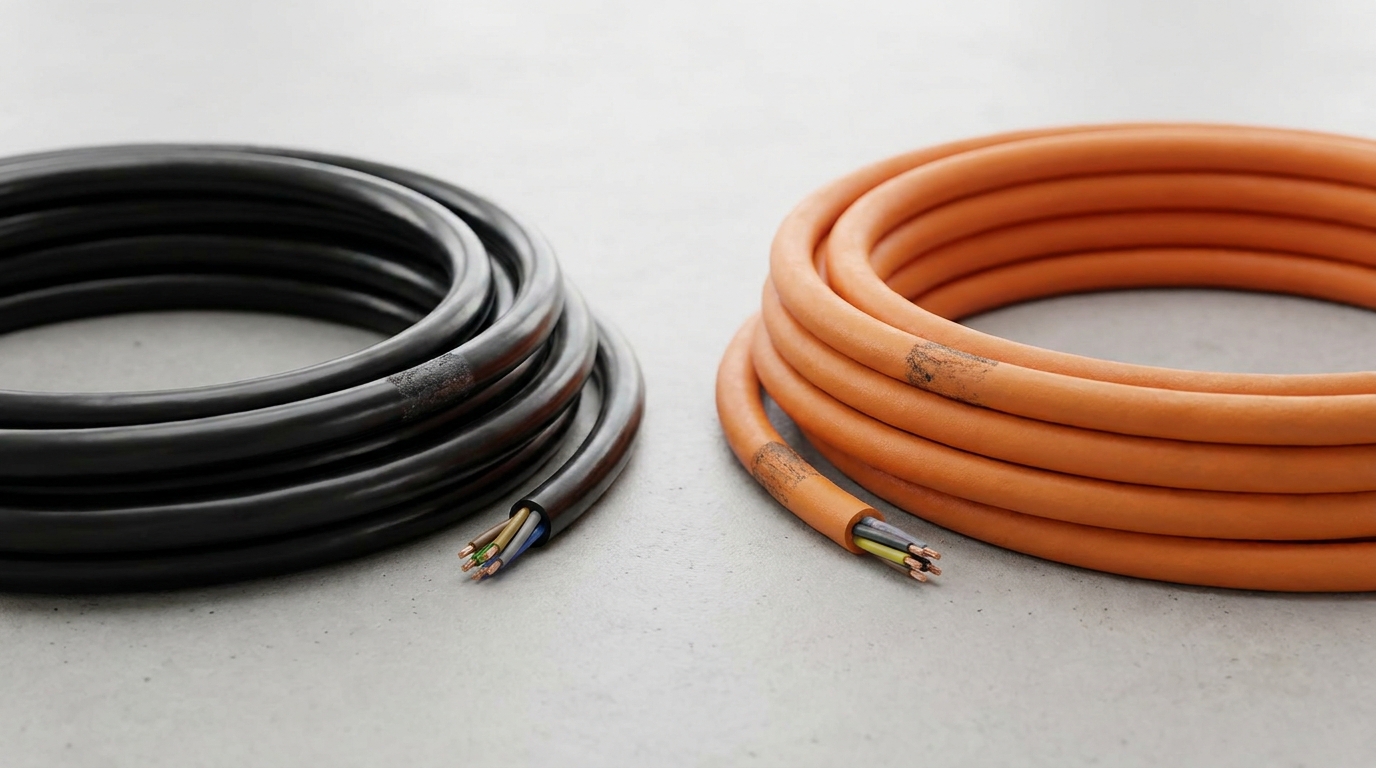
Jacket Material Basics and What They Protect
A cable jacket is the outermost protective layer that shields internal insulation, shielding, and conductors from mechanical damage and environmental attack.
Key definitions:
- سترة PVC: أ thermoplastic compound valued for low cost, easy processing, and broad availability.
- سترة بور: A polyurethane elastomer valued for high abrasion resistance, oil/chemical resistance، و excellent flex-life.
Typical selection logic:
- يستخدم بولي كلوريد الفينيل for fixed or occasional-flex cables in cleaner environments.
- يستخدم بور for continuous motion, سلسلة السحب, robotics, and industrial floors where scuffing and fluids are common.
نصيحة احترافية لـ cwcables: I treat the jacket as the “insurance policy” of the cable—if your cable will touch oil, metal edges, or move continuously, budget for PUR up front to avoid premature failures and downtime.
How Does pvc vs pur cable jacket Work?
PVC and PUR jackets work by forming a protective polymer barrier around the cable core, resisting abrasion, impact, moisture, and chemicals. PVC relies on a plasticized thermoplastic structure that’s flexible but can scuff and harden over time. PUR uses a tougher elastomeric network that resists wear and survives repeated bending better.
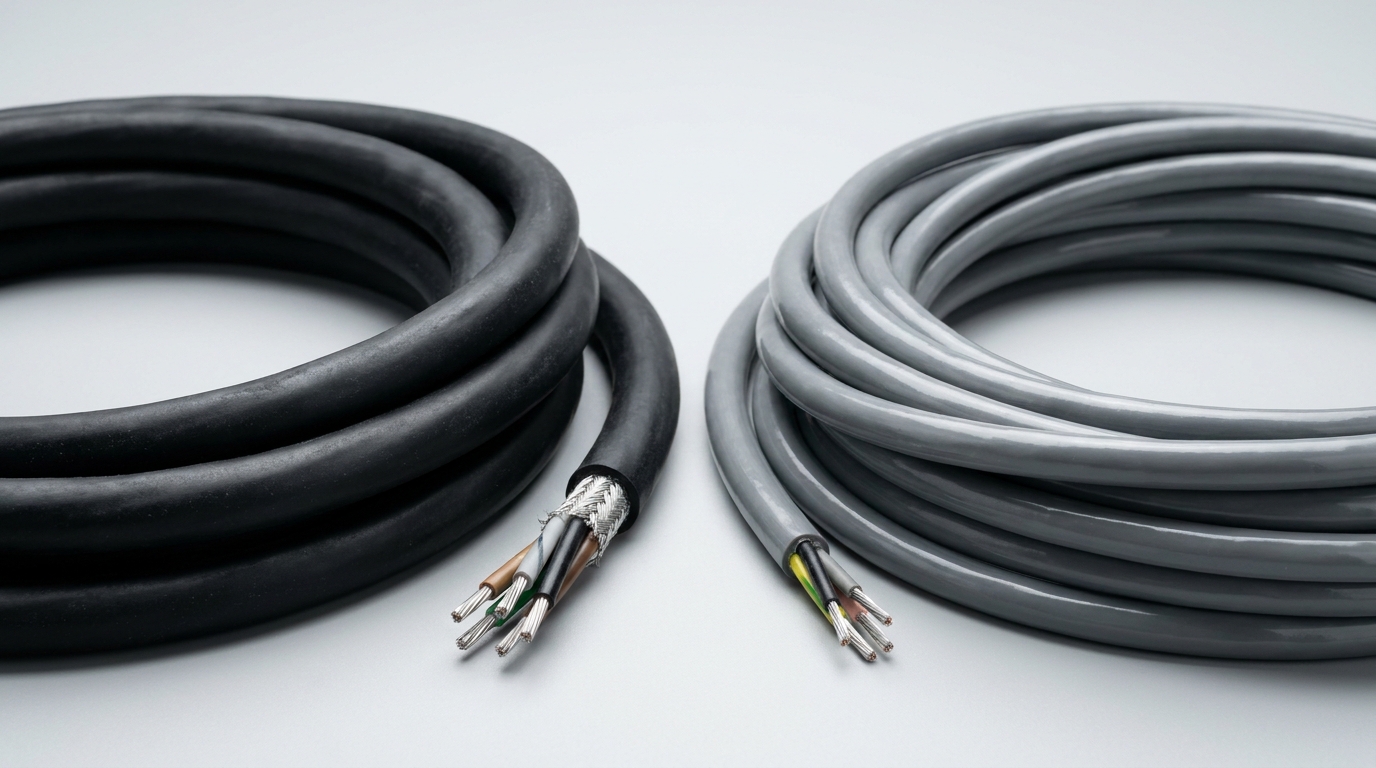
Protection Mechanisms in Real-World Use
Both materials protect in similar ways—by separating the cable internals from the outside world—but their polymer structures behave differently under stress.
Where the “work” shows up:
- Abrasion/drag: PUR resists cutting and scuffing far better when rubbed against concrete, metal, or cable carriers.
- Repeated flexing: PUR maintains mechanical integrity longer in cyclic bending (common in automation).
- Chemical contact: PUR generally withstands oils, coolants, and many industrial chemicals better than standard PVC.
- Temperature swings: PVC performance can vary more with plasticizer migration and low-temperature stiffening, depending on compound.
Practical “behavior” comparison:
- بولي كلوريد الفينيل: Flexible and adequate for many stationary or light-flex installations; can be more prone to surface wear and aging in harsh exposure.
- بور: More “springy” and cut-resistant; tends to hold up longer in motion and contact-heavy environments.
نصيحة احترافية لـ cwcables: If your application includes a drag chain, don’t evaluate only flexibility—evaluate jacket friction and abrasion against the carrier and neighboring cables; PUR typically wins that test.
What are the benefits of pvc vs pur cable jacket?
PVC offers strong value for general-purpose use, easy installation, and wide availability. PUR’s benefits are performance-driven: superior abrasion resistance, better oil/chemical resistance, and longer service life in high-flex or harsh industrial settings. The best choice depends on whether cost or durability is the top priority.
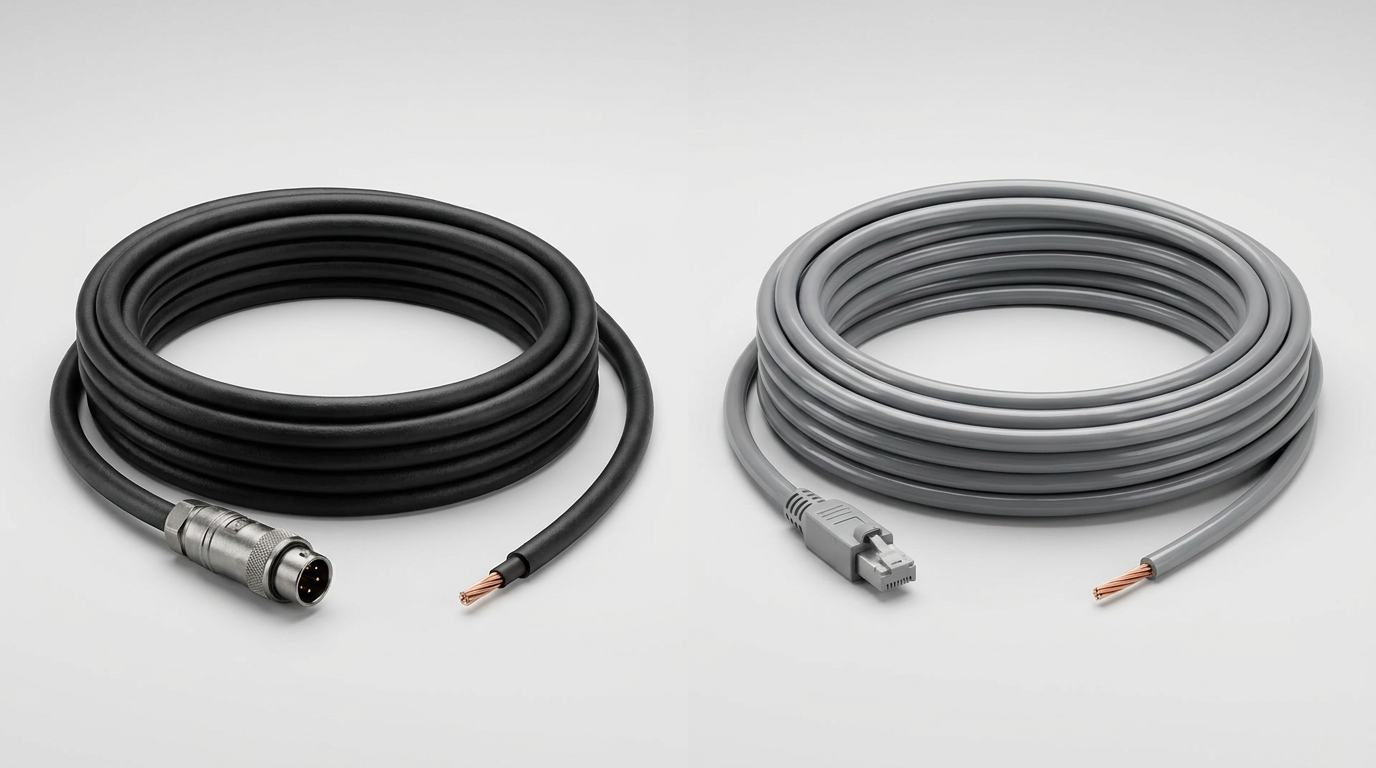
Benefits by Application Category
Benefits tend to cluster around where the cable will be used and how it moves.
PVC jacket benefits
- Lower material cost
- Common and readily sourced
- Good general-purpose performance for indoor routing
- Typically easier to strip/process (depends on compound)
PUR jacket benefits
- Excellent abrasion and cut resistance
- Better performance in oils, coolants, and many chemicals
- Longer flex life in continuous-motion systems
- Often preferred for robotics, material handling, and factory automation
Quick decision list:
- يختار بولي كلوريد الفينيل إذا كان لديك fixed wiring أو light intermittent flex and minimal chemical/abrasion exposure.
- يختار بور إذا كان لديك المرن المستمر, drag chain motion, floor traffic، أو fluid exposure.
نصيحة احترافية لـ cwcables: I like to match PUR with “downtime-critical” lines (robot EOAT, gantries, conveyors). The extra jacket cost is usually smaller than one maintenance callout.
How to maintain a pvc vs pur cable jacket?
Maintaining PVC or PUR cable jackets means preventing mechanical damage, reducing chemical exposure, and inspecting wear points regularly. PUR generally needs less intervention in abrasive areas, but both benefit from good routing, correct bend radius, and proper strain relief. Routine checks for scuffing, cracking, or swelling help you replace cables before failure.
Practical Maintenance Checklist for Longer Service Life
A few discipline steps can dramatically extend jacket life—especially in moving systems.
- Control bend radius: Maintain the minimum bend radius specified by the cable design (especially in continuous flex).
- Eliminate pinch points: Avoid clamping directly on the jacket where movement occurs; use strain relief designed for flex.
- Manage abrasion: Add guides, separators, or sleeves at known rub points (carrier entry/exit, floor transitions).
- Limit chemical exposure: Wipe off oils/coolants; prevent pooling around cable runs.
- Inspect on schedule: Look for jacket thinning, cuts, glossing (polishing from rub), cracks, or softening/swelling.
Common signs you should replace the cable:
- Visible conductor shielding through jacket thinning
- Deep scuffs or cuts
- Hardening and cracking (often seen in aging PVC compounds)
- Swelling/soft spots after chemical exposure
نصيحة احترافية لـ cwcables: I mark “high-wear zones” (carrier exits, clamp points) and inspect those first—80% of jacket failures start in the same predictable 20% of the route.
What is the price of pvc vs pur cable jacket?
PVC jackets are typically less expensive, making them popular for standard industrial and commercial cabling. PUR jackets usually cost more due to higher material and performance requirements, but they can reduce total cost of ownership by lasting longer in high-flex, abrasive, or oily environments. Pricing varies with cable construction, approvals, and volume.
What Actually Drives Jacket-Related Cost
Jacket price is not just “PVC vs PUR”—it’s tied to the entire cable design and compliance needs.
محركات التكلفة الرئيسية:
- Compound type and grade (standard PVC vs specialty PVC; ether/ester-based PUR blends)
- تصميم الكابل (conductor count, shielding, fillers, braid coverage)
- Performance rating (continuous-flex, torsion, drag chain, oil resistance)
- امتثال (UL/CSA, CE, RoHS/REACH, halogen-free requirements)
- Order volume and lead time
General rule of thumb:
- بولي كلوريد الفينيل: Best for budget-sensitive projects with moderate conditions.
- بور: Best where replacement labor, downtime, or failures are expensive.
نصيحة احترافية لـ cwcables: When budgeting, I compare “installed cost per month of service,” not cable cost per meter—PUR often wins once maintenance and downtime are included.
الميزات الرئيسية والمقارنة
PVC vs PUR cable jacket performance differs most in abrasion resistance, oil/chemical tolerance, and flex life. PVC is a strong all-rounder for general environments and cost control, while PUR is engineered for motion, wear, and harsh industrial exposure. The right choice comes from matching jacket properties to real operating conditions.
Side-by-Side Performance Factors That Matter
واستنادًا إلى بياناتنا الداخلية وتحليلات السوق، إليك التفاصيل:
| ميزة | سترة PVC | سترة بور |
|---|---|---|
| حالة الاستخدام النموذجي | General-purpose, indoor, light-duty | High-flex automation, drag chain, harsh industrial |
| مقاومة التآكل | معتدل | عالي |
| مقاومة القطع/المسيل للدموع | معتدل | عالي |
| مقاومة الزيت/المبرد | Varies by compound; often moderate | Typically strong |
| Flex life in continuous motion | معتدل | عالي |
| مرونة درجات الحرارة المنخفضة | Compound-dependent; can stiffen | Often better (compound-dependent) |
| مستوى التكلفة | أدنى | أعلى |
| Best fit for downtime-critical systems | أحيانا | غالباً |
نصيحة احترافية لـ cwcables: I ask one question first: “Will the cable rub against anything during its life?” If yes, I lean PUR unless the environment is very clean and the motion is minimal.
عوامل التكلفة والشراء
To buy the right PVC or PUR jacketed cable, evaluate motion type, abrasion risk, chemical exposure, compliance needs, and expected service life. PVC usually minimizes upfront spend, while PUR often reduces long-term costs in dynamic or harsh environments. A clear spec (flex cycles, bend radius, fluids) prevents overbuying or underbuying.
A Practical Purchasing Checklist
Use this list to avoid mismatched jacket selections:
- الملف الشخصي للحركة: Fixed, occasional flex, continuous flex, torsion/robot wrist, drag chain travel length
- Contact/abrasion: Will it scrape floors, metal edges, cable carriers, or adjacent cables?
- Fluid exposure: Oils, coolants, cleaning chemicals, outdoor moisture
- نطاق درجة الحرارة: Min/max operating temperature and cold-start conditions
- Standards/approvals: UL/CSA, CE, RoHS/REACH, industry-specific requirements
- استراتيجية الخدمة: Planned maintenance intervals vs run-to-failure tolerance
- التكلفة الإجمالية للملكية: Include labor, downtime, and replacement frequency
If you’re comparing quotes, request these clarifications:
- Jacket material and compound grade (not just “PVC” or “PUR”)
- Rated flex class (if applicable) and test basis
- Oil resistance standard (and which oil) if it matters
- Minimum bend radius and intended installation method
نصيحة احترافية لـ cwcables: I recommend you share a short “application card” with suppliers: motion type, travel length, bend radius, temperature, and fluids. It’s the fastest way for us at cwcables to match the correct jacket and construction.
خاتمة
PVC vs PUR cable jacket isn’t about which is universally “better,” but which is better for your operating conditions. PVC is the economical, versatile choice for general environments, while PUR is the durability choice for continuous motion, abrasion, and industrial fluid exposure. Match the jacket to your real risks, and you’ll maximize uptime and cable life.
Next Step: Spec It Correctly the First Time
If your installation is mostly fixed and clean, PVC is often the most cost-effective solution.
If your cable will move continuously, live in a drag chain, or face abrasion and oil, PUR is typically the safer, longer-lasting option.
نصيحة احترافية لـ cwcables: If you tell me your motion type (fixed/drag chain/robot), temperature range, and whether oil/coolant is present, I can help narrow the jacket choice and avoid expensive over- or under-specification.