

Fieldbus is a digital industrial communication network that connects датчики, приводы, controllers, drives, and other automation devices on a shared communication bus. Instead of wiring every device separately to a central controller, fieldbus systems transmit data over a structured network, improving diagnostics, reducing cabling, and supporting real-time control in factories, process plants, and machine automation.
Fieldbus Definition
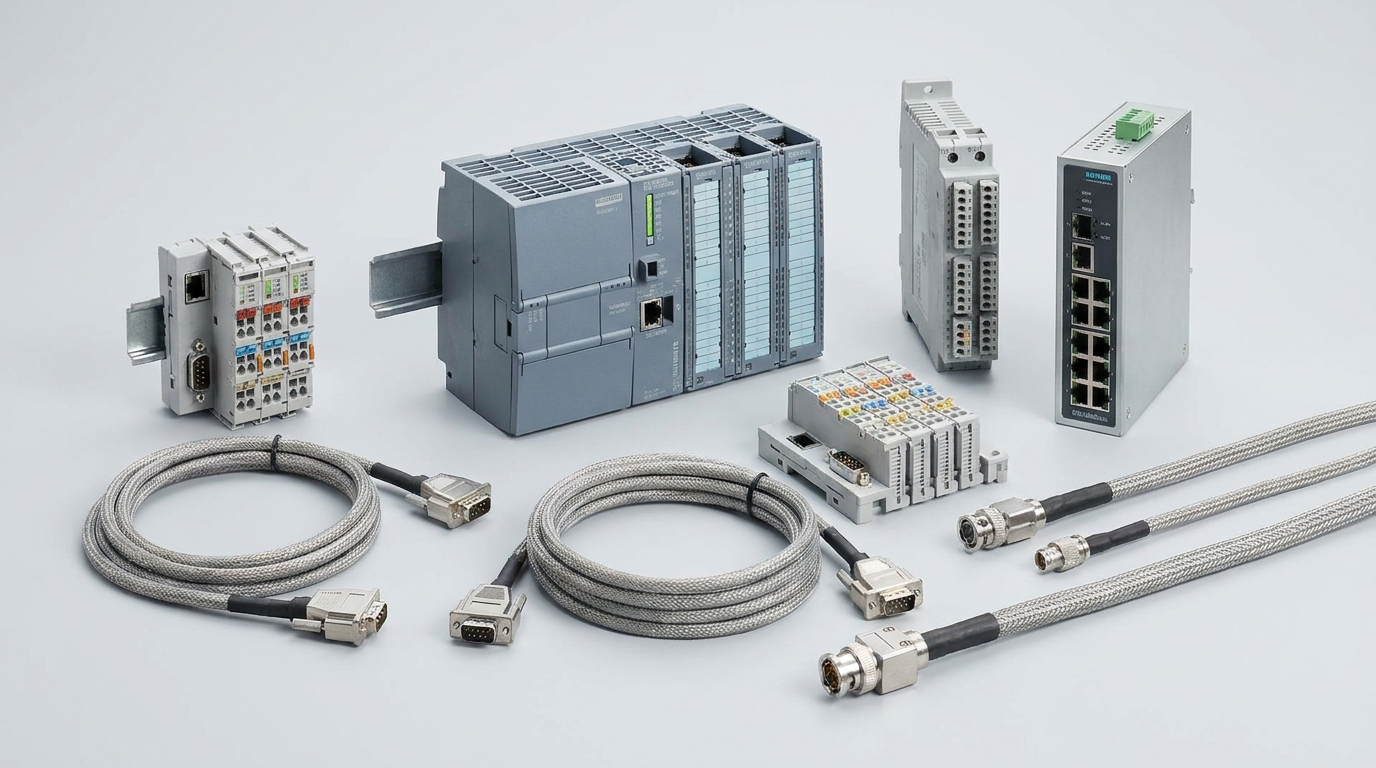
Полевая шина is an industrial networking method used to connect field-level devices such as transmitters, valves, sensors, motor starters, and ПЛК. It replaces large bundles of point-to-point wiring with a digital communication bus, allowing devices to exchange control data, status information, and diagnostics over a fieldbus cable or industrial network segment.
Core Concept and Purpose
A fieldbus system operates at the “field level” of industrial automation, meaning it connects devices located directly on machines, production lines, or process equipment. These devices communicate digitally with controllers, distributed I/O modules, or supervisory systems.
Traditional automation often used analog signals such as 4–20 mA or individual discrete wires. Fieldbus improves this model by allowing multiple devices to communicate over the same cable, reducing wiring complexity and making system diagnostics easier.
Common fieldbus technologies include:
- ПРОФИБУС
- FOUNDATION Fieldbus
- Девайснет
- CANopen
- Модбус РТУ
- Interbus
- AS-Interface
- CC-Link
Fieldbus is especially valuable where reliability, noise resistance, and deterministic communication are required.
Совет профессионала cwcables: When selecting a fieldbus cable, I always check the exact protocol requirements first. Cable impedance, shielding, conductor size, and jacket material can directly affect communication stability in industrial environments.
How Does Fieldbus Work?
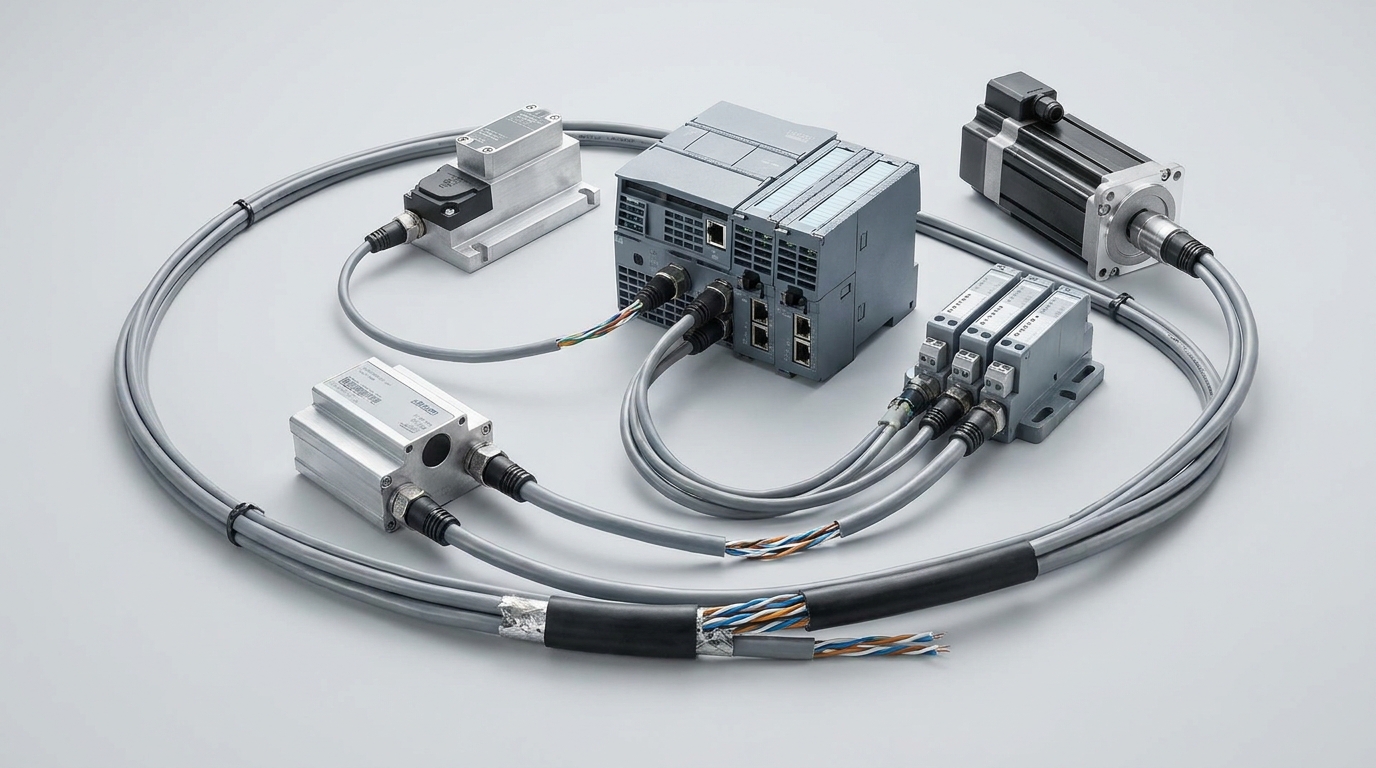
Fieldbus works by allowing multiple industrial devices to share a communication path and exchange digital data according to a defined protocol. A controller sends and receives messages through the bus, while connected devices respond with process values, commands, alarms, and diagnostic information in a structured, timed, and reliable way.
Communication Process
In a fieldbus network, devices are connected using a defined physical layer and communication protocol. The physical layer may include twisted-pair copper cable, shielded fieldbus cable, fiber optics, or hybrid cabling depending on the application.
The protocol defines how devices identify themselves, when they can transmit, how data is formatted, and how errors are detected.
A typical fieldbus communication cycle works like this:
- The controller or master device initiates communication.
- Field devices receive commands or polling requests.
- Sensors send measured values such as pressure, temperature, position, or flow.
- Actuators receive control instructions such as open, close, start, stop, or speed reference.
- Diagnostic data is reported back to the controller.
- The system verifies message integrity and timing.
- The cycle repeats continuously for real-time operation.
Some fieldbus systems use a master-slave structure, while others support publisher-subscriber or peer-to-peer communication. The best choice depends on speed, topology, device count, and process requirements.
Совет профессионала cwcables: For stable operation, I recommend keeping fieldbus cable routing away from high-voltage motor cables whenever possible. If crossing is unavoidable, cross at 90 degrees to reduce электромагнитные помехи.
What Are the Benefits of Fieldbus?
Fieldbus offers major advantages in industrial automation, including reduced wiring, easier troubleshooting, improved diagnostics, better device integration, and lower installation costs. It also enables more intelligent communication between devices, helping plants improve uptime, maintenance planning, process visibility, and control system performance.
Operational Advantages
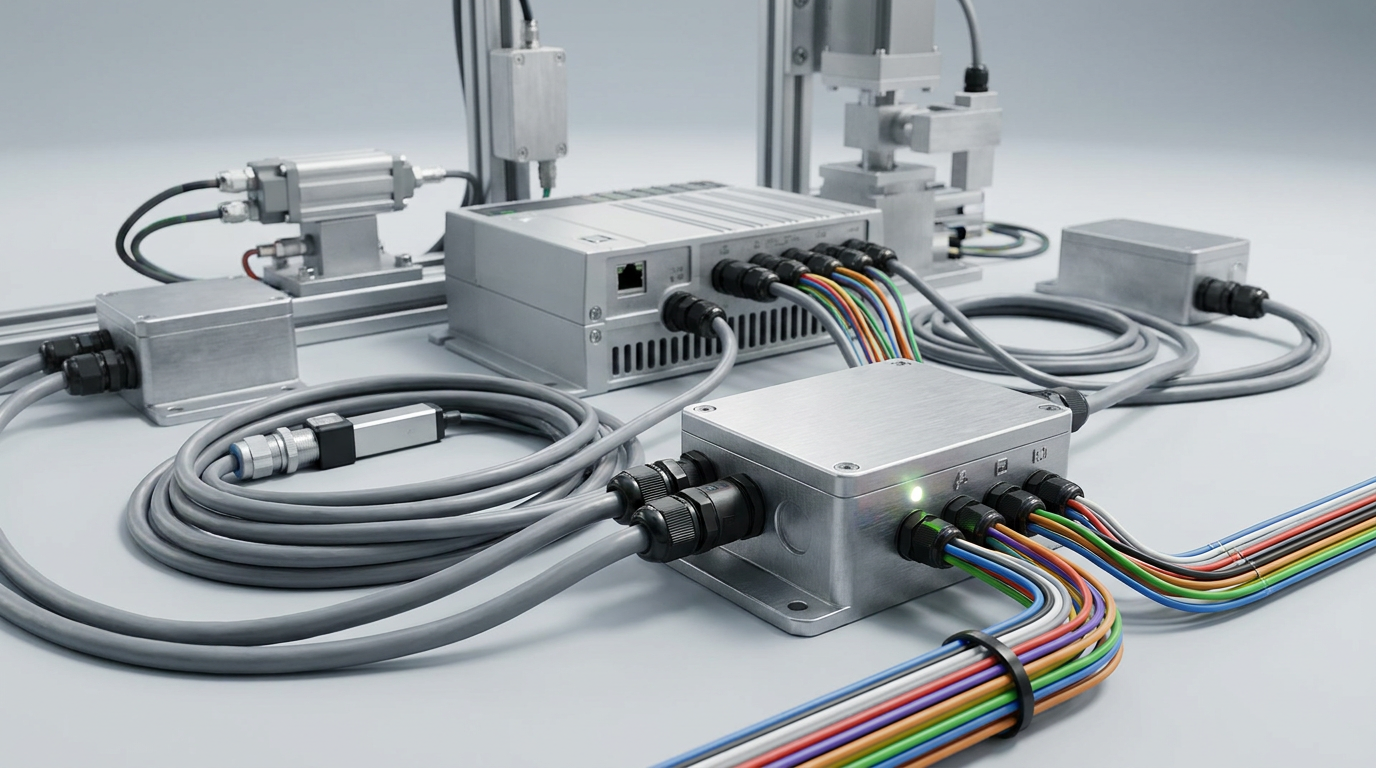
Fieldbus technology helps automation systems become more efficient by simplifying how devices are connected and monitored. Instead of running separate wires for every signal, multiple devices can communicate through one network cable.
Основываясь на наших внутренних данных и анализе рынка, вот разбивка:
| Выгода | Практическое воздействие | Типичный результат |
|---|---|---|
| Reduced wiring | Fewer cable runs and terminals | Lower installation labor |
| Digital communication | More accurate data transfer | Better process visibility |
| Device diagnostics | Faults can be identified faster | Сокращение времени простоя |
| Flexible expansion | New devices can be added more easily | Scalable automation |
| Lower panel complexity | Fewer I/O cards and wiring points | Smaller control cabinets |
| Шумостойкость | Shielded communication improves reliability | Stable industrial performance |
Fieldbus also allows smart devices to report more than just a basic signal. For example, a flow transmitter can send measured flow, device health, calibration status, and alarm conditions through the same connection.
Совет профессионала cwcables: I see many fieldbus problems caused by poor termination or incorrect shielding. Even a high-quality system can become unreliable if the installation details are ignored.
How to Maintain a Fieldbus?
Maintaining a fieldbus involves regular inspection of cables, connectors, shielding, grounding, termination, device status, and communication diagnostics. A good maintenance plan helps prevent signal errors, intermittent faults, network downtime, and performance degradation caused by vibration, corrosion, electrical noise, or incorrect installation practices.
Maintenance Checklist
Fieldbus maintenance should focus on both the physical layer and the communication layer. Since industrial environments may include heat, oil, moisture, vibration, and electromagnetic noise, cable and connector condition are critical.
Используйте этот контрольный список обслуживания:
- Inspect fieldbus cable jackets for cuts, crushing, abrasion, or chemical damage.
- Check connectors for looseness, corrosion, bent pins, or moisture ingress.
- Verify shield continuity and proper grounding practices.
- Confirm that termination resistors are installed correctly.
- Review network diagnostics for retries, dropped messages, or error frames.
- Keep cable routes separated from high-power conductors.
- Confirm device addresses and baud rate settings after replacement.
- Document changes to topology, cable length, and device configuration.
- Replace damaged cables with protocol-compatible industrial cables.
Preventive maintenance is especially important in applications with moving equipment, washdown areas, outdoor installations, and high-vibration machinery.
Совет профессионала cwcables: Before replacing a controller or device, I always inspect the cable and connectors first. In many cases, the “device fault” is actually a wiring, shielding, or termination problem.
What Is the Price of Fieldbus?
The price of a fieldbus system depends on the protocol, cable type, connector style, shielding, device count, environment, and installation complexity. Basic fieldbus cable may be relatively affordable, while complete systems with industrial connectors, gateways, diagnostics, and certified components can cost significantly more.
Pricing Considerations
Fieldbus pricing is not based on the cable alone. The total cost includes communication modules, network devices, installation labor, connectors, junction boxes, testing, and long-term maintenance.
Основываясь на наших внутренних данных и анализе рынка, вот разбивка:
| Фактор стоимости | Influence on Price | Примечания |
|---|---|---|
| Fieldbus cable type | От среднего до высокого | Shielded, armored, or high-flex cables cost more |
| Protocol requirements | Середина | Some networks require certified cable specifications |
| Система разъемов | Середина | M12, 7/8″, terminal blocks, or custom connectors affect cost |
| Среда | Высокий | Oil resistance, UV resistance, flame rating, and temperature range matter |
| Длина кабеля | Середина | Longer runs increase material and labor costs |
| Device count | Высокий | More nodes require more components and commissioning time |
| Diagnostics tools | Середина | Useful for troubleshooting and validation |
| Installation labor | Высокий | Routing, termination, testing, and documentation add cost |
For buyers, the lowest cable price is not always the best value. A properly specified fieldbus cable reduces communication issues, downtime, and replacement costs over the life of the system.
Совет профессионала cwcables: I recommend comparing total installed cost, not just cable price. A cheaper cable that fails early or causes network errors can cost far more than a properly rated industrial fieldbus cable.
Ключевые особенности и сравнение
Fieldbus systems are defined by shared digital communication, industrial durability, device-level diagnostics, protocol-based control, and reduced wiring compared with traditional point-to-point systems. The right fieldbus choice depends on speed, topology, cable requirements, environmental conditions, device compatibility, and the level of diagnostics needed.
Fieldbus Compared With Traditional Wiring
Основываясь на наших внутренних данных и анализе рынка, вот разбивка:
| Особенность | Fieldbus System | Traditional Point-to-Point Wiring |
|---|---|---|
| Wiring method | Multiple devices share one communication bus | Each signal needs dedicated wiring |
| Data type | Digital process data and diagnostics | Analog or discrete signals |
| Поиск неисправностей | Network diagnostics available | Manual wire-by-wire testing often required |
| Expansion | Easier to add compatible devices | More wiring and I/O may be needed |
| Panel space | Reduced I/O and terminal requirements | Larger panels and more terminals |
| Installation time | Often faster for larger systems | Can be labor-intensive |
| Device intelligence | Supports smart device data | Limited device information |
| Cable requirements | Protocol-specific fieldbus cable | General control or instrumentation cable |
| Noise handling | Designed for industrial communication | Depends heavily on wiring design |
| Лучший вариант использования | Modern automation and distributed I/O | Simple or legacy control systems |
Fieldbus is not automatically better for every application. Simple machines with only a few signals may not require it. However, for larger industrial systems, fieldbus can provide better visibility, lower wiring complexity, and improved maintainability.
Совет профессионала cwcables: When upgrading from traditional wiring to fieldbus, I suggest documenting every signal first. A clear device list and topology plan will prevent address conflicts, cable routing issues, and commissioning delays.
Стоимость и факторы покупки
Buying fieldbus components requires evaluating protocol compatibility, cable construction, installation environment, certification needs, connector type, and future expansion. The best purchase decision balances upfront cost with reliability, maintainability, and long-term system performance rather than focusing only on the lowest unit price.
How to Choose the Right Components
A strong fieldbus purchasing decision starts with understanding the automation system. Different protocols have different electrical and mechanical requirements, so cable and connector selection must match the network.
Важными факторами покупки являются:
- Confirm the fieldbus protocol used by the PLC, controller, or devices.
- Check the required cable impedance, capacitance, shielding, and conductor size.
- Select the correct jacket for oil, UV, flame, abrasion, or chemical exposure.
- Choose connectors suitable for vibration, washdown, or outdoor use.
- Verify maximum segment length and node count.
- Confirm whether the cable needs high-flex or drag-chain performance.
- Review grounding and shielding requirements before installation.
- Consider spare capacity for future device expansion.
- Choose a supplier that understands industrial cable applications.
For demanding environments, cwcables can help match fieldbus cable specifications to real installation conditions, including factory automation, process control, machinery, and industrial network wiring.
Совет профессионала cwcables: I always ask where the cable will be installed before recommending a product. A clean control cabinet, a moving cable carrier, and an outdoor process plant may all need different fieldbus cable designs.
Заключение
Fieldbus is a reliable industrial communication approach that connects smart field devices through a shared digital network. It reduces wiring, improves diagnostics, supports scalable automation, and helps maintenance teams identify problems faster. Choosing the right fieldbus cable and components is essential for long-term system stability.
Final Takeaway
Fieldbus is a foundation of modern industrial automation. It helps controllers, sensors, actuators, and smart devices communicate efficiently while reducing the complexity of traditional wiring systems.
For successful implementation, focus on:
- Selecting the correct protocol-compatible fieldbus cable.
- Following proper shielding and grounding practices.
- Maintaining correct termination and topology.
- Protecting cables from mechanical and environmental damage.
- Planning for diagnostics, expansion, and long-term service.
If you are designing, upgrading, or troubleshooting an industrial communication system, cwcables can support cable selection and application guidance for dependable fieldbus performance.
Совет профессионала cwcables: My final recommendation is simple: treat the cable as part of the communication system, not just a passive accessory. The right fieldbus cable can make the difference between stable automation and recurring network faults.