

Where does the viewpoint that тросы для перетаскивания цепей must be flexible come from?
1. “Experience transfer” for ordinary users: equating “everyday software” with “easy to use”
Ordinary users (especially in non industrial fields) have a limited understanding of flexible cables at the level of “household flexible cords”. The characteristic of this type of гибкий шнур is that it is “soft to the touch and easy to bend”, which leads users to form an intuitive judgment of “soft and easy to use”.
When faced with тросы для перетаскивания цепей that need to be frequently moved in industrial scenarios, users naturally consider “soft” as an implicit requirement, and assume that “drag chain cables must also be soft in order to be easy to install and not damage equipment”. This experience transfer ignores the particularity of industrial scenarios – durability under high-frequency bending is far more important than static softness.
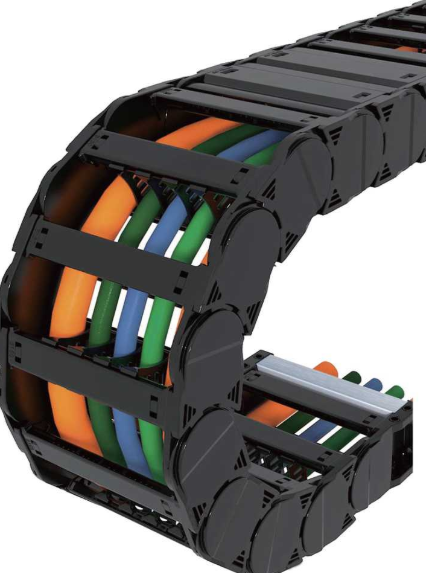
2. Simplified promotion by some гибкий кабель manufacturers: using “soft” to lower the threshold of understanding
In order to cater to users’ intuitive preference for “soft”, some manufacturers (especially low-end manufacturers) deliberately simplify “soft” as “soft” for promotion. For example, using expressions such as “ultra soft drag chain line” and “easy installation” in product descriptions avoids technical terms such as “bending life” and “torsional resistance”.
This promotional strategy exploits the information gap of users, packaging “softness” as the “core selling point” of гибкий провод, further reinforcing the misconception that “softness is necessary”.
3. Visual misguidance of appearance and tactile sensation of высокогибкий кабель: hard shell ≠ not soft
To meet the dynamic protection requirements, high flexibility cables often use high elasticity materials (such as nitrile, Shore hardness) or thermoplastic polyurethane for the outer layer. This type of material has a relatively hard touch at room temperature (similar to car tires), but it exhibits high elasticity when stretched or bent by external forces (quickly rebounds after pressing).
Users directly judge ‘not soft’ because it feels hard, but they overlook the fact that this’ hard ‘is the key to protecting the internal structure – although the outer layer of ordinary soft wire is soft, it lacks elasticity and is prone to cracking after repeated bending.
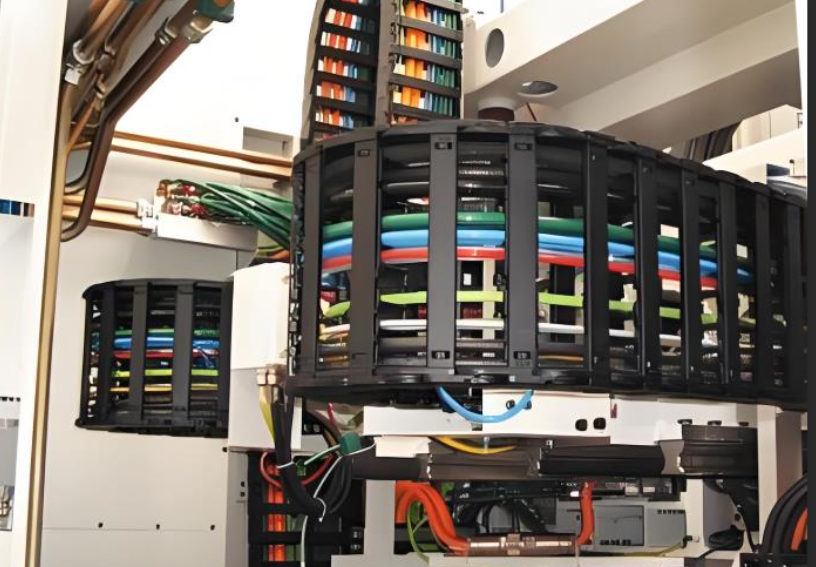
Why is the view that drag chain cables must be flexible wrong?
1. Too soft=easy to “float” and entangle with each other
When the drag chain moves back and forth, the drag chain cable will shake and squeeze in the chain groove.
● Too soft cables are prone to twisting, stacking, and entanglement when bent
● Long term reciprocating motion will result in tighter entanglement, ultimately leading to ore breakage, skin
breakage, and short circuit
2. Too soft=poor tensile strength, easy to elongate
высокогибкий кабель require a certain structural stiffness to support their own weight.
● Soft cables with weak support for tensile and shielding layers
● During high-speed and long-distance movement, it is easy to be stretched and deformed, and the internal core
wire will break first
3. Too soft=poor wear resistance and compression resistance
A truly durable кабель цепи перетаскивания relies on:
● High strength beam layer/tensile center
● Tightly twisted structure
● Appropriate sheath hardness
● Simply pursuing a soft touch often means a loose structure, thin materials, and poorer wear and tear resistance.
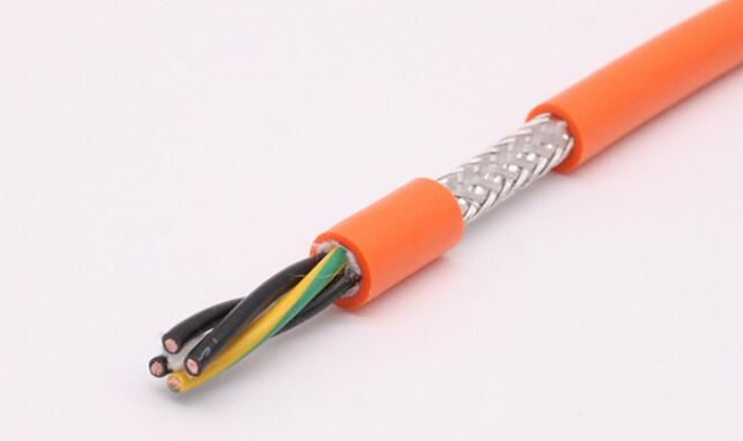
What kind of drag chain cable is “good flexibility”?
A qualified drag chain cable should have a soft feel but not collapse, smooth bending but not deformation at will. After bending, it can quickly rebound without permanent deformation. For example, полиуретановый кабель is not soft, slightly hard, and elastic, but their quality is better than very soft PVC flexible cables(TRVV cable and TRVSP cable). Pinching with your hands provides a sense of support, it’s not just about squeezing and flattening
