

A dynamic cable is an cabo elétrico or data cable engineered to operate reliably while moving, bending, twisting, or flexing repeatedly. Unlike standard static cables, it uses special conductors, insulation, shielding, and jacket materials to withstand continuous motion in applications such as robótica, automation, drag chains, elevators, cranes, and moving machine components.
What is dynamic flex cable, dynamic cable?
A dynamic flex cable, dynamic cable is a cable designed for repeated movement without signal loss, conductor breakage, or jacket failure. It is built with fine-stranded conductors, flexible insulation, optimized shielding, and durable outer jackets to support bending, torsion, rolling, or drag-chain motion in industrial environments.
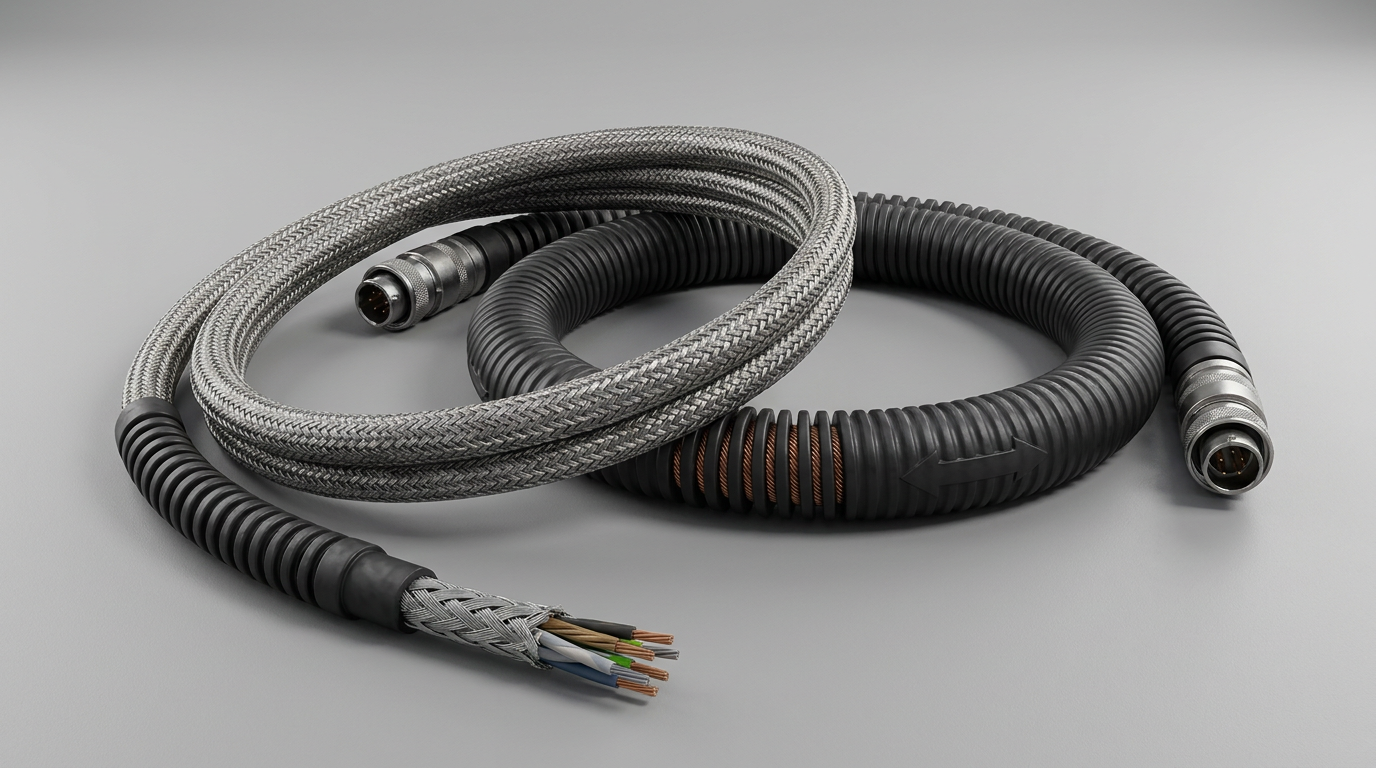
Cable Construction and Application Scope
Dynamic cables are used wherever the cable cannot remain fixed during operation. Their purpose is to carry power, control signals, servo feedback, data, or communications while the machine or equipment is in motion.
A standard cable may work well when installed permanently in a tray, conduit, or wall. However, when subjected to repeated bending cycles, the copper conductors can fatigue, insulation can crack, and shielding can fail. A dynamic cable is engineered to prevent these failures.
As aplicações comuns incluem:
- Robotic arms and end-of-arm tooling
- Máquinas CNC and automated production lines
- Cable carriers and drag chains
- Servomotores and motion-control systems
- Cranes, gantries, and material-handling equipment
- Elevators, hoists, and moving platforms
- Medical equipment and test automation systems
Com base em nossos dados internos e análises de mercado, aqui está o detalhamento:
| Tipo de cabo | Main Use | Movement Capability | Typical Risk if Misused |
|---|---|---|---|
| Cabo estático | Instalação fixa | Muito baixo | Conductor fatigue in moving systems |
| Cabo flexível | Movimento ocasional | Moderado | Shortened service life under continuous motion |
| Dynamic flex cable | Movimento contínuo | Alto | Correct choice for repetitive bending |
| Cabo de torção | Robotic twisting | Very high torsional resistance | Failure if replaced with standard flex cable |
Dica profissional do cwcables: I always recommend defining the motion type before selecting a cable. A cable that performs well in a drag chain may not be suitable for robotic torsion, even if both are described as flexible.
How Does dynamic flex cable, dynamic cable Work?
A dynamic flex cable, dynamic cable works by distributing mechanical stress across flexible conductors, insulation, shielding, and jacket layers. Its fine-stranded copper, optimized lay length, low-friction materials, and reinforced construction allow the cable to bend repeatedly while maintaining electrical continuity and signal integrity.
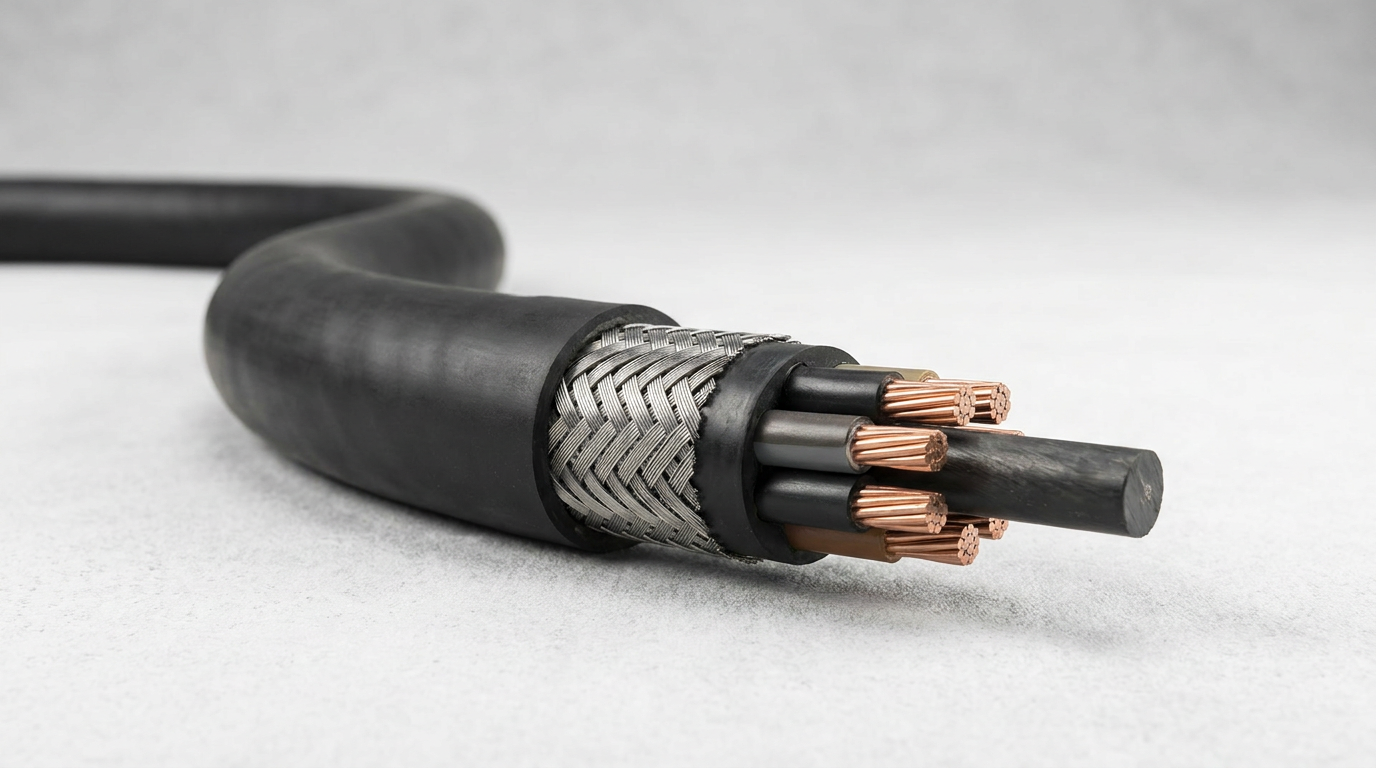
Motion Stress Control
When a cable moves, its internal components experience compression on the inside of the bend and tension on the outside. Dynamic cable design reduces this stress by using finely stranded conductors and carefully balanced cable geometry.
In high-cycle applications, the way conductors are twisted, wrapped, shielded, and jacketed is just as important as the materials themselves. Poor construction can cause conductor corkscrewing, insulation wear, shield breakage, and unpredictable downtime.
Os principais princípios de trabalho incluem:
- Condutores de fio fino reduce metal fatigue during repeated bending.
- Comprimentos de postura curtos e equilibrados help prevent internal twisting and conductor migration.
- Flexível isolamento materials maintain dielectric strength under motion.
- Optimized blindagem protects signals while resisting braid or foil cracking.
- Abrasion-resistant jackets protect against friction in cable carriers or machinery.
- Apropriado raio de curvatura controlar prevents overstressing the cable during installation and operation.
Com base em nossos dados internos e análises de mercado, aqui está o detalhamento:
| Elemento de design | Função em movimento | Performance Impact |
|---|---|---|
| Torção de cobre fino | Melhora a flexibilidade | Prolonga a vida útil da flexão |
| Isolamento especial | Resiste a rachaduras | Maintains electrical safety |
| Textile or foil separators | Reduces internal friction | Prevents layer damage |
| Blindagem trançada | Protects signal quality | Supports EMC performance |
| PUR, TPE, or PVC jacket | Resists wear and chemicals | Improves environmental durability |
Dica profissional do cwcables: I check the minimum bend radius first because even the best dynamic cable can fail early if it is forced into a bend tighter than its design allows.
What are the benefits of dynamic flex cable, dynamic cable?
The main benefits of dynamic flex cable, dynamic cable include longer service life, reduced downtime, stable signal transmission, improved machine reliability, and better resistance to bending, abrasion, oil, chemicals, and vibration. These cables help protect automation systems from premature cable failure and costly maintenance interruptions.
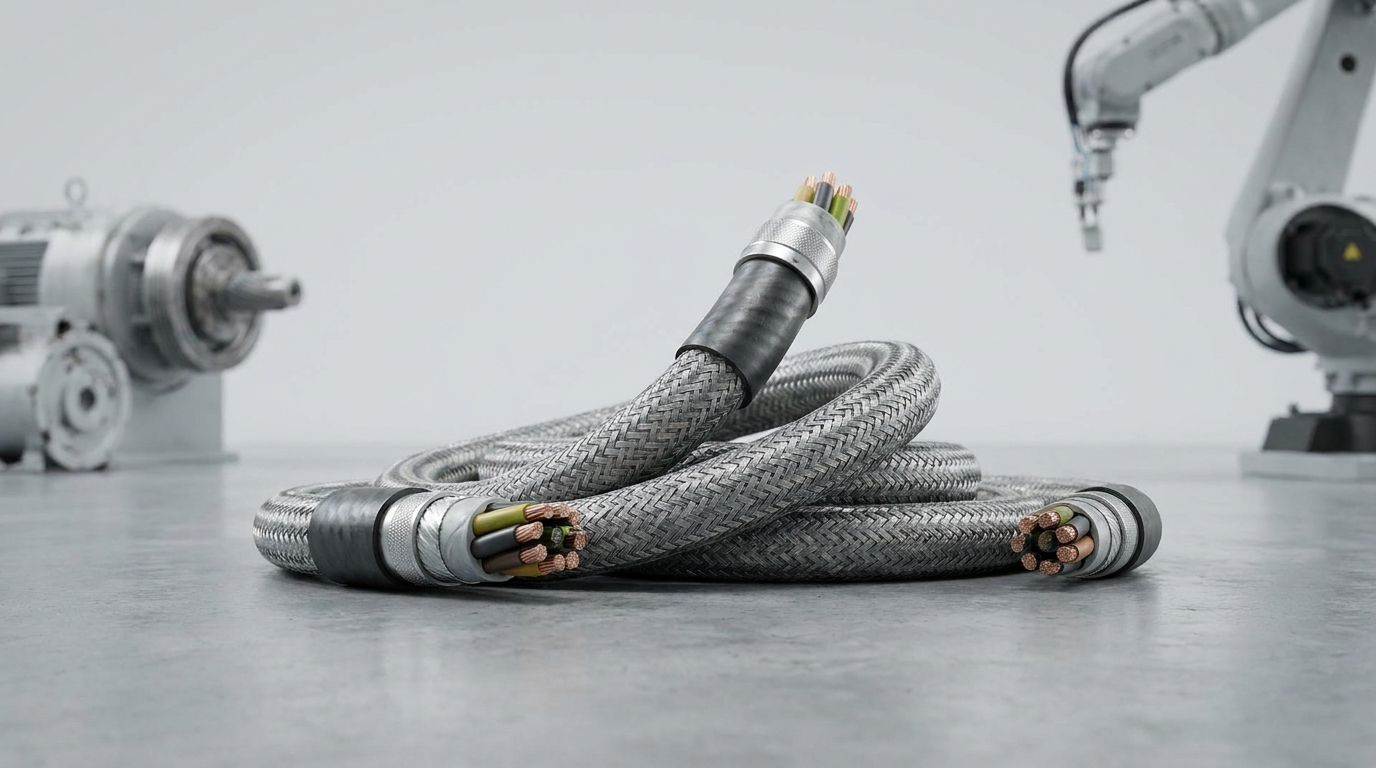
Reliability Advantages in Moving Systems
Dynamic cables are not simply more flexible; they are engineered for predictable performance under continuous mechanical stress. This makes them especially valuable in production environments where unexpected downtime can be expensive.
In industrial automation, a failed cable may stop an entire machine, robot cell, or production line. By using the correct dynamic cable, equipment builders and maintenance teams can improve both system reliability and lifecycle cost.
Os principais benefícios incluem:
- Longer flex life: Designed for thousands to millions of bending cycles depending on construction and application.
- Tempo de inatividade reduzido: Fewer cable failures mean fewer emergency repairs.
- Improved safety: Stable insulation and jacket performance reduce electrical risk.
- Better signal integrity: Proper shielding supports stable data, encoder, servo, and control signals.
- Higher productivity: Machines can run continuously with fewer interruptions.
- Lower total cost of ownership: A higher-quality cable can reduce replacement labor, machine stoppage, and scrap.
Com base em nossos dados internos e análises de mercado, aqui está o detalhamento:
| Beneficiar | Por que é importante | Aplicação Típica |
|---|---|---|
| Alta vida flexível | Reduces cable replacement frequency | Correntes de arrasto e robótica |
| Estabilidade do sinal | Prevents communication faults | Servo and data systems |
| Resistência à abrasão | Protects cable in carriers | CNC and gantry systems |
| Resistência ao óleo | Extends life in factories | Máquinas-ferramentas |
| Design compacto | Economiza espaço de instalação | Automated equipment |
Dica profissional do cwcables: I advise buyers to compare total operating cost, not only purchase price. A cheaper cable that fails repeatedly can cost far more than a properly specified dynamic cable.
How to maintain a dynamic flex cable, dynamic cable?
To maintain a dynamic flex cable, dynamic cable, inspect it regularly for jacket wear, twisting, tight bends, crushing, contamination, and connector damage. Proper cable routing, correct bend radius, strain relief, clean cable carriers, and scheduled replacement planning are essential for long service life.
Inspection and Preventive Care
Even a high-quality dynamic cable needs proper installation and maintenance. Most premature failures are caused by incorrect routing, excessive tension, overfilling a cable carrier, poor strain relief, or operation beyond the specified bend radius.
A structured maintenance plan helps detect early warning signs before the cable causes machine downtime.
Etapas de manutenção recomendadas:
- Verifique o raio de curvatura and confirm the cable is not forced into sharp bends.
- Inspecione a jaqueta externa for cuts, cracks, flattening, swelling, or abrasion.
- Procure torcer ou saca-rolhas inside drag chains or robotic systems.
- Verifique o alívio de tensão at both cable ends to prevent conductor stress.
- Clean cable carriers to remove chips, dust, oil sludge, or debris.
- Separate cables correctly to avoid friction, tangling, or signal interference.
- Test electrical performance if intermittent faults or signal errors appear.
- Replace cables proactively in critical systems based on operating cycles and environment.
Com base em nossos dados internos e análises de mercado, aqui está o detalhamento:
| Item de manutenção | Ação recomendada | Failure Prevented |
|---|---|---|
| Raio de curvatura | Measure and correct routing | Fadiga do condutor |
| Jacket condition | Inspect visually | Abrasion and insulation exposure |
| Cable carrier fill | Avoid overcrowding | Heat and friction damage |
| Connector area | Check strain relief | Broken conductors near ends |
| Cleanliness | Remove debris and contaminants | Jacket wear and chemical attack |
Dica profissional do cwcables: I never ignore small jacket damage in moving applications. A minor cut can quickly become a major failure once the cable continues flexing under load.
What is the price of dynamic flex cable, dynamic cable?
The price of dynamic flex cable, dynamic cable depends on conductor size, core count, shielding, jacket material, voltage rating, certification, flex-life requirements, and order quantity. Simple dynamic control cables may be relatively affordable, while servo, robotic, hybrid, or high-speed data cables cost more.
Pricing Variables and Typical Ranges
Dynamic cable pricing varies widely because applications differ significantly. A basic low-voltage control cable for moderate flexing is very different from a shielded servo cable designed for high-speed drag-chain operation or a torsion cable for six-axis robots.
The final price is usually influenced by engineering requirements, not just cable length.
Os principais fatores de custo incluem:
- Conductor material and copper cross-section
- Número de núcleos ou pares
- Shielding type, such as braid, foil, or combination shielding
- Jacket material, such as PVC, PUR, or TPE
- Oil, flame, UV, chemical, or abrasion resistance
- Minimum bend radius and target flex life
- UL, CE, RoHS, REACH, or other compliance requirements
- Custom printing, color coding, connectors, or assemblies
Com base em nossos dados internos e análises de mercado, aqui está o detalhamento:
| Categoria de cabo | Nível de custo típico | Melhor para |
|---|---|---|
| Basic flexible control cable | Baixo a médio | Equipamento de movimentação leve |
| Cabo de corrente de arrasto | Médio | Repetitive linear motion |
| Cabo servo blindado | Médio a alto | Motors and motion control |
| Cabo de torção robótico | Alto | Multi-axis twisting motion |
| Custom dynamic cable assembly | Variável | Application-specific systems |
Dica profissional do cwcables: I recommend sharing the application details before requesting a quote. Motion type, speed, bend radius, environment, and electrical requirements allow cwcables to recommend the right cable instead of simply quoting the cheapest option.
Principais recursos e comparação
Dynamic cables are defined by their ability to survive motion while maintaining electrical performance. The most important features include fine-stranded conductors, high-flex insulation, durable jackets, stable shielding, small bend radius capability, and resistance to oils, abrasion, chemicals, temperature, and continuous mechanical stress.
Performance Features Compared
The right dynamic cable should be selected according to the movement pattern and operating environment. A cable used in a simple sliding axis does not need the same torsional resistance as a robotic cable, while a servo system may require advanced shielding to protect signal integrity.
Com base em nossos dados internos e análises de mercado, aqui está o detalhamento:
| Recurso | Dynamic Flex Cable | Cabo Padrão | Por que é importante |
|---|---|---|---|
| Vida flexível | Projetado para ciclos repetidos | Limitado | Previne a fadiga precoce do condutor |
| Raio de curvatura | Smaller and controlled | Geralmente maior | Supports compact moving systems |
| Projeto do condutor | Cobre de fio fino | Fios mais grossos | Melhora a flexibilidade |
| Shielding durability | Built for motion | May crack under flexing | Maintains EMC and signal quality |
| Material da jaqueta | PUR, TPE, flexible PVC options | PVC de uso geral | Improves wear and chemical resistance |
| Adequação da corrente de arrasto | Frequentemente disponível | Usually unsuitable | Reduces carrier-related failures |
| Resistência à torção | Disponível em classes robóticas | Not designed for twisting | Essential for robot arms |
| Custo do ciclo de vida | Lower in moving systems | Higher if failures occur | Reduces downtime and replacement labor |
Additional selection priorities include:
- Match the cable to bending, torsion, rolling, or combined motion.
- Confirm the expected cycle life and operating speed.
- Choose shielding based on signal sensitivity and interferência eletromagnética.
- Select jacket material based on oil, coolant, abrasion, and temperature exposure.
- Verify compliance requirements for the target market or equipment standard.
Dica profissional do cwcables: I compare cable specifications against the real machine movement, not just the electrical rating. In dynamic applications, mechanical compatibility is often the deciding factor for long-term reliability.
Fatores de custo e compra
When buying dynamic cable, evaluate the full application rather than only the unit price. Important buying factors include motion type, bend radius, flex cycle rating, conductor size, shielding, jacket material, certifications, installation space, environment, and whether a custom cable or cable assembly is required.
Lista de verificação prática de compra
A well-specified dynamic cable should fit the machine mechanically, electrically, and environmentally. Under-specifying the cable can lead to failures, while over-specifying it may increase cost unnecessarily.
Before purchasing, prepare the key application data so the supplier can recommend the most suitable product.
Lista de verificação de compra:
- Define the motion: Linear bending, rolling, torsion, robotic movement, or combined motion.
- Measure the bend radius: Compare actual installation dimensions with cable specifications.
- Confirm electrical requirements: Voltage, current, signal type, impedance, and data rate.
- Review environmental exposure: Oil, coolant, chemicals, UV, temperature, abrasion, or flame risk.
- Check shielding needs: Especially for servo motors, encoders, sensors, and communication cables.
- Consider installation constraints: Cable carrier size, routing space, connector type, and strain relief.
- Ask about certifications: UL, CE, RoHS, REACH, or industry-specific compliance.
- Evaluate lifecycle value: Balance purchase cost with downtime, labor, and replacement frequency.
Com base em nossos dados internos e análises de mercado, aqui está o detalhamento:
| Fator de compra | Escolha de baixo risco | High-Risk Choice |
|---|---|---|
| Motion definition | Clearly documented | Assumed or unknown |
| Raio de curvatura | Verified before purchase | Checked after installation |
| Material da jaqueta | Matched to environment | Selected by price only |
| Blindagem | Chosen for EMC needs | Ignored until interference occurs |
| Suporte ao fornecedor | Engineering guidance available | Generic product selection |
| Custo total | Lifecycle cost considered | Unit price only |
Dica profissional do cwcables: I encourage customers to send drawings, photos, or motion details when possible. A few minutes of application review can prevent months of recurring cable problems.
Conclusão
A dynamic cable is the correct choice for equipment that moves, bends, twists, or flexes during operation. By selecting the right dynamic flex cable, dynamic cable for the application, users can improve machine reliability, protect signal performance, reduce downtime, and lower long-term maintenance costs.
Orientação de Seleção Final
Dynamic cables are essential components in modern automation, robotics, and motion-control systems. Their value comes from combining electrical performance with mechanical endurance, allowing machines to operate reliably under repeated movement.
For best results, selection should be based on both electrical requirements and real operating conditions.
Principais conclusões:
- Use dynamic cable whenever repeated motion is present.
- Combine o cabo com o tipo exato de movimento.
- Respect minimum bend radius and installation guidelines.
- Choose the correct jacket and shielding for the environment.
- Maintain cables through regular inspection and proper routing.
- Work with an experienced supplier for custom or demanding applications.
For projects requiring dependable dynamic cable solutions, cwcables can help evaluate requirements and recommend suitable cable constructions for industrial, robotic, automation, and motion-control systems.
Dica profissional do cwcables: I always treat cable selection as part of machine design, not an afterthought. The right dynamic cable protects uptime, signal quality, and long-term equipment performance.