

Industrial cable failures often start at the jacket, not the conductor. A PUR cable uses a poliuretano outer sheath to resist abrasion, oils, flexing, moisture, and demanding motion environments. For factories, robotics, automation, transport, and outdoor equipment, the right PUR cable jacket helps reduce downtime, extend service life, and improve long-term installation reliability.
What is pur cable?
A PUR cable is an electrical or data cable protected by a polyurethane jacket. PUR is valued in industrial environments because it combines flexibility, abrasion resistance, oil resistance, and mechanical toughness. Compared with many PVC or rubber alternatives, it performs better where cables face repeated movement, harsh contact, or chemical exposure.
Construction and Material Basics
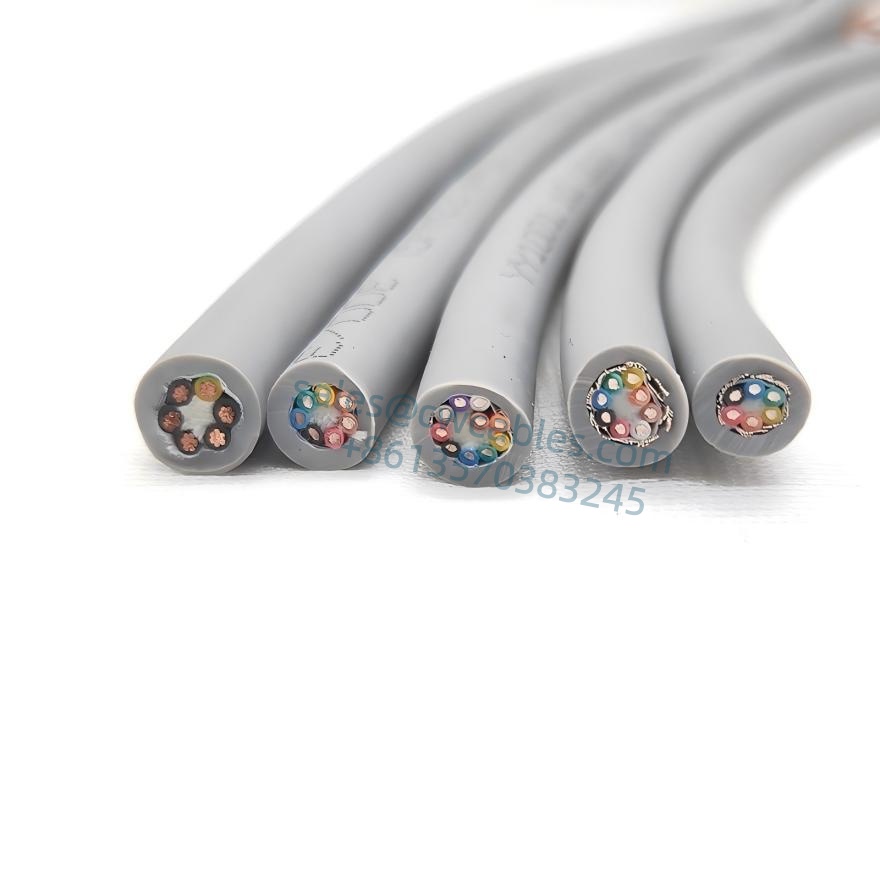
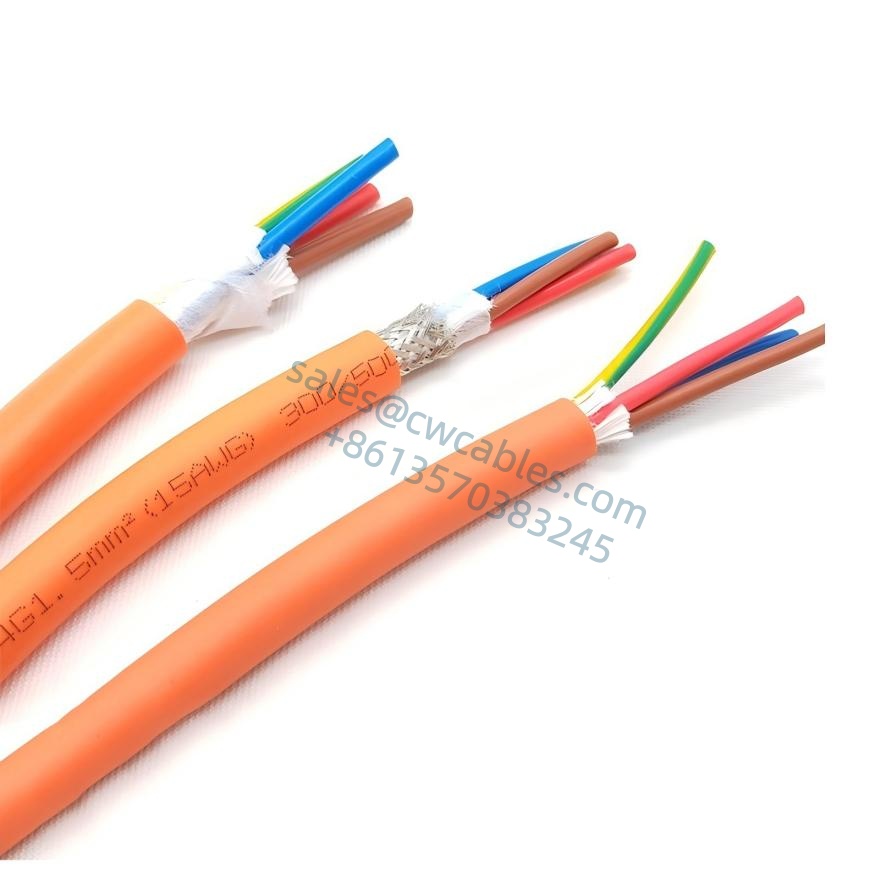
A PUR cable is defined primarily by its jacket material: polyurethane. The internal design may vary depending on application, including power conductors, signal pairs, control cores, shielding, fillers, and reinforcement. The jacket protects these internal elements from the operating environment.
Com base em nossos dados internos e análises de mercado, aqui está o detalhamento:
| Camada de Cabo | Material Típico | Objetivo principal |
|---|---|---|
| Condutor | Bare or tinned copper | Carries power, signal, or data |
| Isolamento | PVC, PE, PP, TPE, or XL materials | Electrically separates conductors |
| Blindagem | Copper braid, foil, or drain wire | Reduz EMI and signal interference |
| Filler / Separator | Non-woven tape or polymer filler | Maintains roundness and flexibility |
| Jaqueta PUR | Poliuretano | Resists abrasion, oil, flexing, and wear |
PUR does not make every cable automatically suitable for every environment. The full cable design still matters, especially conductor stranding, insulation material, shielding coverage, voltage rating, temperature range, and approvals.
As aplicações comuns incluem:
- Robotic arms and drag chains
- Machine tools and CNC systems
- Factory automation sensors and actuators
- Ethernet Industrial and control cables
- Outdoor mobile equipment
- Packaging and material-handling systems
Dica profissional do cwcables: I always recommend checking both the jacket material and the cable’s flex rating. A PUR cable jacket is tough, but continuous-motion applications also need fine-stranded conductors and a structure designed for repeated bending.
How Does pur cable Work?
A PUR cable works by using a polyurethane outer sheath as a durable mechanical and chemical barrier around the cable core. The jacket absorbs abrasion, resists oils and coolants, limits moisture exposure, and preserves flexibility so the conductors and insulation remain protected during industrial operation.
Protection Mechanism in Industrial Use
The PUR cable jacket acts as the first line of defense. In a factory, cables are exposed to scraping, bending, machine vibration, lubricants, cutting fluids, and occasional impact. Polyurethane is selected because it handles these conditions better than many standard jacket compounds.
The protection process can be understood in practical steps:
- Blindagem mecânica: The PUR jacket resists cuts, scraping, and surface wear from contact with machine frames, floors, guides, or cable carriers.
- Flex support: The jacket maintains flexibility while helping the cable return to shape during movement.
- Resistência química: It reduces damage from oils, greases, coolants, and many industrial fluids.
- Defesa contra umidade: It helps prevent environmental moisture from reaching internal insulation and conductors.
- Service-life extension: By reducing jacket cracking and abrasion, it protects the electrical core and lowers replacement frequency.
A PUR cable does not “work” through electronics alone; it works as a complete engineered system. The jacket, insulation, conductor, shielding, and cable geometry all contribute to performance.
For signal and data applications, shielding is especially important. A PUR jacket protects the cable physically, while foil or braid shielding protects the signal electrically.
Dica profissional do cwcables: When I review cable failures, I look for jacket wear patterns first. If the jacket is polished, flattened, or cracked, the installation may need better routing, larger bend radius, or a drag-chain-rated PUR cable.
What are the benefits of pur cable?
The main polyurethane cable benefits include excellent abrasion resistance, strong flexibility, oil and chemical resistance, good tear strength, and longer service life in demanding environments. For industrial users, these advantages often translate into fewer cable replacements, less unplanned downtime, and better reliability in moving machinery.
Performance Advantages That Matter
PUR is popular because it solves common industrial cable problems. It is especially useful where standard PVC jackets become brittle, swell from oils, or wear too quickly under movement.
Com base em nossos dados internos e análises de mercado, aqui está o detalhamento:
| Beneficiar | Por que é importante | Typical Industrial Value |
|---|---|---|
| Resistência à abrasão | Reduces jacket wear from rubbing and dragging | Maior vida útil do cabo |
| Flexibilidade | Supports movement in machinery and automation | Better routing and motion performance |
| Resistência ao óleo | Handles lubricants, coolants, and greases | Less swelling or jacket degradation |
| Tear strength | Resists cuts spreading through the jacket | Improved durability |
| Resistência às intempéries | Performs in outdoor or semi-outdoor use when specified | Wider application range |
| Compact toughness | Offers strength without excessive jacket thickness | Instalação mais fácil |
Compared with many standard cable jackets, PUR is often chosen when the cable is part of a moving system rather than a fixed installation.
Key use cases include:
- Drag chains with continuous bending
- Robotic welding or assembly cells
- Machine tool wiring exposed to oil
- Sensor and actuator cables near moving parts
- Outdoor equipment where abrasion and moisture are concerns
However, material selection should still consider temperature limits, flame requirements, electrical standards, and exposure to specific chemicals.
Dica profissional do cwcables: I don’t choose PUR only because it is “strong.” I choose it when the failure mode is predictable: abrasion, movement, oil exposure, or mechanical stress. Matching the jacket to the real hazard is what saves money.
How to maintain a pur cable?
To maintain a PUR cable, inspect the jacket regularly, protect it from sharp edges, avoid exceeding bend-radius limits, clean off aggressive contaminants, and verify that moving sections are properly supported. Good maintenance helps preserve the PUR cable jacket and prevents hidden conductor damage before failures occur.
Lista de verificação prática de manutenção
PUR is durable, but it is not maintenance-free. Proper installation and routine inspection are essential, especially in automated systems where the same cable may flex thousands or millions of times.
Use esta lista de verificação de manutenção:
- Inspecione a superfície da jaqueta
Look for cuts, abrasion, flattening, swelling, discoloration, or exposed shielding.
- Verifique o raio de curvatura
Confirm that the cable is not bent tighter than the manufacturer’s recommended static or dynamic bend radius.
- Revise o roteamento de cabos
Avoid sharp metal edges, pinch points, excessive tension, and areas where the cable rubs continuously.
- Clean industrial fluids
Remove oil, coolant, grease, or chemical residue when practical, especially if exposure is heavy or continuous.
- Verifique o alívio de tensão
Make sure connectors, glands, clamps, and drag-chain mounts are not pulling on the conductor core.
- Monitor moving applications
In robotics or drag chains, check for twisting, corkscrewing, jacket wear, and uneven cable movement.
- Replace before failure
If the jacket is deeply cut or conductors are visible, replace the cable immediately.
Maintenance frequency depends on application severity. A fixed sensor cable may need only periodic inspection, while a robotic or drag-chain cable should be reviewed as part of scheduled machine maintenance.
Dica profissional do cwcables: I always tell maintenance teams not to ignore small jacket cuts. In wet, oily, or moving environments, a small opening can quickly become a conductor failure, shielding issue, or safety concern.
What is the price of pur cable?
The price of PUR cable depends on conductor size, number of cores, shielding, voltage rating, approvals, flex rating, jacket thickness, order quantity, and customization. PUR usually costs more than standard PVC cable, but the longer service life can reduce total ownership cost in demanding environments.
Pricing Variables and Cost Logic
PUR cable pricing is not determined by jacket material alone. The complete construction drives the final cost, especially copper content and performance requirements.
Com base em nossos dados internos e análises de mercado, aqui está o detalhamento:
| Fator de preço | Impacto no custo | Por que é importante |
|---|---|---|
| Tamanho do condutor | Alto | Mais cobre aumenta o custo do material |
| Contagem de núcleos | Médio a alto | Mais condutores requerem mais isolamento e processamento |
| Blindagem | Médio | Foil, braid, and drain wires add material and labor |
| Classificação flexível | Médio a alto | High-flex designs require finer stranding and specialized construction |
| Jacket thickness | Médio | More PUR material increases durability and cost |
| Certificações | Médio | UL, CE, CSA, or industry approvals may affect design and testing |
| Impressão/cor personalizada | Baixo a médio | Adds production setup and identification value |
| Volume do pedido | Alto | Quantidades maiores geralmente reduzem o preço unitário |
A simple fixed-installation PUR control cable may be relatively economical. A high-flex, shielded, drag-chain-rated cable with approvals will cost more but can be the better choice when downtime is expensive.
When comparing prices, buyers should calculate:
- Initial cable price
- Expected service life
- Replacement labor
- Machine downtime cost
- Risk of production interruption
- Connector or assembly cost
This is where PUR often becomes financially attractive. The unit price may be higher, but fewer failures can make it more economical over time.
Dica profissional do cwcables: I recommend comparing cost per operating month, not only cost per meter. A cheaper cable that fails three times faster is usually the expensive option in industrial automation.
Principais recursos e comparação
The key features of a PUR cable are abrasion resistance, flexibility, oil resistance, tear strength, and durability in moving applications. When comparing PUR vs TPE cable, PUR usually provides stronger mechanical protection, while TPE may offer advantages in softness, low-temperature flexibility, or specific environmental formulations.
PUR vs TPE and Other Jacket Materials
Choosing between PUR, TPE, PVC, and rubber depends on the installation environment. There is no universal best jacket; there is only the best match for the application.
Com base em nossos dados internos e análises de mercado, aqui está o detalhamento:
| Recurso | Cabo PUR | Cabo TPE | Cabo PVC | Cabo de borracha |
|---|---|---|---|---|
| Resistência à abrasão | Excelente | Bom a muito bom | Moderado | Bom |
| Flexibilidade | Muito bom | Excelente | Moderado | Bom |
| Resistência ao óleo | Muito bom | Dependente da formulação | Moderado | Dependente da formulação |
| Tear strength | Excelente | Bom | Moderado | Bom |
| Desempenho em baixas temperaturas | Bom | Muitas vezes excelente | Limitado a moderado | Bom |
| Resistência química | Bom a muito bom | Dependente da formulação | Moderado | Variável |
| Custo | Médio a alto | Médio a alto | Baixo a médio | Médio |
| Melhor caso de uso | Automation, robotics, machine tools | Flexible equipment, low-temperature use, specialty applications | General fixed wiring | Portable power and rugged handling |
The PUR vs TPE cable decision often comes down to the balance between toughness and flexibility. PUR is typically preferred for abrasion-heavy industrial conditions, while TPE may be selected when soft handling, special temperature performance, or specific elastomer properties are more important.
Important selection questions include:
- Will the cable move continuously or remain fixed?
- Is oil, coolant, or grease present?
- Will the cable rub against machine parts or cable carriers?
- Is shielding required for signal integrity?
- Are low-temperature flexibility or flame ratings critical?
- Are certifications required for the target market?
Dica profissional do cwcables: I avoid choosing jacket material by name alone. Two PUR cables can perform differently if one is designed for static routing and the other for continuous flex. Always compare the full datasheet.
Fatores de custo e compra
When buying PUR cable, evaluate application movement, environmental exposure, electrical requirements, approvals, connector compatibility, and total lifecycle cost. The best purchase is not always the lowest-priced cable; it is the cable that meets performance needs while reducing downtime, maintenance, and replacement risk.
Buying Guide for Industrial Applications
A successful PUR cable purchase starts with application details. The more accurately the operating environment is defined, the easier it is to select a cable that lasts.
Use esta lista de verificação de compra:
- Define the application type
Fixed installation, occasional movement, continuous flex, robotics, drag chain, outdoor use, or portable equipment.
- Confirm electrical requirements
Voltage, current, conductor size, signal type, data rate, and grounding needs.
- Identifique a exposição ambiental
Oils, coolants, water, UV, chemicals, weld spatter, abrasion, temperature, and humidity.
- Selecione blindagem, se necessário
Use foil, braid, or combined shielding for EMI-sensitive signals or industrial communication.
- Check mechanical ratings
Bend radius, tensile load, torsion resistance, flex-cycle rating, and jacket thickness.
- Review standards and approvals
Confirm UL, CE, RoHS, ALCANÇAR, CSA, or application-specific requirements when needed.
- Plan termination and installation
Match the cable to connectors, glands, cable carriers, and strain relief systems.
- Compare o custo do ciclo de vida
Consider replacement labor, machine downtime, and production loss, not only purchase price.
For custom applications, cwcables can help align the PUR cable jacket, conductor construction, shielding, and outer dimensions with the intended operating environment.
Dica profissional do cwcables: I ask customers for photos of the installation area whenever possible. Seeing the cable path, bend points, and exposure conditions often prevents over-specifying or under-specifying the cable.
Conclusão
A PUR cable is a strong choice for industrial environments where abrasion, oils, flexing, and mechanical stress can shorten cable life. By selecting the right construction and PUR cable jacket, buyers can improve reliability, reduce downtime, and achieve better long-term value in demanding applications.
Orientação de Seleção Final
PUR cable matters because the jacket often determines how well the cable survives real industrial conditions. Electrical performance is essential, but if the jacket fails, the entire cable assembly can become unreliable or unsafe.
Principais conclusões:
- PUR is ideal for abrasion, motion, oil exposure, and rugged industrial use.
- The full cable design matters, not only the jacket material.
- PUR often costs more than PVC but may reduce lifecycle cost.
- For PUR vs TPE cable decisions, compare the actual environment and performance priorities.
- Maintenance and correct installation are essential for maximum service life.
- Custom cable selection should consider electrical, mechanical, chemical, and regulatory requirements together.
For industrial buyers, the goal is simple: choose a cable that matches the real operating conditions. A properly specified PUR cable from cwcables can support safer operation, longer service life, and more dependable machine performance.
Dica profissional do cwcables: My final recommendation is to specify the environment first and the cable second. When we understand motion, fluids, temperature, abrasion, and electrical load, choosing the right PUR construction becomes much more accurate.