

Modern motion systems rely on codificador feedback to maintain speed, position, and synchronization, but standard cables often fail when exposed to constant bending, torsion, and drag chain movement. A properly engineered continuous flex encoder cable helps preserve signal integrity, reduce downtime, and extend service life in robótica, automation, CNC equipment, packaging lines, and other high-cycle applications.
What is continuous flex encoder cable,drag chain encoder cable, high flex encoder cable?
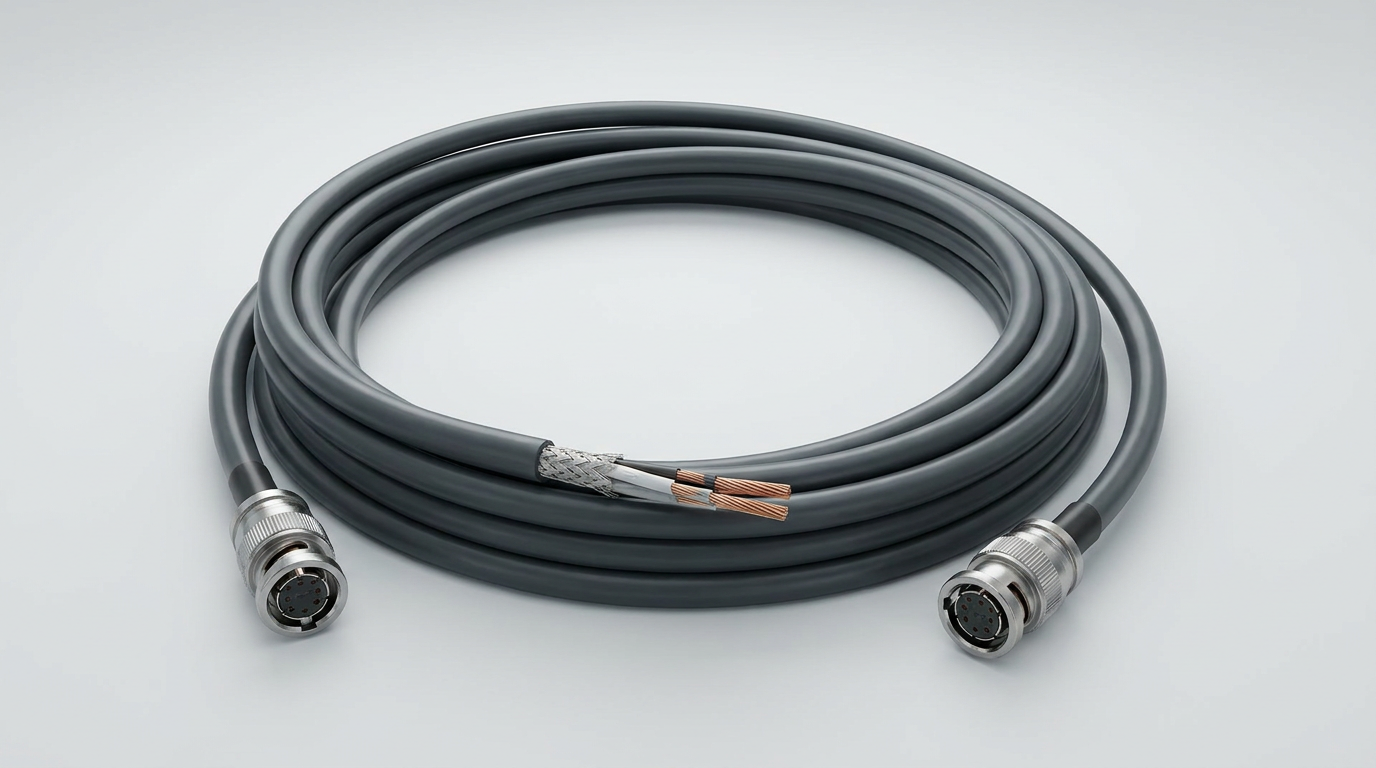
A continuous flex encoder cable, drag chain encoder cable, or high flex encoder cable is a motion-rated signal cable designed to transmit encoder feedback reliably while repeatedly bending inside dynamic machinery. It uses flexible conductors, optimized shielding, and durable jackets to withstand millions of cycles without signal loss or premature mechanical failure.
Cable Definition and Application Scope
A continuous flex encoder cable is built specifically for repetitive motion environments where the cable must bend, travel, and recover without internal conductor fatigue. Unlike static encoder cables, high flex versions are engineered with fine-strand copper conductors, low-friction insulation, shield systems, and abrasion-resistant outer jackets.
As aplicações comuns incluem:
- Servo motor encoder feedback lines
- Robotic arms and gantry systems
- Porta-cabos com corrente de arrasto
- CNC machining centers
- Automated packaging machinery
- Pick-and-place equipment
- Printing and textile machinery
Com base em nossos dados internos e análises de mercado, aqui está o detalhamento:
| Tipo de cabo | Uso primário | Motion Capability | Ambiente Típico |
|---|---|---|---|
| Cabo codificador padrão | Instalação fixa | Baixo | Control cabinets, static routing |
| Continuous flex encoder cable | Flexão repetida | Alto | Mover eixos da máquina |
| Cabo codificador de corrente de arrasto | Sistemas transportadores de cabos | Muito alto | Linear travel applications |
| Cabo codificador de alta flexibilidade | Dynamic automation | Muito alto | Robotics and servo systems |
Dica profissional do cwcables: I always recommend selecting encoder cable based on real motion conditions, not just electrical specifications. Bend radius, acceleration, travel distance, and cycle count often determine cable life more than voltage or conductor size.
How Does continuous flex encoder cable,drag chain encoder cable, high flex encoder cable Work?
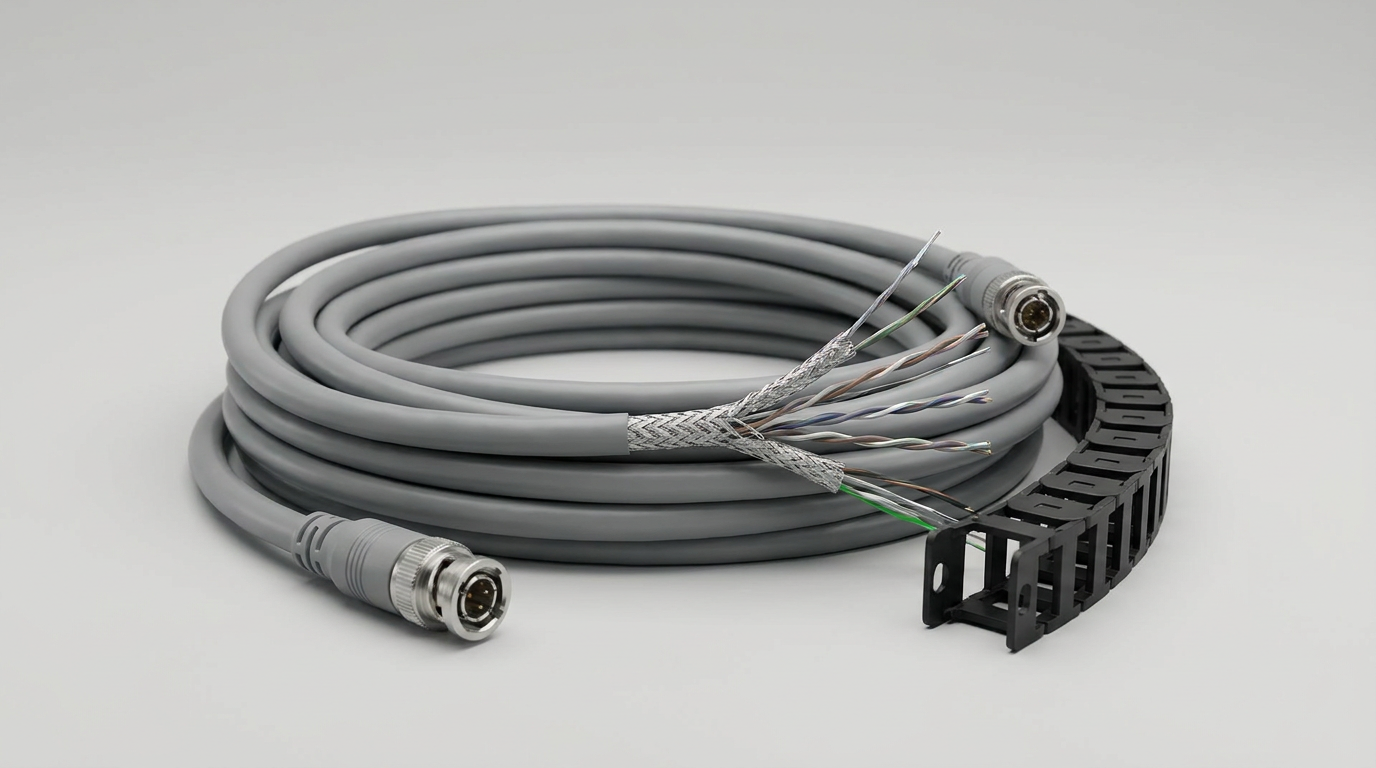
A high flex encoder cable works by carrying low-voltage encoder signals between a motor or sensor and the drive/controller while resisting mechanical stress from continuous motion. Its conductor stranding, shielding, insulation, and jacket are engineered together to maintain stable signal transmission during repeated bending, rolling, and drag chain movement.
Signal Transmission Under Dynamic Motion
Encoder cables transmit feedback signals such as incremental, absolute, analog, or digital position data. In continuous motion systems, the cable must protect these signals from both electrical interference and mechanical degradation. When a cable flexes repeatedly, poor construction can cause conductor breakage, shield gaps, impedance instability, or intermittent signal faults.
A well-designed continuous flex encoder cable works through several engineering principles:
- Fine-strand conductors reduce fatigue
More flexible copper stranding distributes bending stress across many small wires. - Optimized lay length improves flex life
The conductor twist design helps prevent corkscrewing and internal stress concentration. - High-performance insulation maintains geometry
Stable insulation helps preserve signal consistency during movement. - Braided or foil shielding blocks EMI
Shielding protects encoder signals from motors, drives, and high-frequency noise. - Flexible jacket resists abrasion and oil
PUR, TPE, or special PVC jackets protect the cable in drag chains and industrial spaces.
Com base em nossos dados internos e análises de mercado, aqui está o detalhamento:
| Elemento de design | Função | Impacto no desempenho |
|---|---|---|
| Torção de cobre fino | Supports repeated bending | Extends flex life |
| Pares trançados | Stabilizes signal path | Improves data accuracy |
| Blindagem | Reduces EMI interference | Prevents encoder errors |
| Casaco de baixa fricção | Moves smoothly in drag chains | Reduces abrasion |
| Reinforced structure | Prevents elongation | Maintains cable geometry |
Dica profissional do cwcables: I prefer encoder cables with well-balanced shielding and flexibility. A cable that is very flexible but poorly shielded can still cause motion faults, especially near servo drives and Inversores de frequência.
What are the benefits of continuous flex encoder cable,drag chain encoder cable, high flex encoder cable?
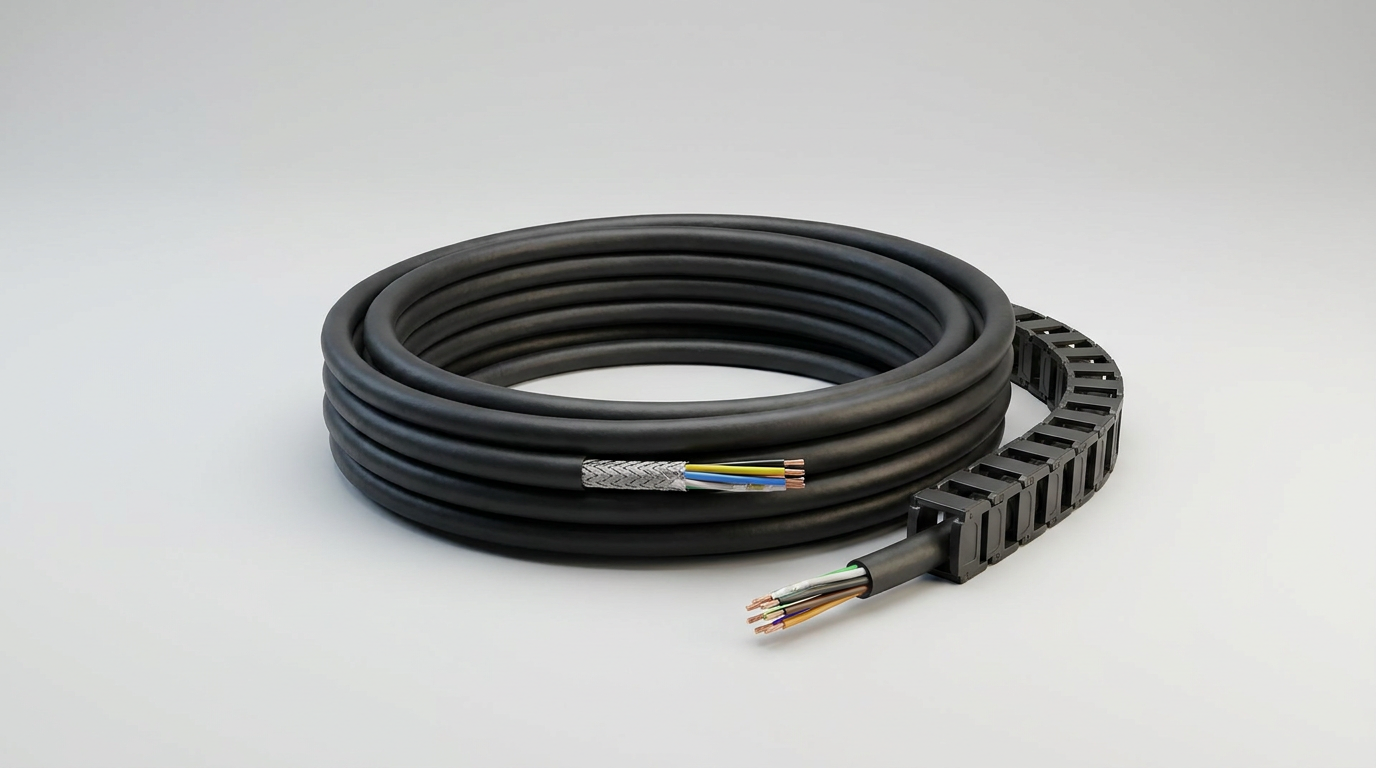
The main benefits of continuous flex encoder cable include longer service life, stable feedback signals, reduced machine downtime, improved EMI protection, and reliable performance in drag chains. For automated equipment, these advantages directly support higher productivity, fewer maintenance interruptions, and better motion control accuracy over millions of operating cycles.
Performance Advantages in Automated Systems
Continuous flex encoder cables are essential where machine uptime and precision matter. Encoder feedback errors can stop production, damage parts, or create positioning faults. A high flex cable reduces these risks by maintaining both mechanical durability and electrical performance over time.
Os principais benefícios incluem:
- Long flex life: Designed for repetitive bending and continuous movement.
- Signal reliability: Helps prevent encoder count loss, noise, and communication errors.
- Lower downtime: Reduces unexpected cable-related failures.
- Better drag chain performance: Moves smoothly without twisting or jacket cracking.
- Improved EMI resistance: Protects feedback signals near servo motors and drives.
- Compact routing: Supports tight machine layouts when selected with the correct bend radius.
Com base em nossos dados internos e análises de mercado, aqui está o detalhamento:
| Beneficiar | Por que é importante | Resultado Típico |
|---|---|---|
| Maior vida útil do cabo | Fewer conductor failures | Reduced replacement frequency |
| Stable encoder feedback | Accurate motor control | Improved machine precision |
| Proteção EMI | Less signal noise | Fewer alarm events |
| Resistência à abrasão | Better drag chain durability | Longer operating intervals |
| Flexible routing | Easier machine integration | Gerenciamento de cabos mais limpo |
Dica profissional do cwcables: I recommend treating encoder cables as critical motion components, not accessories. One failed feedback cable can stop an entire production cell, so investing in high flex construction usually pays for itself quickly.
How to maintain a continuous flex encoder cable,drag chain encoder cable, high flex encoder cable?
To maintain a continuous flex encoder cable, inspect the drag chain routing, confirm bend radius, check jacket wear, secure connectors, and monitor signal performance regularly. Good maintenance prevents conductor fatigue, shield damage, and intermittent encoder faults, especially in high-cycle equipment operating under oil, vibration, abrasion, or rapid acceleration.
Lista de verificação prática de manutenção
Proper maintenance starts with correct installation and continues through routine inspection. Even the best drag chain encoder cable can fail early if it is twisted, overfilled in the cable carrier, clamped too tightly, or forced below its minimum bend radius.
Etapas de manutenção recomendadas:
- Inspecione a condição da jaqueta
Look for cracking, flattening, abrasion, swelling, or exposed shielding. - Verifique o raio de curvatura
Ensure the cable is not bent tighter than the manufacturer’s recommended minimum. - Verify drag chain separation
Keep encoder cables separated from power cables when possible to reduce EMI. - Confirme o alívio de tensão
Avoid pulling force on connectors or cable termination points. - Procure torcer ou saca-rolhas
Twisted cable inside a drag chain can dramatically shorten service life. - Monitor encoder errors
Investigate intermittent feedback faults before complete cable failure occurs.
Com base em nossos dados internos e análises de mercado, aqui está o detalhamento:
| Item de manutenção | Inspection Frequency | Risco se ignorado |
|---|---|---|
| Desgaste da jaqueta | Monthly or by cycle count | Abrasion failure |
| Raio de curvatura | During installation and service | Quebra do condutor |
| Connector tightness | Routine maintenance | Interrupção de sinal |
| Drag chain alignment | Quarterly | Torção de cabo |
| EMI separation | During layout changes | Encoder noise |
Dica profissional do cwcables: I always check the cable’s neutral position inside the drag chain. If it is forced against one side or twisted during installation, it may fail long before reaching its rated flex cycles.
What is the price of continuous flex encoder cable,drag chain encoder cable, high flex encoder cable?
The price of a continuous flex encoder cable depends on conductor count, shielding design, jacket material, flex rating, connector type, certification, and order quantity. Custom drag chain encoder cable assemblies generally cost more than standard cable, but they can reduce downtime and replacement costs in demanding motion applications.
Pricing Factors and Cost Ranges
Pricing varies because encoder cables are often configured for specific servo systems, feedback protocols, machine layouts, and environmental requirements. A basic high flex encoder cable may be cost-effective for moderate motion, while a premium drag chain version with PUR jacket, paired shielding, and molded connectors will cost more.
Key price drivers include:
- Number of conductors or twisted pairs
- Cable outer diameter and conductor gauge
- Shielding type and coverage percentage
- Jacket material such as PVC, PUR, or TPE
- Flex cycle rating and drag chain approval
- Oil, coolant, flame, or abrasion resistance
- Connector type, pinout, and overmolding
- Certification requirements such as UL, CE, or RoHS
Com base em nossos dados internos e análises de mercado, aqui está o detalhamento:
| Specification Level | Typical Configuration | Custo relativo |
|---|---|---|
| Entry-level flexible cable | Basic shielding, moderate flex | Baixo a médio |
| Cabo industrial altamente flexível | Improved jacket and shielding | Médio |
| Cabo codificador de corrente de arrasto | High-cycle flex construction | Médio a alto |
| Custom assembled cable | Connectors, pinout, labeling | Alto |
| Harsh-environment cable | Oil, coolant, abrasion resistance | Alto |
Dica profissional do cwcables: I suggest comparing cable cost against downtime cost. If a machine outage costs hours of production, a higher-grade continuous flex encoder cable is usually the more economical choice.
Principais recursos e comparação
The key features of a continuous flex encoder cable include fine-stranded conductors, stable twisted-pair geometry, strong EMI shielding, flexible insulation, abrasion-resistant jacket materials, and drag chain compatibility. Comparing these features against standard encoder cable helps identify the right cable for demanding motion systems and long-term automation reliability.
Feature Comparison for Motion-Rated Encoder Cables
Choosing the correct encoder cable requires matching mechanical and electrical properties to the application. Static cables may work in fixed routing, but they are not designed for repeated bending. For continuous motion, the cable must support stable signal transmission while surviving high-cycle mechanical stress.
Com base em nossos dados internos e análises de mercado, aqui está o detalhamento:
| Recurso | Cabo codificador padrão | Continuous Flex Encoder Cable | Drag Chain Encoder Cable | Cabo codificador de alta flexibilidade |
|---|---|---|---|---|
| Adequação de movimento | Fixed routing | Flexão repetida | Cable carrier movement | Dynamic automation |
| Projeto do condutor | Encalhe padrão | Fine-strand copper | Ultra-flexible construction | High-flex stranding |
| Blindagem | Básico a moderado | Enhanced EMI protection | Optimized for moving systems | Proteção de sinal forte |
| Material da jaqueta | PVC comum | PVC, PUR ou TPE | PUR/TPE preferido | PUR/TPE preferido |
| Vida flexível | Baixo | Alto | Muito alto | Muito alto |
| Raio de curvatura | Maior | Menor | Controlled by drag chain | Dependente do aplicativo |
| Melhor caso de uso | Cabinets, fixed machines | Eixos móveis | Linear travel equipment | Robotics and servo systems |
Critérios de seleção importantes incluem:
- Match cable flex rating to expected cycle count.
- Confirm bend radius under real installation conditions.
- Select shielding based on nearby electrical noise sources.
- Choose jacket material according to oil, coolant, abrasion, and temperature exposure.
- Verify compatibility with encoder type, servo drive, and connector pinout.
Dica profissional do cwcables: I do not recommend using standard encoder cable in a drag chain, even for short travel distances. The failure may not happen immediately, but repeated bending will usually expose the limitation over time.
Fatores de custo e compra
When buying continuous flex encoder cable, evaluate total value rather than unit price alone. The best choice balances flex life, signal integrity, jacket durability, shielding, connector quality, certification, and supplier support. For OEMs and maintenance teams, the right specification can reduce downtime, inventory complexity, and long-term replacement costs.
How to Specify and Purchase the Right Cable
A practical buying process begins with the machine’s motion profile. Travel length, acceleration, cycle rate, temperature, fluid exposure, and cable carrier layout all influence cable selection. Electrical requirements are equally important because encoder feedback signals can be sensitive to impedance changes and EMI.
Use esta lista de verificação de compra:
- Define encoder type
Identify whether the system uses incremental, absolute, resolver, or digital feedback. - Confirm electrical requirements
Check conductor count, voltage rating, impedance, and shielding needs. - Measure mechanical movement
Document travel distance, bend radius, speed, and cycle frequency. - Review environmental exposure
Consider oil, coolant, UV, abrasion, weld spatter, or chemical contact. - Choose connector and termination style
Decide between bulk cable, field-wireable connectors, molded assemblies, or custom harnesses. - Verify compliance requirements
Confirm UL, CE, RoHS, ALCANÇAR, or machine-specific standards if needed.
Com base em nossos dados internos e análises de mercado, aqui está o detalhamento:
| Fator de compra | Por que isso afeta o custo | Recomendação |
|---|---|---|
| Classificação do ciclo flexível | Classificações mais altas exigem melhor construção | Match to real motion duty |
| Projeto do escudo | More shielding improves signal stability | Use strong shielding near drives |
| Material da jaqueta | PUR/TPE may cost more than PVC | Choose based on environment |
| Montagem do conector | Molded ends add labor and tooling | Use for reliability and speed |
| Comprimento personalizado | Reduces waste but may affect lead time | Specify accurately |
| Certificações | Testing and compliance add cost | Obrigatório para mercados regulamentados |
Dica profissional do cwcables: I recommend sharing your machine motion profile with the cable supplier before ordering. At cwcables, this helps us recommend a cable that fits the application instead of overspecifying or underspecifying the product.
Conclusão
Continuous flex encoder cable, drag chain encoder cable, and high flex encoder cable are essential for reliable motion feedback in automated equipment. By selecting the correct construction, shielding, jacket, bend radius, and connector design, manufacturers can improve signal stability, extend cable life, and reduce costly downtime in continuous motion applications.
Orientação de Seleção Final
For motion systems, cable performance is not only about electrical continuity. It is about maintaining clean feedback signals while surviving millions of bending cycles in a demanding mechanical environment. The right encoder cable supports machine precision, protects production uptime, and reduces maintenance risk.
Principais conclusões:
- Use continuous flex encoder cable for moving axes and repeated bending.
- Use drag chain encoder cable when routing through cable carriers.
- Use high flex encoder cable for robotics, servo systems, and high-cycle automation.
- Prioritize bend radius, shielding, jacket material, and conductor construction.
- Work with a knowledgeable supplier when custom lengths, connectors, or harsh-environment ratings are required.
Com base em nossos dados internos e análises de mercado, aqui está o detalhamento:
| Application Need | Recommended Cable Focus |
|---|---|
| General moving machine axis | Continuous flex construction |
| Long linear travel | Drag chain compatibility |
| High-speed robotics | High flex conductor design |
| Noisy electrical environment | Blindagem aprimorada |
| Exposição a óleo ou líquido refrigerante | PUR or resistant jacket |
| Instalação rápida | Custom cable assembly |
Dica profissional do cwcables: If you are unsure which encoder cable fits your application, I suggest starting with motion details: bend radius, travel length, cycle rate, and environment. With that information, cwcables can help identify a reliable cable solution for long-term performance.