

O motor linear CA é um motor linear que usa fonte de alimentação CA. Comparado com motores rotativos gerais, possui uma estrutura simples, alta precisão de posicionamento, velocidade de resposta rápida, alta sensibilidade, bom desempenho de acompanhamento, operação segura e confiável, longa vida útil, poucas falhas e livre de manutenção. Os motores lineares CA são usados principalmente em sistemas de controle automático, dispositivos que requerem grande energia de movimento linear em um curto espaço de tempo e curta distância, e como motores de acionamento para operação contínua de longo prazo.
Os motores lineares CA são amplamente utilizados no processamento de filmes, indústria leve e dispositivos de enrolamento de fibras químicas, têxteis, cabos, plásticos e papel.
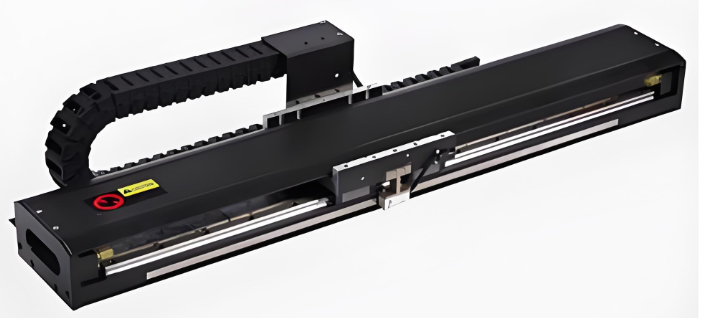
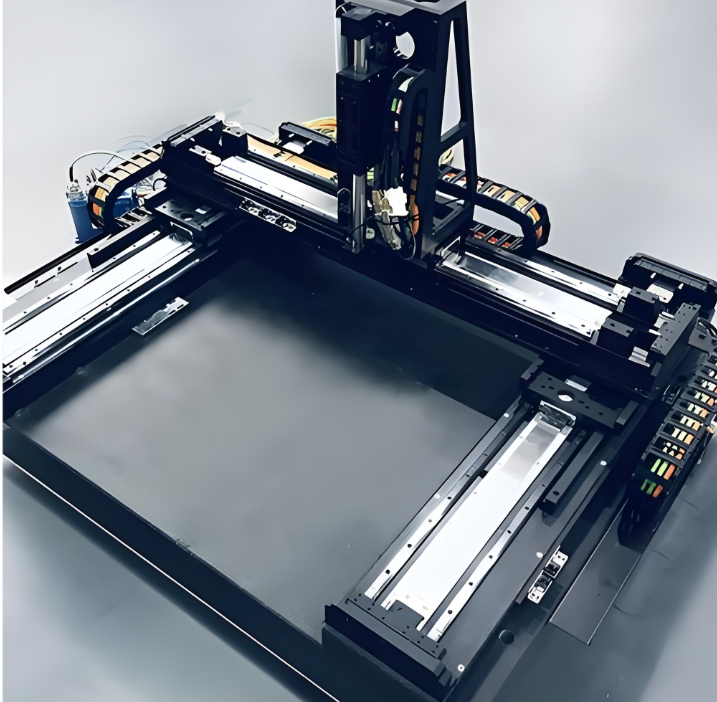
Cabos de motor linear are highly flexible cables specifically designed for linear motor systems, capable of withstanding high-frequency bending and twisting movements to ensure reliable signal and power transmission in high-speed, high-precision scenarios.
Key features include bend resistance (up to 50 million cycles), interference-shielded design, and oil/coolant-resistant materials, primarily used in industrial robots, CNC machine tools, and other automated equipment.
The specialized cable for linear motors is a special high flexibility drag chain cable that is suitable for high-speed reciprocating, high-speed acceleration, and high-precision signal transmission of linear motors. It has significant differences in structure, material, and performance compared to ordinary cables.
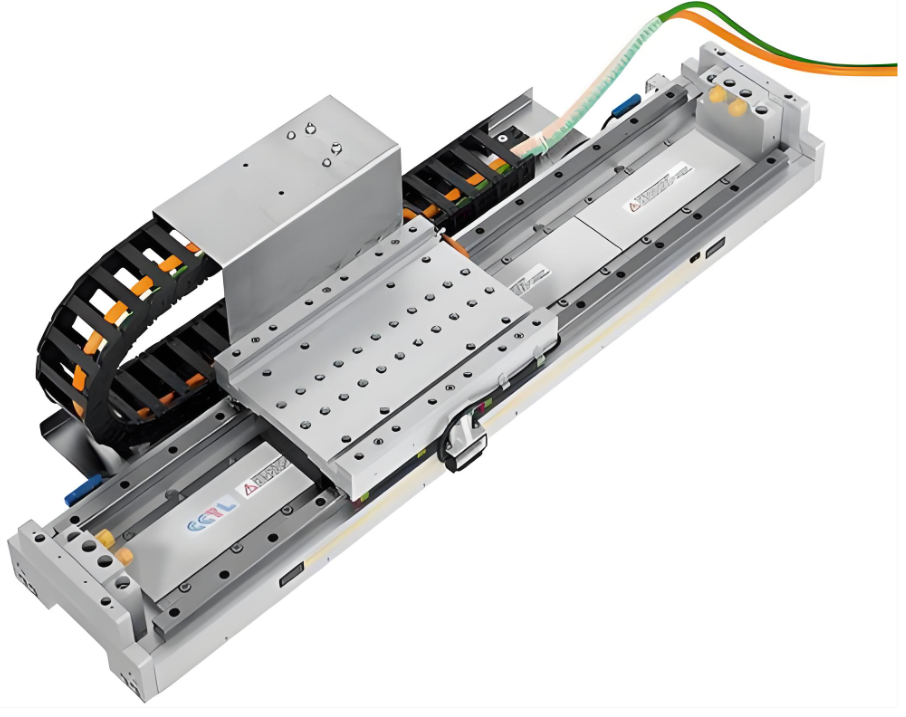
Core Structure and Materials of Cabo de motor linear
1.Condutor: Feito de fio de cobre multifilamentos ultrafino IEC 60228 Classe 6/Classe 5 (geralmente estanhado para evitar oxidação) para aumentar a resistência à fadiga por flexão e reduzir o risco de fratura do condutor durante o movimento;
2.Isolamento: resinas de flúor comumente usadas, como ETFE e FEP, resistência a altas temperaturas, resistência química, baixo atrito, espessura de parede fina;
3. Blindagem: principalmente tecido com folha de alumínio e fio de cobre estanhado de alta densidade (cobertura ≥ 90%), alguns pares de sinais adotam uma estrutura de camada dupla de blindagem de fio de núcleo individual e blindagem total para suprimir a interferência de fortes campos eletromagnéticos de motores lineares em sinais de codificador/feedback;
4.Sheath: Almost standard with PUR (polyurethane), wear-resistant, oil resistant, hydrolysis resistant, low temperature resistant, suitable for long-term drag chain movement;
5.Internal structure: Optimize pitch layering and twisting, ensure stable filling, and avoid core displacement and friction during movement.
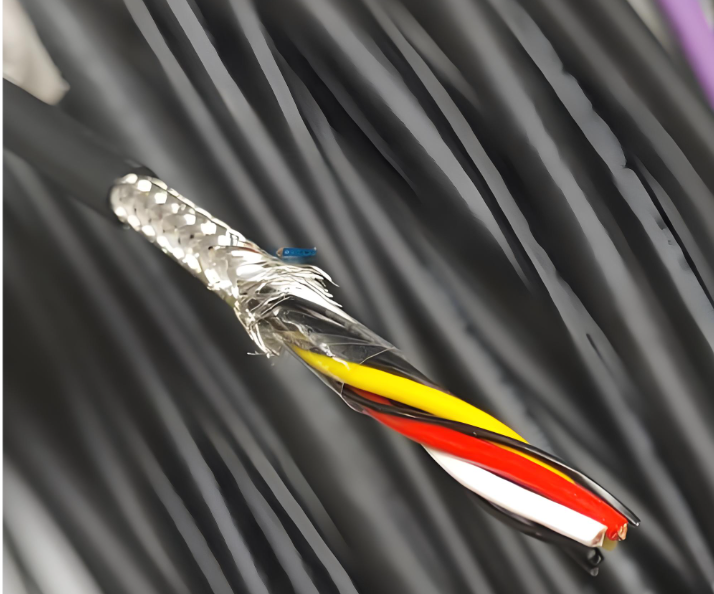
Classification and Application Scenarios
1.Power cable: Conveying driving current, commonly 4 × 1.0 and 4 × 0.5 mm ², used for supplying power to the linear motor body;
2.Encoder/feedback cable: twisted pair multi-core shielded (e.g. 4 × 2 × 0.14 mm ²), transmitting grating ruler/magnetic grating position signals;
3.Composite cable: power+encoder+temperature sensor integrated(e.g. 4 × 0.5+4 × 2 × 0.14 mm ²) ,saving drag chain space.
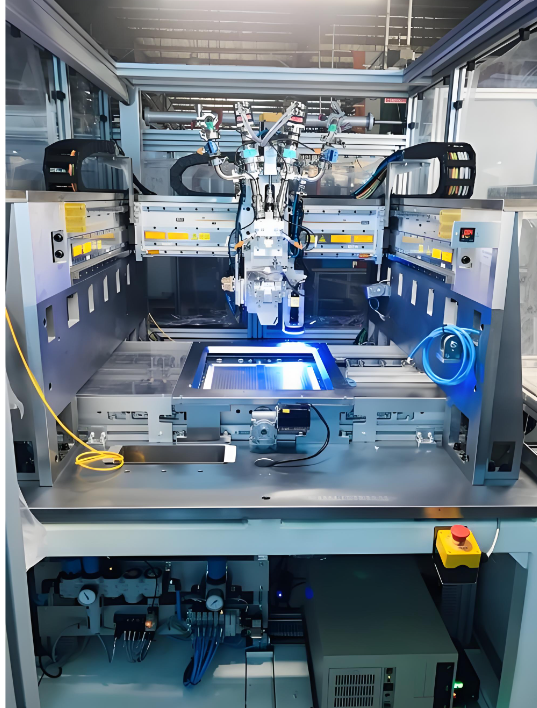
Typical applications: CNC machine tools, semiconductor equipment, high-speed automated production lines, laser processing machines, precision inspection platforms.
Internal structure: Optimize pitch layering and twisting, ensure stable filling, and avoid core displacement and friction during movement.
Key selection points
1.Determine the flexible wire movement speed/acceleration, stroke, and number of bends, and match the corresponding fatigue resistance level.
2.Calculate the cross-sectional area of the conductor based on current and wire length, and control the voltage drop;
3.The signal category must strengthen the shielding scheme (especially in strong electromagnetic environments);
4.Environment: Oil pollution, cutting fluid, temperature, UV radiation, corresponding to chemical/temperature resistant protective sheath;
5.Strictly follow the minimum bending radius (not less than the recommended value in the moving state) to avoid excessive bending and accelerated aging.
Installation and maintenance suggestions for flexible cord
1.Reserve appropriate slack insidflexible corde the drag chain to avoid excessive tension;
2.Avoid distortion, keep the fixed end parallel to the mobile end;
3.Regularly inspect the wear of the protective sheath and whether the shielding layer is damaged to prevent insulation breakdown and signal interference;
4.Special sealed connectors are used at the joints to prevent dust and cutting fluid from entering.
