

Choosing the right Cat5e cable for PoE comes down to three practical factors: conductor gauge, heat control, and distance. Cat5e can support many PoE and PoE+ installations when it is built with solid copper conductors, properly terminated, and installed within Ethernet limits. The key is matching cable construction to power load, bundle size, and the environment where the cable will run.
What is cat5e cable for poe?
Cat5e cable for PoE is Ethernet cable designed to carry both network data and electrical power to devices such as IP cameras, wireless access points, VoIP phones, and access control hardware. For reliable PoE performance, solid bare copper Cat5e with the right PoE cable gauge is strongly preferred over alumínio revestido de cobre.
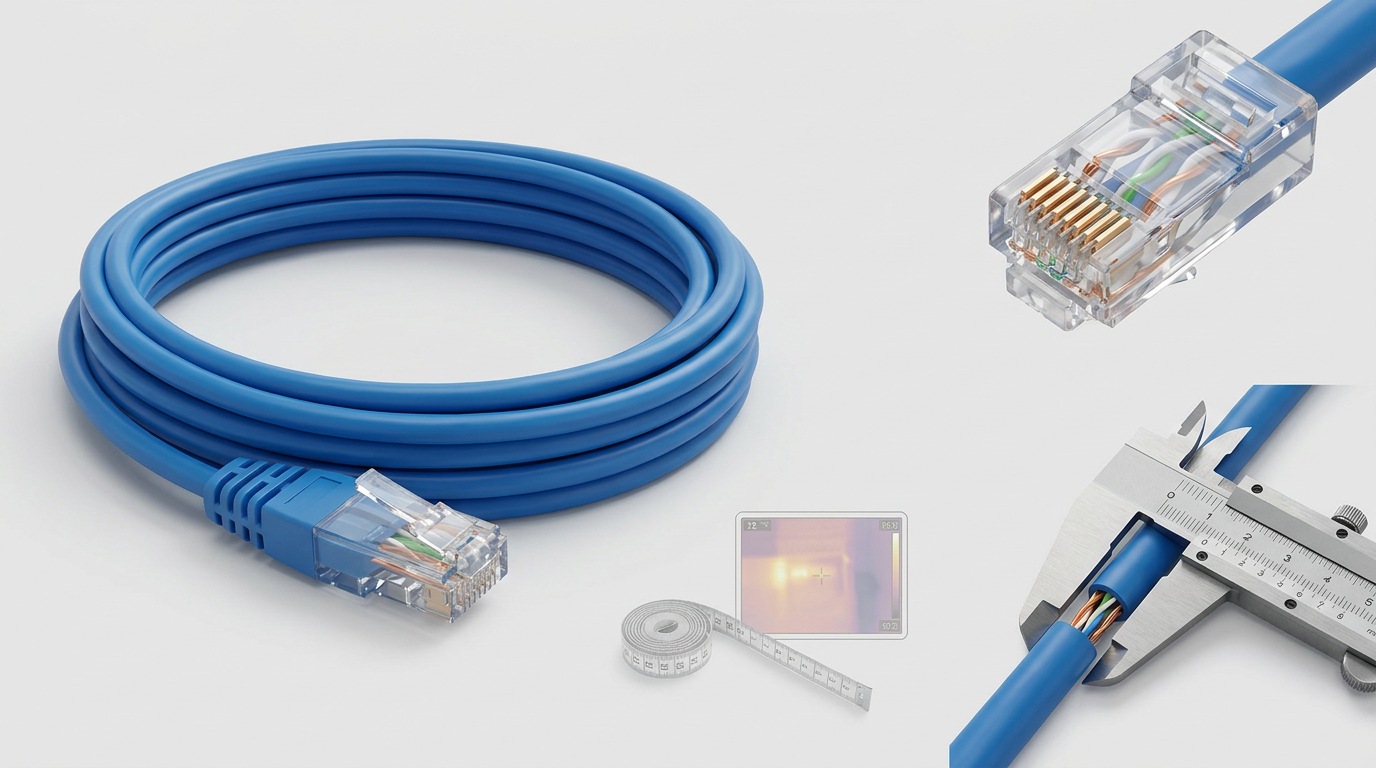
Cat5e PoE Basics
Cat5e, short for Category 5 enhanced, is a twisted-pair Ethernet cable rated for up to 1 Gigabit Ethernet at distances up to 100 meters under standard conditions. When used for Alimentação pela Ethernet, the same copper pairs that transmit data also deliver DC power from a PoE switch, injector, or midspan device.
For most professional installations, the cable construction matters as much as the category rating. A high-quality Cat5e cable for PoE should use solid bare copper conductors, consistent twist rates, reliable insulation, and proper jacket materials for the installation environment.
Com base em nossos dados internos e análises de mercado, aqui está o detalhamento:
| Recurso | Recommended for PoE | Por que é importante |
|---|---|---|
| Material condutor | Cobre sólido nu | Lower resistance and better heat performance |
| Typical gauge | 24 AWG or 23 AWG | Thicker conductors reduce voltage drop |
| Tipo de cabo | Solid for permanent links | Better long-distance PoE reliability |
| Jaqueta | CMP, CMR, CM, outdoor, or direct burial as needed | Matches safety and environment requirements |
| Maximum channel distance | 100 m/328 pés | Standard Ethernet limit for data and PoE planning |
Dica profissional do cwcables: I always recommend checking the conductor material before approving a PoE installation. If the cable is CCA, I do not treat it as a professional PoE option, especially for cameras, access points, or long cable runs.
How Does cat5e cable for poe Work?
Cat5e cable for PoE works by sending low-voltage DC power and Ethernet data over twisted copper pairs. A PoE switch or injector detects a compatible powered device, negotiates the required power class, and then supplies power while maintaining data communication over the same cable run.
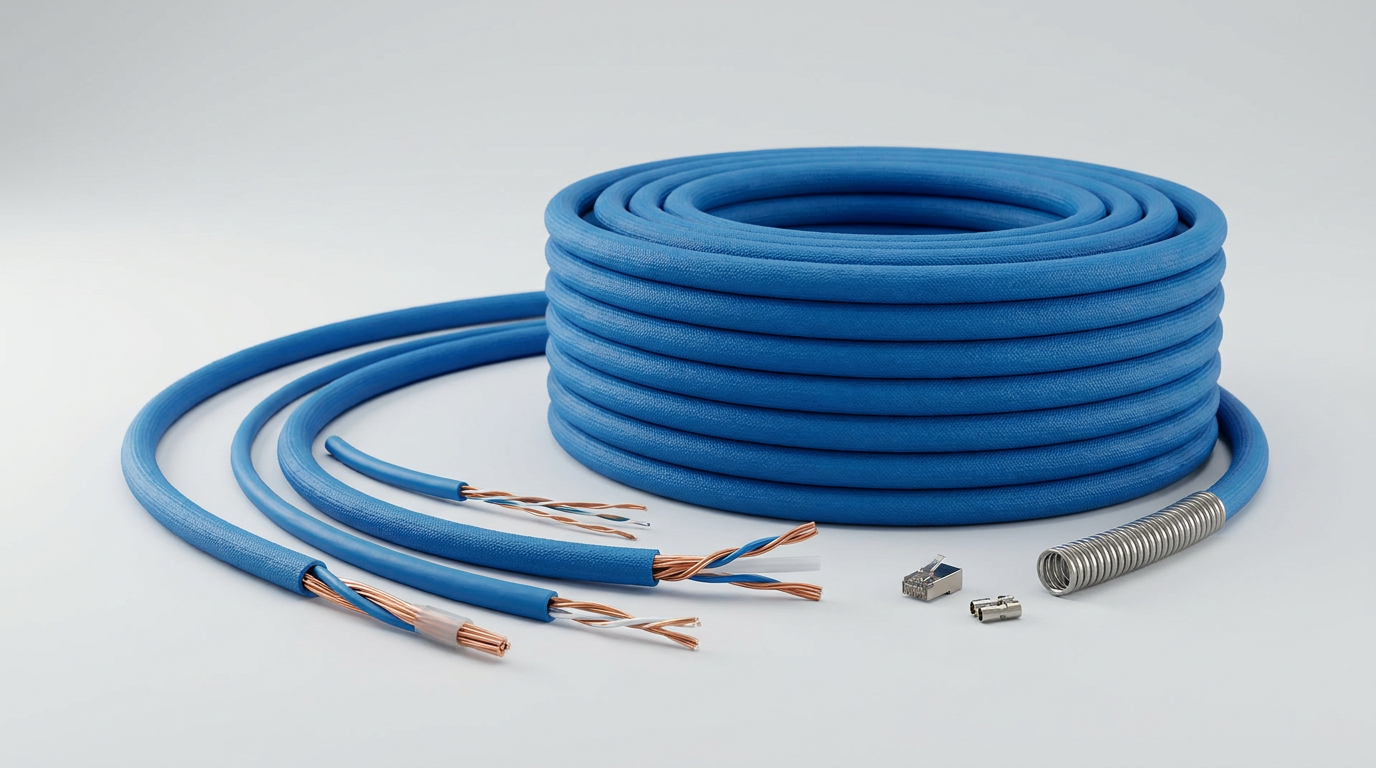
Power and Data Delivery Process
Power over Ethernet follows IEEE 802.3 standards such as 802.3af, 802.3at, and 802.3bt. These standards define how power sourcing equipment, such as a PoE switch, communicates with powered devices before energizing the line. This detection process helps prevent non-PoE equipment from receiving unwanted power.
In a typical setup, the PoE switch sends a small detection voltage first. If the device responds correctly, the switch classifies the device and provides the correct power level. The cable then carries both data and DC power over the twisted pairs.
A simplified process looks like this:
- The PoE switch or injector checks whether the connected device supports PoE.
- The powered device identifies its power class or required wattage.
- The switch supplies the correct voltage and power level.
- Ethernet data continues to transmit over the same cable.
- The system monitors power draw and may shut down the port if a fault occurs.
The quality of the cable affects voltage drop, heat buildup, and performance stability. This is why PoE cable gauge, conductor material, and bundle management are important when planning a PoE network.
Dica profissional do cwcables: When troubleshooting PoE dropouts, I do not start with the device. I first check cable length, conductor type, termination quality, and whether the run is close to the Cat5e PoE distance limit.
What are the benefits of cat5e cable for poe?
The main benefits of Cat5e cable for PoE are simplified installation, reduced electrical wiring costs, flexible device placement, centralized power control, and reliable Gigabit network performance. It is a practical choice for many cameras, phones, access points, and low-to-moderate power network devices.
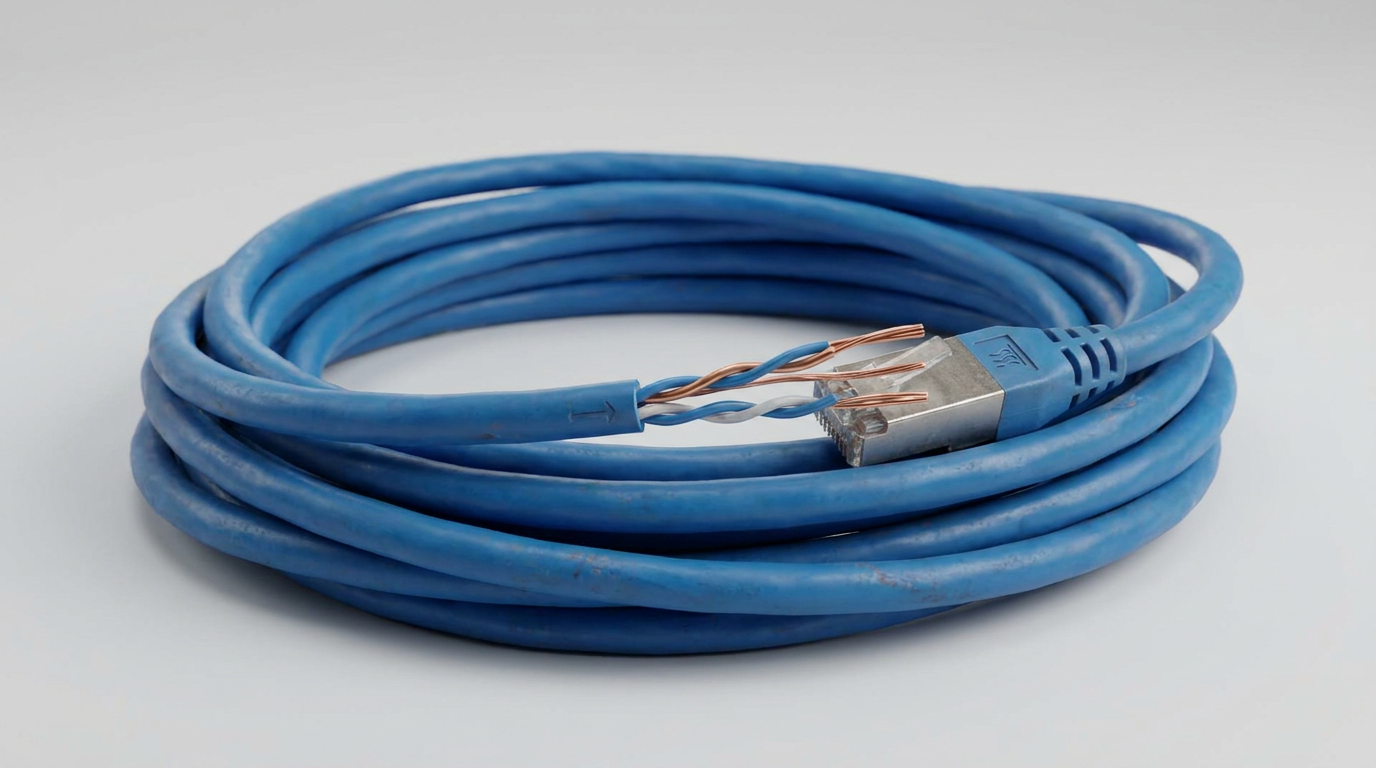
Practical Advantages in Real Installations
Using Cat5e for PoE allows installers to deploy networked devices without placing a separate AC outlet at every endpoint. This is especially useful for ceilings, warehouses, exterior walls, security camera locations, and office workstations.
Cat5e also remains widely available and cost-effective. For many projects, it provides enough bandwidth and PoE support without the higher material cost of Cat6 or Cat6A. The key is choosing the correct cable grade and avoiding poor-quality conductors.
Os principais benefícios incluem:
- One-cable installation: Data and power run through the same cable.
- Lower labor cost: Fewer electrical circuits are required at endpoint locations.
- Centralized backup power: UM UPS can protect the PoE switch and connected devices.
- Cleaner device placement: Cameras and access points can be mounted where performance is best.
- Gigabit support: Cat5e supports 1000BASE-T for most business and residential applications.
- Good value: It is often less expensive than higher-category cable while still meeting many PoE needs.
For security, VoIP, and Wi-Fi deployments, these benefits make Cat5e a dependable option when the cable is correctly specified.
Dica profissional do cwcables: I like Cat5e for budget-conscious PoE jobs, but I only use it when the power level, run length, and environment are appropriate. Saving on cable should never create service calls later.
How to maintain a cat5e cable for poe?
Maintaining Cat5e cable for PoE means protecting terminations, avoiding excessive heat, keeping bundles organized, testing cable runs, and replacing damaged patch cords. Good maintenance reduces voltage drop, intermittent power loss, packet errors, and overheating in high-density PoE installations.
Maintenance Checks That Prevent PoE Failures
PoE cable maintenance is mostly about preventing resistance, heat, and physical damage from increasing over time. Loose terminations, crushed jackets, moisture exposure, and poor patch cords can all cause unstable PoE performance even when the original installation passed testing.
Regular inspection is especially important in security systems, offices with frequent equipment moves, and telecom rooms with dense patching.
Use esta lista de verificação de manutenção:
- Inspect terminations: Look for loose plugs, damaged keystones, and poorly seated patch cords.
- Check cable temperature: Dense PoE bundles should not feel excessively warm.
- Avoid tight bends: Maintain proper bend radius to protect pair geometry.
- Keep cables dry: Replace any cable exposed to water unless it is rated for that environment.
- Test suspect links: Use a cable certifier or PoE tester to check length, wire map, and power delivery.
- Rotule ambas as extremidades: Clear labeling reduces accidental disconnects and troubleshooting time.
- Replace damaged patch cords: Patch cords are often the weak link in PoE systems.
Good maintenance helps preserve the expected Cat5e PoE distance and reduces the risk of endpoint resets, camera dropouts, or access point instability.
Dica profissional do cwcables: I treat warm cable bundles as a warning sign. If a PoE bundle is carrying high wattage, I separate it, improve airflow, or review whether a thicker-gauge cable should have been used.
What is the price of cat5e cable for poe?
The price of Cat5e cable for PoE depends on conductor material, gauge, jacket rating, shielding, length, certification, and whether it is bulk cable or pre-terminated patch cable. Solid copper riser-rated Cat5e usually costs more than basic patch cable, but it is the better choice for permanent PoE links.
Price Drivers and Typical Ranges
Pricing varies by market, copper cost, jacket type, and compliance requirements. The cheapest Cat5e cable is not always suitable for PoE, especially if it uses copper-clad aluminum or has inconsistent conductor diameter. For PoE projects, the cable should be evaluated by total installed reliability, not just box price.
Com base em nossos dados internos e análises de mercado, aqui está o detalhamento:
| Tipo de cabo | Uso típico | Custo relativo | PoE Suitability |
|---|---|---|---|
| Cat5e CCA cable | Low-cost non-critical use | Mais baixo | Não recomendado |
| Cat5e solid copper CM/CMR | General in-wall and riser runs | Moderado | Good for many PoE jobs |
| Cat5e plenum CMP | Air-handling spaces | Mais alto | Good when code requires CMP |
| Cat5e blindado | Áreas propensas a EMI | Mais alto | Good if properly grounded |
| Outdoor/direct burial Cat5e | Exterior or underground runs | Mais alto | Good when environment-rated |
When budgeting, include connectors, patch panels, labor, testing, pathway materials, and possible future upgrades. A slightly better cable often costs less than one truck roll to fix a power issue later.
Dica profissional do cwcables: I would rather pay a little more for verified solid copper Cat5e than save a few dollars on questionable cable. With PoE, poor cable quality shows up as heat, voltage drop, and unreliable devices.
Principais recursos e comparação
The most important features in Cat5e cable for PoE are solid copper conductors, suitable PoE cable gauge, correct jacket rating, dependable terminations, and verified performance to the full channel distance. Cat5e can work well for PoE, but Cat6 or Cat6A may be better for higher power, larger bundles, or future bandwidth needs.
Cat5e, Cat6, and Cat6A for PoE Planning
Cat5e is often sufficient for standard PoE and many PoE+ installations, but the best cable choice depends on current draw, distance, heat, and upgrade plans. Higher-category cables often use larger conductors or improved construction, which can help with heat dissipation and voltage drop.
Com base em nossos dados internos e análises de mercado, aqui está o detalhamento:
| Recurso | Cat5e | Cat6 | Cat6A |
|---|---|---|---|
| Common Ethernet speed | 1Gb/s | 1 Gbps / 10 Gbps short runs | 10Gbps |
| Standard max channel distance | 100 m/328 pés | 100 m/328 pés | 100 m/328 pés |
| Typical conductor gauge | 24 AWG | 23–24 AWG | 23 AWG or larger construction |
| Tratamento térmico PoE | Good with quality copper | Melhorar | Best among these options |
| Diâmetro do cabo | Menor | Médio | Maior |
| Custo de instalação | Mais baixo | Moderado | Mais alto |
| Melhor caso de uso | Cost-effective PoE endpoints | Higher-performance office networks | High-density, high-power, future-ready networks |
Cat5e remains a practical option when the design is within limits. However, for high-density Wi-Fi, 802.3bt power, long bundled runs, or long-term infrastructure planning, Cat6 or Cat6A may offer better thermal and performance margin.
Dica profissional do cwcables: I do not choose cable category by speed alone. For PoE, I also look at power load, bundle size, pathway temperature, and how difficult it would be to replace the cable later.
Fatores de custo e compra
When buying Cat5e cable for PoE, prioritize solid copper construction, the correct jacket rating, verified compliance, appropriate gauge, and supplier reliability. The lowest-cost cable can become expensive if it causes voltage loss, heat buildup, failed inspections, or intermittent device power problems.
How to Choose the Right Cable Before Ordering
A good buying decision starts with the application. An indoor office camera, a ceiling-mounted access point, and an outdoor gate controller may all use Cat5e, but they may require different jackets, ratings, and installation methods.
Before purchasing, review these factors:
- Material condutor: Choose solid bare copper for permanent PoE runs.
- Gauge: 24 AWG is common; thicker conductors can reduce resistance.
- Distância: Keep total channel length within the Cat5e PoE distance limit of 100 meters.
- Power standard: Confirm whether devices use 802.3af, 802.3at, or 802.3bt.
- Bundle size: Large bundles carrying PoE generate more heat.
- Avaliação da jaqueta: Match CMP, CMR, CM, outdoor, UV-rated, or direct burial requirements.
- Blindagem: Use shielded cable only when needed and properly grounded.
- Testing requirements: For business installations, budget for certification or validation testing.
The best buying approach is to compare cable by performance and compliance, not just per-foot price. Reliable cable protects the entire PoE system.
Dica profissional do cwcables: I always ask where the cable will be installed before recommending a part number. The right Cat5e for a plenum ceiling is not the same as the right Cat5e for an outdoor camera pole.
Conclusão
Cat5e cable for PoE is a reliable and cost-effective choice when it uses quality copper conductors, stays within distance limits, and is installed with heat and gauge in mind. For the best results, match the cable to the power level, environment, and long-term network requirements.
Final Recommendation for PoE Installations
Cat5e can support many PoE applications successfully, but not all Cat5e cable is equal. The safest approach is to select solid copper cable, confirm the correct PoE cable gauge, follow the 100-meter Ethernet limit, and manage heat in bundled or high-power installations.
For most standard PoE devices, quality Cat5e is a practical solution. For higher power, dense cable pathways, or future 10G planning, consider stepping up to Cat6 or Cat6A.
Use this final checklist before installation:
- Confirm the device power requirement.
- Verify the PoE switch or injector power budget.
- Choose solid copper cable.
- Match the jacket rating to the installation space.
- Keep the full channel within 100 meters.
- Avoid oversized hot bundles.
- Test the link after termination.
For dependable cable selection, cwcables can help you match Cat5e, Cat6, or Cat6A cabling to your PoE project requirements.
Dica profissional do cwcables: My final rule is simple: design the cable run for the worst day, not the best day. Heat, distance, and power load all add up, so choose cable with enough margin to keep the network stable.