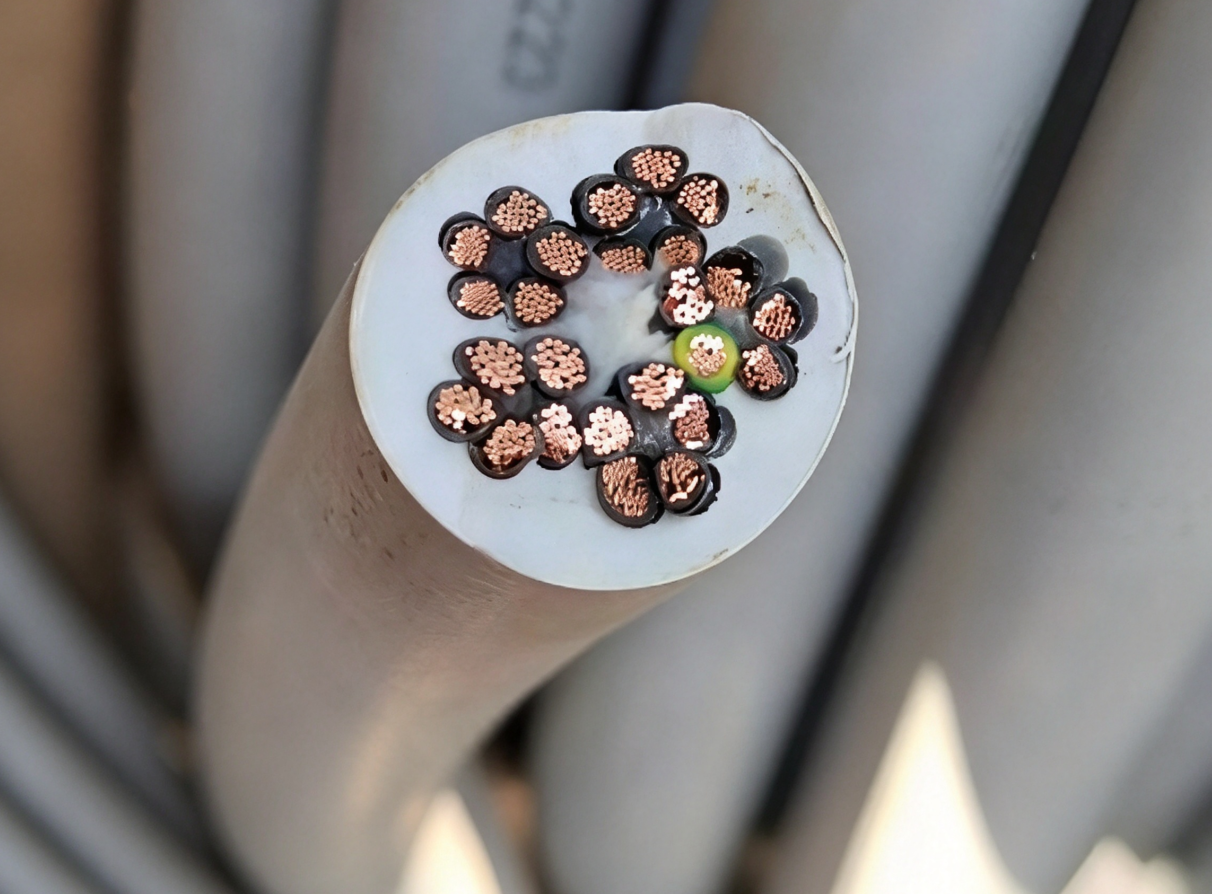
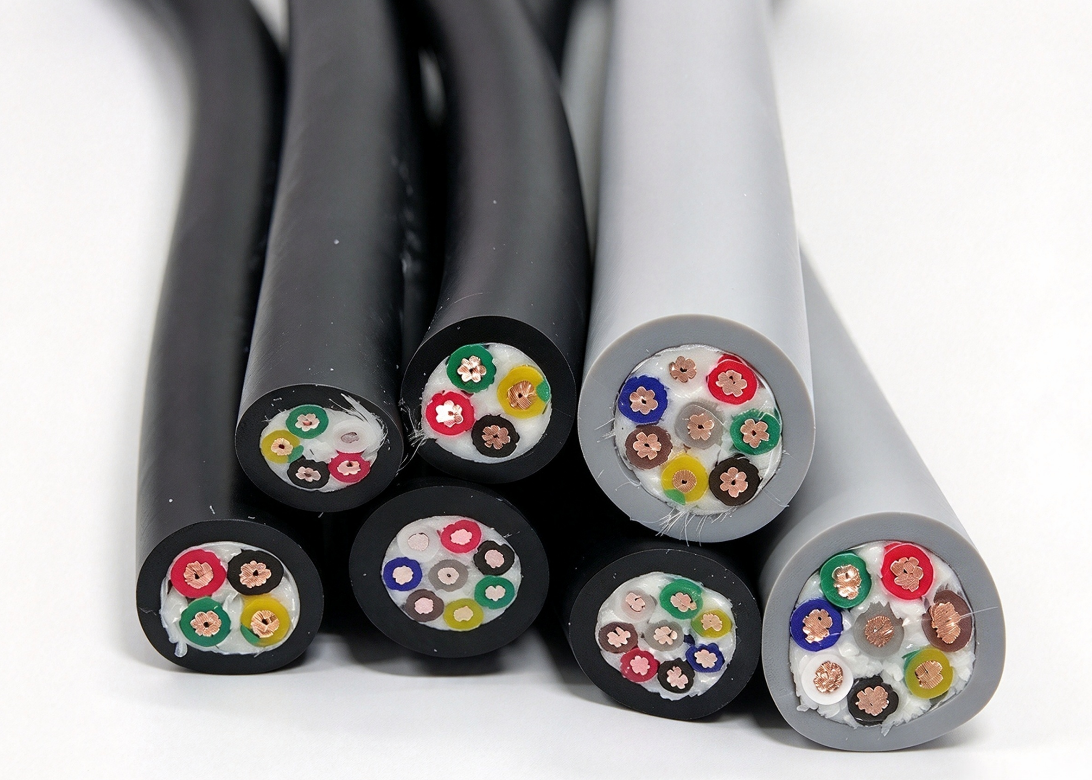
TRVV cable is a flexiblePVC-insulated and PVC-sheathedコントロールケーブルdesigned for moving electrical connections in automation, machinery, drag chains, and control systems. It combines fine-stranded copper conductors with a durable outer jacket, making it suitable for repeated bending, signal transmission, and low-voltage control wiring where flexibility and mechanical reliability matter.
What is trvv cable?
TRVV cable is a flexible control cable with copper conductors, PVC insulation, and a PVC outer sheath, commonly used in industrial automation, machine tools, drag chains, and control cabinets. It is designed for applications requiring repeated movement, moderate mechanical protection, and stable low-voltage signal or power transmission.
構築と応用の基礎
TRVV is widely used as a flexible control cable in China and global equipment manufacturing because it offers a practical balance between flexibility, cost, and electrical performance. Compared with standard fixed-installation control cable, TRVV is built with finer銅導体so it can bend more easily during operation.
Low-voltage signal, control, and instrumentation circuits
Typical trvv cable specs include rated voltage, conductor size, core count, insulation thickness, sheath material, bending radius, and operating temperature. For many industrial buyers sourcing flexible control cable China products, TRVV is often selected when the cable must move but does not require the higher shielding performance of RVVP or specialized servo cable.
cwcables プロのヒント:I recommend confirming whether the cable will be used in continuous drag-chain motion or only occasional movement, because that choice directly affects conductor stranding, sheath grade, and service life.
trvvケーブル
How Does trvv cable Work?
TRVV cable works by using fine-stranded copper cores to carry control signals or low-voltage power while flexible PVC insulation separates each conductor and an outer PVC sheath protects the complete cable. Its structure allows repeated bending while maintaining electrical continuity and helping prevent conductor fatigue in moving equipment.
Operating Principle in Moving Control Systems
In a control system, each conductor inside a TRVV cable carries a dedicated electrical function, such as start/stop signals, sensor feedback, relay control, or auxiliary power. The insulation prevents short circuits between cores, while the outer sheath resists abrasion, light oil exposure, and mechanical stress.
The working process is usually:
A controller,PLC, relay, or terminal block sends electrical signals through the cable.
Fine copper strands distribute bending stress across many small wires instead of one rigid conductor.
PVC insulation keeps each circuit electrically isolated.
The outer sheath protects the cable bundle from friction, dust, and installation damage.
The cable continues operating as equipment moves, bends, or vibrates.
TRVV performs best in low-to-medium mechanical stress environments. If the installation includes high-speed drag chains, torsion, outdoor exposure, or strong電磁干渉, the cable specification should be upgraded accordingly.
cwcables プロのヒント:I always check bending radius first; even a good trvv cable can fail early if it is bent tighter than the manufacturer’s recommended limit.
What are the benefits of trvv cable?
The main benefits of TRVV cable are flexibility, easy installation, reliable control signal transmission, cost efficiency, and suitability for dynamic industrial environments. It is especially useful where standard rigid cable is too stiff, but a fully specialized robotic or servo cable would be unnecessary or too expensive.
Practical Advantages for Industrial Wiring
TRVV is valued because it solves a common industrial wiring problem: equipment cables must move without breaking, but they also need to remain economical and easy to terminate. Its fine-stranded copper conductors and PVC construction make it flexible enough for many machine-building and automation applications.
主な利点は次のとおりです。
High flexibility:Easier routing through machinery, panels, and moving assemblies.
Good cost performance:More economical than many high-end robotic or servo cable types.
Simple termination:Compatible with common terminals, connectors, and cable glands.
Multi-core options:Available in many conductor counts for complex control wiring.
Reliable insulation:PVC insulation supports stable low-voltage control circuits.
Custom availability:Many flexible control cable China manufacturers can provide custom core counts, colors, sheath markings, and packaging.
TRVV is particularly attractive for OEM machine builders who need consistent cable performance across repeated production batches while controlling material cost.
cwcables プロのヒント:I suggest choosing a slightly higher flexibility grade than the minimum requirement if the cable will move daily, because the small extra cost can prevent expensive downtime later.
How to maintain a trvv cable?
To maintain a TRVV cable, inspect it regularly for sheath wear, cracking, flattening, loose terminations, overheating, and excessive bending. Proper routing, strain relief, clean cable tracks, and avoiding chemical or mechanical damage are essential for extending service life in industrial control applications.
trvvケーブル
Inspection and Service Checklist
TRVV cable maintenance is straightforward, but it should be systematic. Most failures are caused by incorrect installation, sharp bending, repeated abrasion, or loose terminations rather than the cable material itself.
このメンテナンス チェックリストを使用してください。
Inspect the outer sheath for cuts, cracks, swelling, or discoloration.
Check whether the cable is rubbing against sharp metal edges or machine frames.
Confirm the bending radius is not smaller than the recommended value.
Verify that cable glands, clamps, and connectors provide proper strain relief.
Look for signs of overheating near terminals or bundled cable areas.
Keep drag chains clean and free from metal chips, oil sludge, and debris.
Test continuity and絶縁抵抗during scheduled maintenance.
For moving applications, maintenance intervals should be shorter than for fixed wiring. In harsh environments, visual inspection alone may not be enough, and electrical testing should be included.
cwcables プロのヒント:I recommend photographing the cable route after installation; it gives maintenance teams a clear reference when checking whether the cable has shifted, twisted, or been re-routed incorrectly.
What is the price of trvv cable?
The price of TRVV cable depends on conductor size, number of cores, copper purity, sheath quality, flexibility grade, shielding requirements, certification, and order quantity. Standard small-core TRVV is usually economical, while custom high-flex, oil-resistant, or export-certified versions cost more.
価格変動要因と一般的なコスト要因
TRVV pricing is closely linked to copper content because copper is the largest material cost in most flexible control cables. A cable with more cores or larger conductor cross-sections will cost significantly more than a small signal cable.
当社の内部データと市場分析に基づく内訳は次のとおりです。
コスト要因
価格への影響
購入者向けメモ
導体サイズ
高い
Larger mm² means more copper and higher cost
コア数
高い
コアが増えると材料と製造が複雑になります
銅の品質
高い
Oxygen-free or high-purity copper improves performance
For accurate pricing, buyers should provide trvv cable specs such as core count, conductor size, voltage rating, sheath color, operating environment, and required length.
cwcables プロのヒント:I advise buyers not to compare price by meter alone; compare copper size, strand count, sheath quality, and test standards, because low-cost cable may have a shorter working life.
主な機能と比較
TRVV cable is best understood by comparing it with related flexible cable types such as RVV and RVVP. TRVV emphasizes flexibility for moving control applications, RVV is more common for general flexible wiring, and RVVP adds shielding for better electromagnetic interference resistance.
The common question of trvv vs rvvp depends on the installation environment. If flexibility and movement are the priority, TRVV is usually better. If electromagnetic interference is the main concern, RVVP or a shielded TRVV version may be more suitable.
cwcables プロのヒント:I usually choose shielded TRVV when a cable must move near motors, inverters, or servo drives, because flexibility alone does not solve interference problems.
コストと購入要素
When buying TRVV cable, evaluate the application first, then match the cable specification to movement frequency, voltage, current, environment, and installation method. The right purchase decision balances price with conductor quality, sheath durability, flexibility, compliance, and supplier consistency.
Buyer Selection Guide
A reliable TRVV purchase starts with technical clarity. Many cable problems occur because buyers only specify the core count and conductor size, without explaining motion conditions or environmental exposure.
重要な購入要素には次のようなものがあります。
アプリケーションの種類:Fixed wiring, occasional movement, or continuous drag-chain motion.
電気要件:Rated voltage, current load, signal type, and grounding design.
Mechanical condition:Bending radius, travel distance, acceleration, and friction points.
環境:Oil, moisture, temperature, UV exposure, and chemical contact.
ケーブル構造:Core count, conductor size, insulation thickness, and sheath material.
コンプライアンスのニーズ:RoHS, CE, flame retardance, or customer-specific test reports.
サプライヤーの能力:Custom printing, stable production quality, and export packaging.
For OEM buyers, it is often better to request samples and test them in the actual equipment before confirming bulk production.
cwcables プロのヒント:I recommend giving the supplier a drawing or photo of the installation path; it helps us suggest a more accurate cable structure instead of quoting a generic TRVV model.
結論
TRVV cable is a practical flexible control cable for machinery, automation, control panels, and moderate moving applications. By understanding its structure, benefits, maintenance needs, pricing factors, and comparison with RVVP or RVV, buyers can select a safer and more cost-effective cable solution.
Final Selection Advice
TRVV is a strong choice when the application requires flexibility, reliable control transmission, and economical performance. It is not a universal cable for every condition, but it works very well when matched correctly to movement, load, and environment.
Before placing an order, confirm:
Core count and conductor cross-section
Rated voltage and operating temperature
Required flexibility and bending radius
Shielding requirement, especially for trvv vs rvvp decisions
Sheath performance, including oil resistance or flame retardance
Certification and quality documentation
Sample testing before mass production
For buyers looking for flexible control cable China supply, cwcables can help review specifications, recommend suitable TRVV constructions, and support custom production based on real application requirements.
cwcables プロのヒント:I always prefer to solve cable selection before the machine is finalized, because early cable planning reduces installation problems, improves reliability, and avoids costly redesigns.