

Choosing the right Cat5e cable for EtherCAT is not only about meeting Ethernet speed ratings; it is about ensuring deterministic communication, noise resistance, mechanical durability, and long-term stability in industrial motion control and automation systems. Buyers should check shielding, conductor quality, jacket material, bend performance, certifications, and supplier support before approving any industrial EtherCAT cable for equipment deployment.
What is Cat5e Cable for EtherCAT?
あ Cat5eケーブル のために EtherCAT is a twisted-pair Ethernet cable used to carry EtherCAT communication between controllers, drives, I/O modules, sensors, and other automation devices. While Cat5e supports the required 100 Mbps transmission, industrial EtherCAT applications often need enhanced shielding, flexible jackets, and rugged construction.
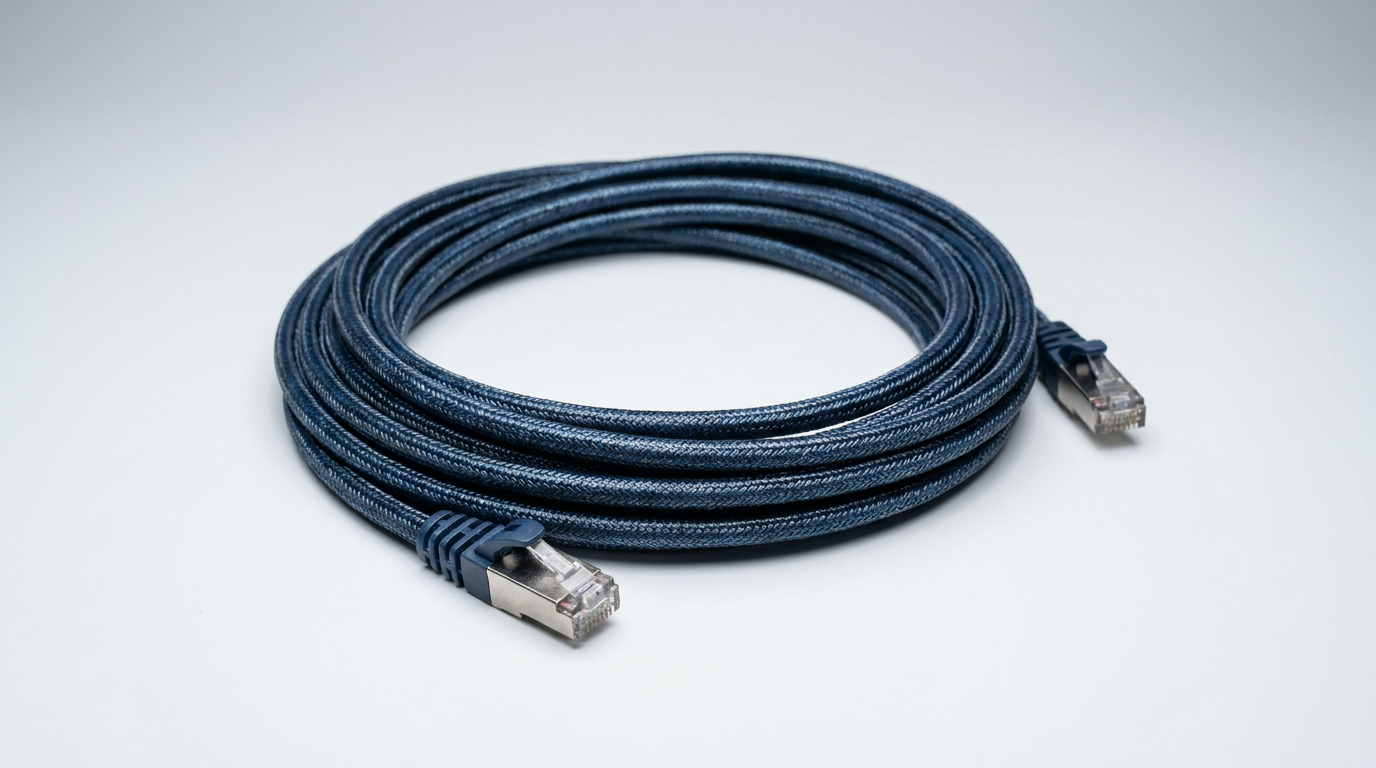
産業用コミュニケーションの役割
EtherCAT uses standard Ethernet physical layers but applies a real-time industrial protocol that processes data “on the fly” as frames pass through connected nodes. This means cable quality directly affects timing stability, packet integrity, and machine reliability.
For buyers, the key point is that not every office-grade Cat5e cable is suitable for factory EtherCAT use. Industrial environments may include 電磁干渉, cable drag chains, oil exposure, vibration, and frequent movement.
- Common EtherCAT cable applications include:
- Servo drive and motion control networks
- Distributed I/O systems
- Robotics and automated assembly lines
- Packaging and printing machines
- CNC装置
- Industrial sensors and gateways
A suitable industrial EtherCAT cable should combine Cat5e electrical performance with industrial-grade materials and construction. For fixed installations, a standard industrial shielded Cat5e cable may be enough. For moving applications, flexible or high-flex cable designs are usually required.
cwcables プロのヒント: I always recommend checking the actual installation environment before choosing cable. A cable that works perfectly inside a cabinet may fail quickly in a drag chain, near a motor, or around welding equipment.
How Does Cat5e Cable for EtherCAT Work?
A Cat5e cable for EtherCAT works by transmitting Ethernet frames through balanced twisted pairs while EtherCAT devices read and insert data as the frame passes through each node. The cable must preserve signal integrity, reduce interference, and maintain stable impedance so real-time communication remains predictable across the network.
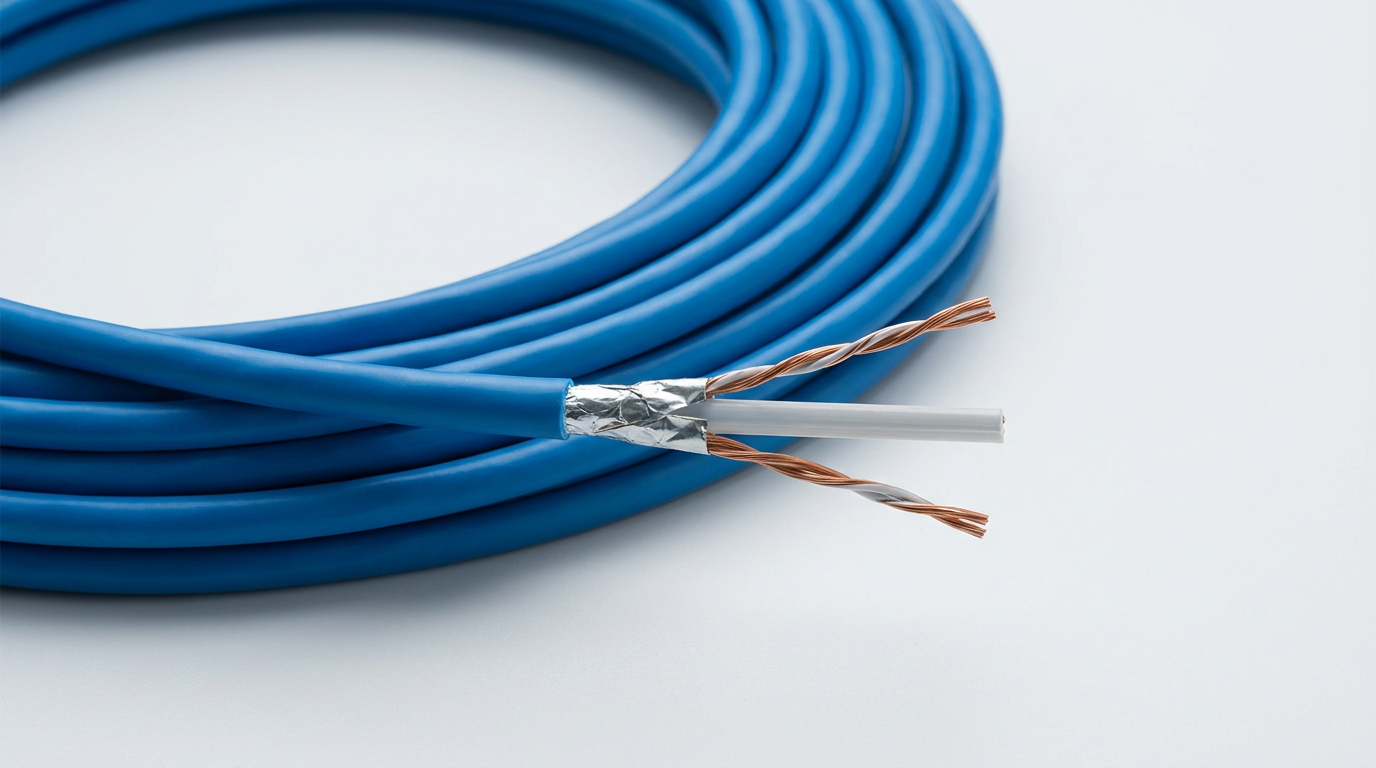
Signal Transmission and Real-Time Data Flow
EtherCAT typically operates over 100BASE-TX Ethernet, using two twisted pairs for data transmission. The controller sends a frame through the network, and each EtherCAT slave device processes its assigned data while the frame continues downstream.
Because EtherCAT is designed for very short cycle times, unstable cabling can create errors, retries, or communication interruptions. That is why EtherCAT cable selection should consider both electrical and physical conditions.
- The EtherCAT master sends an Ethernet frame.
- The frame passes through each connected slave device.
- Each device reads output data and inserts input data in real time.
- The frame returns to the master after completing the network path.
- The master verifies data timing and communication status.
Important cable performance factors include:
- Controlled impedance for consistent signal transmission
- Low attenuation to reduce signal loss
- Twisted pair balance to limit crosstalk
- Shielding to protect against EMI
- Reliable connectors for stable contact
- Proper cable length within system limits
For most EtherCAT copper networks, individual cable segments are commonly limited to 100 meters, but machine builders often use shorter runs to improve reliability and reduce troubleshooting complexity.
cwcables プロのヒント: I treat EtherCAT cabling as part of the control system, not as an accessory. If cycle time and uptime matter, cable impedance, shielding, and connector quality deserve the same attention as the controller or drive.
What are the Benefits of Cat5e Cable for EtherCAT?
The main benefits of Cat5e cable for EtherCAT include reliable real-time communication, broad device compatibility, cost-effective performance, and easy integration with industrial Ethernet hardware. When specified correctly, Cat5e provides enough bandwidth for EtherCAT while allowing buyers to choose rugged shielding, flexible jackets, and application-specific designs.
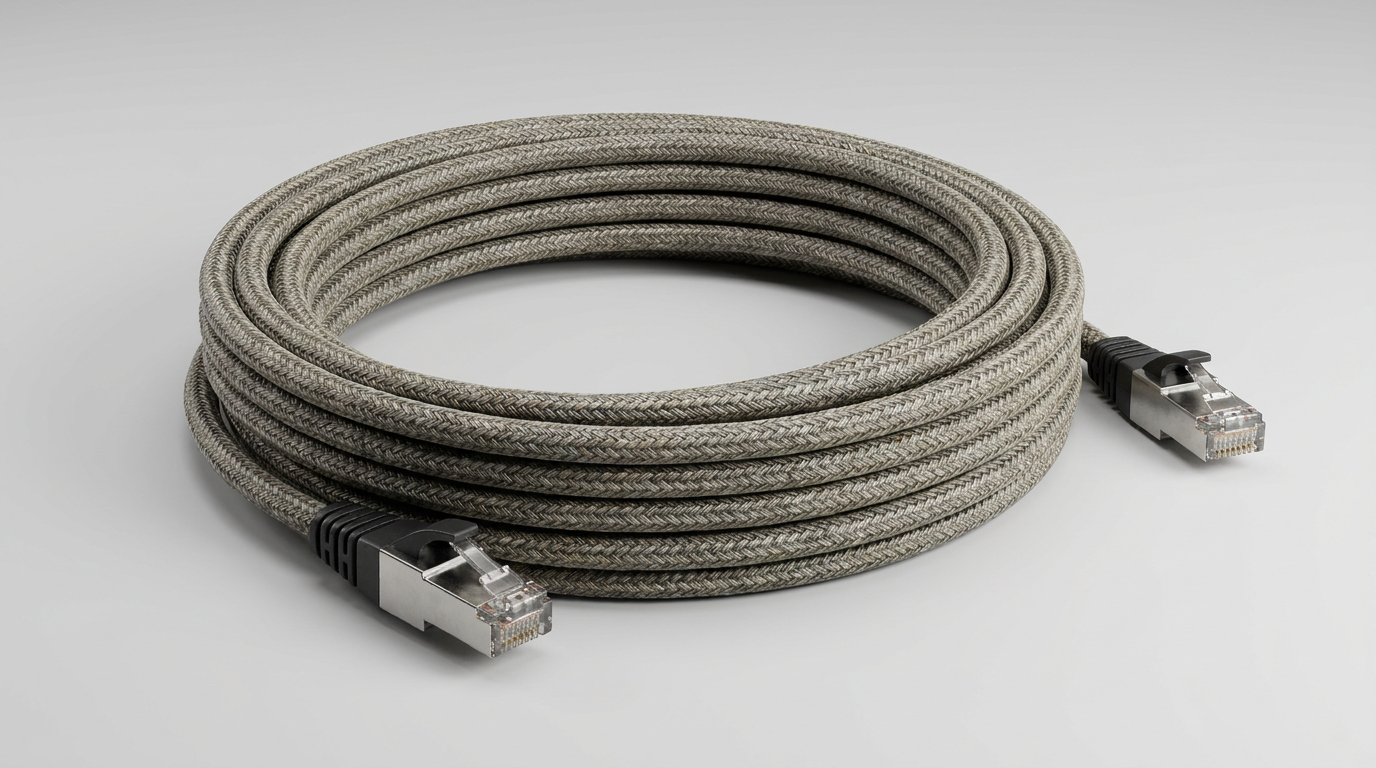
Performance and Practical Advantages
Cat5e remains widely used for EtherCAT because it supports the required data rate while keeping system cost manageable. It also benefits from mature manufacturing standards, wide connector compatibility, and easy sourcing for different industrial layouts.
当社の内部データと市場分析に基づく内訳は次のとおりです。
| 利点 | Why It Matters for EtherCAT | 購入者の検討事項 |
|---|---|---|
| 100 Mbps support | Matches common EtherCAT physical layer requirements | Confirm Cat5e or better rating |
| コスト効率 | Lower cost than higher-category cable in many applications | Avoid overpaying for unnecessary bandwidth |
| 幅広い互換性 | Works with many RJ45 and M12 industrial Ethernet devices | Match connector type to equipment |
| シールドオプション | Reduces noise from motors, drives, and power cables | Choose SF/UTP, S/FTP, or similar shielding where needed |
| Flexible versions | Supports motion, robotics, and drag-chain use | Check bend radius and flex-cycle rating |
| 工業用ジャケット | Improves resistance to oil, abrasion, UV, or chemicals | Select PVC, PUR, TPE, or LSZH based on environment |
The biggest advantage is balanced performance. Cat5e is not excessive for EtherCAT, but it is capable enough when the construction is correct. This makes it a practical choice for OEMs, machine builders, maintenance teams, and system integrators.
cwcables プロのヒント: I do not recommend choosing Cat5e only by category marking. Two cables can both say Cat5e, but one may be office-grade and the other may be built for oil, vibration, shielding, and continuous movement.
How to Maintain a Cat5e Cable for EtherCAT?
To maintain a Cat5e cable for EtherCAT, inspect connectors, shielding continuity, bend radius, jacket condition, and routing separation from power cables. Preventing mechanical stress and electromagnetic exposure is more effective than replacing failed cables after communication errors appear in the control system.
Maintenance Checklist for Stable EtherCAT Networks
EtherCAT cable maintenance should focus on preventing signal degradation. Since communication issues may appear as intermittent drive faults, I/O dropouts, or synchronization errors, visual inspection alone is not always enough.
Use a structured maintenance routine:
- Inspect connector locking mechanisms.
- Check RJ45 or M12 contacts for corrosion, looseness, or damage.
- Confirm cable shields are properly grounded according to system design.
- Look for crushed, kinked, or over-bent cable sections.
- Verify cables are not rubbing against sharp metal edges.
- Keep data cables separated from high-voltage or motor power cables.
- Replace cables with cracked, swollen, oil-softened, or abraded jackets.
- Test suspect cables with a network cable tester or industrial Ethernet diagnostic tool.
For moving applications, maintenance intervals should be shorter. Cables in drag chains, robot arms, or repeated-flex assemblies experience mechanical fatigue that fixed cabinet wiring does not.
Recommended checks include:
- Bend radius compliance
- Drag-chain alignment
- Strain relief condition
- Connector pull force
- Shield termination condition
- Communication error counters in the controller
cwcables プロのヒント: I like to check EtherCAT error logs before touching hardware. If errors increase during motion, acceleration, or motor startup, the issue often points to cable routing, shielding, or flex fatigue.
What is the Price of Cat5e Cable for EtherCAT?
The price of Cat5e cable for EtherCAT depends on shielding, conductor type, jacket material, flexibility, certification, connector style, and order quantity. Basic industrial Cat5e cable is more affordable, while high-flex, PUR-jacketed, shielded, or pre-assembled EtherCAT cables cost more due to materials and testing requirements.
Pricing Factors Buyers Should Expect
There is no single price for every Cat5e cable for EtherCAT because application requirements vary. A short fixed cable inside a cabinet costs less than a drag-chain-rated shielded cable with molded M12コネクタ and oil-resistant PUR jacket.
当社の内部データと市場分析に基づく内訳は次のとおりです。
| コスト要因 | 低コストのオプション | より高価なオプション | Impact on Buying Decision |
|---|---|---|---|
| ケーブル構造 | Standard Cat5e | Industrial shielded Cat5e | Shielding improves noise protection |
| ジャケット素材 | PVC | ピュア、TPE、 LSZH | Industrial jackets improve durability |
| フレックス評価 | 固定設置 | High-flex or drag-chain | Required for moving machinery |
| コネクタの種類 | Unassembled bulk cable | Molded RJ45 or M12 assemblies | Assemblies reduce installation time |
| シールドレベル | U/UTP | F/UTP, SF/UTP, S/FTP | More shielding usually increases cost |
| テスト | 基本的な継続性 | 100% electrical and network testing | Better quality assurance |
| 量 | 小ロット | Bulk order | Larger orders often reduce unit cost |
Buyers should compare total cost, not only unit price. A cheaper cable that causes downtime, troubleshooting labor, or premature replacement can cost much more than a properly specified industrial EtherCAT cable.
cwcables プロのヒント: I recommend requesting pricing by application, not just by length. Tell the supplier whether the cable is fixed, flexible, shielded, oil-resistant, or connectorized so the quote matches the real installation.
主な機能と比較
Key features to compare when selecting Cat5e cable for EtherCAT include shielding type, conductor material, jacket durability, flexibility, connector compatibility, impedance control, and industrial certification. The best choice depends on whether the cable will be installed in a cabinet, on a machine frame, or in continuous motion.
Specification Comparison for EtherCAT Cable Selection
当社の内部データと市場分析に基づく内訳は次のとおりです。
| 特徴 | Office Cat5e Cable | Industrial Cat5e EtherCAT Cable | High-Flex Industrial EtherCAT Cable |
|---|---|---|---|
| 一般的な使用方法 | オフィスネットワーク | ファクトリーオートメーションおよび機械配線 | Drag chains, robotics, moving axes |
| シールド | シールドされていないことが多い | 通常はシールドされています | Shielded with flexible braid or foil design |
| ジャケット | PVC | PVC, PUR, TPE, or LSZH | PUR または高屈曲 TPE |
| 柔軟性 | 低から中程度 | 適度 | 高い |
| 耐油性 | 通常は制限されています | Available depending on jacket | 一般的に利用可能 |
| 耐振動性 | 限定 | Better with industrial connectors | Strong when properly strain-relieved |
| コネクタオプション | RJ45 | RJ45, M12, open-end | RJ45, M12, molded assemblies |
| EMI保護 | 基本 | 良い | 良いから素晴らしいまで |
| Best buyer fit | Non-industrial environments | Fixed industrial installations | ダイナミックモーションシステム |
The right EtherCAT cable selection should begin with the machine environment. A fixed cabinet run may only need shielded industrial Cat5e. A servo axis or robotic application may need high-flex cable with tested bend-cycle performance.
Important features buyers should verify:
- Cat5e compliance or better
- 100-ohm nominal impedance
- シールド構造
- Conductor material, preferably copper
- Jacket resistance to oil, abrasion, flame, or UV
- 最小曲げ半径
- Flex-cycle rating where applicable
- Connector compatibility with controller and slave devices
- Supplier testing documentation
cwcables プロのヒント: I always ask whether the cable will move. That one question quickly separates standard industrial cable from high-flex EtherCAT cable and prevents many premature failures.
コストと購入要素
When buying Cat5e cable for EtherCAT, evaluate total installed value rather than the lowest catalog price. Cable length, environment, shielding, flexibility, jacket material, connector type, compliance requirements, and supplier quality control all affect long-term cost, reliability, and maintenance workload.
Practical Buying Guide for Industrial EtherCAT Cable
A strong purchasing process starts with defining the application. Many cable failures happen because the buyer orders a generic Cat5e cable without confirming mechanical and environmental requirements.
Use this buying checklist before final selection:
- Confirm the EtherCAT device connector type.
- Measure required cable length with routing allowance.
- Identify fixed, flexible, or continuous-motion installation.
- Check nearby EMI sources such as VFDs, servo drives, motors, and welders.
- Select the correct shielding level.
- Choose jacket material for oil, abrasion, chemical, flame, or UV exposure.
- Verify bend radius and cable carrier requirements.
- Confirm compliance needs such as RoHS, CE, UL, or flame rating.
- Decide between bulk cable and pre-assembled cable.
- Request testing or quality documentation from the supplier.
当社の内部データと市場分析に基づく内訳は次のとおりです。
| 購入者優先 | Recommended Cable Choice | Why It Helps |
|---|---|---|
| Lowest acceptable cost | Shielded fixed Cat5e | Suitable for stable cabinet or machine-frame runs |
| Maximum uptime | Industrial shielded Cat5e with tested assemblies | Reduces installation and contact problems |
| Motion performance | High-flex Cat5e EtherCAT cable | Handles repeated bending and movement |
| 過酷な環境 | PUR または TPE 被覆ケーブル | Improves oil, abrasion, and chemical resistance |
| 素早いインストール | Pre-terminated RJ45 or M12 cable | Saves labor and reduces wiring errors |
| Noise-heavy area | 編組およびフォイルシールドケーブル | EMI保護を向上 |
For OEMs and system integrators, working with a cable supplier that understands industrial automation can simplify selection. cwcables can support application-based cable recommendations, custom lengths, connector choices, and industrial cable configurations for EtherCAT networks.
cwcables プロのヒント: I suggest standardizing cable types across similar machines whenever possible. It simplifies purchasing, spare parts, maintenance training, and troubleshooting across the entire production line.
結論
A reliable Cat5e cable for EtherCAT should meet electrical performance requirements while also surviving the real industrial environment. Buyers should check shielding, jacket material, flexibility, connector quality, length, and supplier testing before purchase to avoid communication faults, downtime, and unnecessary maintenance.
Final Buyer Takeaways
Cat5e can be an excellent choice for EtherCAT when it is selected correctly. The key is matching cable construction to the environment instead of assuming every Cat5e cable performs the same.
Before placing an order, confirm these essentials:
- Use industrial-grade Cat5e for automation environments.
- Select shielding based on EMI exposure.
- Choose fixed or high-flex construction based on movement.
- Match RJ45, M12, or custom connectors to device requirements.
- Verify jacket material for oil, abrasion, flame, or chemical resistance.
- Keep cable routing away from power and motor cables where possible.
- Work with a supplier that can support testing and application guidance.
For buyers comparing industrial EtherCAT cable options, cwcables can help specify cable assemblies, bulk cable, shielding structures, jacket materials, and connector configurations that match the actual installation conditions.
cwcables プロのヒント: I would rather help a buyer choose the right cable before installation than troubleshoot network faults later. Share the machine environment, movement type, and connector needs early, and the cable selection becomes much more accurate.