
I have been doing 産業用イーサネットケーブル business for so long and have encountered many times. Some customers, for the convenience of wiring and limited installation space, require the design of a composite cable that combines 柔軟なイーサネット ケーブル with power cords.
As an experienced engineer, I do not recommend designing in this way. Because the alternating current of the power line generates an electromagnetic field, it is directly coupled to the differential signal of the network cable inside the same cable. The back and forth movement of the drag chain can also cause displacement of the shielding layer and impedance drift.

Is it feasible to use a power cord and flexible Ethernet composite cable? Let’s first take a look at the following case:
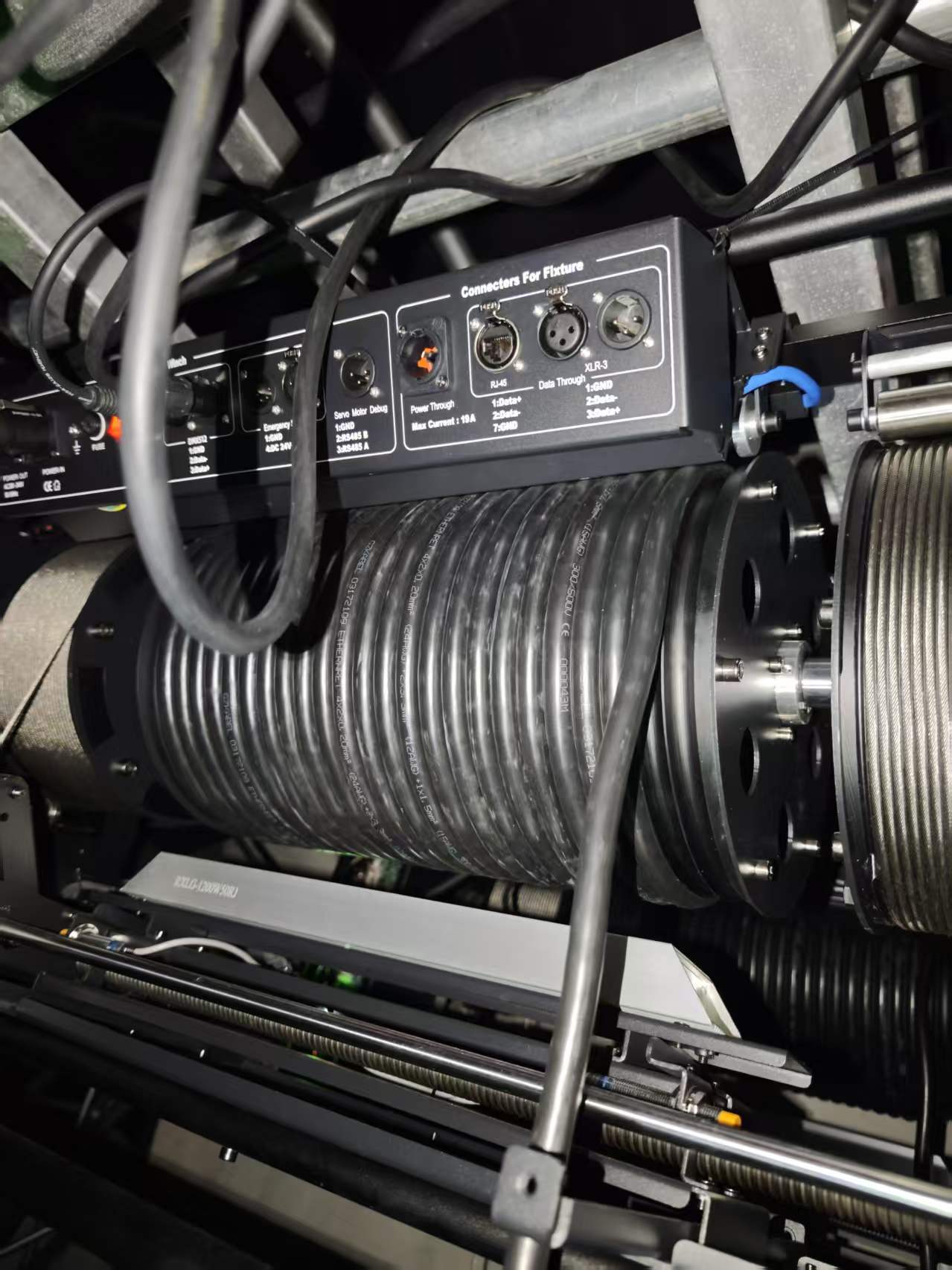
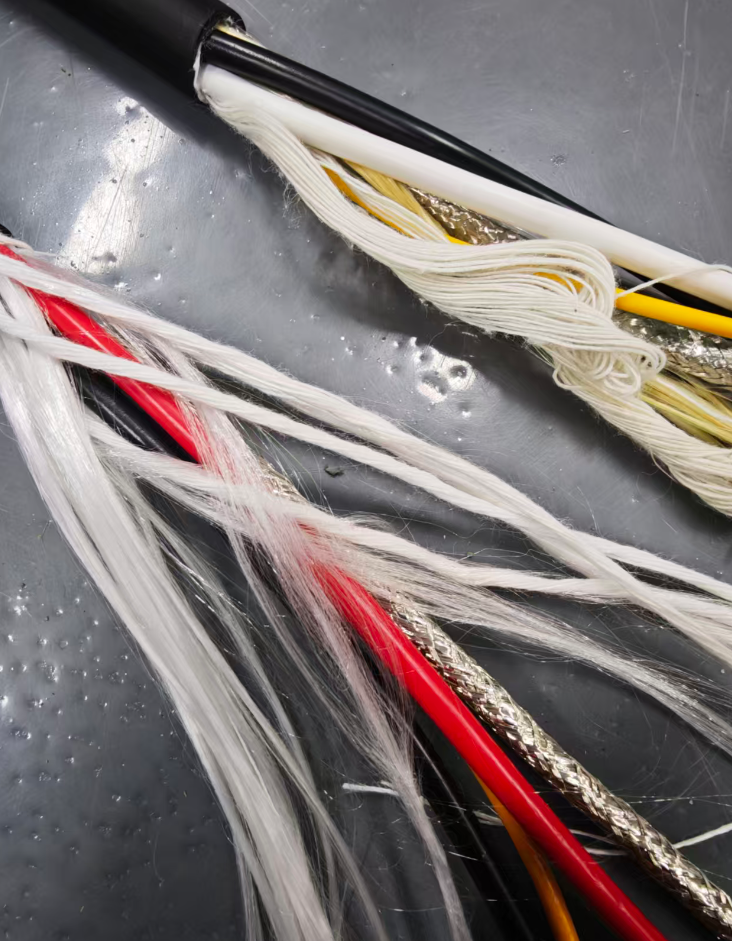
A client who works in stage lighting requested to combine a 2×4+1×1.5mm ² power cord and a 4x2x0.14mm ² CAT6A Ethernet cable into a single cable, which should be installed in a drum and used as a drum cable to hang a lamp vertically. Due to the small internal space of the drum, the entire cable is required to have a very small outer diameter. So initially, according to the conventional design, the network cable did not come with a separate outer sheath. According to the customer’s request, this cable has been produced, but after 2 days of use, the network cable signal was found to be intermittent. This proves that this design is not feasible.
Because the current of the power cord reaches 32A, the electromagnetic field generated by the high current interferes with the network cable signal. The solution is to make the network cable an independent outer sheath to shield the interference of the power cord, and increase the density of the Ethernet cable’s shielding layer woven mesh from 85% to 100%. This design encountered another problem, as the outer diameter of the entire cable increased from the original 12.8mm to 14.5mm, which was too large to fit into the drum. In the absence of any other options, the customer decided to replace the drum with a larger one so that the installation space for the cable could be accommodated.After adopting this solution, the cable has been running stably for over 5 months, and the Ethernet cable signal is stable.

From the real cases above, we can summarize some experiences:
1.The power cord and Ethernet cable integrated drag chain composite cable, whether the Ethernet cable signal can be stable, depends entirely on the internal structure of the cable; Ordinary and simple models have a high probability of packet loss and latency fluctuations, while qualified industrial customized models can operate stably.
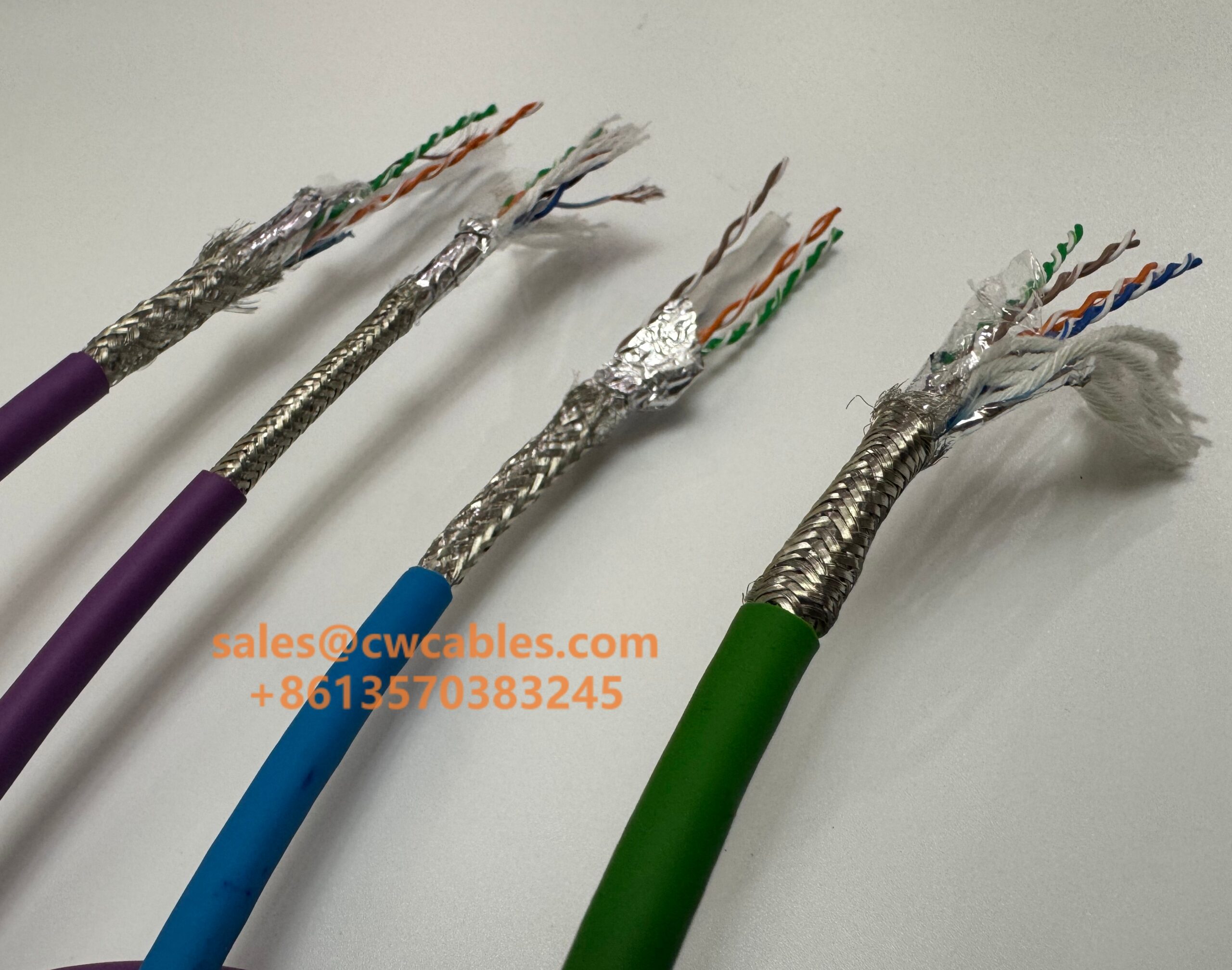
2. 柔軟なイーサネット ケーブル unit must be SFTP (aluminum foil paired+integral tinned copper braided mesh coverage of over 90%)
3.The power cord and flexible Ethernet cable unit are physically partitioned into cables, with isolation tape added in between; High end solution: Ethernet cable unit independent inner sheath+independent shielding (group shielding)
4.Flexible Ethernet cables strictly control 100 Ω impedance and prioritize PUR for the outer sheath.
5.Shield both ends with a 360 ° reliable grounding, do not just pull and crimp one aluminum foil ground wire; Eliminate single ended grounding.