

Cavo servo is a specialized power and control composite cable for servo systems, designed specifically for the connection and adaptation of servo motors, controllers, and frequency converters.
This type of cable has multiple characteristics such as high flexibility, wear resistance, oil resistance and torsion resistance, as well as tensile strength, anti-interference and anti-aging, which can adapt to industrial use scenarios with high electromagnetic interference.
It is a key connection component for signal transmission and power supply of the servo system, and can effectively guarantee the precise control and stable operation of the servo motor.
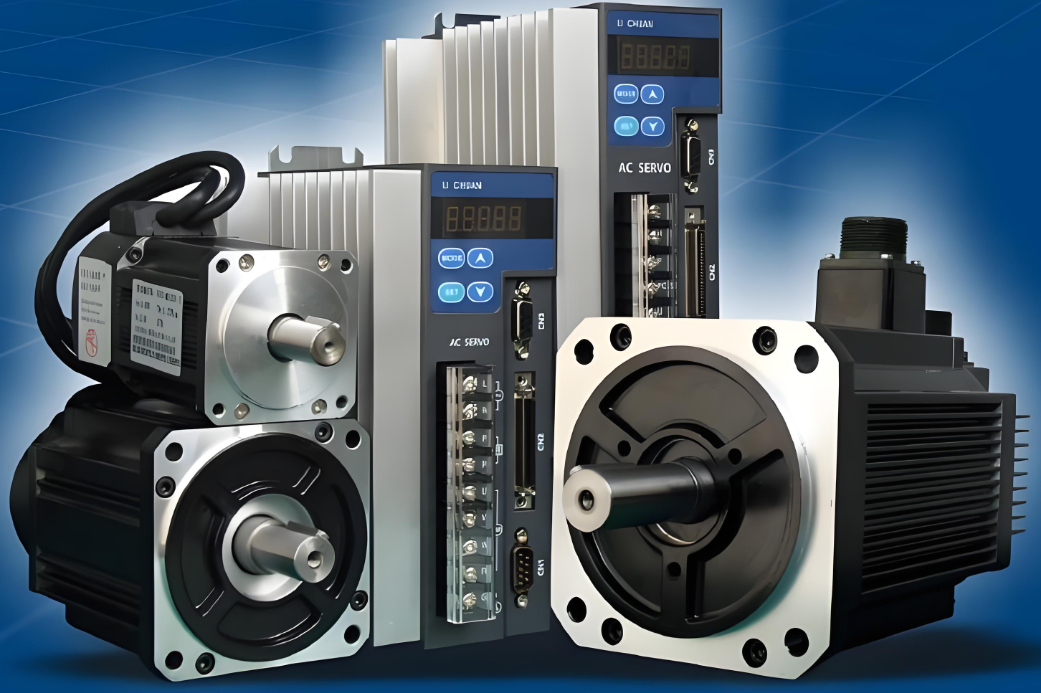
Basic composition of cavi del servomotore
The cables on the servo motor are not randomly connected, but are divided into several key circuits: cavo di alimentazione del servo, cavo del servocodificatore, and grounding line.
IL cavo di alimentazione del servo, line is responsible for transmitting electrical energy and is usually thick and brightly colored; The cavo del servocodificatore is relatively thin, used for transmitting position and velocity signals; The grounding wire ensures equipment safety and prevents static interference.
The reasonable layout of these cables directly affects the performance and lifespan of the motor.
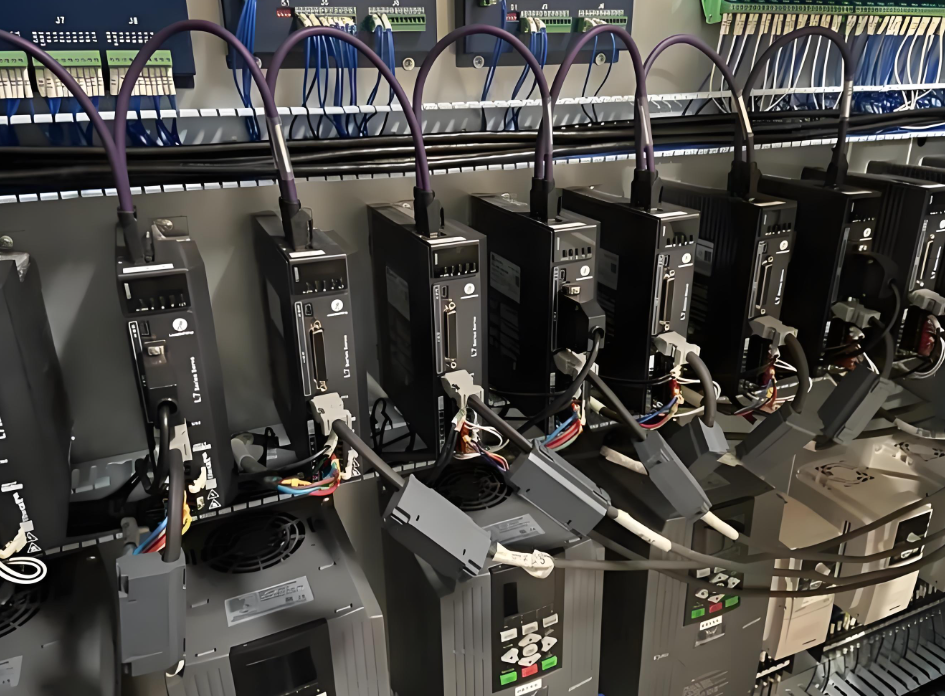
The function and importance of Servo motor cables
Each cable plays a unique role in the servo system. The cavo di alimentazione del servo provides driving force, the cavo del servocodificatore provides real-time data feedback, and the grounding wire ensures stable operation.
If any of the servo cables have a problem, it may cause the motor to lose control or the accuracy to decrease. Therefore, choosing the appropriate cable material and specifications is crucial, especially in high load or high-frequency usage scenarios.

Characteristics of servo cables
1.High flexibility and bending resistance
The conductor adopts multi strand precision twisted copper wire, combined with optimized cable structure, giving the cable excellent flexibility, which can adapt to application scenarios such as drag chains and robot joints that require continuous movement and repeated bending; Some models have a minimum bending radius of only 7.5 times the outer diameter of the cable, and the bending life of the drag chain can reach millions to tens of millions of times.
2.Outstanding anti-interference performance
Adopting high-density tinned copper wire braided shielding or a dual shielding structure of aluminum foil and braided mesh can effectively suppress external electromagnetic interference, ensure stable signal transmission and accurate equipment positioning, and adapt to strong interference industrial environments such as frequency converters and motors.
3.Integrated design is more convenient
Modern servo cables integrate power lines, CAT5e standard control signal lines, brake control lines, etc. into a single cable, paired with mixed connectors such as M23+IX, greatly simplifying on-site wiring, saving control cabinet space, and perfectly adapting to integrated drive control systems.
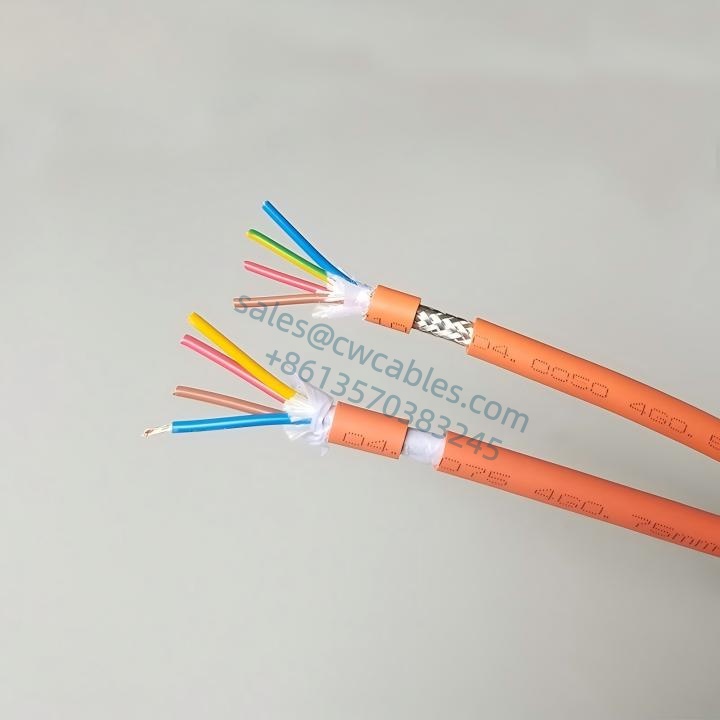
4.Wear resistant and oil resistant
The outer sheath is made of polyurethane (PUR), thermoplastic elastomer (TPE) or specialized PVC material, which has excellent resistance to oil stains, hydrolysis, chemical corrosion and wear, and can operate stably for a long time in various harsh industrial environments.
5.High reliability and long service life
The conductor is made of high-purity copper material, effectively reducing high-frequency transmission heat loss; Both insulation and sheath are made of brand new materials, which comply with environmental standards such as REACH and ROHS, and have passed international authoritative certifications such as UL, IEC 60332-1-2, and NFPA 79, balancing safety and durability.
6.Wide temperature range and strong adaptability
In mobile usage scenarios, it can withstand temperatures as low as -25 ℃. When installed in a fixed location, the temperature adaptation range can reach -40 ℃ to+80 ℃, which can match the needs of different climatic conditions and various industrial sites.
7.Resistant to tensile torsion and not easily damaged
Multiple fiber filling ropes and tensile center elements are added inside the cable to greatly enhance its tensile and torsional resistance, effectively avoiding damage to the cable due to external forces during moving operations and ensuring stable transmission.
With the above characteristics, cavi del servo have become the core supporting components in industrial automation, CNC machine tools, industrial robots, automated production lines, packaging and printing equipment and other fields.
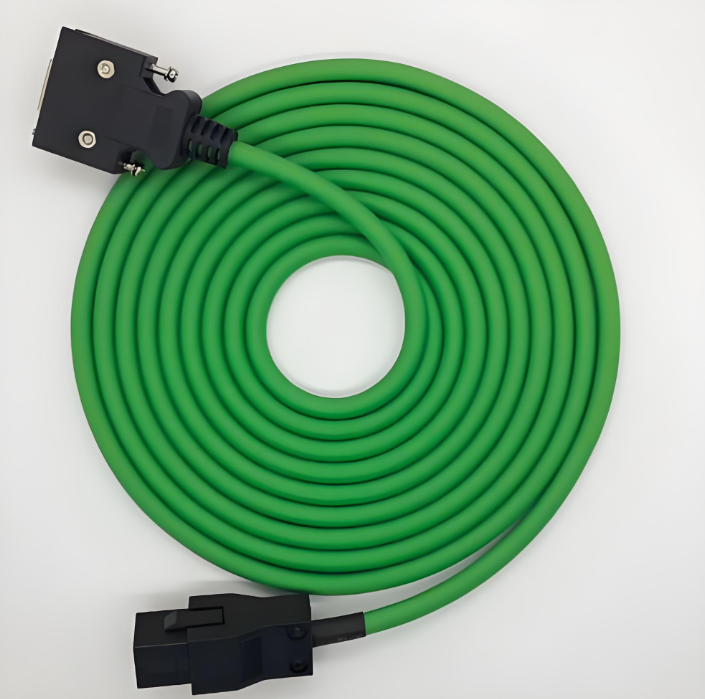
Daily maintenance and precautions for servo cables
In order to extend the service life of cables and motors, the following points should be noted: avoid excessive bending or pulling of servo cables, regularly check whether the outer skin of cables is damaged, and ensure that the connection terminals are securely fastened without looseness.
In addition, when used in high temperature or humid environments, cables with corresponding protection levels should be selected to prevent aging or short circuits.
The selection of servo cables should be based on the equipment used for the entire servo motor. For example, if the servo motor is used in CNC machining equipment and the cable needs to be laid in the drag chain, high flexibility servo cables should be selected. If the servo cable is used in equipment without a drag chain and is fixedly installed, flexible servo cables should be selected.
The specifications of servo cables should be determined based on the power of the servo motor. For example, if the power is 1000w, the servo power line should be selected as 4×0.5mm ². If the power is higher, thicker cores should be selected. For encoder cables, the thickness should be selected based on the length of the entire cable.