

Ethernet Cat 8 is built for high-speed, short-distance copper networking where bandwidth, shielding, and low latency matter. In real-world use, ethernet cat 8 can support up to 40Gbps, but only within strict distance limits and with compatible hardware. For businesses, data rooms, and advanced home networks, understanding its practical limits helps avoid overspending or underperforming installations.
What is ethernet cat 8?
Ethernet cat 8 is a high-performance doppino intrecciato copper cable standard designed for very fast networking over short distances. It supports up to 40Gbps and frequencies up to 2,000MHz, making it best suited for data centers, server rooms, and high-demand network links rather than ordinary long cable runs.
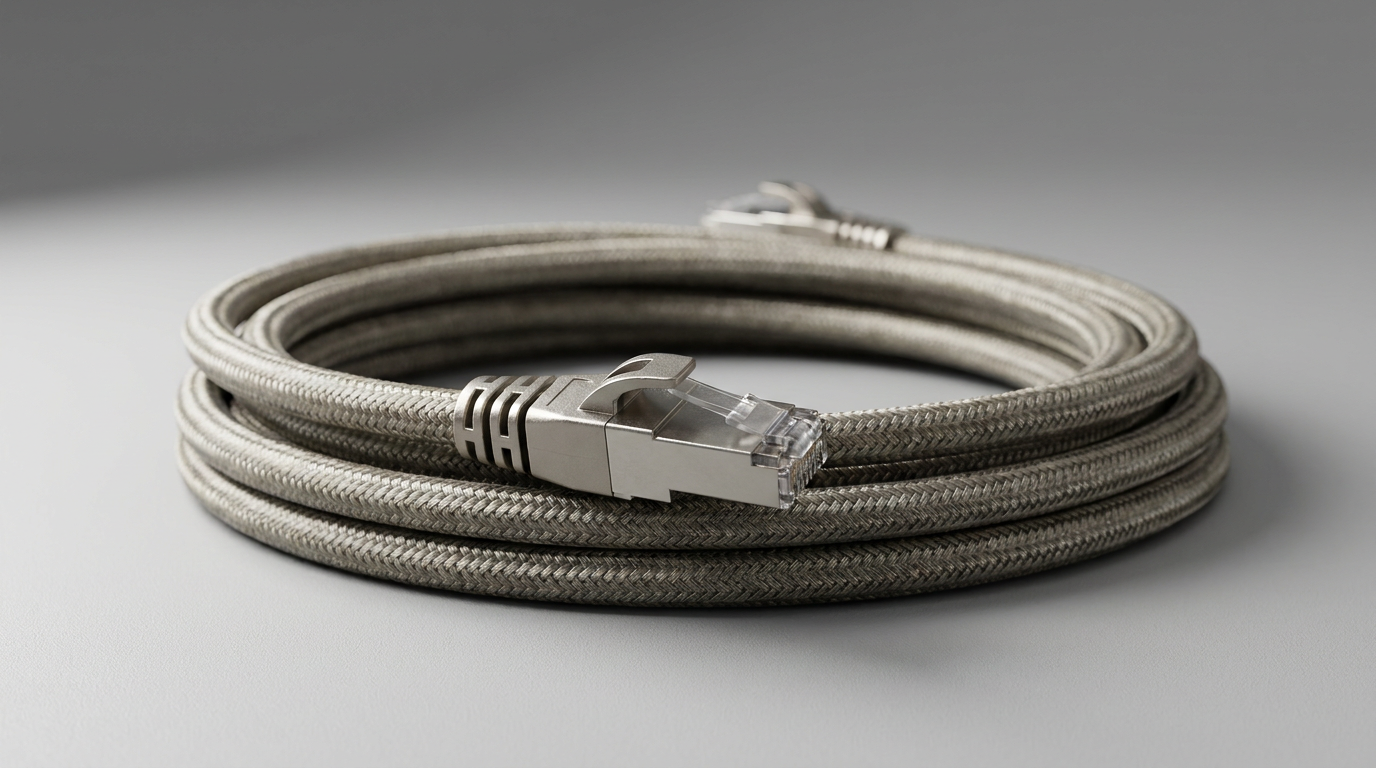
Core Definition and Use Case
Ethernet cat 8 is the latest widely recognized category of copper Ethernet cabling, developed to deliver 25GBASE-T E 40GBASE-T performance over shielded twisted-pair cable. Unlike Cat 5e or Cat 6, it is not primarily designed for long office drops; it is optimized for short, high-bandwidth links.
Sulla base dei nostri dati interni e dell’analisi di mercato, ecco la ripartizione:
| Categoria cavi | Velocità massima | Frequenza massima | Distanza massima tipica | Uso comune |
|---|---|---|---|---|
| Cat 5e | 1 Gbps | 100 MHz | 100 metri | Reti domestiche e aziendali di base |
| Gatto 6 | Da 1 Gbps a 10 Gbps | 250 MHz | 55m for 10Gbps | Office and prosumer networks |
| Cat 6a | 10 Gbps | 500 MHz | 100 metri | Enterprise structured cabling |
| Cat 7 | 10 Gbps | 600MHz+ | 100 metri | Shielded specialty installs |
| Cat 8 | Da 25 Gbps a 40 Gbps | 2.000 MHz | 30m | Data center e collegamenti brevi ad alta velocità |
Consiglio dell'esperto cwcables: I recommend ethernet cat 8 when the cable run is short and the network equipment can actually support 25Gbps or 40Gbps. If your switches and network cards are only 1Gbps or 10Gbps, Cat 6a may be the smarter buy.
How Does ethernet cat 8 Work?
Ethernet cat 8 works by using heavily shielded twisted copper pairs to carry very high-frequency signals with reduced crosstalk and interference. Its 2,000MHz bandwidth allows much higher data rates than older cable categories, but that performance depends on short runs, proper termination, and compatible networking equipment.
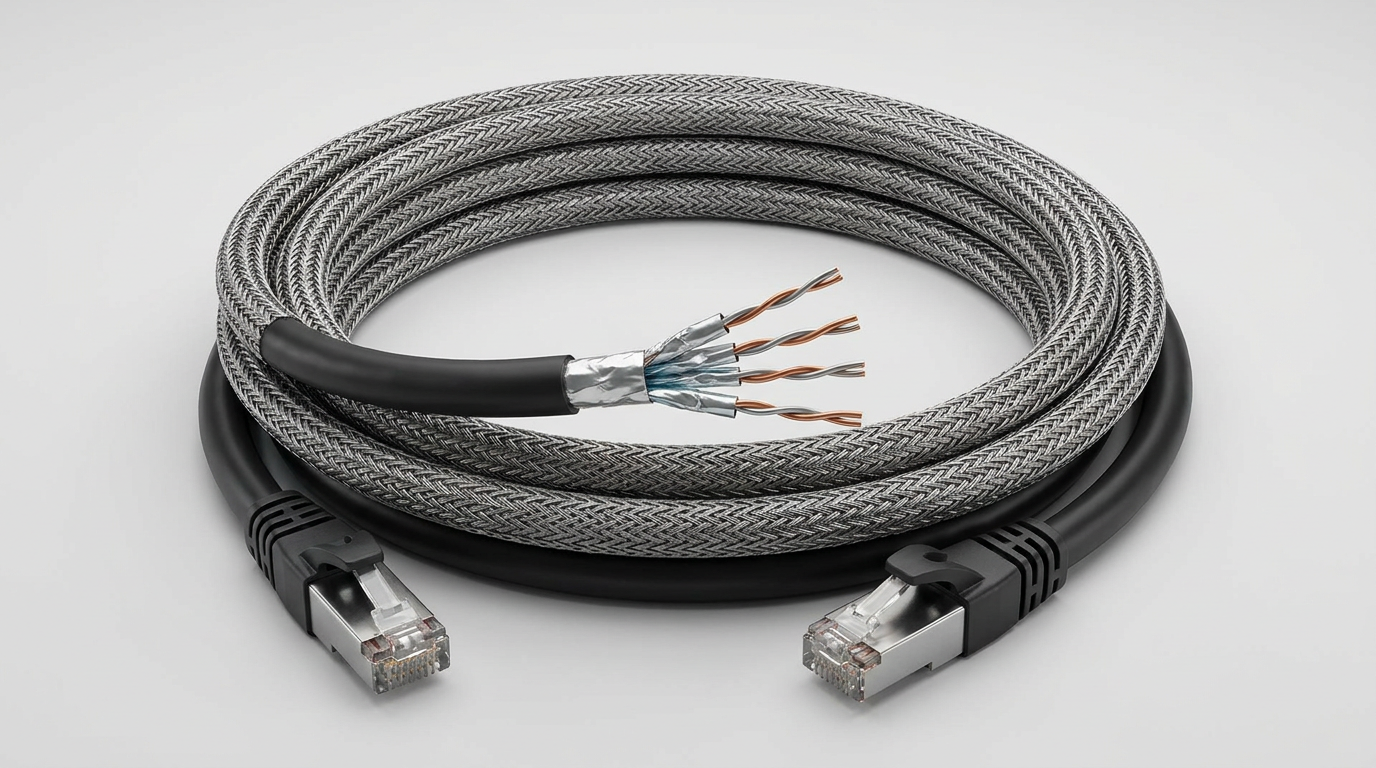
Signal Transmission and Shielding
Ethernet cat 8 uses four twisted copper pairs, like earlier Ethernet categories, but with much stricter shielding and performance requirements. The shielding helps protect against alien crosstalk, interferenza elettromagnetica, and signal degradation at high frequencies.
Key operating principles include:
- High-frequency signaling — Cat 8 supports up to 2,000MHz, enabling 25Gbps and 40Gbps transmission.
- Short-distance optimization — Maximum channel length is typically 30 meters, including patch cords.
- Costruzione schermata — Most Cat 8 cables use S/FTP or F/FTP shielding to control interference.
- Compatibilità RJ45 — Many Cat 8 patch cables use standard 8P8C/RJ45-style connectors, though performance depends on properly rated components.
- Hardware dependency — Actual speed is limited by the slowest device in the link, including switches, NICs, routers, and ports.
Consiglio dell'esperto cwcables: I always tell customers to think of Cat 8 as a complete system, not just a cable. If the connectors, patch panels, and switch ports are not rated for the same performance, the cable alone will not deliver 40Gbps.
What are the benefits of ethernet cat 8?
The main benefits of ethernet cat 8 are extremely high bandwidth, strong shielding, low latency, and support for 25Gbps or 40Gbps networking over short copper runs. It is especially useful for server-to-switch links, high-speed storage networks, and dense environments where interference control is critical.
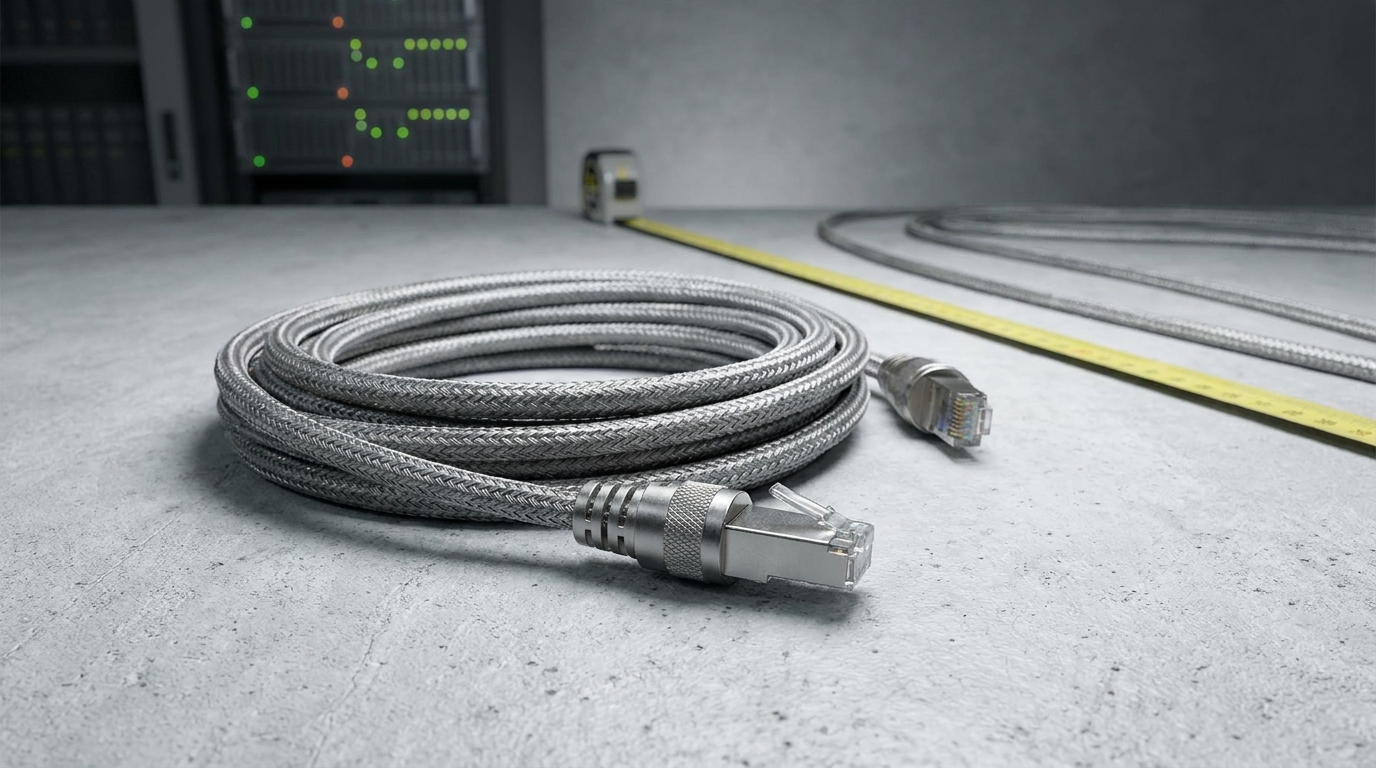
Practical Advantages in Real Networks
Ethernet cat 8 is valuable when a network needs more than standard 1Gbps or 10Gbps performance but still wants to use copper cabling instead of fiber. Its shielded design also makes it a strong choice in electrically noisy environments.
Primary benefits include:
- Higher speed ceiling: Supports up to 25Gbps or 40Gbps under the right conditions.
- Excellent shielding: Reduces interference from power cables, equipment racks, and neighboring network cables.
- Low latency: Useful for servers, storage systems, workstations, and real-time applications.
- Compatibilità con le versioni precedenti: Can usually connect to older Ethernet ports, though speed will drop to the hardware’s limit.
- Short-run efficiency: Convenient for rack-to-rack, switch-to-server, and patch panel connections.
- Future-ready capacity: Provides extra bandwidth headroom for demanding network upgrades.
Consiglio dell'esperto cwcables: I like Cat 8 for compact, high-performance spaces. For long building runs, I usually recommend Cat 6a or fiber instead because Cat 8’s biggest advantage disappears once the required distance exceeds its rated range.
How to maintain a ethernet cat 8?
To maintain ethernet cat 8 performance, keep cable runs short, avoid sharp bends, protect shielding continuity, use rated connectors, and prevent physical damage. Because Cat 8 operates at very high frequencies, poor handling, excessive bending, or low-quality terminations can reduce speed and reliability.
Handling, Installation, and Inspection
Ethernet cat 8 maintenance is mostly about preserving signal integrity. The cable’s shielding and twist geometry are engineered for high-frequency transmission, so installation quality matters more than it does with basic Ethernet cables.
Recommended maintenance practices:
- Rispettare il raggio di curvatura
Avoid tight bends, kinks, or crushing, especially near connectors and rack edges. - Use proper cable management
Route cables through trays, hooks, or Velcro ties instead of over-tightened zip ties. - Separate from power lines
Keep distance from electrical cables, motors, fluorescent lighting, and other EMI sources. - Inspect connectors regularly
Look for loose boots, damaged clips, corrosion, or poorly seated plugs. - Avoid unnecessary couplers
Extra connection points can introduce loss and reduce performance margin. - Test after changes
Any rack rework, patching change, or cable replacement should be followed by link testing.
Consiglio dell'esperto cwcables: I avoid pulling Cat 8 like standard low-cost patch cable. Treat it like precision cabling—gentle routing, clean terminations, and proper strain relief make a noticeable difference in high-speed links.
What is the price of ethernet cat 8?
The price of ethernet cat 8 depends on length, shielding quality, conductor material, certification, connector construction, and jacket rating. Short patch cables can be affordable, while certified bulk cable, plenum-rated jackets, or professional installations cost more due to stricter performance and compliance requirements.
Pricing Ranges and What Affects Cost
Ethernet cat 8 is generally more expensive than Cat 6 or Cat 6a because it requires tighter manufacturing tolerances, heavier shielding, and better connectors. However, the right price depends on whether you need patch cables, bulk cable, or a fully tested installation.
Sulla base dei nostri dati interni e dell’analisi di mercato, ecco la ripartizione:
| Buying Option | Typical Cost Level | Ideale per | Cost Drivers |
|---|---|---|---|
| Short Cat 8 patch cable | Da basso a moderato | Desktops, racks, switches | Length, connector quality, shielding |
| Long Cat 8 patch cable | Moderare | Short room runs | Gauge, jacket, certification |
| Bulk Cat 8 cable | Da moderato ad alto | Custom installation | Copper quality, spool size, rating |
| Plenum-rated Cat 8 | Alto | Commercial air spaces | Fire-code compliant jacket |
| Professionally installed Cat 8 | Più alto | Data rooms and business networks | Labor, testing, termination, certification |
Consiglio dell'esperto cwcables: I would not choose Cat 8 based only on the lowest price. Look for real copper conductors, proper shielding, and verified category rating. Cheap “Cat 8” cables that are not built to spec can perform worse than a quality Cat 6a cable.
Caratteristiche principali e confronto
Ethernet cat 8 stands out for its 2,000MHz bandwidth, shielded construction, short-distance 25Gbps and 40Gbps capability, and suitability for high-density network environments. Compared with earlier Ethernet categories, it offers much higher speed but less practical distance, making it a specialized upgrade rather than a universal replacement.
Feature Comparison by Cable Category
Cat 8 is not automatically the best cable for every network. It is the best fit when high speed is needed over short copper runs. For longer distances, Cat 6a or fiber may be more practical and cost-effective.
Sulla base dei nostri dati interni e dell’analisi di mercato, ecco la ripartizione:
| Caratteristica | Gatto 6 | Cat 6a | Cat 7 | Cat 8 |
|---|---|---|---|---|
| Maximum Speed | Da 1 Gbps a 10 Gbps | 10 Gbps | 10 Gbps | Da 25 Gbps a 40 Gbps |
| Maximum Frequency | 250 MHz | 500 MHz | 600MHz+ | 2.000 MHz |
| Maximum Rated Distance | 100m, or 55m at 10Gbps | 100 metri | 100 metri | 30m |
| Schermatura | UTP o schermato | UTP o schermato | Di solito schermato | Schermato |
| Connettore tipico | RJ45 | RJ45 | GG45/TERA or RJ45 variants | RJ45-style or rated connectors |
| Migliore applicazione | General office | Enterprise 10G | Shielded specialty runs | Data center short links |
| Livello di costo | Moderare | Da moderato ad alto | Alto | Alto |
| Practical Upgrade Value | Bene | Eccellente | Limited by compatibility | Excellent for short high-speed links |
Consiglio dell'esperto cwcables: I compare Cat 8 against Cat 6a first, not Cat 5e. If the site needs 10Gbps at 100 meters, Cat 6a usually wins. If it needs 25Gbps or 40Gbps inside a rack or data room, Cat 8 becomes much more compelling.
Fattori di costo e di acquisto
When buying ethernet cat 8, consider actual speed requirements, cable length, shielding type, jacket rating, connector quality, installation environment, and whether your equipment supports 25Gbps or 40Gbps. The best purchase is not always the highest category cable, but the cable that matches the full network design.
Buying Checklist for Smarter Selection
A good Cat 8 purchase starts with confirming the use case. Many networks will not gain speed from Cat 8 unless the connected devices support faster Ethernet standards. For standard internet routers, gaming consoles, and office PCs, the equipment often limits speed long before the cable does.
Utilizza questa lista di controllo prima di acquistare:
- Confirm port speed: Check whether your switch, router, and NIC support 10G, 25G, or 40G.
- Measure the run: Keep total channel length within Cat 8’s practical limit of about 30 meters.
- Choose real copper: Evitare alluminio rivestito di rame for performance-critical networking.
- Check shielding type: Look for S/FTP or F/FTP construction for high-interference environments.
- Match jacket rating: Use riser or plenum-rated cable where building codes require it.
- Plan the full channel: Include patch panels, keystone jacks, couplers, and patch cords in the performance path.
- Buy from a reliable supplier: Use a source such as cwcables when consistency and specification accuracy matter.
Consiglio dell'esperto cwcables: I always start with the network goal, not the cable category. If the target is simply stable 1Gbps internet, Cat 8 is overkill. If the target is high-throughput server or storage connectivity, it can be the right investment.
Conclusione
Ethernet cat 8 delivers exceptional short-distance copper performance, but its real-world value depends on distance, equipment compatibility, installation quality, and network goals. It is ideal for high-speed data environments, yet many homes and offices may be better served by Cat 6a unless 25Gbps or 40Gbps is required.
Raccomandazione finale
Ethernet cat 8 is a powerful cabling option, but it should be selected carefully. Its biggest strengths are speed, shielding, and high-frequency performance. Its biggest limitation is distance. For short rack connections, advanced workstations, server rooms, and data-intensive environments, it can provide meaningful performance headroom.
Best-fit scenarios include:
- Patch per data center
- Server-to-switch connections
- High-speed storage networking
- Short copper backbone links
- Electrically noisy environments
- Future-ready professional installations
For longer structured cabling runs, Cat 6a or fiber may offer better value and easier deployment. If you are planning an upgrade, cwcables can help match the right Ethernet cable category to your speed, distance, and installation requirements.
Consiglio dell'esperto cwcables: My final advice is simple: choose Cat 8 when you have a short run and hardware that can use the bandwidth. Otherwise, invest in quality Cat 6a, proper installation, and reliable testing for the best long-term network performance.