

Long-travel drag chain cable design changes the moment transportador de cable travel length becomes a major engineering variable. Longer strokes create more accumulated bending cycles, higher tensile stress, greater fricción, and stricter installation requirements. Choosing the right long stroke cable helps prevent fatiga del conductor, jacket abrasión, signal instability, and unplanned downtime in gantry systems, cranes, automated warehouses, machine tools, and moving production lines.
What is long travel drag chain cable?
A long travel drag chain cable is a flexible moving cable engineered for extended cable carrier travel length, where repeated bending, sliding, and tensile forces are much higher than in short-stroke applications. It typically uses fine-stranded conductors, optimized insulation, low-friction jackets, and construction that resists twisting, abrasion, and fatigue over long distances.
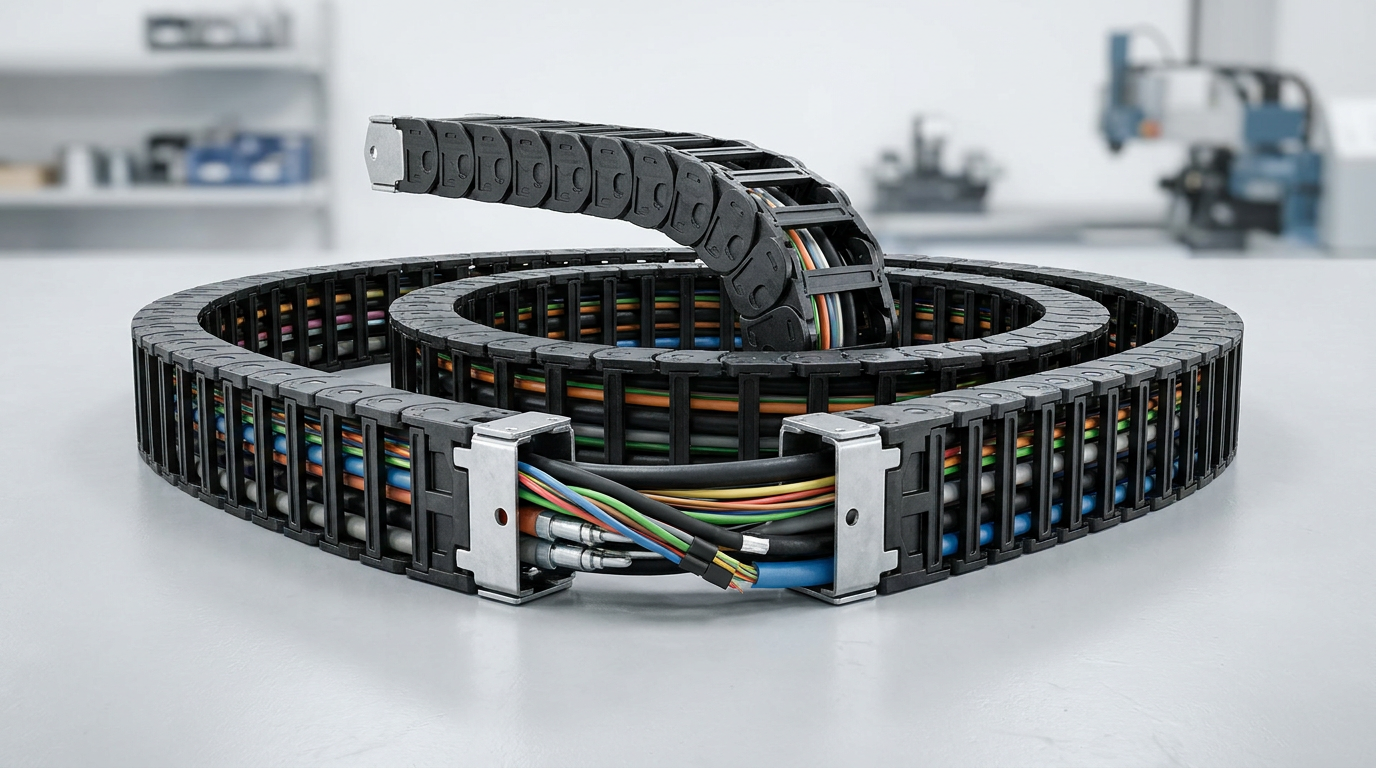
Definición y ámbito de aplicación
Long travel drag chain cable is designed for systems where the cable carrier moves over a long stroke, often several meters to hundreds of meters depending on the machine layout. Unlike static cable or standard flexible cable, it must survive continuous motion while maintaining stable electrical, signal, data, or fluid-control performance.
Las aplicaciones comunes incluyen:
- Sistemas automatizados de almacenamiento y recuperación.
- Port cranes and container handling equipment
- CNC gantry machines
- Robotic transfer lines
- Conveyor automation
- Linear motor systems
- Large-format cutting, welding, and printing machines
- Material handling systems with long reciprocating travel
Según nuestros datos internos y análisis de mercado, aquí está el desglose:
| Tipo de cable | Uso típico | Motion Capability | Long-Travel Suitability |
|---|---|---|---|
| Cable estático | Cableado fijo | No continuous motion | Pobre |
| Cable flexible estándar | Movimiento ocasional | Limited bending cycles | Bajo |
| Cable de cadena de arrastre | Movimiento continuo del portador | High bending cycles | Medio a alto |
| Long travel drag chain cable | Extended carrier travel | High bending plus long stroke stress | Excelente |
Consejo profesional de cwcables: I always check travel length before looking at conductor size. In long-stroke systems, the cable’s mechanical behavior is often the real failure point, not its current rating.
How Does long travel drag chain cable Work?
A long travel drag chain cable works by flexing in a controlled bending radius inside a cable carrier while moving with the machine axis. Its internal conductor lay, insulation, shielding, and jacket are designed to distribute stress evenly, reduce friction, and prevent twisting, conductor breakage, or jacket wear during long-distance reciprocating motion.
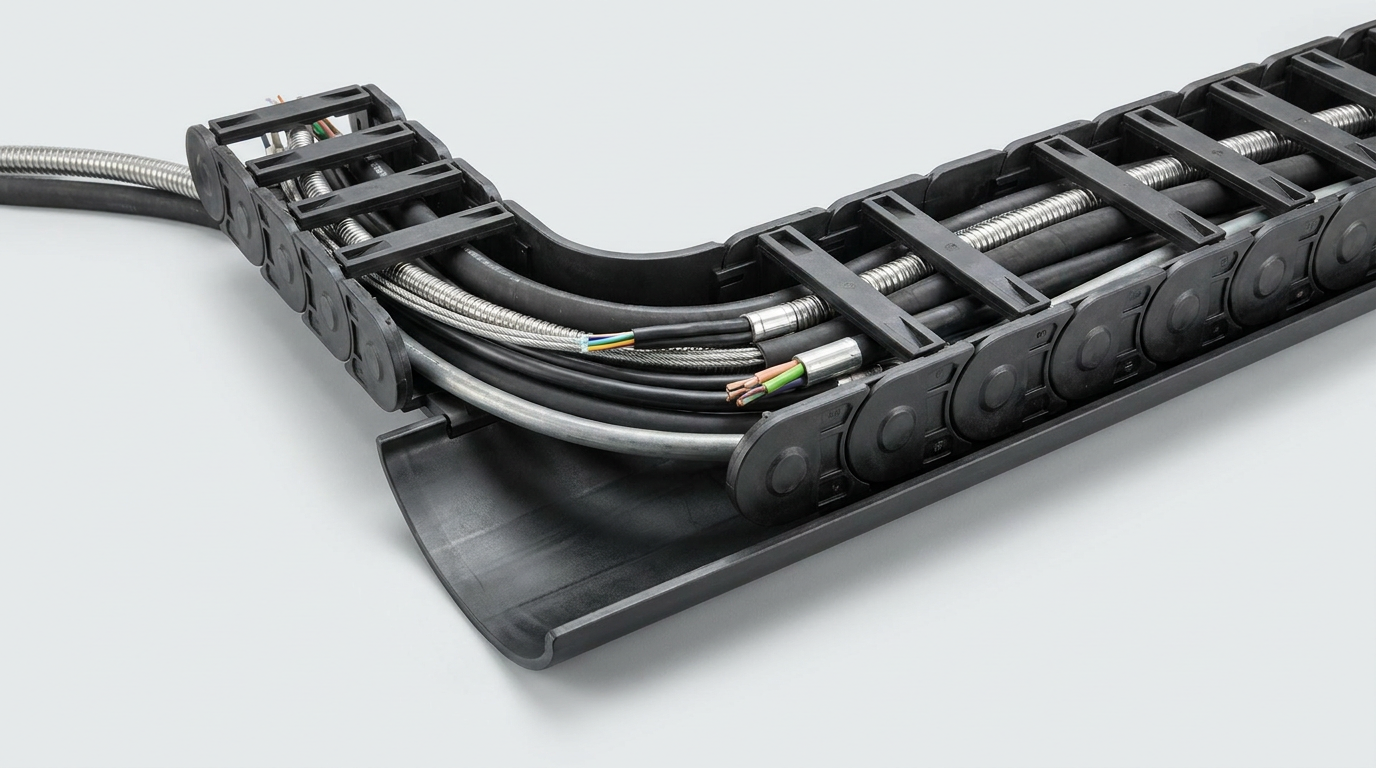
Control de movimiento dentro del transportador de cables
In a long-travel system, the cable does not simply “bend.” It moves through a controlled loop formed by the drag chain. As the machine travels, one side of the carrier is fixed while the moving end pulls the chain and cable along the track. The cable must roll and flex smoothly without corkscrewing, stacking, or rubbing excessively against neighboring cables.
Los principios de trabajo clave incluyen:
- Radio de curvatura controlado
The cable must not be bent tighter than its rated minimum bend radius. - Neutral-axis stress management
Conductors are arranged so bending stress is distributed across the cable structure. - Low-friction movement
Outer jacket materials reduce sliding resistance inside the chain. - Tension control
Proper cable length prevents stretching at full extension. - Separation and guidance
Dividers, shelves, and carrier layout prevent cable crossing and abrasion.
Según nuestros datos internos y análisis de mercado, aquí está el desglose:
| Factor de diseño | Why It Matters in Long Travel | Riesgo si se ignora |
|---|---|---|
| Radio de curvatura | Controls fatigue stress | Conductores rotos |
| Cable clearance | Prevents rubbing and compression | Abrasión de la chaqueta |
| Estabilidad del escudo | Maintains signal integrity | CEM issues and data loss |
| Material de la chaqueta | Resists wear and oil exposure | Cracking or swelling |
| Cable lay length | Controls torsion and flexibility | Spiral deformation |
Consejo profesional de cwcables: I never install long stroke cable under tension. A small amount of relaxed cable inside the carrier is essential because the cable must move naturally, not behave like a stretched rope.
What are the benefits of long travel drag chain cable?
The main benefits of long travel drag chain cable are longer service life, reduced downtime, better signal stability, safer cable routing, and improved resistance to abrasion, oil, bending fatigue, and tensile stress. For long cable carrier travel length, these advantages directly improve machine reliability and lower maintenance costs over time.
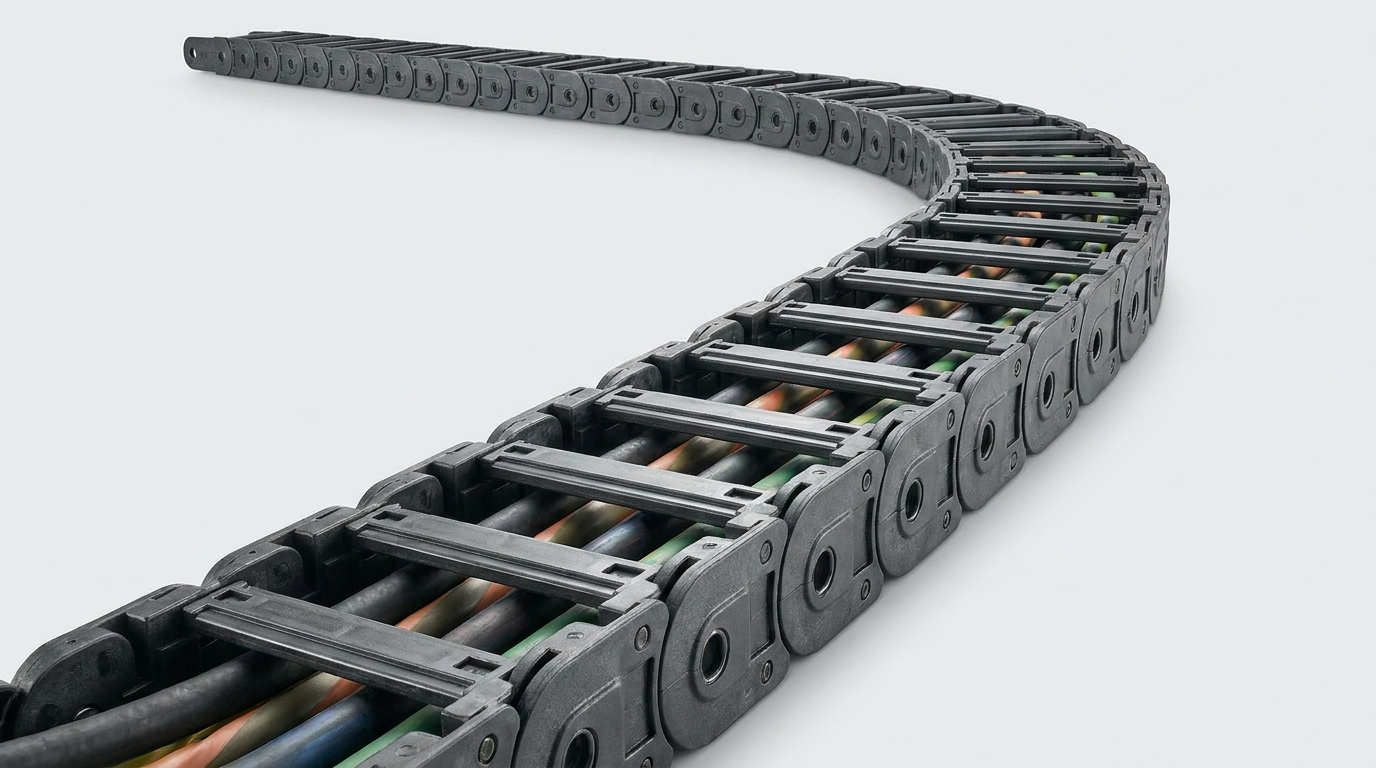
Performance Advantages in Extended Motion Systems
Long-travel cable is not only about flexibility. It is about predictable performance under repeated mechanical stress. In high-duty automation, a cable failure can stop an entire production line, crane, or logistics system. A purpose-built long travel drag chain cable reduces this risk by matching the cable construction to the motion profile.
Los principales beneficios incluyen:
- Higher flex life for continuous reciprocating movement
- Lower abrasion risk inside long carrier runs
- Improved tensile strength for extended travel lengths
- Better signal protection para codificador, servo, bus, and data lines
- Reduced twisting compared with ordinary flexible cable
- Gestión de cables más limpia in compact machine layouts
- Menor costo total de propiedad through fewer replacements
Según nuestros datos internos y análisis de mercado, aquí está el desglose:
| Beneficio | Impacto práctico | Aplicación más adecuada |
|---|---|---|
| Larga vida flexible | Menos reemplazos de cables | 24/7 automation |
| Resistencia a la abrasión | Longer jacket durability | Sliding carrier systems |
| Protección CEM | Stable signal transmission | Servo and encoder systems |
| Resistencia al aceite | Safer operation in harsh environments | CNC and machining centers |
| Enrutamiento compacto | Better machine integration | Gantry and robotics systems |
Consejo profesional de cwcables: I recommend specifying the cable based on expected cycle count, not just travel distance. A 20-meter stroke running all day can be far more demanding than a longer system that moves only occasionally.
How to maintain a long travel drag chain cable?
To maintain a long travel drag chain cable, inspect the carrier path, bend radius, cable spacing, jacket condition, and mounting points regularly. Maintenance should focus on preventing abrasion, over-tension, contamination, misalignment, and cable twisting because these issues accelerate failure in long stroke cable systems.
Pasos de inspección y mantenimiento preventivo
Maintenance is especially important in long-travel systems because small installation problems become larger over distance. A slightly misaligned carrier, overloaded cable compartment, or incorrect bend radius may not fail immediately, but it can shorten service life significantly.
Recommended maintenance routine:
- Inspeccionar la cubierta del cable
Look for flattening, cuts, cracking, swelling, or polished wear marks. - Check cable position inside the carrier
Cables should lie flat and parallel, not crossed or twisted. - Verificar el radio de curvatura
Confirm the carrier radius matches or exceeds the cable specification. - Check moving and fixed-end strain relief
Cable clamps should secure without crushing. - Clean the carrier track
Remove chips, dust, oil sludge, and foreign objects. - Monitor noise and vibration
Excessive noise may indicate misalignment, friction, or chain wear. - Review operating changes
Higher speed, longer duty cycle, or added cables may require redesign.
Según nuestros datos internos y análisis de mercado, aquí está el desglose:
| Artículo de mantenimiento | Recommended Check | Señal de advertencia |
|---|---|---|
| Jacket surface | Inspección visual | Abrasion, cracks, cuts |
| Enrutamiento de cables | Position inside chain | Crossing or twisting |
| Alivio de tensión | Clamp condition | Cable movement or crushing |
| Carrier track | Alignment and cleanliness | Noise, vibration, debris |
| Radio de curvatura | Compare with cable rating | Tight bending or kinking |
Consejo profesional de cwcables: I always photograph the cable carrier during commissioning. Later, those photos make it much easier to identify whether cables have shifted, twisted, or been replaced incorrectly.
What is the price of long travel drag chain cable?
The price of long travel drag chain cable depends on conductor count, cross-section, shielding, jacket material, voltage rating, certifications, oil resistance, data performance, and required cable carrier travel length. Long stroke cable usually costs more than standard flexible cable, but it often reduces downtime and replacement costs in demanding applications.
Pricing Drivers and Budget Expectations
There is no single fixed price for long-travel cable because the construction changes according to the application. A shielded servo cable for a high-speed gantry will cost more than a simple unshielded control cable. Likewise, PUR jackets, high-flex conductors, hybrid structures, and special approvals increase cost.
Los principales factores de precio incluyen:
- Number of cores or conductors
- Conductor size and copper content
- Shielding type and coverage
- Jacket material such as PVC, PUR, or TPE
- Oil, coolant, UV, or flame resistance
- Rated voltage and temperature range
- Data or signal transmission requirements
- Minimum order quantity and customization
- Required testing and certification
Según nuestros datos internos y análisis de mercado, aquí está el desglose:
| Categoría de cable | Nivel de precio relativo | Typical Reason |
|---|---|---|
| Cable de control no blindado | Bajo a medio | Simpler construction |
| Cable de control blindado | Medio | Added EMC protection |
| Cable de servomotor | Medio a alto | Power plus shield performance |
| Codificador/cable de datos | Medio a alto | Requisitos de integridad de la señal |
| Hybrid long-travel cable | Alto | Multiple functions in one cable |
| Custom long stroke cable | Variable | Application-specific engineering |
Consejo profesional de cwcables: I advise buyers not to compare only price per meter. For long travel drag chain cable, the better metric is cost per operating cycle or cost per year of reliable machine uptime.
Características clave y comparación
Key features of long travel drag chain cable include high-flex conductors, abrasion-resistant jackets, optimized conductor lay, stable shielding, oil resistance, and controlled bending performance. Compared with standard flexible cable, it is built for longer cable carrier travel length, higher cycle life, and more reliable operation in continuous-motion industrial equipment.
Feature Comparison for Long-Stroke Applications
Long-travel cable differs from standard cable in both material selection and mechanical design. The cable must tolerate the combined effects of bending, sliding, acceleration, deceleration, and environmental exposure. In many systems, the cable is as critical as the drive, motor, or controller because electrical failure can stop the entire machine.
Según nuestros datos internos y análisis de mercado, aquí está el desglose:
| Característica | Cable flexible estándar | Long Travel Drag Chain Cable | Por qué es importante |
|---|---|---|---|
| Diseño de conductores | Flexible strands | Fine-stranded high-flex conductors | Mejora la resistencia a la fatiga |
| Cable lay | Propósito general | Optimizado para flexión repetida | Reduces twisting and stress |
| Material de la chaqueta | PVC o compuestos básicos | PUR, TPE, or high-grade PVC options | Mejora la resistencia a la abrasión y al aceite. |
| Blindaje | Opcional | Stable braid or foil/braid designs | Protects signal and EMC performance |
| Radio de curvatura | Moderado | Designed for dynamic carrier bending | Supports longer service life |
| Longitud del viaje | Corto a medio | Medium to very long | Matches extended machine strokes |
| Installation tolerance | Más indulgente | Requires precise routing | Prevents premature wear |
| Vida de servicio | Dependiente de la aplicación | Diseñado para un alto número de ciclos | Reduce el tiempo de inactividad |
Additional selection priorities:
- Match cable type to motion speed and acceleration.
- Use separate carrier chambers for power, signal, and pneumatic lines when needed.
- Evite llenar demasiado la cadena de arrastre.
- Select shielding based on motor drive and signal sensitivity.
- Confirm jacket compatibility with oil, coolant, temperature, and outdoor exposure.
Consejo profesional de cwcables: I prefer to review the full cable carrier layout before confirming cable construction. The best cable can still fail early if it is squeezed into an overloaded or poorly divided chain.
Costo y factores de compra
When buying long travel drag chain cable, evaluate total system cost instead of only unit price. Important factors include travel length, cycle rate, bend radius, environment, shielding, jacket material, machine speed, installation space, and expected service life. The right specification helps avoid costly downtime and repeated cable replacement.
Guía práctica de compra
A reliable purchase starts with the motion profile. Buyers should collect application details before requesting a quotation, especially when the cable will be used in high-cycle or long-stroke equipment. For cwcables recommendations, the most useful information is travel length, speed, acceleration, bend radius, cable function, and operating environment.
Utilice esta lista de verificación de compras:
- Define cable function
Power, control, servo, encoder, data, bus, or hybrid. - Confirm cable carrier travel length
Include stroke length, loop length, and mounting arrangement. - Identify motion frequency
Continuous, intermittent, or occasional movement. - Check bend radius limits
Compare machine space with cable requirements. - Revisar la exposición ambiental
Oil, coolant, UV, water, welding spatter, temperature, or chemicals. - Determine EMC needs
Select shielding for VFD, servo, encoder, and communication systems. - Plan installation layout
Include divider spacing, fill ratio, and cable separation. - Request proper documentation
Datasheets, test data, approvals, and installation recommendations.
Según nuestros datos internos y análisis de mercado, aquí está el desglose:
| factor de compra | Elección de bajo riesgo | High-Risk Mistake |
|---|---|---|
| Longitud del viaje | Specify full carrier travel | Estimating only machine stroke |
| Radio de curvatura | Use rated dynamic radius | Choosing cable by outside diameter only |
| Chaqueta | Match environment | Ignoring oil or coolant exposure |
| Blindaje | Select for EMC conditions | Using unshielded cable near drives |
| Proporción de llenado | Leave movement space | Overloading the carrier |
| Soporte de proveedores | Provide application data | Buying without motion review |
Consejo profesional de cwcables: I always ask for the machine’s travel speed and acceleration, not just the length. Fast long-stroke movement creates very different cable stress than slow movement over the same distance.
Conclusión
Long travel drag chain cable changes the design focus from basic flexibility to complete motion reliability. For extended cable carrier travel length, the cable must control bending stress, friction, abrasion, shielding stability, and tensile forces. Correct selection, installation, and maintenance are essential for long service life and dependable machine performance.
Final Recommendation for Reliable Long-Travel Performance
Long-stroke systems demand a cable that is engineered for the full motion environment. The right cable should match the carrier design, bend radius, speed, duty cycle, shielding requirements, and surrounding conditions. A standard flexible cable may appear acceptable at first, but it can fail quickly when exposed to continuous long-distance movement.
For a better specification process, prepare:
- Machine type and operating environment
- Required travel length and carrier layout
- Speed, acceleration, and duty cycle
- Cable function and electrical requirements
- Bend radius and available installation space
- Exposure to oil, coolant, water, UV, heat, or chemicals
- Required approvals or industry standards
cwcables can help evaluate these details and recommend a long travel drag chain cable that fits the application rather than forcing a generic cable into a demanding system.
Consejo profesional de cwcables: My final advice is simple: design the cable and carrier together. In long-travel applications, reliability comes from the complete moving system, not from the cable alone.