

Moving inspection systems need stable image transmission while the camera, robot arm, gantry, or cadena de arrastre keeps moving. A high flex camera cable is designed for repeated bending, torsion control, and signal integrity under motion. For visión artificial, choosing the right moving camera cable helps reduce image loss, trigger errors, downtime, and premature cable failure in automated inspection environments.
What is high flex camera cable?
A high flex camera cable is a motion-rated vision cable built to transmit image, power, trigger, or data signals while repeatedly bending in moving equipment. Unlike standard camera cables, it uses flexible conductors, reinforced shielding, and drag-chain-compatible jackets to maintain stable performance in robotic inspection, gantry vision, and automated production systems.
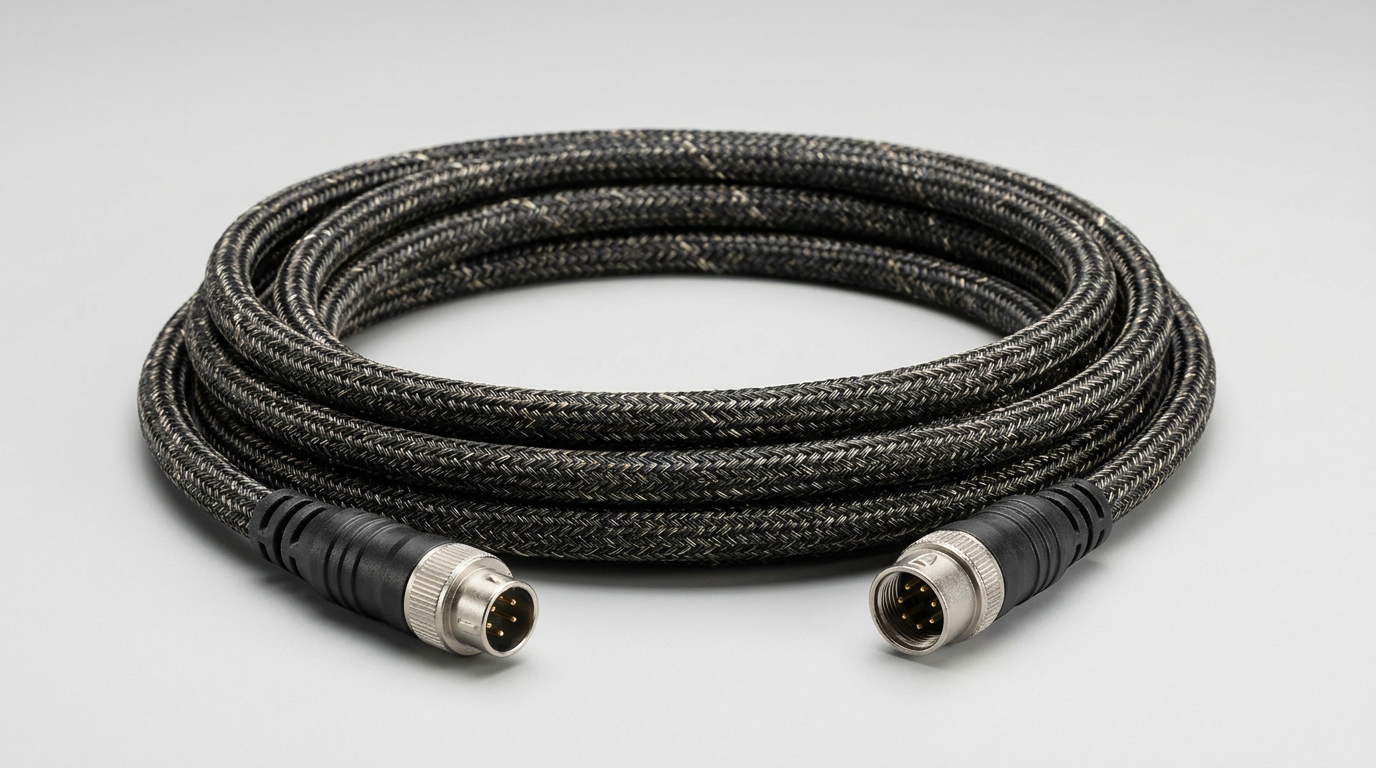
Cable Definition and Application Scope
A high flex camera cable is engineered for applications where the camera is not fixed, or where the cable must move continuously with the inspection mechanism. It is commonly used in machine vision systems, automated optical inspection, semiconductor equipment, packaging lines, robotics, and drag chain installations.
Según nuestros datos internos y análisis de mercado, aquí está el desglose:
| Tipo de cable | Uso típico | Motion Capability | Mejor ajuste |
|---|---|---|---|
| Standard camera cable | Fixed camera installation | Bajo | Static inspection stations |
| Cable de cámara de alta flexibilidad | Doblado repetido | Alto | Moving camera heads and gantries |
| Drag chain vision cable | Movimiento lineal continuo | muy alto | Cable carriers and automation tracks |
| Robotic camera cable | Flexión más torsión | muy alto | Robot arms and multi-axis systems |
The key difference is mechanical endurance. Standard cables may transmit signals well when stationary, but repeated motion can cause conductor fatigue, shield breakage, impedance instability, or intermittent image transmission. High flex designs address these risks through fine-stranded copper, optimized lay length, flexible insulation, controlled shielding, and abrasion-resistant outer jackets.
For industrial vision, the cable is part of the imaging chain. Even a high-quality camera and lens can underperform if the cable creates packet loss, frame drops, electrical noise, or inconsistent triggering.
Consejo profesional de cwcables: I always recommend treating the cable as a precision component, not an accessory. If the camera moves more than occasionally, specify a high flex camera cable from the start instead of replacing failed standard cables later.
How Does high flex camera cable Work?
A high flex camera cable works by combining flexible conductor geometry, motion-resistant insulation, stable shielding, and controlled signal design. These features allow the cable to bend repeatedly without breaking internally, while preserving data transmission quality for cameras using interfaces such as USB, GigE, CoaXPress, Enlace de cámara, or power-trigger lines.
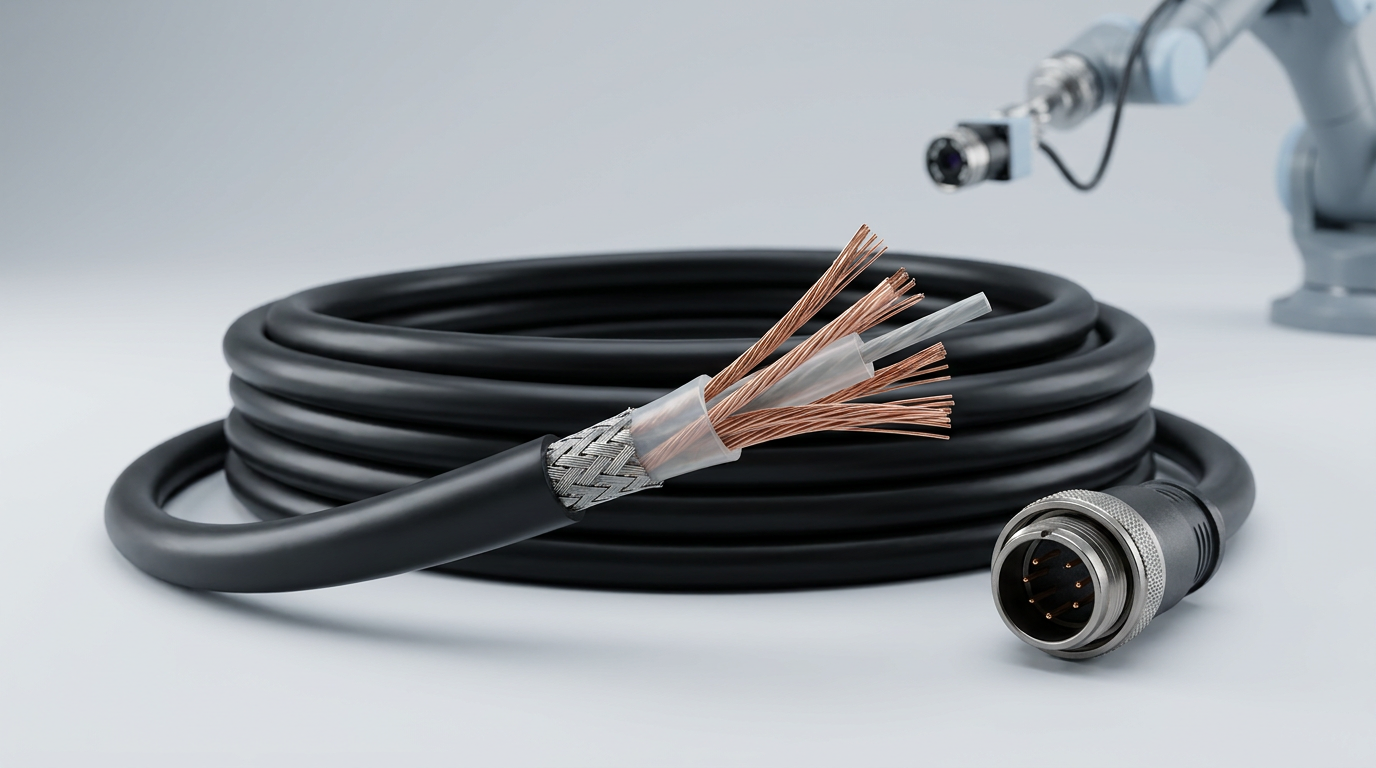
Motion-Resistant Signal Transmission
The cable works by managing both mechanical stress and electrical performance at the same time. In a moving inspection system, bending force concentrates at the same points repeatedly. A high flex structure distributes that stress more evenly across the cable length.
Los elementos clave de trabajo incluyen:
- Conductores de hilo fino that resist fatigue better than solid or coarse-stranded copper.
- Optimized conductor lay that reduces internal stress during bending cycles.
- Materiales aislantes flexibles that maintain spacing between conductors.
- Blindaje de alta cobertura that protects image signals from motors, drives, and electrical noise.
- Chaqueta exterior duradera that resists abrasion inside drag chains or cable carriers.
- Radio de curvatura controlado that prevents overstretching conductors and shields.
For high-speed vision interfaces, electrical consistency is especially important. If impedancia changes during motion, the camera signal may become unstable. This can lead to missing frames, image artifacts, communication errors, or failed inspections.
In drag chain applications, the cable must also slide smoothly and avoid twisting. That is why a drag chain vision cable should be selected based on bend radius, travel speed, acceleration, cable carrier dimensions, and expected cycle life.
Consejo profesional de cwcables: I usually check the smallest moving bend radius first. If the real machine bend radius is tighter than the cable rating, even a premium moving camera cable can fail earlier than expected.
What are the benefits of high flex camera cable?
The main benefits of a high flex camera cable are longer service life, stable image transmission, reduced downtime, and better reliability in moving inspection systems. It helps prevent conductor fatigue, shield damage, intermittent data loss, and signal noise, making it essential for automated vision equipment that runs continuously.
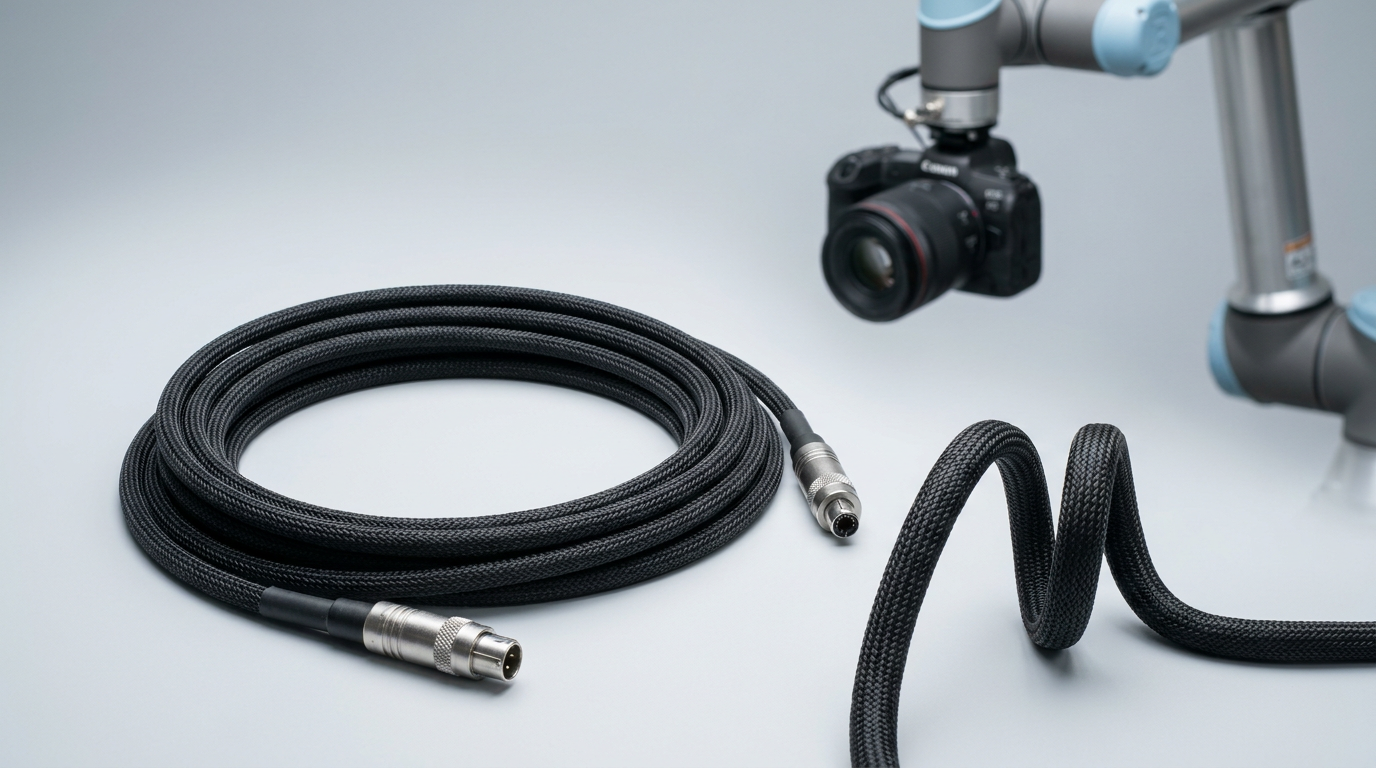
Practical Benefits for Machine Vision Systems
High flex cable design improves both machine uptime and inspection consistency. In production environments, cable failure can stop an entire line, create false rejects, or cause missed defects. Selecting the correct cable reduces these risks.
Según nuestros datos internos y análisis de mercado, aquí está el desglose:
| Beneficio | Por qué es importante | Impact on Inspection |
|---|---|---|
| Vida flexible más larga | Resists repeated bending cycles | Menos reemplazos de cables |
| Stable signal quality | Maintains impedance and shielding | Fewer frame drops |
| Menor tiempo de inactividad | Reduces intermittent faults | Higher production availability |
| Mejor resistencia al ruido | Protects against EMI from motors | Cleaner image data |
| Drag chain compatibility | Handles guided linear motion | Safer cable routing |
| Improved total cost | Reduces maintenance frequency | Lower lifecycle cost |
A high flex camera cable is especially valuable where failures are difficult to diagnose. Intermittent image loss may appear as a camera, software, or network problem, but the root cause is often cable fatigue or shielding degradation.
For systems with continuous movement, the benefit is not only durability. It is also predictability. A cable designed for motion makes system behavior more consistent, which helps engineers validate inspection accuracy and maintain production quality.
Consejo profesional de cwcables: I look beyond the cable purchase price and calculate the cost of one unexpected production stop. In many inspection systems, one downtime event costs more than choosing the correct high flex cable upfront.
How to maintain a high flex camera cable?
To maintain a high flex camera cable, inspect bend radius, routing, connector strain relief, jacket wear, and drag chain movement regularly. Avoid twisting, crushing, over-bending, or mixing cables incorrectly inside carriers. Preventive checks help preserve signal quality and extend cable life in moving inspection systems.
Maintenance Checklist for Moving Camera Cables
Maintenance should focus on preventing mechanical stress and identifying early signs of wear before signal problems occur. A cable can look acceptable externally while internal conductors or shields are already weakening, so routine checks are important.
Pasos de mantenimiento recomendados:
- Verificar el radio de curvatura
Confirm the cable is not bent tighter than the manufacturer’s minimum dynamic bend radius. - Check drag chain routing
Ensure the cable moves freely and is not crossing, twisting, or rubbing heavily against other cables. - inspeccionar la chaqueta
Look for cuts, flattening, abrasion, swelling, or exposed shielding. - Compruebe el alivio de tensión del conector
Make sure the connector end is not carrying repeated bending stress. - Monitor image stability
Watch for frame drops, communication errors, flickering, or random disconnections. - Avoid forced cable ties
Do not clamp the moving section too tightly, as this can create stress concentration points. - Document cycle conditions
Record travel length, speed, acceleration, bend radius, and replacement history.
In drag chain vision cable installations, separation is also important. Power cables, servo cables, and camera signal cables should be arranged to minimize interference and mechanical abrasion. Proper dividers inside the chain can improve cable life and signal reliability.
Consejo profesional de cwcables: I recommend checking the first and last links of the drag chain carefully. Many cable failures begin near fixed points where bending stress concentrates more than expected.
What is the price of high flex camera cable?
The price of a high flex camera cable depends on interface type, cable length, flex rating, shielding structure, connector type, jacket material, and customization requirements. Industrial motion-rated camera cables typically cost more than static cables, but they usually reduce lifecycle cost by preventing downtime and frequent replacement.
Variables de precios e impulsores de costos típicos
High flex camera cable pricing is application-specific because the cable must match both electrical and mechanical requirements. A simple short trigger cable costs much less than a high-speed, shielded, connectorized vision cable built for millions of drag chain cycles.
Según nuestros datos internos y análisis de mercado, aquí está el desglose:
| Factor de costo | Opción de menor costo | Opción de mayor costo | Por qué afecta el precio |
|---|---|---|---|
| Interfaz | Basic I/O or power | USB3, GigE, CoaXPress, Camera Link | Higher data rates need tighter design |
| Longitud del cable | Short assemblies | Long machine runs | More material and signal control |
| Calificación flexible | Movimiento ocasional | Movimiento continuo de la cadena de arrastre | Higher-grade construction required |
| Blindaje | Standard shielding | Multi-layer high-coverage shielding | Mejor protección EMI |
| Chaqueta | CLORURO DE POLIVINILO | PUR, TPE, compuestos especiales | Mejor resistencia a la abrasión y al aceite |
| Conectores | Standard molded ends | Industrial screw-lock or custom ends | Higher reliability and labor cost |
| Certificación | Basic use | Industrial or application-specific needs | Las pruebas y el cumplimiento añaden costos |
A high flex camera cable should be quoted based on actual machine conditions. Important details include camera interface, connector gender and orientation, bend radius, travel distance, speed, operating environment, and expected cycle life.
For buyers comparing prices, the cheapest option is not always economical. If a low-cost cable causes intermittent inspection errors or stops production, the total cost becomes much higher.
Consejo profesional de cwcables: I suggest sharing machine motion details when requesting a quote. With bend radius, travel speed, interface, and connector information, we can recommend a cable that fits the real application instead of overpaying or under-specifying.
Características clave y comparación
Key features of a high flex camera cable include fine-stranded conductors, motion-rated shielding, flexible insulation, abrasion-resistant jacket materials, stable impedance, and reliable connector strain relief. Compared with standard camera cables, high flex versions are built to survive repeated movement while maintaining dependable image and data transmission.
Feature Comparison for Industrial Vision Use
The right cable should be selected according to the motion profile and vision interface. A fixed inspection camera may only need a standard cable, while a moving camera in a drag chain requires a purpose-built drag chain vision cable.
Según nuestros datos internos y análisis de mercado, aquí está el desglose:
| Característica | Standard Camera Cable | Cable de cámara de alta flexibilidad | Drag Chain Vision Cable |
|---|---|---|---|
| Mejor aplicación | Fixed cameras | Moving cameras | Continuous guided motion |
| Bend cycle resistance | Bajo | Alto | muy alto |
| Diseño de conductores | Standard strand | Fine-stranded flexible copper | Optimized fine-strand structure |
| Durabilidad del escudo | Básico | Reinforced for motion | High-coverage motion-rated shielding |
| Material de la chaqueta | PVC or standard jacket | Flexible PVC, PUR, or TPE | Abrasion-resistant PUR/TPE common |
| Signal stability during motion | Limitado | Fuerte | Excellent when properly installed |
| Entorno típico | Static inspection | Gantry, slide, robot-adjacent motion | Cable carrier and automation track |
| Riesgo de fallo en movimiento | Alto | Bajo | Lowest when correctly specified |
| Nivel de costo | Más bajo | Medio | Medio a alto |
| Recommended by cwcables for moving systems | No | Sí | Yes, for drag chains |
High flex cables are not all identical. Some are designed mainly for bending, while others are designed for torsion, oil resistance, cleanroom use, or high-speed data stability. Matching the cable structure to the actual motion is essential.
For example, a gantry-mounted line scan camera may need long travel drag chain performance, while a robot-mounted area scan camera may need torsion resistance. Using the wrong motion cable can shorten service life even if the interface and connector are correct.
Consejo profesional de cwcables: I always separate “flexing” from “torsion” when reviewing applications. A cable that performs well in a linear drag chain may not be the best choice for a robot wrist that twists repeatedly.
Costo y factores de compra
When buying a high flex camera cable, evaluate the camera interface, motion type, bend radius, cycle life, environment, connector design, shielding, and supplier customization capability. The best choice balances upfront price with signal reliability, mechanical endurance, and reduced maintenance cost across the machine’s operating life.
Buying Guide for Reliable Cable Selection
A structured buying process helps avoid under-specification and unnecessary cost. The cable should be selected after reviewing how the inspection system actually moves, not only by camera model or connector type.
Utilice esta lista de verificación antes de comprar:
- Identify the camera interface
Confirm whether the system uses USB, GigE, CoaXPress, Camera Link, power, trigger, encoder, or mixed signals. - Define the motion profile
Note whether the cable bends, slides, twists, or moves inside a drag chain. - Confirmar radio de curvatura
Measure the real dynamic bend radius in the machine, not only the available space. - Estimate cycle life
Consider operating hours, machine speed, stroke length, and expected production life. - Revisar la exposición ambiental
Check for oil, coolant, abrasion, temperature, cleanroom requirements, or chemical exposure. - Choose connector style
Select straight, angled, locking, molded, or custom connectors based on machine layout. - Check EMI risk
Identify nearby servo motors, drives, power cables, and welding or high-noise equipment. - Comparar el costo del ciclo de vida
Include downtime, replacement labor, troubleshooting time, and inspection error risk.
For custom machinery, a supplier such as cwcables can help match electrical specifications with mechanical design. This is especially useful when standard cable assemblies do not fit the routing path, connector orientation, or flex-life requirements.
Consejo profesional de cwcables: I recommend sending a photo or drawing of the cable route whenever possible. A simple layout review often reveals bend, clamp, or drag chain issues before the cable is manufactured.
Conclusión
A high flex camera cable is essential for moving inspection systems that require stable image transmission under repeated motion. By choosing the correct moving camera cable or drag chain vision cable, manufacturers can reduce downtime, improve inspection reliability, and extend cable service life in demanding automation environments.
Guía de selección final
The cable is a critical part of the vision system, especially when the camera moves continuously. A well-selected cable protects both signal quality and machine uptime.
Before finalizing a specification, confirm:
- Camera interface and bandwidth requirements
- Dynamic bend radius and travel length
- Drag chain or robotic motion conditions
- Shielding and EMI protection needs
- Jacket material and environmental resistance
- Connector orientation and strain relief
- Expected cycle life and maintenance access
For moving inspection systems, the safest approach is to specify a cable based on real motion conditions rather than choosing only by connector type. cwcables can support standard and customized high flex camera cable solutions for industrial vision, automation, and drag chain applications.
Consejo profesional de cwcables: I would rather slightly over-spec the cable for a critical moving inspection system than risk intermittent signal faults after installation. Reliable vision starts with a cable that is designed for the motion.