

Choosing between flex wire and solid wire depends on movement, installation conditions, current requirements, and long-term reliability. Flex wire is usually best for electronics, robotics, control panels, appliances, and any application exposed to vibration or repeated bending. Solid wire is often better for fixed building wiring, breadboards, and permanent runs where rigidity and low installation cost matter most.
What is flex wire?
Flex wire is an electrical conductor made from multiple thin strands bundled together, giving it greater bendability than a single solid conductor. It is commonly used where cables must move, route through tight spaces, or resist vibration, making it a practical choice for electronics, machinery, vehicles, and portable equipment.
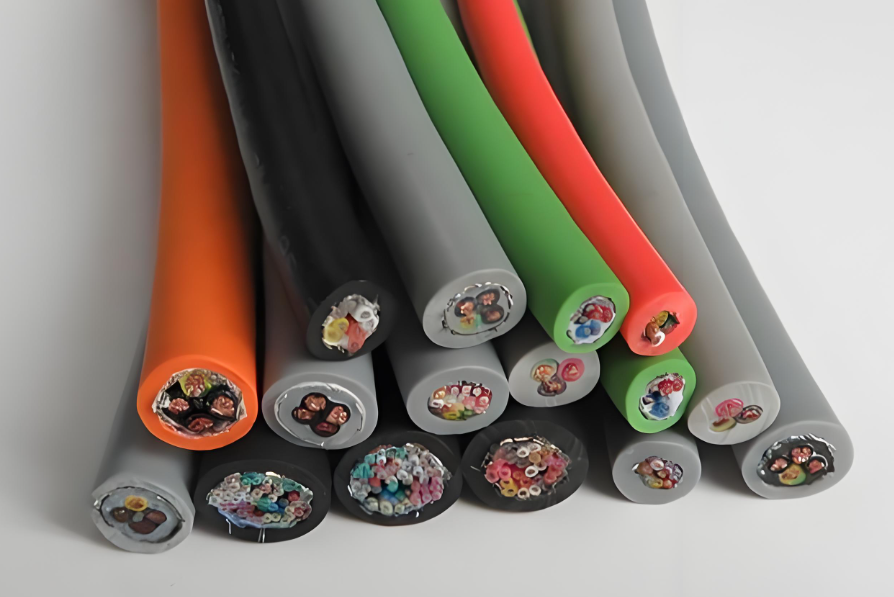
Construction and Common Uses
Flex wire, also called alambre trenzado, is built by twisting many fine copper or tinned copper strands into one conductor. The more strands it has, and the finer those strands are, the more flexible the wire becomes. This construction helps the conductor survive bending and movement better than solid wire.
Los usos típicos incluyen:
- Flexible wire for electronics and PCB connections
- Robotics, drones, and automation systems
- Automotive harnesses and marine wiring
- Control cabinets and industrial machinery
- Power cords, test leads, and portable devices
- LED lighting, appliances, and battery connections
Según nuestros datos internos y análisis de mercado, aquí está el desglose:
| Tipo de cable | Estructura de conductores | Mejor caso de uso | Flexibilidad | Limitación típica |
|---|---|---|---|---|
| Cable flexible | Many fine strands | Moving or vibrating applications | Alto | Requires proper terminals |
| Solid wire | One solid conductor | Instalaciones fijas | Bajo | Can fatigue if repeatedly bent |
| Extra-flex wire | Very fine multi-strands | Robotics, test leads, drag chains | muy alto | Costo generalmente más alto |
Consejo profesional de cwcables: I recommend flex wire whenever the cable will be handled, bent, routed around corners, or installed near vibration. Solid wire may look cleaner in fixed runs, but flex wire usually provides better durability in real-world equipment.
How Does flex wire Work?
Flex wire works by distributing mechanical stress across many small conductor strands instead of one rigid core. When the cable bends, individual strands shift slightly against each other, reducing fatigue and breakage. Electrically, the strands act together as one conductor when properly terminated and sized.
Bending Behavior and Electrical Performance
The key difference in stranded vs solid wire is mechanical behavior. A solid conductor must bend as one piece, so repeated movement concentrates stress in the same location. Flex wire spreads that stress among many small strands, which makes it more resistant to cracking from repeated motion.
Electrically, flex wire still follows the same basic rules as solid wire: current capacity depends on conductor material, cross-sectional area, insulation rating, temperature, and installation method. The main difference is how the conductor handles motion.
Important working factors include:
- Número de hebras: More strands generally mean better flexibility.
- Strand diameter: Finer strands improve bend performance.
- Insulation type: Silicone, CLORURO DE POLIVINILO, XLPE, y TPE each offer different flexibility and temperature ratings.
- Método de terminación: Crimping, soldering, ferrules, and lugs must be matched to stranded conductors.
- Radio de curvatura: Even flex wire should not be folded sharply beyond its design limit.
Consejo profesional de cwcables: I avoid tinning stranded wire before screw-terminal installation unless the terminal manufacturer specifically allows it. A ferrule usually gives a safer, more stable connection because it prevents strand damage and loosening over time.
What are the benefits of flex wire?
The main benefits of flex wire are improved bendability, better vibration resistance, easier routing, and stronger performance in moving assemblies. Compared with solid wire, it is less likely to break from repeated handling, making it ideal for portable devices, vehicles, electronic projects, and industrial equipment.
Practical Advantages in Real Applications
Flex wire is preferred when a cable must survive physical movement. Its stranded construction makes it easier to install in tight enclosures, route through cable chains, and connect to terminals without forcing the conductor into position.
Según nuestros datos internos y análisis de mercado, aquí está el desglose:
| Beneficio | Por qué es importante | Best Application Example |
|---|---|---|
| High flexibility | Easier routing in tight spaces | Control panels and electronics |
| Resistencia a las vibraciones | Reduce la fatiga del conductor | Vehicles and machines |
| Better handling | Easier to bend, strip, and position | Prototyping and repairs |
| Durable in motion | Withstands repeated movement | Robotics and portable devices |
| Broad insulation options | Supports heat, oil, abrasion, or chemical resistance | Industrial and marine wiring |
Flex wire is especially useful when the installation must be serviced later. Technicians can move and reconnect stranded conductors more easily than rigid solid conductors, reducing stress on terminals and components.
Consejo profesional de cwcables: I choose insulation as carefully as conductor size. For flexible wire for electronics, soft PVC may be enough, but for robotics, high-temperature silicone or TPE can make a major difference in lifespan.
How to maintain a flex wire?
To maintain flex wire, inspect it regularly for insulation cracks, loose strands, corrosion, overheated terminals, and sharp bend points. Good maintenance also includes proper strain relief, correct crimping, clean routing, and replacing any wire that shows conductor fatigue or damaged insulation.

Inspection and Care Checklist
Flex wire lasts longest when it is installed with mechanical protection. Most failures come from poor termination, excessive bending, abrasion, or heat exposure rather than the conductor itself. Preventive inspection helps identify issues before they cause intermittent faults or unsafe overheating.
Utilice esta lista de verificación de mantenimiento:
- Check insulation condition: Look for cuts, flattening, brittleness, swelling, or discoloration.
- Inspect terminations: Confirm crimps, ferrules, lugs, or solder joints are secure.
- Look for strand breakage: Exposed or frayed strands indicate mechanical damage.
- Verify strain relief: Cables should not pull directly on terminals.
- Avoid sharp bend points: Maintain a smooth bend radius near connectors.
- Check heat signs: Brown insulation, melted jackets, or loose screws suggest overload or poor contact.
- Protect from abrasion: Use sleeving, conduit, grommets, or cable glands where needed.
Consejo profesional de cwcables: I always inspect flex wire near connectors first because that is where bending stress concentrates. If the insulation looks fine but the device cuts in and out when moved, suspect broken internal strands.
What is the price of flex wire?
The price of flex wire depends on conductor material, gauge, strand count, insulation type, voltage rating, certifications, and order quantity. Basic PVC stranded copper wire is usually economical, while silicone, high-flex, tinned copper, shielded, or specialty industrial wire costs more.
Pricing Variables and Typical Ranges
Flex wire is not priced by flexibility alone. The final cost depends on electrical rating, mechanical durability, compliance requirements, and the environment where it will be used. For example, a low-voltage electronics lead costs far less than an oil-resistant, high-flex industrial control cable.
Según nuestros datos internos y análisis de mercado, aquí está el desglose:
| Flex Wire Category | Nivel de costo típico | Why It Costs More or Less | Uso común |
|---|---|---|---|
| Standard PVC stranded wire | Bajo | Common materials and broad availability | Electronics, panels, appliances |
| Tinned copper flex wire | Medio | Better corrosion resistance | Marine, automotive, outdoor devices |
| Silicone flex wire | Medio a alto | High flexibility and heat resistance | Batteries, RC, test leads |
| Cable flexible blindado | Medio a alto | Added EMI protección | Sensors, data, control systems |
| High-flex industrial cable | Alto | Diseñado para movimientos repetidos | Cadenas de arrastre, robótica, automatización. |
When comparing flex wire vs solid wire by price, solid wire is often cheaper for fixed building runs. However, flex wire can reduce replacement costs in moving applications because it resists fatigue better.
Consejo profesional de cwcables: I do not buy the cheapest flex wire for moving equipment. A slightly better strand count, insulation, or temperature rating can prevent downtime that costs far more than the cable itself.
Características clave y comparación
Flex wire and solid wire both conduct electricity effectively, but they serve different mechanical needs. Flex wire is better for movement, vibration, tight routing, and serviceability, while solid wire is better for fixed, straight, permanent installations where rigidity, shape retention, and lower cost are priorities.
Side-by-Side Selection Guide
Según nuestros datos internos y análisis de mercado, aquí está el desglose:
| Característica | Flex Wire | Solid Wire | Which to Choose |
|---|---|---|---|
| Diseño de conductores | Multiple strands | Single conductor | Flex wire for movement, solid for fixed runs |
| Flexibilidad | Alto | Bajo | Cable flexible |
| Resistencia a las vibraciones | Fuerte | Weak to moderate | Cable flexible |
| Ease of routing | Excellent in tight spaces | Better for straight runs | Depends on layout |
| Terminal requirements | Needs proper crimp, ferrule, or lug | Easy under many screw terminals | Depends on terminal type |
| Breadboard use | Less convenient without pins | Excelente | Solid wire |
| Doblado repetido | Bueno a excelente | Pobre | Cable flexible |
| Costo | Generalmente más alto | Generalmente más bajo | Solid wire for budget fixed wiring |
| Current capacity | Based on gauge and rating | Based on gauge and rating | Equal if properly sized |
| Mejores aplicaciones | Electronics, robotics, vehicles, machinery | Building wiring, breadboards, fixed panels | Match to motion requirement |
In stranded vs solid wire decisions, the first question should be mechanical: will the wire move? If yes, flex wire is usually the safer choice. If the conductor will remain fixed and needs to hold shape, solid wire may be more practical.
Consejo profesional de cwcables: I treat wire choice as both an electrical and mechanical decision. Correct gauge prevents overheating, but correct conductor type prevents fatigue, loose connections, and premature failure.
Costo y factores de compra
When buying flex wire, consider wire gauge, copper quality, strand count, insulation material, temperature rating, voltage rating, flexibility class, certifications, and environmental exposure. The best value is not always the lowest price; it is the wire that safely matches the application.
How to Choose the Right Flex Wire
A good buying decision starts with the electrical load and ends with the installation environment. Undersized wire can overheat, while the wrong insulation can crack, melt, or degrade. For moving systems, strand count and jacket durability become just as important as current capacity.
Los factores clave de compra incluyen:
- Gauge or cross-sectional area: Match current draw, caída de voltaje, and distance.
- Material conductor: Bare copper is common; tinned copper improves corrosion resistance.
- Número de hebras: Higher strand counts improve flexibility and fatigue life.
- Insulation type: Choose PVC, silicone, XLPE, TPE, or other jackets based on heat, oil, abrasion, and flexibility needs.
- Voltage rating: Ensure the wire is rated for the circuit.
- Clasificación de temperatura: Consider both ambient heat and conductor heating.
- Certificaciones: Buscar UL, CSA, RoHS, or other standards when required.
- Color coding: Simplifies installation, troubleshooting, and safety checks.
- Fiabilidad del proveedor: Consistent copper quality and insulation thickness matter.
For standard electronics, flexible stranded copper wire is usually sufficient. For automation, robotics, or repeated motion, high-flex cable from a qualified supplier such as cwcables is the better long-term option.
Consejo profesional de cwcables: I always ask three questions before buying: how much current, how much movement, and what environment? Those answers usually narrow the choice faster than comparing price alone.
Conclusión
Use flex wire when your application involves movement, vibration, tight routing, or frequent handling. Use solid wire for fixed installations that need shape retention and low cost. For most electronics, machinery, automotive, and portable applications, flex wire provides the better balance of durability and serviceability.
Recomendación final
The right wire is the one that matches both the electrical load and the mechanical conditions. Flex wire is generally the better option when reliability depends on bend performance, vibration resistance, and easy routing. Solid wire remains useful for permanent, stationary wiring where the conductor will not be repeatedly moved.
A simple selection rule:
- Elegir alambre flexible for electronics, robotics, vehicles, appliances, power leads, control panels, and moving assemblies.
- Elegir solid wire for fixed building wiring, breadboards, structured panels, and straight permanent runs.
- Elegir high-flex specialty wire for drag chains, automation, test leads, and continuous-motion equipment.
- Elegir tinned copper flex wire for marine, humid, or corrosion-prone environments.
- Elegir silicone flex wire when heat resistance and soft handling are important.
For dependable wire selection, cwcables can help match conductor size, strand count, insulation type, and compliance needs to your application.
Consejo profesional de cwcables: I recommend documenting wire type, gauge, insulation, and rating during the design stage. It makes future maintenance easier and prevents substitutions that look similar but perform very differently.