

Choosing the right Ethernet cable AWG matters because conductor size affects signal stability, PoE performance, installation flexibility, and long-term reliability. A lower AWG number means a thicker copper conductor, while a higher number means thinner wire. For homes, offices, data centers, and structured cabling projects, understanding Ethernet wire gauge helps you match cable performance to distance, bandwidth, power, and budget requirements.
What is Ethernet cable AWG,Ethernet wire gauge,network cable conductor size?
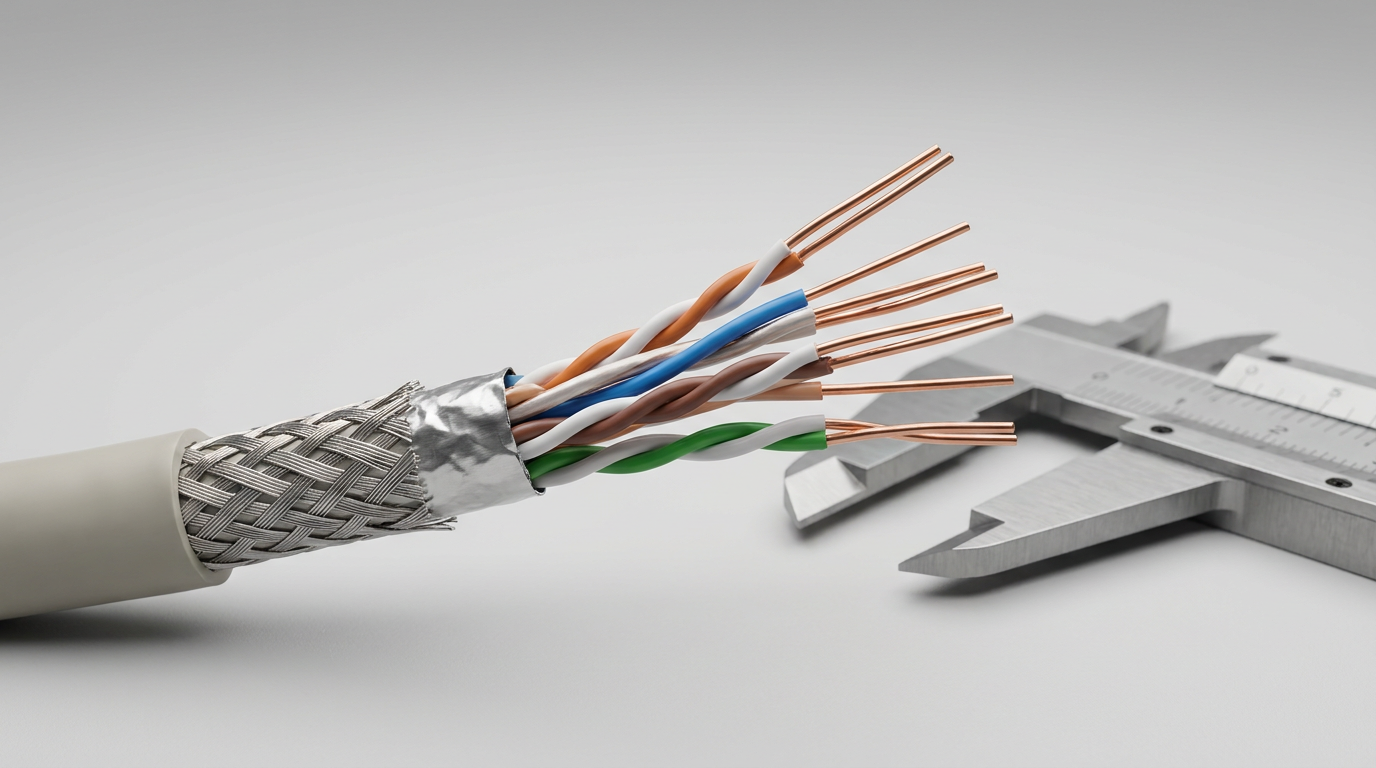
Ethernet cable AWG refers to the American Wire Gauge size of the copper conductors inside a network cable. Ethernet wire gauge and network cable conductor size describe the same core specification: how thick each wire is, which directly influences resistance, signal quality, PoE capability, and installation performance.
Understanding Wire Gauge in Ethernet Cables
AWG is an inverse measurement system: the smaller the AWG number, the thicker the conductor. For Ethernet cables, common conductor sizes include 23AWG, 24AWG, 26AWG, and 28AWG. Thicker conductors typically offer lower electrical resistance, better performance over longer distances, and improved support for Alimentación a través de Ethernet.
Según nuestros datos internos y análisis de mercado, aquí está el desglose:
| AWG Size | Conductor Thickness | Uso común | Ventaja típica | Limitación principal |
|---|---|---|---|---|
| 23AWG | más grueso | Cat6A, high-performance runs | Better PoE and long-distance stability | Less flexible, larger diameter |
| 24AWG | Estándar | Cat5e, Cat6 structured cabling | Balanced performance and handling | Moderate cable bulk |
| 26AWG | Persona a régimen | Patch cords, short links | Flexible and easy to route | Higher resistance |
| 28AWG | Very slim | High-density patching | Saves rack space | Best for shorter runs |
Consejo profesional de cwcables: I usually recommend 23AWG or 24AWG solid copper cable for permanent in-wall or ceiling installations, especially when PoE is involved. For short patching in crowded racks, slim 28AWG cables can be useful, but they should not replace full-size horizontal cabling.
How Does Ethernet cable AWG,Ethernet wire gauge,network cable conductor size Work?
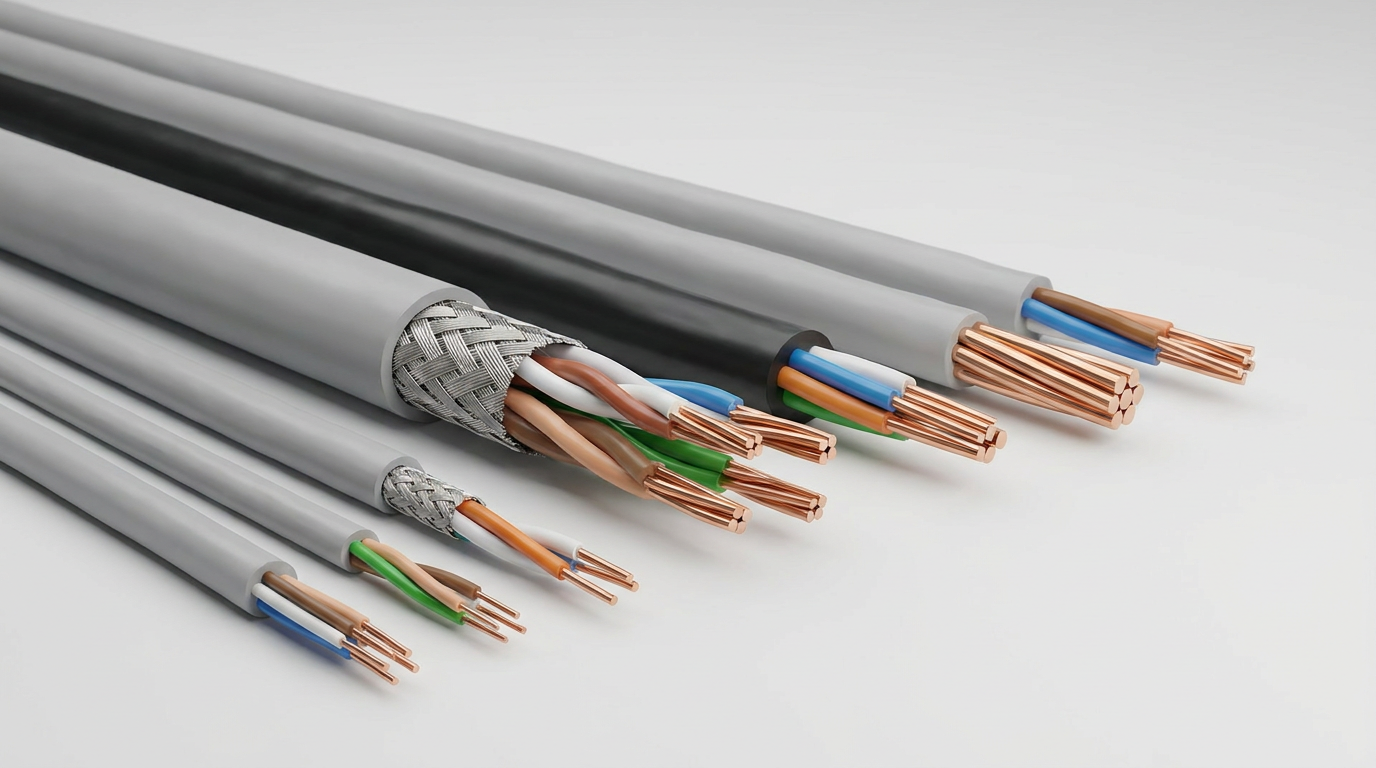
Ethernet wire gauge works by determining how efficiently electrical signals and power travel through the copper conductors. Thicker conductors reduce resistance, voltage drop, and heat buildup, helping maintain data integrity over distance. Thinner conductors improve flexibility but may limit cable length, PoE capacity, or high-speed performance.
Signal Transmission and Electrical Resistance
Ethernet cables transmit data through pares trenzados of copper conductors. The conductor size affects how much resistencia electrica the signal encounters as it travels from one device to another. Over longer distances, resistance can weaken signals and increase insertion loss, which may reduce network reliability.
For PoE applications, conductor size also affects how much power reaches the powered device. Thicker copper conductors lose less voltage and generate less heat, making them better suited for PoE, PoE+, and higher-power PoE++ deployments.
Key operating factors include:
- Resistance: Thicker conductors have lower resistance and support more stable transmission.
- Insertion loss: Larger conductors help reduce signal loss over distance.
- Heat rise: Lower resistance means less heat, especially in bundled PoE cable runs.
- Voltage drop: Better conductor size helps powered devices receive sufficient voltage.
- Flexibilidad: Smaller conductors bend more easily but sacrifice some electrical performance.
Consejo profesional de cwcables: When I review a network design, I always check both data speed and PoE load. A cable that works for basic data may not be the best choice for IP cameras, wireless access points, or VoIP phones drawing continuous power.
What are the benefits of Ethernet cable AWG,Ethernet wire gauge,network cable conductor size?
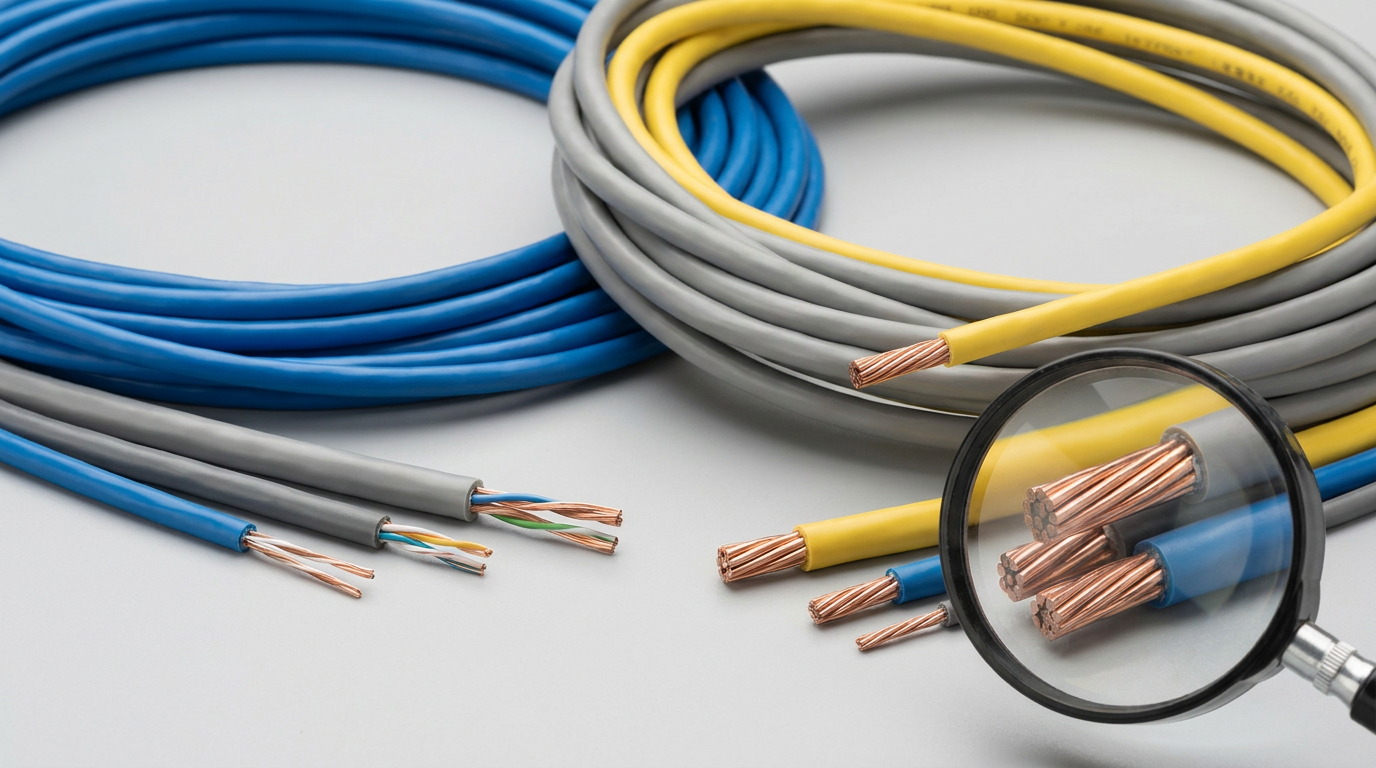
Choosing the correct network cable conductor size improves performance, reduces power loss, supports cleaner installations, and helps protect long-term network reliability. The right AWG can improve PoE delivery, reduce troubleshooting, and ensure the cable matches the application instead of becoming a hidden bottleneck.
Performance Advantages by Application
The main benefit of selecting the right Ethernet cable AWG is application matching. Permanent infrastructure, patch cords, PoE devices, and high-density data cabinets all have different priorities. No single wire gauge is best for every situation.
Según nuestros datos internos y análisis de mercado, aquí está el desglose:
| Beneficio | Best Supported By | Por qué es importante |
|---|---|---|
| Longer stable cable runs | 23AWG or 24AWG | Lower resistance supports distance and signal integrity |
| Better PoE efficiency | 23AWG solid copper | Reduce caída de voltaje and heat buildup |
| Easier patch management | 26AWG or 28AWG | Slimmer cables improve airflow and rack organization |
| mas fuerte cableado estructurado | Solid 23AWG or 24AWG | Better suited for punch-down termination |
| Flexible device connections | Stranded 24AWG, 26AWG, or 28AWG | Handles movement better than solid cable |
| Reduced future replacement risk | Proper gauge for speed and power | Helps avoid underperforming installations |
A correct AWG selection can also reduce maintenance cost. For example, using full-size copper conductors in PoE-heavy installations minimizes overheating risk and helps connected devices operate more consistently.
Consejo profesional de cwcables: I advise customers not to buy cable by category alone. Cat6 or Cat6A tells you performance class, but conductor size, copper quality, shielding, and jacket rating determine whether the cable is truly right for the job.
How to maintain an Ethernet cable AWG,Ethernet wire gauge,network cable conductor size?
Maintaining Ethernet cables with the correct AWG means protecting conductor integrity, avoiding excessive bends, preventing connector strain, and checking for heat or performance issues in PoE installations. Good handling preserves the electrical characteristics of the conductor and keeps network links stable over time.
Installation Care and Long-Term Handling
Ethernet conductor size only performs as intended when the cable is installed and maintained correctly. Even high-quality cable can fail if it is kinked, crushed, overstretched, or terminated poorly. Smaller-gauge patch cords need extra care because their conductors are thinner and more sensitive to stress.
Recommended maintenance practices:
- Respect bend radius: Avoid sharp bends that can deform twisted pairs and affect signal balance.
- Prevent cable crushing: Do not overtighten zip ties or route cables under heavy equipment.
- Check PoE bundles: Large bundles carrying PoE may generate heat, especially with thin conductors.
- Use proper connectors: Match plugs, keystone jacks, and patch panels to cable type and conductor size.
- Avoid unnecessary movement: Solid conductor cable should remain fixed after installation.
- Test after termination: Use a cable tester to confirm continuity, wire map, and performance.
- Label both ends: Proper labeling reduces accidental pulling and repeated handling during troubleshooting.
For high-performance links, maintenance should also include periodic inspection of patch cords, especially in racks where cables are frequently moved.
Consejo profesional de cwcables: I never recommend forcing a thick 23AWG cable into a connector designed for smaller stranded patch cable. Connector compatibility matters, and a poor termination can ruin the benefit of choosing the right conductor size.
What is the price of Ethernet cable AWG,Ethernet wire gauge,network cable conductor size?
Ethernet cable AWG affects price because thicker conductors require more copper, and copper is a major cost driver. Larger network cable conductor size usually costs more, especially with pure copper, shielding, outdoor jackets, plenum ratings, or Cat6A performance requirements included.
Pricing Variables That Influence Cable Cost
The price of Ethernet cable is not based on AWG alone. Category rating, jacket type, shielding, copper purity, packaging, certification, and length all influence cost. However, conductor size is one of the most important material factors because copper content directly affects manufacturing expense.
Según nuestros datos internos y análisis de mercado, aquí está el desglose:
| Tipo de cable | Common AWG | Costo relativo | Uso típico |
|---|---|---|---|
| Cat5e UTP bulk cable | 24AWG | Bajo a moderado | Redes básicas para el hogar y la oficina. |
| Cat6 UTP bulk cable | 23AWG or 24AWG | Moderado | Gigabit and structured cabling |
| Cat6A UTP/FTP bulk cable | 23AWG | Moderado a alto | 10G networks and longer runs |
| Slim patch cable | 28AWG | Moderate per foot | High-density rack patching |
| Outdoor-rated cable | 23AWG or 24AWG | Más alto | Exterior or conduit installations |
| Plenum-rated cable | 23AWG or 24AWG | Más alto | Air-handling spaces |
In general, a thicker solid copper cable costs more upfront but can reduce performance issues and replacement risk in demanding installations. For short patching, thinner cables may provide better value when used appropriately.
Consejo profesional de cwcables: I focus on total installed cost, not just cable price. Saving a small amount on undersized cable can become expensive if it causes PoE voltage drop, failed certification tests, or repeat service calls.
Características clave y comparación
The key features of Ethernet cable AWG include conductor thickness, resistance, flexibility, PoE support, cable diameter, and installation suitability. Comparing these factors helps determine whether a cable is better for permanent structured cabling, short patching, high-density racks, or power-hungry connected devices.
AWG Feature Comparison for Network Planning
Selecting Ethernet wire gauge requires balancing physical handling with electrical performance. Thick conductors are generally better for permanent links and PoE, while thinner conductors are easier to route in patch panels and equipment cabinets. The ideal choice depends on link length, power load, and installation environment.
Según nuestros datos internos y análisis de mercado, aquí está el desglose:
| Característica | 23AWG | 24AWG | 26AWG | 28AWG |
|---|---|---|---|---|
| Tamaño del conductor | Thick | Estándar | Thin | Very thin |
| Resistencia | Más bajo | Bajo | Más alto | más alto |
| PoE performance | Excelente | Muy bien | Limitado a moderado | Best for short low-load links |
| Flexibilidad | Moderado | Bien | Muy bien | Excelente |
| Diámetro del cable | Más grande | Medio | Menor | Slimmest |
| Mejor aplicación | Cat6A, PoE, long runs | General structured cabling | Patch cords | High-density patching |
| Long-run suitability | Excelente | Muy bien | Limitado | Not preferred |
| Rack airflow | Justo | Bien | Muy bien | Excelente |
| Termination type | Often solid cable hardware | Standard keystones and panels | Patch connectors | Slim patch connectors |
| Prioridad típica del comprador | Actuación | Balance | Flexibilidad | Space saving |
For cwcables customers, the most practical approach is to separate permanent cabling from patching. Use robust conductor sizes for infrastructure, then choose slimmer patch cords only where flexibility and density are more important than distance.
Consejo profesional de cwcables: I like to design networks with 23AWG or 24AWG permanent links and then use shorter, flexible patch cords at the rack. That gives you strong backbone performance without making the cabinet difficult to manage.
Costo y factores de compra
When buying Ethernet cable, consider AWG together with cable category, copper quality, jacket rating, shielding, length, PoE requirements, and installation location. The lowest-price cable is not always the best value if it lacks the conductor size or material quality needed for reliable performance.
Lista de verificación práctica de compras
A good buying decision starts with the network requirement, not the cable price. If the installation involves long runs, PoE cameras, Wi-Fi access points, or 10G equipment, conductor size becomes more important. If the requirement is short patching inside a rack, flexibility and cable diameter may matter more.
Utilice esta lista de verificación antes de comprar:
- Confirm the application: Permanent link, patch cord, outdoor run, plenum space, or data cabinet.
- Match the category: Cat5e, Cat6, or Cat6A depending on speed and distance needs.
- Check conductor material: Choose bare copper for performance-critical Ethernet installations.
- Review AWG size: Use thicker conductors for PoE, distance, and structured cabling.
- Select jacket rating: CMP for plenum, CMR for riser, CM for general use, outdoor-rated for exterior runs.
- Verify shielding needs: Use shielded cable in electrically noisy environments when properly grounded.
- Confirm connector compatibility: Ensure plugs and jacks match solid or stranded cable and conductor diameter.
- Plan future growth: Consider higher category and suitable AWG if bandwidth or PoE demand may increase.
Buying from a supplier such as cwcables also helps ensure specification clarity, consistent product quality, and proper cable selection for the installation environment.
Consejo profesional de cwcables: I always ask three questions before recommending a cable: How far is the run, will it carry PoE, and where will it be installed? Those answers usually determine the correct AWG faster than brand names or category labels alone.
Conclusión
Ethernet cable AWG is a critical specification because conductor size affects distance, power delivery, flexibility, heat, and long-term reliability. For most structured cabling, 23AWG or 24AWG is the safer choice, while thinner gauges are useful for short, flexible patching and high-density spaces.
Guía de selección final
The best Ethernet wire gauge depends on the role of the cable. Permanent network infrastructure should prioritize signal quality and PoE efficiency, while patching can prioritize flexibility and cabinet organization. Understanding network cable conductor size allows you to avoid overpaying for unnecessary bulk or underbuilding a network that needs reliable power and performance.
Quick recommendations:
- Choose 23AWG for Cat6A, long runs, PoE-heavy networks, and performance-focused installations.
- Choose 24AWG for balanced Cat5e or Cat6 structured cabling.
- Choose 26AWG for short, flexible patch cords.
- Choose 28AWG for high-density rack patching where cable length is short.
- Avoid undersized cable for long PoE runs or permanent cabling.
- Verify copper quality and connector compatibility before installation.
For dependable selection, cwcables can help match Ethernet cable AWG, category rating, jacket type, and application requirements so your network is built for both current needs and future expansion.
Consejo profesional de cwcables: If you are unsure which gauge to choose, I recommend starting with the installation type. Permanent runs deserve full-size copper conductors, while patch areas can use slimmer cables when distance and power requirements are modest.