

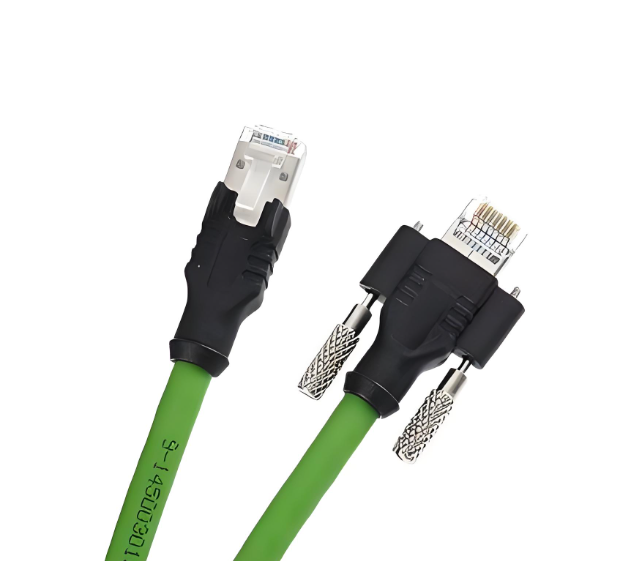
El tendido fiable de cables es un eslabón técnico fundamental pero crítico en equipos como la automatización industrial, robots y máquinas CNC que se mueven continuamente. Cuando los componentes del equipo se mueven repetidamente, los cables que tradicionalmente se fijan y tienden pueden dañarse rápidamente debido a la flexión, la torsión y la fricción. Para solucionar esta contradicción, se creó un cable especializado llamado “Cable Ethernet de cadena de arrastre ultraflexible"Se ha diseñado. No es una simple variante de los cables Ethernet comunes, sino el producto de una integración multidimensional desde la ciencia de los materiales, la mecánica estructural hasta la teoría de la transmisión de señales.
Definición inversa de atributos de cable de una escena deportiva
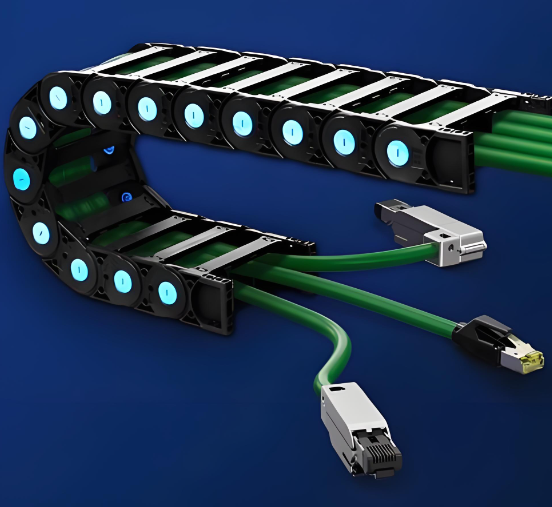
para entender el cable de cadena de arrastre de alta flexibilidad, primero debemos comenzar con su entorno de trabajo: el sistema de cadena de arrastre. Una cadena de arrastre es una estructura similar a una cadena que se asemeja a la vía de un tanque, que se utiliza para acomodar y guiar cables, tuberías de aceite, etc., formando un paso protector entre las partes móviles y fijas del equipo. El cable ethernet flexible El interior de la cadena de arrastre no está estacionario, sino que sufre continuamente flexión, estiramiento, compresión y fricción de radio pequeño con la pared interna de la cadena de arrastre a medida que se mueve hacia adelante y hacia atrás.
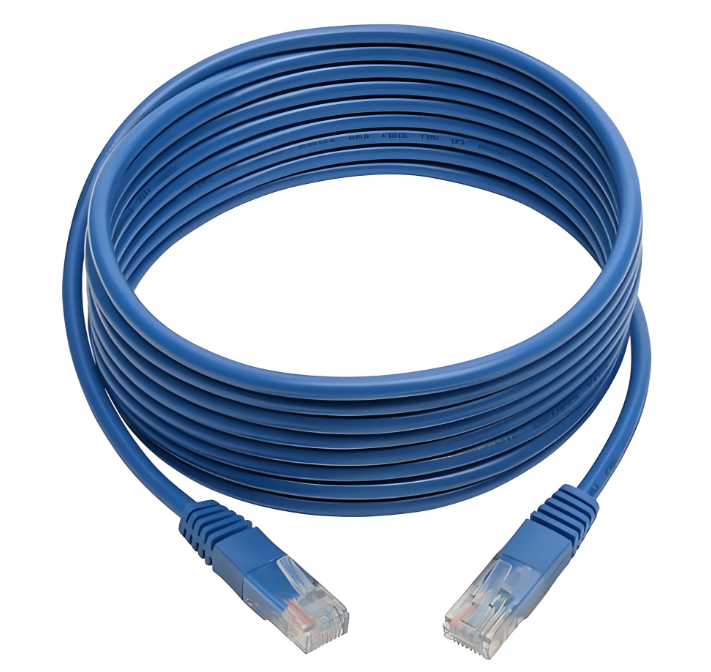
Este escenario impone requisitos de desempeño estrictos e inversos a cables ethernet flexibles:
1. Vida útil de flexión de alta frecuencia: los cables Ethernet comunes no pueden soportar cientos de flexión, mientras que en los equipos de automatización, el número de movimientos diarios puede llegar a decenas de miles. Uno de los principales indicadores de Cable Ethernet ultraflexible Es un ciclo de vida de flexión de hasta millones o incluso decenas de millones de veces.
2. Antitorsión y antitensión: el movimiento del equipo puede ir acompañado de una ligera torsión, y las estructuras de los cables deben poder dispersar la tensión de torsión. En la curva de la cadena de arrastre, el lado exterior del cable Ethernet se estira y el lado interior se comprime. El cable Ethernet debe tener un cierto grado de elasticidad para hacer frente a esta deformación.
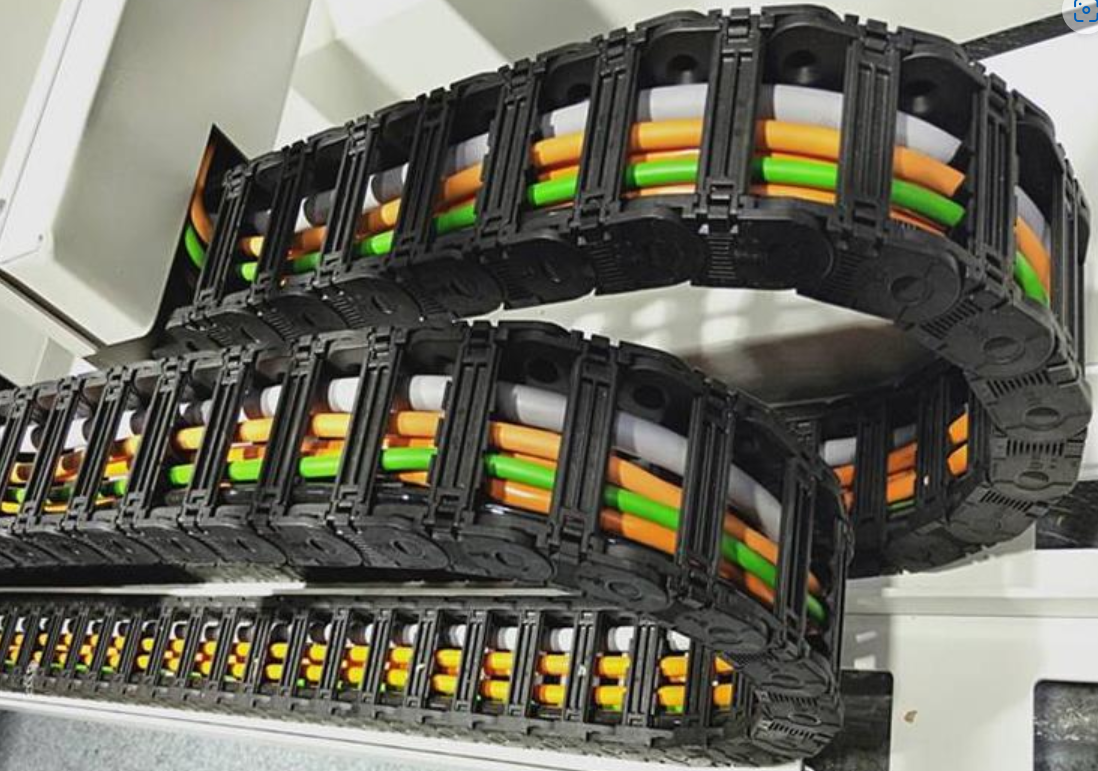
3. Estabilidad en un espacio compacto: Generalmente se colocan varios cables densamente en una cadena de arrastre, lo que requiere Cable Ethernet industrial tener un diámetro exterior pequeño, buena flexibilidad y estructura estable para evitar enredos o desplazamientos que puedan causar concentración de tensiones locales.
El cable de cadena de arrastre está diseñado basándose en el desafío definitivo del “movimiento mecánico continuo” y sus diversas características físicas.
Deconstrucción colaborativa de materiales y estructuras.
Para lograr las propiedades anteriores, el cable ethernet de cadena de arrastre Tiene diferencias fundamentales en la selección de materiales y diseño estructural en comparación con los cables convencionales. Su misterio no es un único avance tecnológico, sino el efecto sinérgico de múltiples niveles.
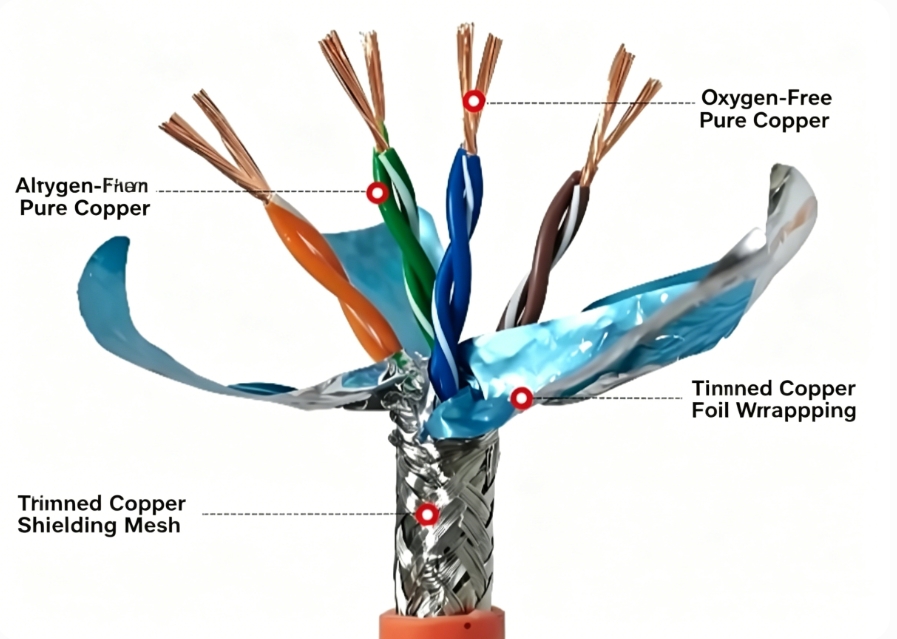
En primer lugar, el director de orquesta. Los cables de red convencionales utilizan uno o varios cables de cobre más gruesos como conductores, y la flexión repetida puede provocar fácilmente fatiga y fractura del metal. El cable de cadena de arrastre ultra flexible Utiliza haces de cables de cobre finos de alta densidad trenzados entre sí. Por ejemplo, cada conductor puede estar enrollado con cientos de alambres de cobre estañados extremadamente delgados. Esta estructura convierte la deformación macroscópica por flexión en un pequeño deslizamiento entre innumerables filamentos microscópicos, dispersando en gran medida la tensión, al igual que el principio de que los cables de acero son más resistentes a la flexión que un solo alambre de acero grueso.
Los siguientes son los materiales de aislamiento y revestimiento. Los materiales de PVC comunes se vuelven duros y propensos a agrietarse a bajas temperaturas, y aceleran el envejecimiento mediante dobleces repetidos. cables ethernet flexibles Por lo general, están hechos de elastómeros termoplásticos especiales (TPE), poliuretano (PUR) o PVC modificado. Estos materiales permanecen suaves en un amplio rango de temperaturas, con una resistencia al desgaste, resistencia al aceite y resistencia al desgarro significativamente mejoradas, lo que proporciona una amortiguación duradera para los conductores internos.
Finalmente, la configuración general del cable. Para reducir la tensión interna y mantener la integridad de la señal, el paso de torsión de sus cuatro pares trenzados se calcula con precisión y se pueden rellenar fibras de tracción (como hilo de aramida) entre los pares trenzados como elementos de soporte de carga. Todos los componentes no están estrechamente unidos, sino que adoptan una estructura de "cable central suelto" o "esqueleto", que proporciona un espacio de desplazamiento relativo para los pares de cables internos cuando se doblan, evitando daños estructurales profesionales.
Mantener el rendimiento eléctrico de cable ethernet flexible en entornos dinámicos
Una pregunta común es: ¿ese énfasis en el rendimiento mecánico sacrificará su esencia como “Cable Ethernet industrial"- ¿rendimiento eléctrico? La respuesta es exactamente la contraria, mantener la estabilidad eléctrica en condiciones dinámicas es uno de sus objetivos de diseño.
La estabilidad de la resistencia del conductor es crucial en caso de flexión repetida. La estructura conductora de los haces de filamentos retorcidos tiene un impacto mínimo en la resistencia general incluso si los filamentos individuales se rompen, lo que garantiza la suavidad continua del canal de transmisión. El diseño preciso de par trenzado garantiza que los cambios en capacitancia, inductancia y otros parámetros entre cable de par trenzado blindado se controlan dentro de un rango mínimo durante la deformación por flexión, manteniendo así la estabilidad de la impedancia característica (como los 100 Ω requeridos para Cables de red Cat5e/6).
Otro punto clave es la atenuación y la pérdida de retorno. La curvatura del cable, especialmente la curvatura de radio pequeño, puede alterar la distribución de los campos eléctricos, lo que podría provocar una mayor atenuación y reflexión de la señal. El cable ethernet flexible garantiza que su rendimiento de transmisión de señal de alta frecuencia (como 250 MHz para Cat6) aún pueda cumplir con los requisitos estándar relevantes dentro del radio de curvatura declarado del equipo (generalmente 7,5 veces o menos del diámetro exterior del cable) a través de un material de aislamiento optimizado, constante dieléctrico y una estructura física estable.