

Choosing flame-retardant cable is not just about asking whether a cable “doesn’t burn.” Suppliers should identify the exact flame test standard, rating, material system, marking, and test documentation behind each claim. For buyers comparing FT2 cable, FT1 cable, VW1 cable, and other cable flame test standards, the goal is to match safety performance with installation environment, compliance needs, and long-term reliability.
What is flame retardant cable ratings,FT2 cable,FT1 cable?
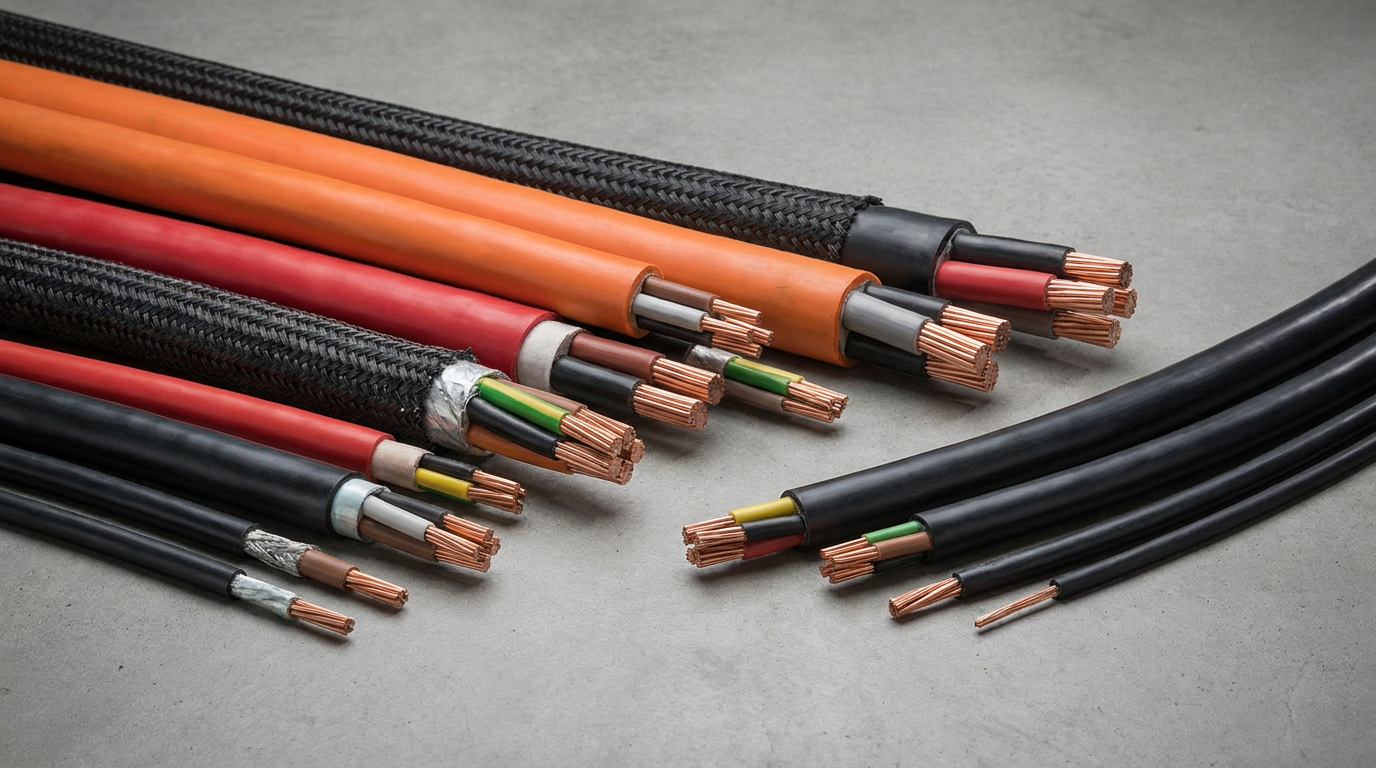
Flame retardant cable ratings classify how a cable behaves when exposed to flame under defined laboratory test conditions. FT2 cable usually refers to a horizontal flame test, while FT1 cable refers to a vertical flame test. These ratings help buyers compare fire performance, but they must be verified against the actual applicable standard and test report.
Understanding the Rating System
Flame retardant cable ratings are not universal marketing terms; they are tied to specific cable flame test standards. A cable may pass one test but fail another because each method uses different flame orientation, exposure time, specimen setup, and pass/fail criteria.
واستنادًا إلى بياناتنا الداخلية وتحليلات السوق، إليك التفاصيل:
| Rating / Standard Term | Typical Test Orientation | المعنى المشترك | Relative Severity | What to Ask the Supplier |
|---|---|---|---|---|
| FT2 cable | Horizontal | Basic flame spread resistance | أدنى | Which standard version was used? |
| FT1 cable | Vertical | Better resistance to upward flame spread | معتدل | Is the cable jacket marked FT1? |
| VW1 cable | Vertical wire flame test | شائع أول-style flame requirement | معتدلة إلى عالية | Is there a UL file or test report? |
| FT4 / Tray-rated cable | Vertical tray | Flame spread control in cable trays | أعلى | Is it approved for tray installation? |
The most important point is that flame retardant does not mean fireproof. A flame-retardant jacket is designed to slow ignition, reduce flame spread, or self-extinguish under defined conditions. It may still burn in a severe fire, especially if installed near other combustible materials.
When sourcing from cwcables or any qualified supplier, ask for the full standard name, test method, certification body, and cable construction details. This prevents confusion between similar-looking products with very different safety performance.
نصيحة احترافية لـ cwcables: I always recommend asking for the actual marking printed on the cable jacket, not just the catalog description. If the cable is genuinely rated, the supplier should be able to show the rating, standard reference, and supporting document clearly.
How Does flame retardant cable ratings,FT2 cable,FT1 cable Work?
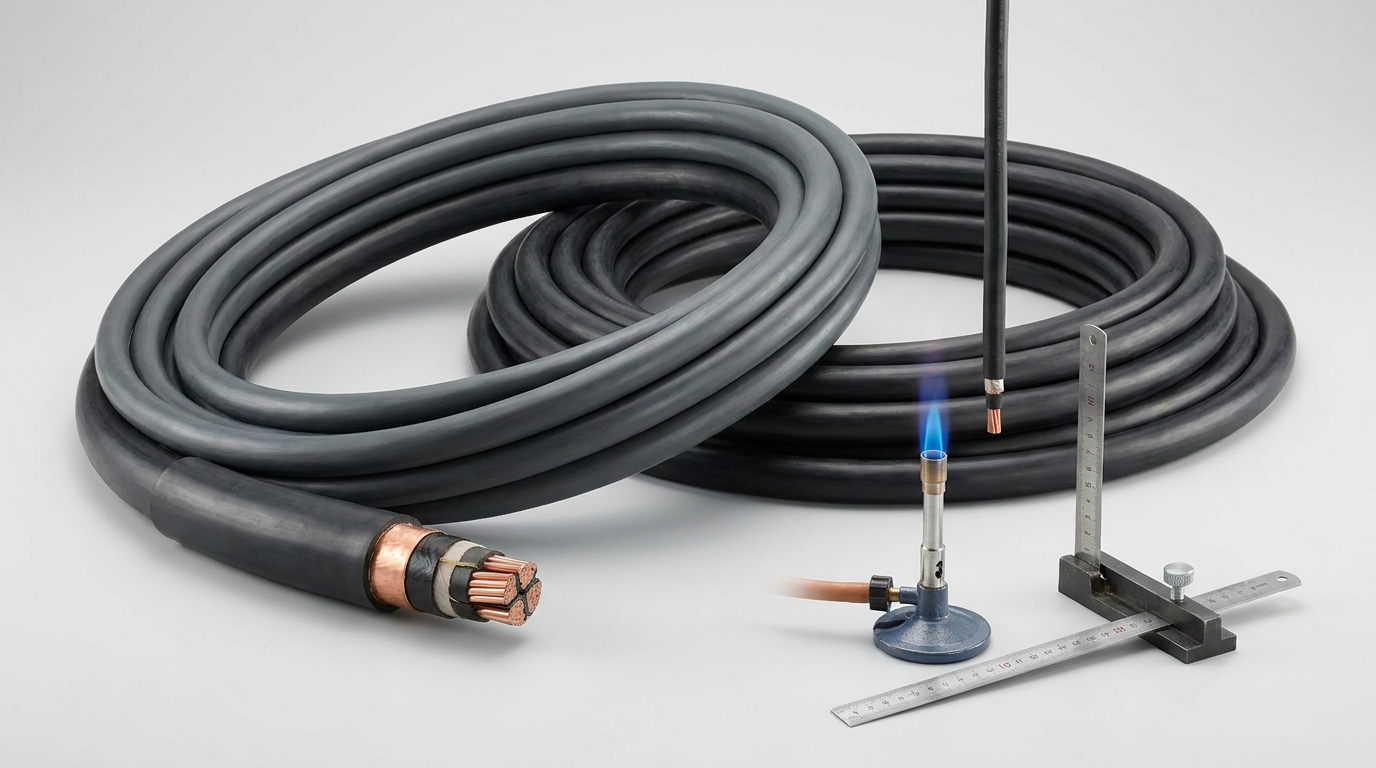
Flame retardant cable ratings work by testing how cable insulation and jacket materials react to controlled flame exposure. FT2, FT1, VW1, and similar ratings measure ignition behavior, flame spread, dripping, afterflame time, and self-extinguishing performance. The cable passes only if it meets the defined criteria of the selected test method.
How Flame Tests Evaluate Cable Performance
Cable flame test standards simulate specific fire exposure conditions. The test does not predict every real fire scenario, but it provides a repeatable way to compare materials and constructions.
A typical flame test evaluation may include:
- Specimen preparation
Cable samples are cut to the required length and conditioned according to the test method. - Mounting orientation
The cable is mounted horizontally, vertically, or in a tray arrangement depending on whether the test is FT2, FT1, VW1, or another standard. - Flame application
A controlled burner applies flame for a specified duration and angle. - Observation period
The tester records afterflame time, glowing, dripping, burning particles, and flame spread distance. - Pass/fail judgment
Results are compared against the standard’s acceptance criteria.
The difference between FT2 cable and FT1 cable often comes down to orientation and flame spread challenge. A vertical test is generally more demanding because flame naturally travels upward along the cable. VW1 cable is also a vertical flame test category commonly associated with UL requirements, but buyers should still verify the exact standard and certification status.
Material formulation is central to performance. بولي كلوريد الفينيل, LSZH compounds, البوليمرات الفلورية, and other jacket materials can be engineered with flame-retardant additives. However, the final rating depends on the complete cable design, not the jacket material alone.
نصيحة احترافية لـ cwcables: I never judge flame performance by jacket material name only. Two PVC cables can perform very differently depending on compound formulation, wall thickness, filler system, and overall cable construction.
What are the benefits of flame retardant cable ratings,FT2 cable,FT1 cable?
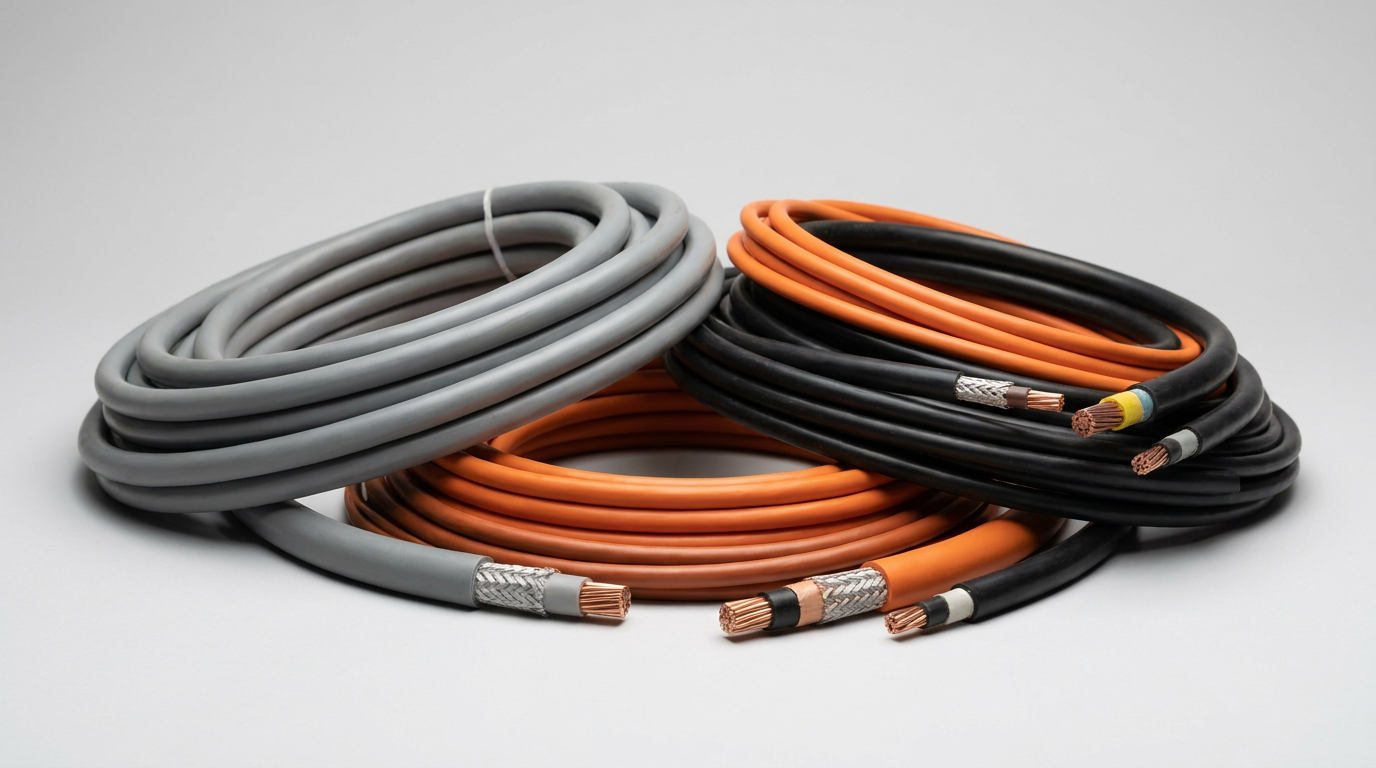
The main benefits of flame retardant cable ratings are clearer compliance, improved installation safety, easier product comparison, and reduced flame spread risk. FT2 cable, FT1 cable, and VW1 cable ratings give buyers a structured way to evaluate fire behavior instead of relying on vague supplier claims such as “fire resistant” or “safe.”
Practical Advantages for Buyers and Installers
Flame-retardant ratings help procurement, engineering, and compliance teams make better decisions. They are especially useful when projects require documented performance for industrial equipment, control panels, appliances, electronics, automation systems, or building-related cable routes.
تشمل الفوائد الرئيسية ما يلي:
- Compliance support
Ratings help demonstrate that the selected cable aligns with required cable flame test standards. - Reduced flame propagation risk
Properly rated cables can help limit how quickly flame spreads along wiring routes. - Better supplier comparison
FT2, FT1, and VW1 references provide a more objective basis than general fire-safety claims. - Improved documentation
Test reports, certifications, and jacket markings support audits and project approvals. - Application-specific selection
Buyers can choose a rating appropriate for horizontal runs, vertical routing, equipment wiring, or tray environments. - Lower project risk
Correctly specified cables reduce the chance of rejection during inspection or customer qualification.
For many applications, the benefit is not only fire performance but also traceability. A properly documented product gives engineering teams confidence that the cable delivered matches the cable specified.
However, over-specifying can increase cost unnecessarily. FT2 cable may be acceptable for some basic equipment wiring, while FT1 cable or VW1 cable may be required where vertical flame spread performance is more important. The best selection depends on the installation environment and governing standard.
نصيحة احترافية لـ cwcables: I suggest sharing your installation environment with the supplier before asking for a quote. A good cable partner should help you avoid both under-specification and expensive over-specification.
How to maintain a flame retardant cable ratings,FT2 cable,FT1 cable?
Maintaining flame-retardant cable performance means protecting the cable from damage, contamination, overheating, incorrect routing, and unauthorized replacement. FT2 cable, FT1 cable, and VW1 cable ratings are validated under tested conditions, so poor installation or harsh service conditions can reduce the real-world safety margin over time.
Inspection and Care Practices That Preserve Performance
A flame-retardant rating belongs to the tested cable construction. Once the cable is installed, maintenance focuses on preventing conditions that could compromise insulation, jacket integrity, or heat performance.
Recommended maintenance practices include:
- Inspect jacket condition regularly
Look for cracks, cuts, abrasion, swelling, hardening, or discoloration. - Avoid excessive heat exposure
Do not route cables near unshielded hot surfaces unless the cable is rated for that temperature. - Prevent chemical contamination
Oils, solvents, fuels, and cleaning agents can weaken jacket compounds. - يحافظ على نصف قطر الانحناء
Over-bending can damage insulation and expose conductors or weaken the jacket. - Control cable bundling
Dense bundles can trap heat and may affect flame behavior and current-carrying capacity. - Replace with equivalent ratings
If a rated cable is replaced, the substitute should match or exceed the original rating and electrical specification. - Keep documentation available
Store supplier datasheets, test reports, and certification references for future maintenance or audits.
Maintenance teams should also verify that repairs do not introduce lower-rated materials. For example, using ordinary sleeving, tape, or heat shrink over a rated cable may create a weak point if those accessories do not meet the same fire-performance expectations.
In critical systems, it is wise to include cable rating verification in scheduled preventive maintenance. This is especially important in industrial machinery, transport equipment, control cabinets, and high-density wiring areas.
نصيحة احترافية لـ cwcables: I always tell customers that maintenance is part of compliance. A cable that passed FT1 or VW1 testing in the lab can still become a risk if it is crushed, overheated, contaminated, or repaired with unsuitable materials.
What is the price of flame retardant cable ratings,FT2 cable,FT1 cable?
The price of flame retardant cable ratings depends on conductor material, insulation compound, jacket formulation, certification requirements, order quantity, and testing documentation. FT2 cable is often less costly than higher-rated options, while FT1 cable, VW1 cable, LSZH constructions, and certified specialty cables may carry higher material and compliance costs.
Pricing Variables That Affect Supplier Quotations
There is no single fixed price for flame-retardant cable because the rating is only one part of the product specification. A quote should always be based on the full cable design and required documentation.
واستنادًا إلى بياناتنا الداخلية وتحليلات السوق، إليك التفاصيل:
| عامل التكلفة | التأثير على السعر | لماذا يهم؟ |
|---|---|---|
| حجم موصل النحاس | عالي | Larger conductors require more copper, usually the biggest cost driver |
| Flame-retardant compound | متوسطة إلى عالية | Specialized PVC, LSZH, or other compounds may cost more |
| Rating requirement | واسطة | FT1, VW1, or higher tests may require more robust materials |
| الشهادة والاختبار | واسطة | Third-party approvals, reports, and audits add cost |
| Shielding or armoring | متوسطة إلى عالية | Adds materials and manufacturing complexity |
| MOQ and production volume | عالي | Larger orders usually reduce unit cost |
| Custom printing and color | منخفضة إلى متوسطة | Special markings or jacket colors may affect setup cost |
| Packaging and logistics | واسطة | Drum size, export packaging, and freight influence final landed cost |
When asking suppliers for pricing, avoid requesting “flame retardant cable” only. Instead, provide conductor size, voltage rating, insulation material, jacket material, flame rating, operating temperature, certification needs, color, print legend, and quantity.
A reliable supplier should be transparent about what is included in the price. If one quotation is much cheaper than others, check whether certification, test reports, copper quality, jacket thickness, or flame rating has been downgraded.
نصيحة احترافية لـ cwcables: I recommend comparing quotations line by line. The lowest price is not always the lowest cost if the cable lacks the correct FT1, FT2, or VW1 documentation and later fails inspection.
الميزات الرئيسية والمقارنة
The key difference between FT2 cable, FT1 cable, and VW1 cable is the flame test method used to validate performance. Buyers should compare test orientation, severity, documentation, markings, and intended application. A clear comparison helps prevent confusion between basic flame-retardant claims and verified cable flame test standards.
Side-by-Side Rating Comparison
Choosing the correct cable rating requires comparing both technical performance and project requirements. FT2 may be sufficient for lower-risk applications, while FT1 or VW1 may be more appropriate where vertical flame spread behavior is important.
واستنادًا إلى بياناتنا الداخلية وتحليلات السوق، إليك التفاصيل:
| ميزة | FT2 Cable | FT1 Cable | VW1 Cable |
|---|---|---|---|
| Typical test type | Horizontal flame test | Vertical flame test | Vertical wire flame test |
| General severity | أساسي | معتدل | معتدلة إلى عالية |
| Flame spread challenge | أدنى | Higher than FT2 | Higher, depending on applicable UL method |
| حالة الاستخدام الشائع | Basic wiring applications | Equipment and vertical routing needs | UL-related product compliance |
| Documentation to request | Test report or standard reference | Test report, datasheet, marking proof | UL file, certificate, or test evidence |
| Buyer concern | May not suit vertical flame spread requirements | Verify exact standard version | Confirm certification is active and applicable |
| أولوية الاختيار | Cost-sensitive applications | Balanced safety and compliance | Compliance-driven applications |
The comparison should not stop at the rating name. Buyers should ask whether the cable is approved, merely tested, or designed to meet a standard. These are different levels of assurance.
Important supplier questions include:
- Which exact cable flame test standards apply?
- Is the rating printed on the cable jacket?
- Can you provide the test report or certificate?
- Is the report from an accredited laboratory؟
- Does the cable construction in the report match the quoted product?
- Are substitutions allowed for insulation, jacket, or conductor materials?
- What is the production batch traceability process?
For regulated projects, the best choice is usually the cable with the correct rating, visible marking, and verifiable documentation—not just the strongest marketing claim.
نصيحة احترافية لـ cwcables: I always check whether the tested construction matches the production cable. A report for a similar cable is not enough if the jacket compound, conductor size, or insulation system is different.
عوامل التكلفة والشراء
When buying flame-retardant cable, focus on rating accuracy, certification proof, construction quality, supplier traceability, and total installed cost. FT2 cable, FT1 cable, and VW1 cable can differ significantly in price, but the right choice should be based on application risk, inspection requirements, and long-term reliability.
Supplier Questions That Protect Your Purchase
A strong purchasing process helps avoid miscommunication and compliance problems. Before placing an order, confirm technical, commercial, and documentation requirements in writing.
Use this checklist when evaluating suppliers:
- Confirm the required rating
Specify whether you need FT2 cable, FT1 cable, VW1 cable, or another rating such as FT4 or LSZH compliance. - Ask for the exact standard
Do not accept only general language like “flame retardant.” Request the standard number and test method. - Request documentation
Ask for datasheets, test reports, certificates, and relevant approval files. - Check cable markings
Confirm what will be printed on the jacket and whether it includes rating, voltage, temperature, and manufacturer identification. - Verify material construction
Review conductor, insulation, jacket, shielding, and filler details. - Confirm production traceability
Ask how batches are controlled and how materials are verified. - Evaluate lead time and MOQ
Certified or custom-rated cables may require longer production schedules. - Review packaging requirements
Export drums, labeling, and handling requirements can affect cost and delivery quality.
Buying decisions should also consider failure cost. A cheaper cable may become expensive if it causes inspection delays, rework, customer rejection, or replacement after installation. For OEMs and project contractors, consistent documentation can be just as important as unit price.
cwcables can support buyers by aligning cable construction, flame rating, documentation, and application requirements before production, helping reduce sourcing risk.
نصيحة احترافية لـ cwcables: I advise customers to send their target market, installation method, and compliance requirement together. With that information, we can recommend a cable rating that is practical, compliant, and cost-effective.
خاتمة
Flame retardant cable ratings are essential purchasing details, not optional technical labels. FT2 cable, FT1 cable, VW1 cable, and related cable flame test standards help define how a cable performs under controlled flame exposure. The safest buying approach is to verify the rating, documentation, marking, and supplier capability before ordering.
Final Guidance for Supplier Discussions
The best supplier conversations are specific. Instead of asking whether a cable is flame retardant, ask which test it passes, whether the marking appears on the jacket, and what documentation proves the claim.
Before confirming a purchase, review these essentials:
- Required flame rating: FT2, FT1, VW1, FT4, LSZH, or another standard
- Exact cable flame test standards and test method
- Voltage, temperature, and application environment
- موصل size, insulation, jacket, and shielding construction
- Certification, test report, or third-party approval availability
- Jacket marking and batch traceability
- MOQ, lead time, packaging, and delivery terms
A well-specified cable reduces compliance risk, improves installation confidence, and supports long-term system safety. For buyers comparing flame-retardant cable options, cwcables can help review technical requirements and recommend a practical cable solution for your market and application.
نصيحة احترافية لـ cwcables: I recommend treating flame rating as part of the full cable specification, not a separate add-on. When electrical performance, mechanical design, and flame rating are selected together, the final cable is far more reliable.